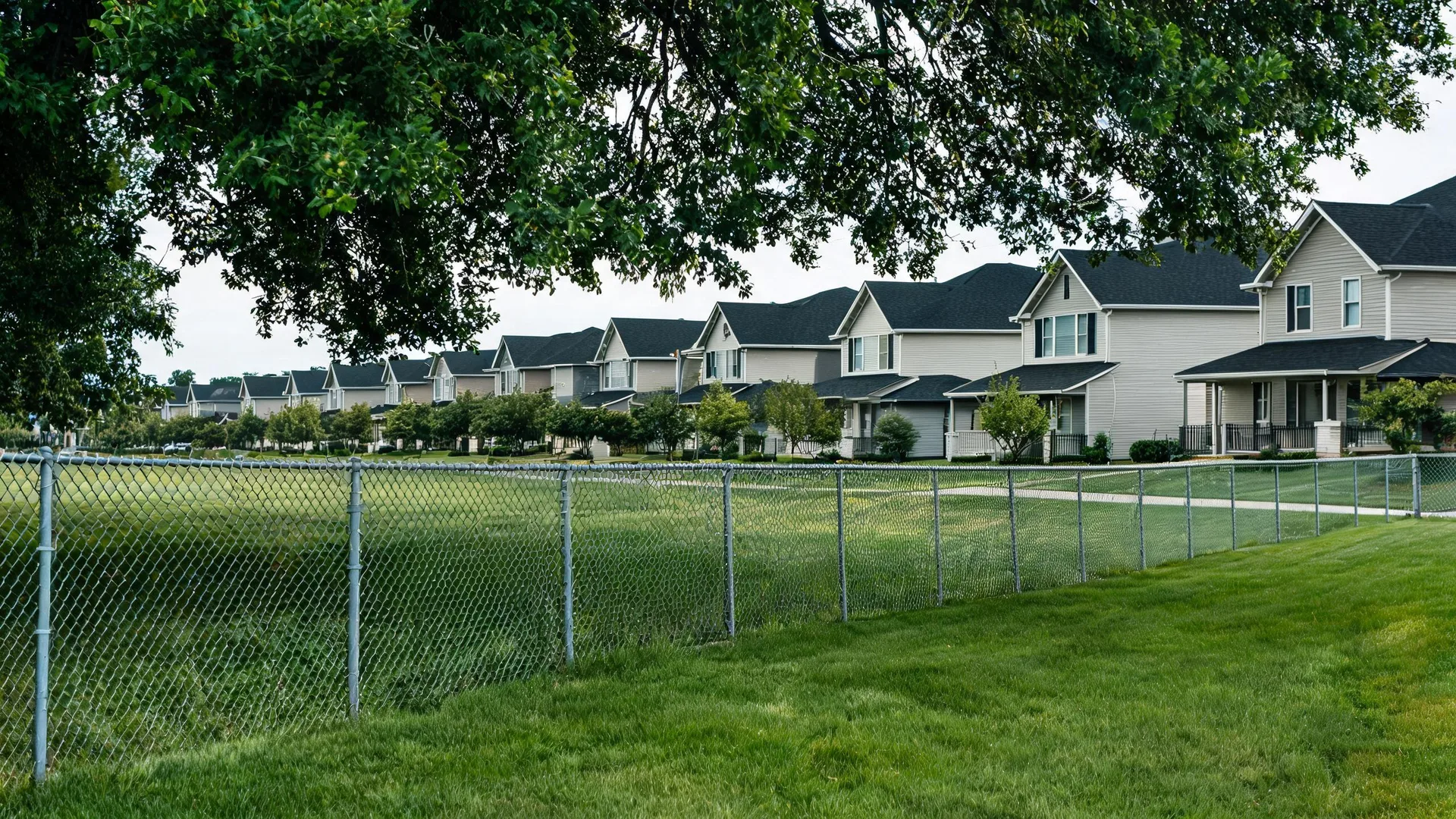






A chain-link fence runs diagonally across a mown grass field, with a row of two-story suburban houses with gray roofs and light siding behind it and tree branches overhanging the top of the frame.

Heat Pump Repair in Paola, KS

Tell us about the job

Takes about a minute. No obligation.

RepairHeat PumpMiami County, KS
Step 1 of 2

What ZIP code is the job in?

Paola doesn't put any unusual strain on a heat pump. Miami County has recorded 29 hail events between 2015 and 2024, enough to dent a cabinet or bend a few fins on the outdoor unit, but that's rarely what sends a heat pump into repair. A heat pump that's short cycling, blowing air that isn't warm enough, or running nonstop in cold weather usually has an ordinary cause. A failing defrost control. A low refrigerant charge. A dirty coil, or a reversing valve stuck in one position. These are the same problems you'd find on a heat pump anywhere in Kansas. The fix starts with finding which one it is, not guessing based on where the house sits.

7 months
October through April, your system heats
5 months
May through September, it cools
24°F
the average winter night it heats against
87°F
the average summer afternoon it cools against
Isometric line illustration of a cutaway single-story house showing interior rooms with beds and furniture, ceiling ductwork connected to an indoor air handler, and an outdoor condenser unit linked by refrigerant lines.
Your system heats October through April and cools May through September.

NOAA nClimDiv, 1991–2020 normals

Heat pumps in Miami County run from October through April, seven months of work.

A part that was already weak often fails in October, once the heat pump starts working hard again.

Paola's climate doesn't wear out a heat pump faster. A bad part does.

Power costs 14.15 cents a kWh statewide
29 hail events from 2015 to 2024
Climate zone 4A

Half the homes in Miami County were built in 1987 or later. If yours is one of them, the heat pump itself is probably not old enough to be the problem. A unit that age still has plenty of working life left in it, so a breakdown is more likely one part failing than the whole system wearing out. That changes what repair means here. Replacing a defrost control or a reversing valve on a system with years ahead of it is a straightforward call.

A newer system is worth fixing

If your heat pump came with the house, get the part that failed repaired rather than planning around a replacement. A stuck reversing valve or a bad defrost control doesn't say much about the system behind it.

Find a contractor
A man in a dark long-sleeved shirt and dirt-stained tan jeans walks away from the camera up porch steps toward a red front door, carrying a worn canvas and leather tool bag.
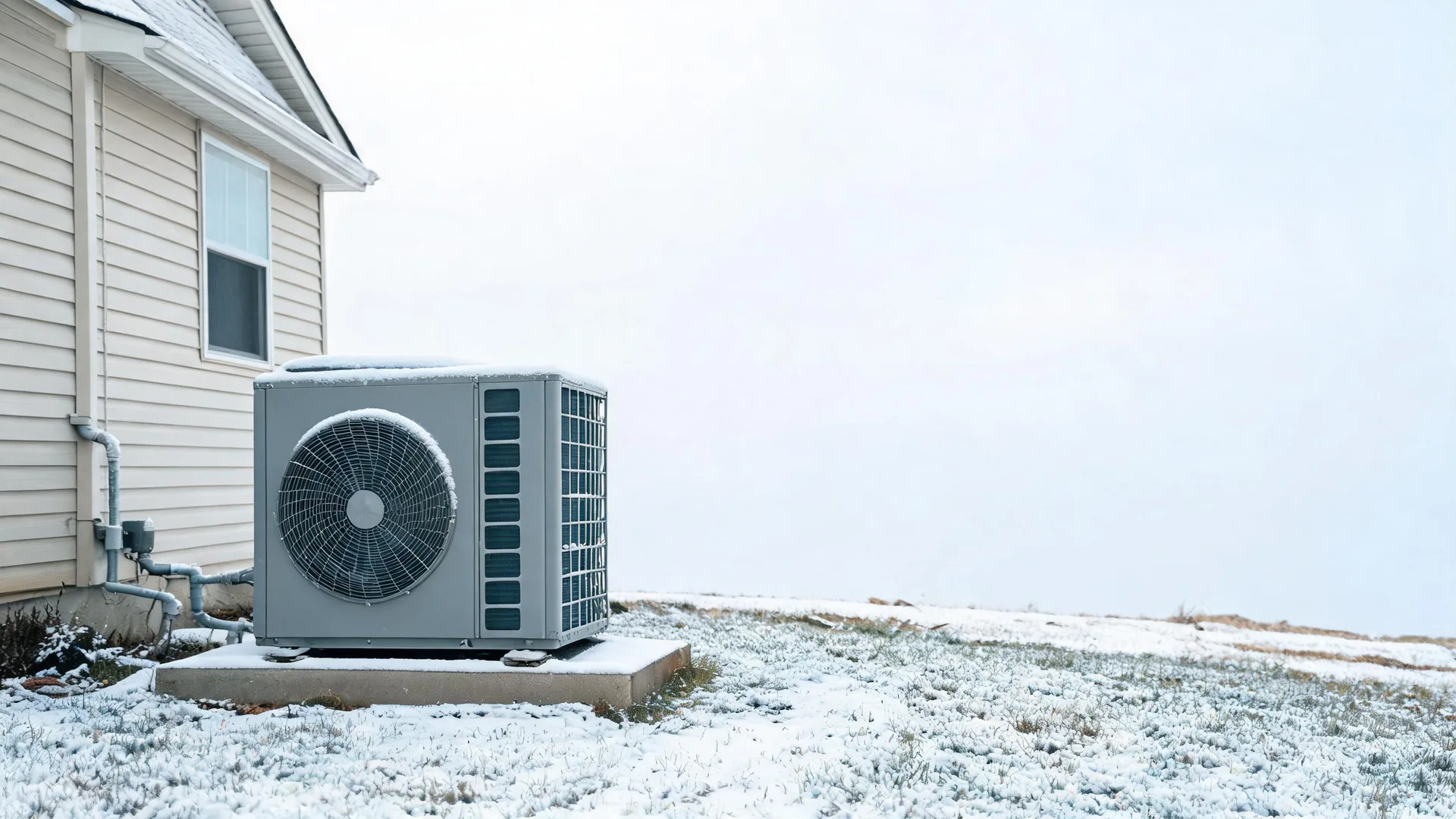
A residential heat pump outdoor unit mounted on a concrete pad next to a house with gray vinyl siding.

A small problem left running becomes a big one

A heat pump that's struggling doesn't fail all at once. It fails a little more each hour it keeps running the wrong way. A reversing valve stuck in one position forces the compressor to work against itself. A refrigerant leak that started small gets worse under load, and a compressor run low on charge builds up heat it was never meant to handle. Ice on the outdoor coil shows this clearly. Once the defrost cycle stops working right, frost builds on every run and blocks airflow across the coil. The system keeps calling for heat, the coil keeps icing, and the compressor keeps pulling against a unit that can't shed heat properly. Left running, that pattern moves from a bad defrost control to a damaged compressor. One of those is a repair. The other is closer to a replacement. Shutting the system off when something looks wrong doesn't hurt it. Running it through the problem usually does.

What you can check yourself

Look at the outdoor unit. If it's caked in ice outside of a normal defrost cycle, or if leaves and debris are packed against the fins, that's worth noting before anyone comes out. Check the thermostat is set to heat and the batteries aren't dead. Go to the air handler or furnace closet and look at the filter. A filter clogged with dust chokes airflow and can make a heat pump seem like it's failing when it's just starving for air. Check the breaker box for a tripped breaker on either the indoor or outdoor unit. None of this requires opening the unit itself.
What to leave alone

Don't take the outdoor cabinet apart or touch anything inside it. The refrigerant lines, the reversing valve, and the compressor itself need a gauge set and training to diagnose safely. If the outdoor unit is frozen over, don't chip at the ice or hose it off while the system is running. Switch the thermostat to emergency heat or off and let it sit. Trying to force a frozen coil to clear or resetting the breaker repeatedly on a unit that trips it again and again usually turns a repair into a bigger one.

Most calls start with one of a few things. The system runs but the air coming out doesn't feel warm, even though the thermostat shows it's working. It short cycles, kicking on and off in runs too short to actually heat the house. Or it runs constantly and still can't keep up, especially once it gets cold out. Sometimes you'll hear it too, a clicking at startup that repeats, or a hard shudder when the compressor kicks in. A hissing sound near the lines usually points to refrigerant escaping somewhere it shouldn't. None of these tell you the exact part on their own, but together they're what a tech listens for before ever opening the cabinet.

A diagnostic visit starts outside, at the unit itself. A tech checks refrigerant pressure with a gauge set, because a system low on charge behaves a lot like one with a bad reversing valve from the thermostat's point of view. They'll check the temperature split between the air going into the system and the air coming out. That tells them whether the unit is actually moving heat the way it should. The reversing valve gets tested directly, since a valve stuck halfway can make a heat pump blow cold air in heating mode without throwing any obvious error. Electrical readings come next, the capacitor, the contactor, the wiring at the compressor. A tech is looking for the weak connection or failing part that doesn't always show itself until the system has been running a while. Each check rules something out until only one explanation is left standing.