


Side profile of a bearded man wearing a black baseball cap and a dark gray t-shirt against a plain light gray background.

Heat pump tune-up in Manhattan, KS

Tune-up, service, or cleaningHeat PumpRiley County, KS
Step 1 of 2

What ZIP code is the job in?

A heat pump tune-up is a yearly check that keeps your system pulling heat out of cold outdoor air without straining to do it. In Riley County, the unit works hard both ways, cooling the house through muggy summers and pulling heat from the air all winter, including the cold snaps when outdoor temperatures drop well below freezing. A technician checks the refrigerant charge, cleans the outdoor coil, tests the defrost cycle, and makes sure the reversing valve switches cleanly between heating and cooling. A coil caked with dust or a charge that's low makes the system run longer to do the same job, and in winter it can mean more frost on the outdoor unit than the defrost cycle can clear. Catching that in a tune-up, before the cold months set in, means fewer surprise breakdowns and a system that keeps up on the days you need it most.

An outdoor air conditioning condenser unit on a concrete pad beside a house with horizontal siding above a brick foundation, with a flexible conduit running to a wall-mounted disconnect box.
Before you get your heat pump maintenance
A gray outdoor heat pump unit on a concrete pad beside a house with horizontal lap siding, with a conduit running to a wall-mounted disconnect box and a green shrub to the left.
After you get your heat pump maintenance

How cold and how long does your heat pump have to work here?

  • Winter nights average 21°F

    Nights this cold mean the unit spends winter pulling heat from air that has little to give, so a weak system falls behind fast.

  • Heat runs October through April

    Seven months of heating is more than half the year. A tune-up before that stretch starts matters more than one after it.

  • Cooling runs June through September

    Four months of cooling on top of seven of heat means the system gets little rest. Checking it yearly catches wear before it costs you.

NOAA nClimDiv 1991-2020

A gray outdoor condenser unit on a concrete pad beside a house with horizontal lap siding, with a wall-mounted disconnect box, conduit and insulated refrigerant lines, a shrub at left and gravel at right.

Running clean

This is a heat pump that got its yearly check. The fins are clear, the pad is clean, and the lines running up to the disconnect box are doing their job without anything fighting them. Air moves through those fins the way it was built to, in July and in January.


A gray outdoor air conditioning condenser unit on a concrete pad beside a house with light vinyl siding, with a gray electrical disconnect box and conduit on the wall to the right.

Caked with grime

Dirt has built up across the fins here, and it is not coming off on its own. A coil this caked can't pull heat from January air as well as it should, and it can't shed heat in August either. The unit draws more power to do the same job, and it keeps losing ground.

A gray-haired man in a dark coat with snow on the shoulders and collar stands smiling in a dimly lit entryway with a paneled front door, lamps, and a framed picture in an adjoining room.
A gray-haired, bearded man in a dark winter coat with snow on the shoulders stands in a doorway of a home interior with a lit lamp, framed pictures, a potted plant and a staircase behind him, and an evergreen wreath at the left edge.
An older man with gray hair and a beard, wearing a snow-dusted dark coat and knit scarf, stands smiling in a dimly lit house entry with a lit lamp, mirror, and a living room with snow visible through the window behind him.
A smiling gray-haired man in a dark wool coat with snow flecks stands in a dimly lit home entryway, with a lit table lamp, potted plant, framed pictures and a living room visible behind him.

What a Tune-Up Covers

  • A tech checks refrigerant charge against the manufacturer's spec, since a heat pump low on charge can't move heat well in either direction.
  • The reversing valve gets tested, since that's the part that switches the unit between heating and cooling and sticking valves cause no-heat calls.
  • Outdoor coil fins get cleaned, because a dirty coil can't pull heat from cold air as well as a clean one.
  • Electrical connections get checked for looseness or corrosion, since a loose wire at the contactor can take the whole unit down.
  • Defrost control gets tested to confirm the unit actually clears ice off the outdoor coil on its own schedule through winter.
  • The tech checks airflow at the indoor coil, since a heat pump moving less air works harder to hit the same temperature.

A heat pump tune-up runs through the whole system, not just a filter swap. The tech starts with refrigerant charge, checking it against the manufacturer's spec with gauges, because a unit low on charge struggles to move heat in either direction, not just one. The reversing valve gets exercised next. That's the part that flips the system between pulling heat in and pushing it out, and when it sticks, you get a no-heat call in the middle of January. Outside, the coil fins get cleaned of leaves, grass clippings and whatever else has settled into them over the year. A coil caked with debris can't pull heat from cold air the way a clean one does, and in Riley County that coil is working through long stretches of cold air with little heat in it to begin with. The tech also checks every electrical connection at the contactor and disconnect box, since a wire that's worked loose or started to corrode can take the whole unit down without warning. Defrost control gets tested too, confirming the unit actually clears ice off that outdoor coil on its own schedule rather than letting frost build up through the winter. Last, airflow gets checked at the indoor coil. A unit moving less air than it should ends up running longer and harder to hit the same setpoint on the thermostat, which shows up as wear and a bigger pull on the electric bill before it shows up as a breakdown.

A gray outdoor condenser unit sits on a concrete pad against a house wall with horizontal siding above a stone veneer base, with an electrical disconnect box and conduit on the wall and a leafy shrub in mulch to the left.
Working as it should, this unit moves heat without fighting the reversing valve or anything else to do it.
An outdoor air conditioner condenser unit on a concrete pad beside a house with beige horizontal siding, with conduit running from an electrical box on the wall.
This unit has a tech working on it, with the conduit pulled clear so the problem underneath can be found.
  1. Tech checks refrigerant charge against the unit's rated specs

  2. Reversing valve gets tested switching between heat and cool modes

  3. Outdoor coil and fins get cleaned of dirt and debris

  4. Electrical connections and capacitors get checked for wear

Power here costs 15.04 cents per kilowatt-hour

At 15.04 cents per kilowatt-hour, every degree your heat pump has to fight for shows up on the bill. A unit running low on charge or pushing air through a dirty coil pulls more power to move the same heat, all seven months of winter and all summer too.

EIA-861 2025

A heat pump losing its charge or icing up outdoors still runs. It just runs longer to reach the same setting, pulling more power every hour it does.

You notice it on the bill before you notice it in the house, since the thermostat still reads what you set it to.

A woman wrapped in a thick textured blanket sits on a sofa with an open book on her lap, beside a lit lamp and bookshelf, with a frost-patterned window behind her.
A bearded man in a red and navy plaid shirt stands indoors looking out a frost-edged window at a snowy scene, with a steaming mug on the windowsill and a potted plant nearby.
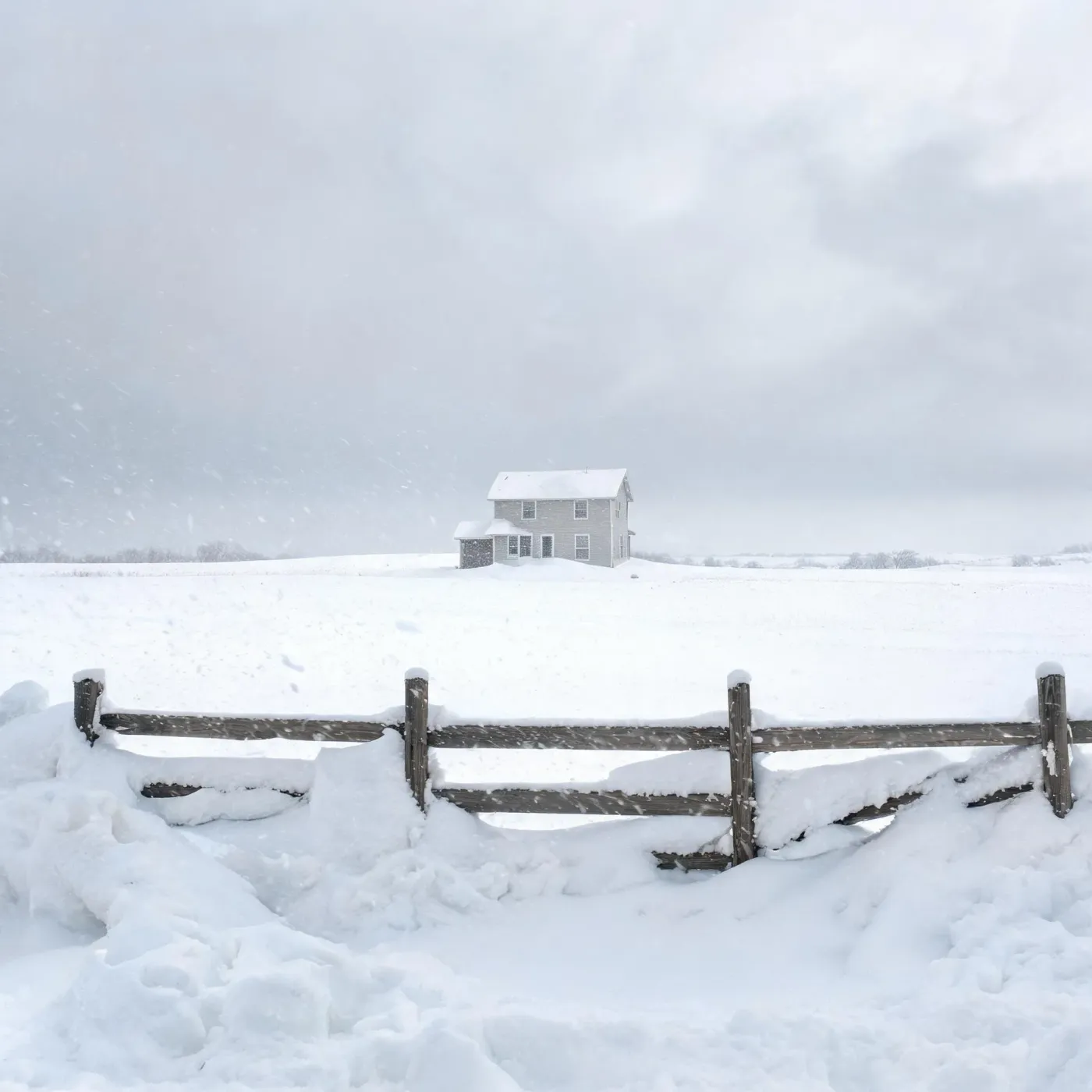
A two-story light-colored house with a gabled roof stands alone on a snow-covered field under an overcast sky, with a weathered wooden post-and-rail fence half-buried in snow drifts in the foreground.

Winter nights in Riley County average 21°F, according to NOAA climate data. At that temperature, a heat pump is pulling heat out of air that has almost none to spare, and it runs long stretches to do it. A clean coil and a full refrigerant charge make that possible. A unit that's behind on either one starts leaning on its backup heat strips more often, and those draw a lot more power for the same warmth. You'd likely notice rooms taking longer to come up to temperature, or the system running almost constantly on the coldest nights instead of cycling off. Once you send in a request, you're done chasing it down. A contractor who knows these units in this cold will take it from there.

NOAA nClimDiv 1991-2020

A pro who works on heat pumps

Send the form and the heat pump tune-up stops being something to remember.

Asking costs nothing, and the choice to hire stays yours.

A gray outdoor condenser unit sits on a concrete pad beside a house with horizontal lap siding, with a wall-mounted disconnect box and refrigerant lines, mulched beds and a shrub nearby, and a concrete walkway in the foreground.

Clear fins, clean pad

The coil fins on this unit are open, so air passes through them the way the unit needs. Nothing is blocking the base, and the conduit to the disconnect box is doing its job without debris in the way.

An outdoor air conditioner condenser unit on a concrete pad beside a house with horizontal vinyl siding, with refrigerant lines and an electrical disconnect box on the wall and dry leaves on the ground.

Dirty coil, leaves piling up

Dirt has built up on these fins, and dead leaves sit against the base of the unit. Air has to push through that buildup to move heat, so the unit works longer and harder to reach the same setting.

Tuned Up or Left to Run

Tuned up

  • The outdoor coil stays clear, so the fan pulls air through it without fighting dirt or leaves packed against the fins.
  • Refrigerant charge sits at the level the manufacturer specs, so the unit moves heat the way it was built to in both directions.
  • The reversing valve gets tested switching between heat and cool, so it won't stick on a cold morning when you need heat.
  • Electrical connections and capacitors get checked, catching a loose wire or a weak capacitor before it strands you without heat.
  • Power use stays close to what the unit is rated for, since nothing is forcing it to run longer to hit the same setting.

Skipped

  • Dirt builds up on the coil fins a little at a time, and the fan has to work harder to move the same air through them.
  • A slow refrigerant leak can go unnoticed for a season or more, since the unit still runs, just with less charge than it needs.
  • A reversing valve that's starting to stick may not show up until a cold night, when it won't switch the unit into heat mode.
  • A loose connection or a failing capacitor sits unnoticed until it causes the unit to stop rather than just run less efficiently.
  • Riley County winter nights average 21°F, and a unit already running long and hard in that cold has less room to absorb a problem.
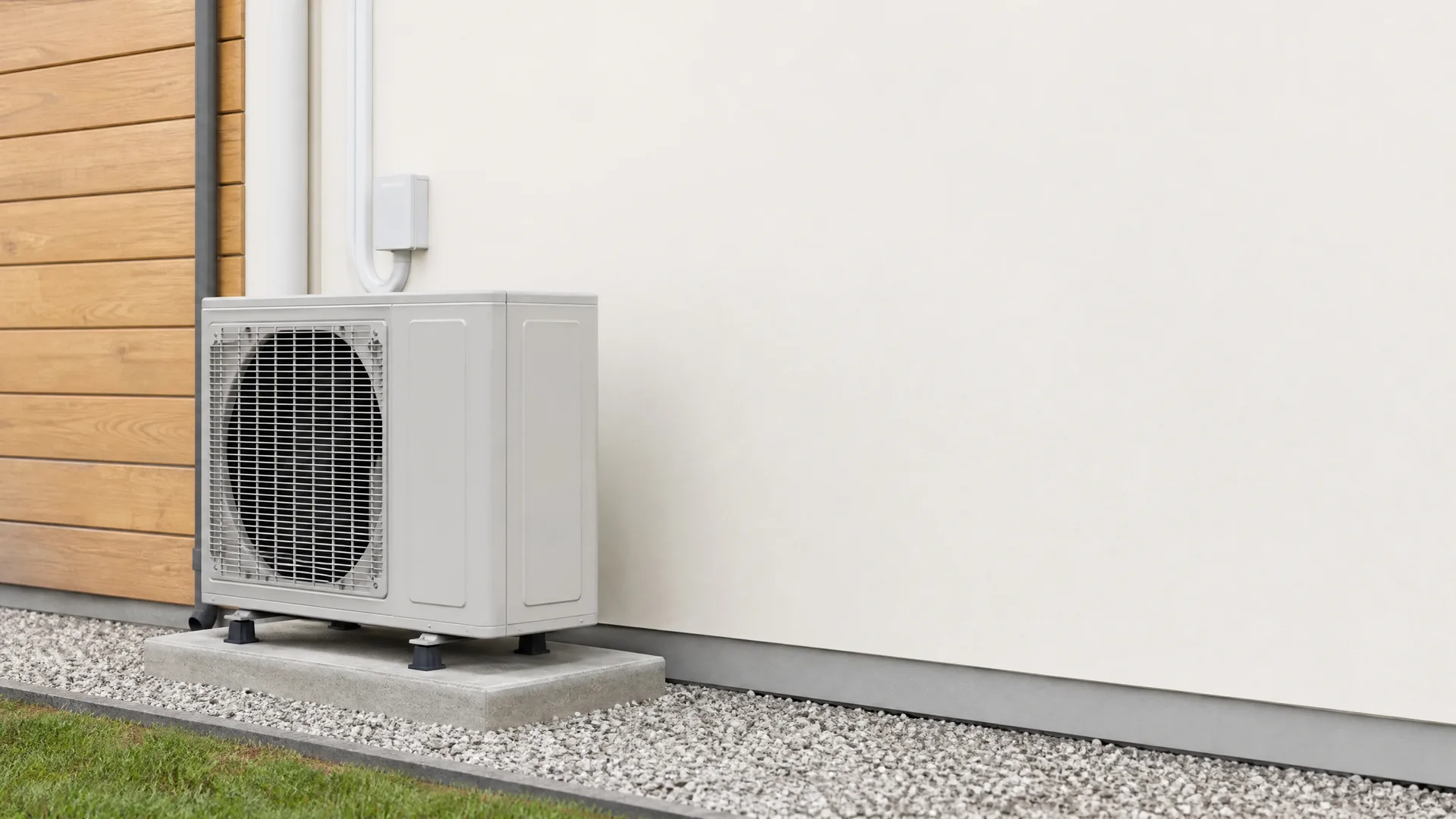
An outdoor heat pump unit on a concrete pad set in gravel beside a cream rendered wall with a wood-clad section at left and grass in the lower left corner.

A system left to run on its own

Nobody opens the cabinet unless something stops working. Dust settles on the coil, the pad holds moisture against the base, and the unit keeps running anyway because a heat pump will push through most of that rather than quit. It just works harder to do the same job. Over a winter of nights near freezing, that difference shows up as longer run times and a bill that climbs without anyone touching the thermostat.

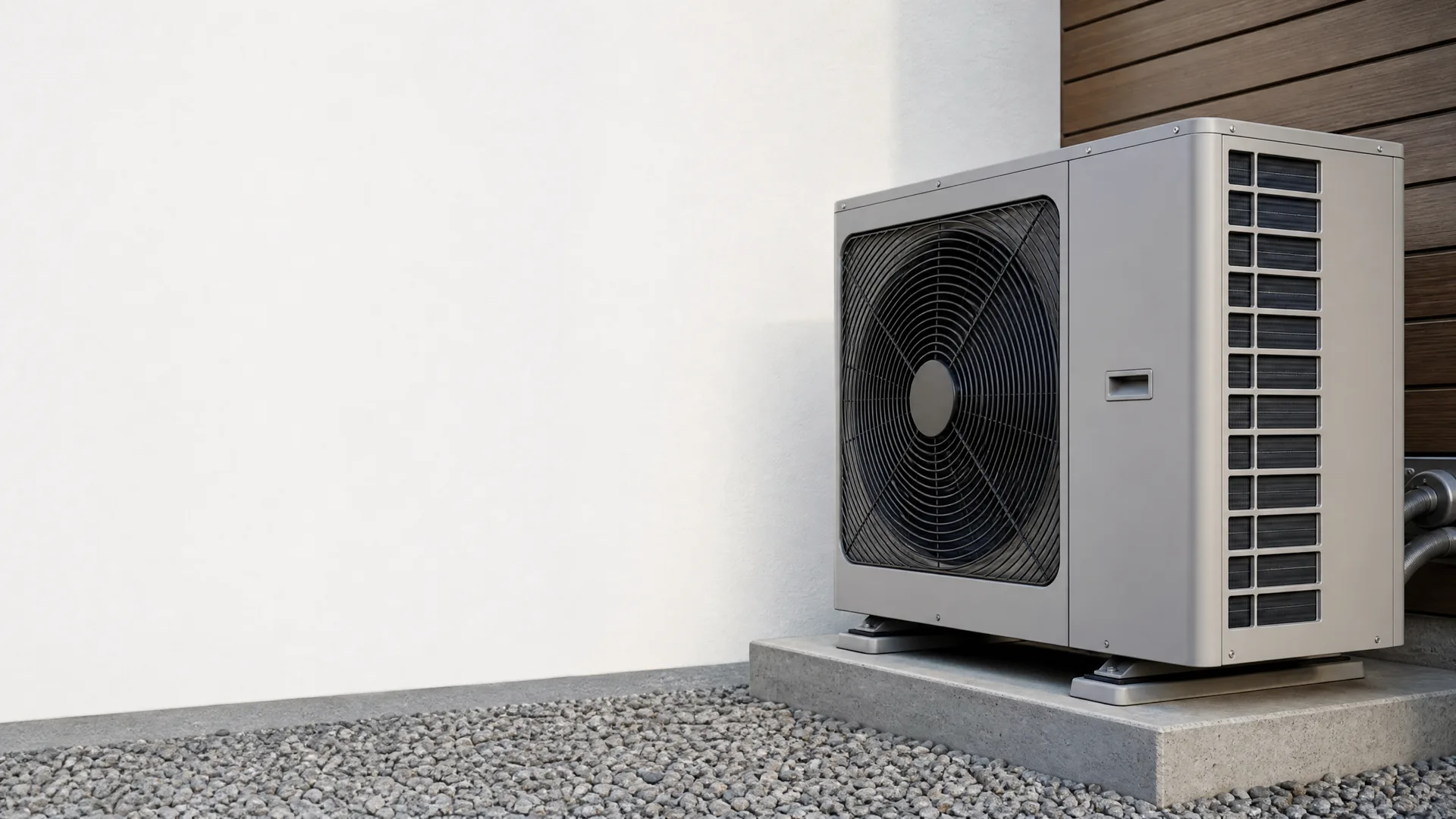
A gray outdoor air-source heat pump unit with a large circular fan grille, mounted on a concrete pad beside a white wall and wood-clad facade, with gravel in the foreground.

A system someone has checked

A tech has been through the unit, tested the charge against spec, and cleared the coil of whatever built up against it. Nothing about how it looks changes what matters, which is what is happening inside the cabinet. Air moves through clean fins the way the unit was designed to move it, and the reversing valve switches between heat and cool without sticking. It runs the way it did when it was new.

A woman stands in the open black front door of a white-sided house with a dark shingled roof while a man in a navy jacket approaches along the walkway, with lantern wall lights, a potted shrub, and flowering garden beds nearby.

A heat pump that's been checked keeps doing its job quietly

That's the plain answer. A yearly check on the charge, the coil, the reversing valve and the electrical connections is what keeps a heat pump moving heat the way it's built to, through a Riley County winter and the muggy months that follow. Skip it and the unit doesn't quit. It just works harder for the same result, and that shows up on the power bill before it shows up anywhere else.

Once you know what the check covers, the next part is finding someone to do it right. Submitting the form here hands that off. You get matched with a contractor who takes on jobs like yours, and that contractor reaches out to you. Looking for the right person stops being something you have to do yourself.

Interior corner of a room with a window and sheer curtain at left, a gray upholstered sofa with a cushion at right, and a round wooden table holding stacked books and a round vase with an olive branch.
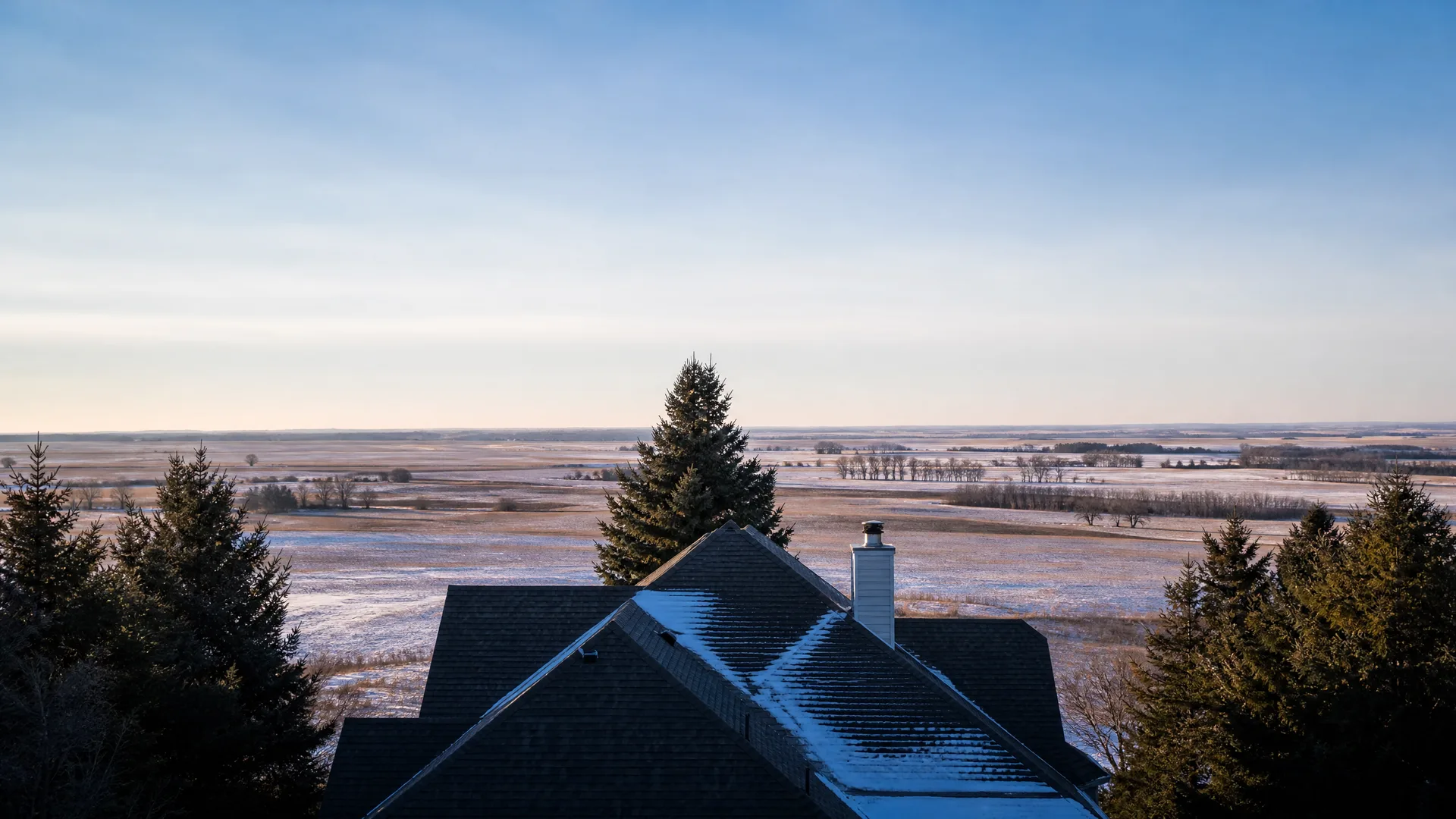
A dark shingled roof with a white chimney in the foreground, framed by evergreen trees, overlooking a broad flat snow-dusted plain under a pale blue sky.

Get your heat pump to the right pro

Get my match

No fee to send it, and nothing to sign.

A heat pump that's never been checked can run for years before a weak charge or a stuck reversing valve shows up as a real problem. Sending the request now gets you in front of a contractor who can catch it before a cold night in Riley County finds the weak spot for you.