


Below 5°F
Some mini splits in Kansas struggle hard once the outdoor air drops into single digits. If yours is still trying to run without backup heat kicking in, a contractor can check whether it's working as it should.
Describe your mini split job, and a local pro who handles it gets in touch.
Connect with a proA mini split that won't heat in a Kansas winter is usually losing the fight to the cold air outside. Below a certain outdoor temperature, the outdoor unit has to work harder to pull heat from the air, and when it drops into the teens or lower, a mini split without backup heat can struggle to keep up or stop warming the room at all. Frost on the outdoor coil is often part of it. The unit should run a defrost cycle to clear that frost, and if that cycle isn't working right, ice builds up and blocks the airflow it needs to work. A low refrigerant charge or a failing component inside the outdoor unit can cause the same thing even on a milder day. Since most homes around here lean on gas furnaces for the coldest stretches, a mini split that can't keep pace in deep cold isn't unusual, but one that stops working altogether points to something that needs a look.
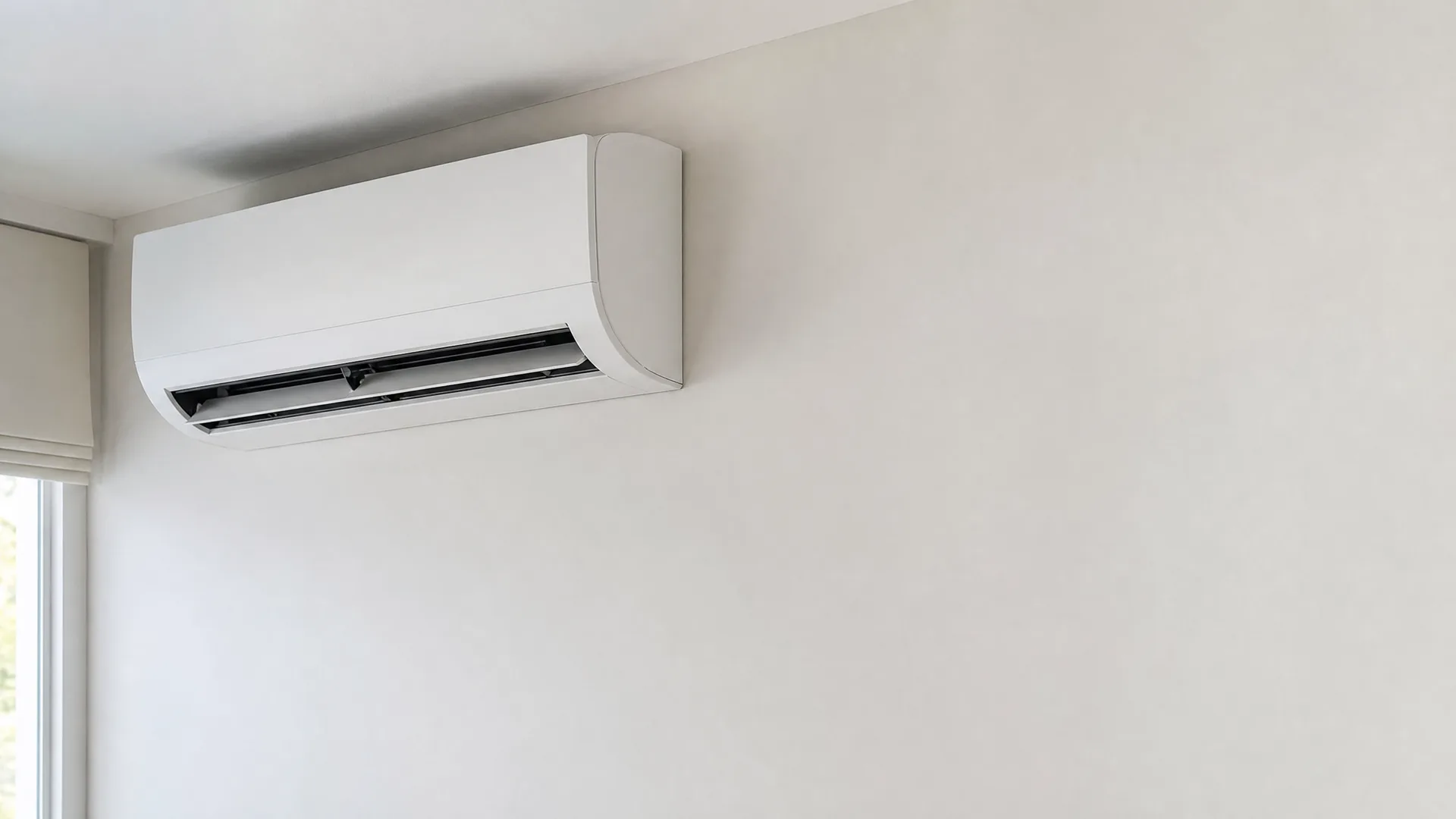
The outdoor unit pulls heat out of the outside air and moves it inside, even when that air feels cold to you. It takes refrigerant and a compressor cycling to do it. As the temperature outside drops, there's less heat in that air to grab, so the system has to run longer and work harder to keep up. Below a certain point, it can't pull enough to keep your rooms warm, no matter how long it runs.
Frost or a solid layer of ice on the outdoor coil is common in a Kansas winter and isn't automatically a problem. Mini splits run a defrost cycle on their own to clear it, which can briefly blow cool air inside and may look like a malfunction. Ice that keeps building back up fast, or never seems to clear, points to a stuck defrost cycle, a failing sensor, or a fan that isn't moving enough air across the coil.
When a mini split runs constantly without shutting off and the air coming out doesn't feel warm, it's easy to assume something is badly broken. Often the unit is actually working the whole time, just losing ground to how cold it is outside. The question is whether that's expected for a night in the teens or single digits, or whether something is actually wrong and needs a contractor to look at it.
Below freezing, frost builds up on the outdoor unit's coil, and the system has to pause heating every so often to melt it off. During that defrost cycle, the indoor unit can blow air that feels cool even though the system hasn't failed. This happens on its own and should end within several minutes. If the air stays cool well past that, or the unit never cycles off at all even on a milder day, the system may be too small for your home, low on refrigerant, or struggling with a frozen coil that isn't clearing. A contractor who services mini splits in Kansas winters can tell the difference by checking the defrost cycle, the refrigerant charge, and the coil itself.
Outdoor unit pulls heat from the outside air first
Refrigerant carries that heat to the indoor coil
Indoor fan pushes warmed air into the room
Defrost cycle runs briefly when ice builds on the coil




Most mini splits sold for Kansas winters have a backup heat strip built into the indoor unit for the days when the outdoor air is too cold to pull much heat from. That strip can keep a room from going cold, but it runs on electric resistance heat, the same way a space heater does. It costs more to run than the heat pump side ever does, and if it's doing all the work because the outdoor unit has stopped contributing, your room may hold steady while your power bill does not. It's a reasonable stopgap for a hard freeze, not a fix for a system that's lost its ability to extract heat.
Most homes in Kansas already have a gas furnace, and if yours is still connected, it's worth running that instead of leaning on a struggling mini split through a cold snap. A furnace burns fuel to make heat directly, so it doesn't lose capacity as the temperature drops the way a heat pump does. Switching over doesn't fix whatever is wrong with the mini split, and it isn't something to do for the rest of the winter. But it buys time to get the unit looked at by someone who can tell whether it's a refrigerant problem, a frozen coil, or something electrical, without you sitting in a cold house while that gets sorted out.


Some mini splits in Kansas struggle hard once the outdoor air drops into single digits. If yours is still trying to run without backup heat kicking in, a contractor can check whether it's working as it should.
A thin coat of frost during a defrost cycle is normal. Ice that builds up and stays means the unit isn't defrosting right, and a local tech who works on these year-round can tell you why.



Summer here isn't just hot, it's heavy. Averaged across Kansas homes, the summer dew point runs 64°F through June, July and August, per NOAA. That's the kind of air your mini split has to wring moisture out of every time it cools a room, and it's a different job than the one it does in January pulling heat from cold air. A unit that's been straining against that thick summer air all season can go into winter with a dirty coil, a low charge, or a compressor that's already worn down, and that shows up as weak heat once the cold sets in. A contractor who works on mini splits in Kansas year-round sees this pattern often, the same unit struggling in both directions, and knows what to check first.
NASA POWER T2MDEW county cells weighted by homes
Only one pro gets your request, so you hear from one company.
You only hire the pro if you want to.
Ice on the outdoor coil is normal on a cold, damp Kansas day. The system clears it by reversing itself for a few minutes, sending warm refrigerant out to the coil instead of into your house. That is why the indoor fan slows down or shuts off and you feel a cool draft, or nothing at all, for a short stretch. It is not a malfunction by itself. Once the coil is clear, the system switches back and goes back to heating.
What matters is how often that happens and how long it lasts. A defrost cycle that runs for several minutes every thirty minutes or so, on a cold and humid day, is doing what it is built to do. A system that is defrosting almost back to back, with only a short stretch of real heating in between, is spending more time clearing ice than it is warming your home. That pattern usually means the coil is icing up faster than it should, and the two common reasons are a dirty outdoor coil that cannot shed heat properly and a refrigerant charge that has dropped below what the system needs.
The backup heat strip is there to cover those short defrost gaps, a few minutes here and there. If it is running steadily because the compressor cannot keep up, that is a sign the refrigerant side needs a look, not a sign the strip is doing its job.


You bump the temperature up and the air coming out feels lukewarm at best, sometimes barely moving at all. The outdoor unit might be running the whole time, fan going, but the room never catches up. You may notice the backup heat strip clicking on more than it used to, or your power bill climbing because that strip is doing more of the work than the compressor was built to do. Frost sitting on the outdoor unit for long stretches, or ice that doesn't clear between defrost cycles, is another sign. Left alone through a hard Kansas winter, a struggling unit can mean rooms that just don't get livable on the coldest nights.

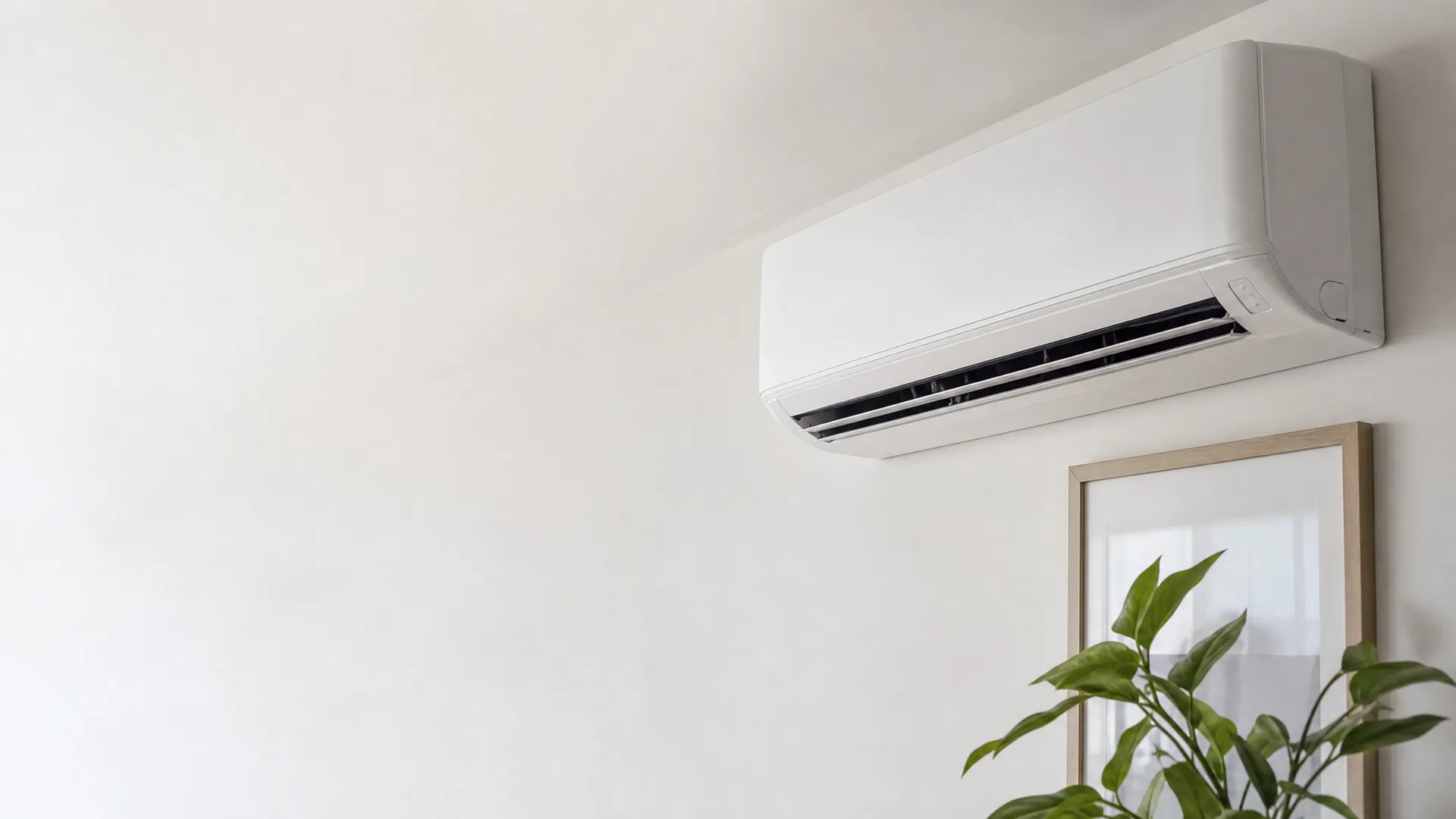
This is what a mini split looks like when nothing's in its way. Air moves freely across the coil and out into the room, and the unit isn't fighting dust or grime to do its job. A contractor still needs the outdoor side working right to call it healthy.

Grime like this builds up slowly, along the casing edges and in the vents, and most people don't notice until the airflow weakens. A coil working under a layer of dust pulls less heat out of the air it already has, which matters more once it's cold outside.
At 14.44 cents a kilowatt-hour, running the backup heat strip on your mini split costs more than the compressor does on its own. That's worth knowing before you crank the heat on a cold night and let it run that way for hours. A contractor can tell you if yours is relying on the strip more than it should.
EIA-861 2025 statewide residential average

Cold outdoor air, ice on the coil, a backup strip doing all the work, a room that never gets warm no matter the setting. Each of those points somewhere specific, and a contractor can usually tell which one it is within a few minutes of looking at your unit.
What matters now is getting someone out who actually works on these systems through a Kansas winter and knows where they tend to give out. A local, licensed contractor matched to your situation can look at your outdoor unit, your indoor coil and your backup strip, and tell you what's actually going on, without three other companies calling you about it too. You'll hear from one contractor, the one suited to your system, and you'll know where you stand.

A pro who works on mini splits