
AC can't keep up on hot days in Manhattan, KS

Find my pro

Your AC runs hard most afternoons once Riley County summer sets in, and on the worst days it just can't get the house down to where you set it. That usually means the system is undersized for what this heat is asking of it, or something in it is already struggling, like a weak capacitor or a low charge, and the humidity here isn't helping. Figuring out which one takes someone who can look at your specific setup, not a guess over the phone. Finding that person is its own chore: searching, calling a few numbers, explaining the same problem three times, then trying to compare quotes that don't line up. You can skip that part. Tell us what's going on and you'll be matched with a contractor who works on systems like yours in this area, and they'll reach out to you directly. No more sorting through names on a list.

When your AC runs nonstop on a 95 degree Manhattan afternoon and the house still sits a few degrees above where you set it, the system is losing a race it can't win. Hot, humid air keeps pushing into the house through walls and windows, and the unit has to pull that heat back out as fast as it comes in. If the air conditioner was sized for a milder day, or if something inside it, a low refrigerant charge, a weak capacitor, a coil caked with dirt, is cutting its capacity, it falls behind and never catches up before evening brings the temperature down on its own. Some houses feel it worst in the upstairs bedrooms, where heat collects by afternoon. The fix depends on which of those is actually happening in your house, and that takes someone looking at the unit itself, not a guess from the thermostat reading.

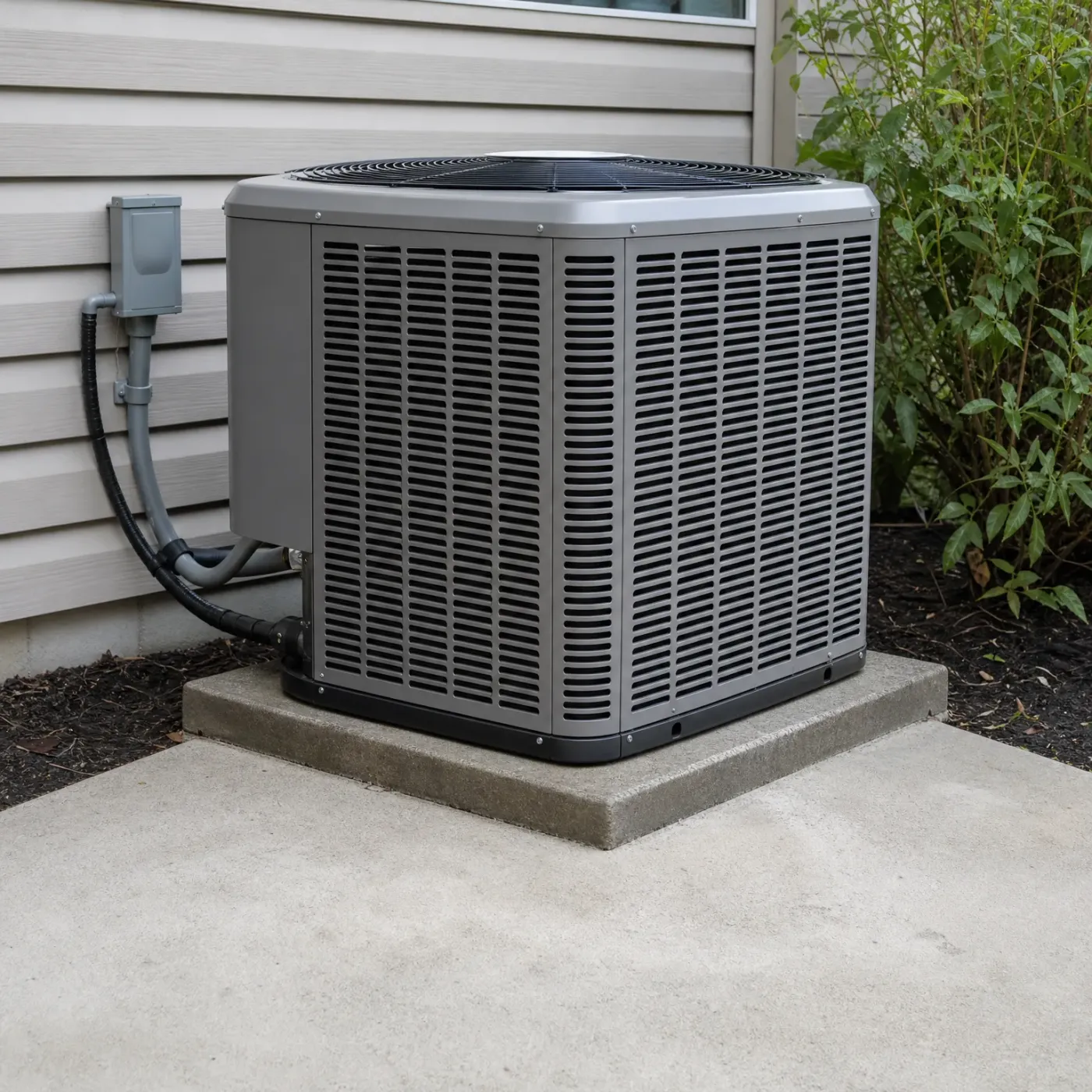
A gray outdoor air conditioning condenser unit on a concrete pad beside a house with horizontal lap siding and a stone veneer base, with a disconnect box and conduit on the wall, mulch bed and shrub to the right, and mowed grass in the foreground.

Keeping Pace

Here the unit cycles on, cools the house to your setting, and shuts off. The pad is clear, the cabinet is clean, and the disconnect box sits ready beside it. On a hot Riley County afternoon it works, rests, and works again without falling behind.


An outdoor air conditioner condenser unit on a gray composite pad beside a house with horizontal siding, a concrete foundation, a basement window, and a conduit and disconnect box on the wall.

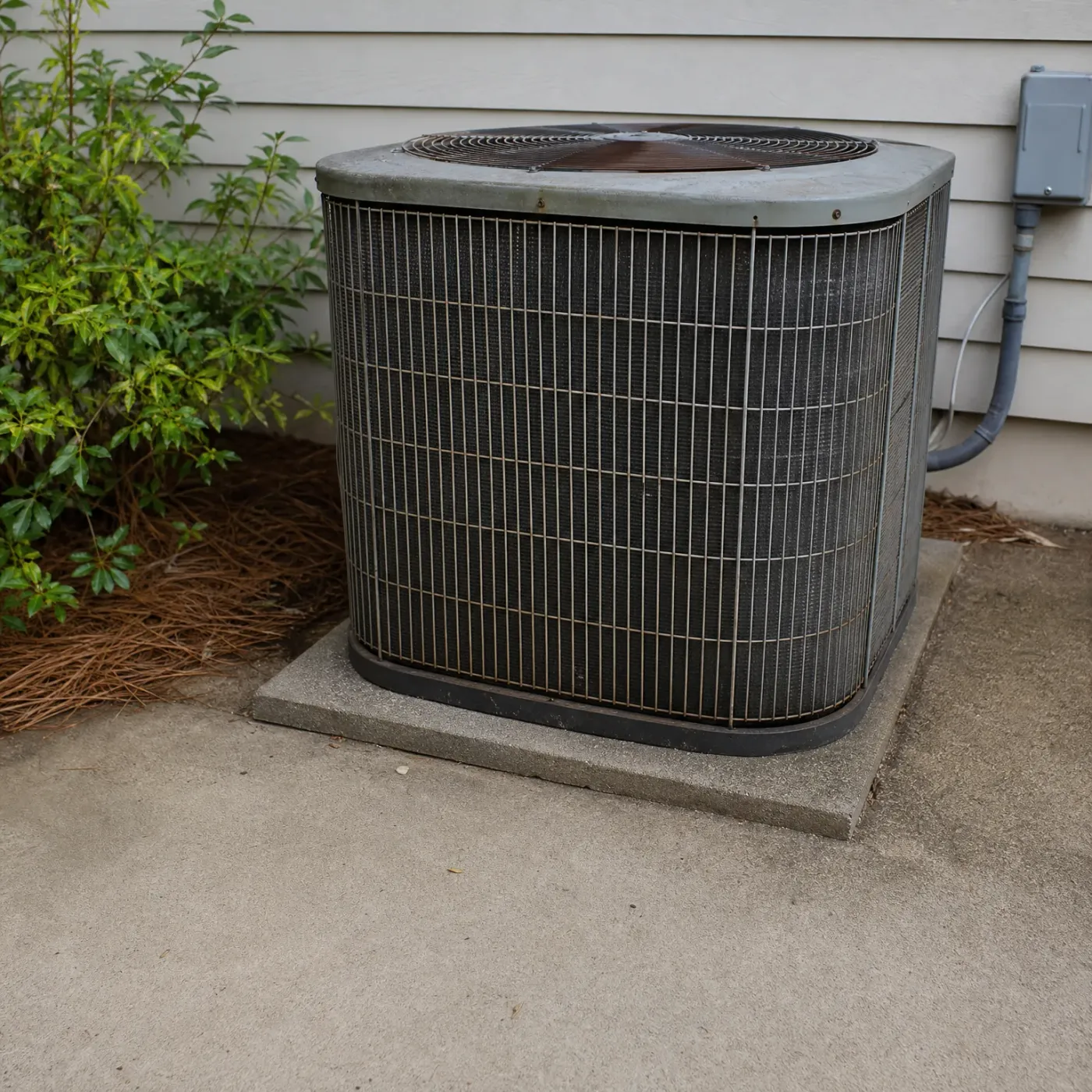
Falling Behind

Here the cabinet is caked with dust and grime, the mesh clogged with it. Airflow through a dirty coil drops, so the unit runs longer to move the same heat out of the house. On a 95 degree day it keeps running and the house still doesn't reach your setting.

Low on Refrigerant or Just Too Small

Running Low

  • A system that's low on refrigerant will run long stretches without the house ever reaching your setpoint, especially once it's above 90 outside.
  • Ice can form on the indoor coil even while the air outside is hot, which cuts cooling further and can damage the compressor if it keeps running.
  • A hissing or bubbling sound near the lines points to a leak, and the charge will keep dropping until that leak is found and sealed.
  • Airflow out of the vents feels weak or barely cool, even though the outdoor unit sounds like it's working hard.
  • The electric bill climbs because the compressor runs almost constantly trying to make up for the lost refrigerant.
  • Left alone through a full Riley County summer, a low charge usually ends with a failed compressor instead of a simple top-off.

Undersized for the House

  • The system cools fine on an 80 degree day but falls several degrees short once Manhattan hits the mid 90s, because it was never sized for that load.
  • It runs nonstop in the afternoon heat and still can't catch up, not because anything is broken but because the equipment is too small for the square footage.
  • Rooms farthest from the unit, or ones with west facing windows, stay noticeably warmer than the rest of the house.
  • The thermostat shows a gap of several degrees between the setting and the actual room temperature that never closes, even by evening.
  • Humidity lingers indoors because a system running flat out doesn't get the longer, slower cycles that actually pull moisture out of the air.
  • This pattern shows up every summer and gets worse on the hottest days, rather than appearing suddenly like a breakdown does.
A woman with long brown hair in a cream knit turtleneck sweater sits on a light sofa indoors, looking off to the side, with a shelf of plants and pottery blurred behind her.
A smiling woman with dark hair in an updo, wearing a gray ribbed turtleneck sweater, sits on a light sofa in a living room and looks off to the side.
A woman in a mustard knit sweater sits on a light-colored sofa indoors, looking toward a bright window, with a potted fiddle-leaf fig plant behind her.
A woman with long brown hair in a dark red knit sweater sits on a gray couch with cushions, smiling and looking off to the side, with a window and indoor plant behind her.

Matched to your air conditioner job

Fill out one short form instead of calling around.

Asking costs nothing, and the choice to hire stays yours.

What a properly sized system does

A central air conditioner sized right for the house is built to hold the line on a 95 degree Riley County afternoon, not just a mild one. Manufacturers rate that capacity in tons, and the number has to match the square footage, the windows and the insulation it's fighting against. A system sized a half ton short might keep up in June and fall behind by August. If your AC has never once reached your setpoint on the hottest days since it was installed, sizing is worth checking before anything else gets replaced or recharged.

Why the charge matters so much

Refrigerant doesn't get used up the way fuel does. A system that's low on charge has a leak somewhere in the line set or the coil, and it will keep running low until that leak is found and sealed. Running a unit on a partial charge for weeks at a time makes the compressor work harder than it was built to, and that wear doesn't reverse once the charge is corrected. A gauge reading at the service valves tells a technician the charge in minutes. Waiting past one summer to deal with it usually costs more than the refrigerant itself.

A gray outdoor air conditioner condenser unit on a concrete pad beside a house with beige horizontal siding, with an electrical disconnect box and insulated refrigerant lines on the wall and dry leaves on the ground.
Before you get your air conditioner repair
A gray outdoor air conditioning condenser unit on a concrete pad beside a house with horizontal gray siding, with a wall-mounted electrical disconnect box and insulated refrigerant lines, and blue hydrangeas in a mulched bed to the left.
After you get your air conditioner repair
A gray outdoor air conditioner condenser unit on a concrete pad beside a house with light vinyl siding, with an electrical disconnect box and conduit on the wall and a leafy shrub with dark mulch to the right.

Running clean

The grille is clear and the cabinet looks almost new. Air moves through it the way it was built to, so the system can pull heat out of the house as fast as a Riley County afternoon piles it back in.

An outdoor air conditioner condenser unit on a concrete pad beside a house with horizontal lap siding, with a gray electrical disconnect box and conduit on the wall and a green shrub over pine-needle mulch at left.

Choked with dirt

A grille caked with dust and weathered mulch blocks airflow before it ever reaches the coil. The unit draws more power to do less cooling, and on a 95 degree day it can fall behind and stay behind.

Cooling runs June through September

Four months of real cooling load is what your system gets to prove itself in. There's no stretch of mild days in between to make up for a bad run, so a unit that struggles in July will struggle again every July until it's looked at.

NOAA nClimDiv 1991-2020

  1. Heat moves from inside air into refrigerant at the indoor coil.

  2. The compressor squeezes that refrigerant into a hot, high pressure gas.

  3. The outdoor fan pushes that heat out across the condenser coil.

  4. Refrigerant cools and expands, ready to absorb heat again.

An older woman with short gray hair in a cream knit sweater smiles while looking to the side, standing behind a wooden board holding a round loaf of bread, with a dark window and lamp-lit interior behind her.
A woman with dark hair in a bun sits on a brown couch with a sleeping child resting against her, both wrapped in a cream knitted blanket, with a lit lamp and houseplants in the background.

Where That Leaves Your AC

  • An AC that can't hold a Riley County house to its setpoint on a 95 degree day is either undersized or running with a fault that needs a diagnosis.
  • Ice on the coil, long run times that never reach your setpoint, and a dirty grille all point to specific, checkable problems rather than just summer heat.
  • Four months of hard summer running is the only test your system gets each year, and a unit that falls behind in July will fall behind again next July until someone looks at it.
  • Matching with a contractor means you skip calling around to different companies and repeating the same description of what your AC is doing.
  • A contractor who takes on the job sorts out whether the fix is a repair to what you have or a sign the system was never sized right for your house.
  • Once you're matched, you're not left comparing quotes on your own or chasing down who can actually come look at the unit.

A system that can't bring a Riley County house down to your setpoint on a 95 degree afternoon is telling you something specific. It's either sized wrong for the square footage it's cooling, or a part in it has already failed and the rest of the system is working around that failure. Ice on the coil, run times that stretch on without ever reaching your setpoint, a grille caked with dirt choking off airflow. Each of those is a condition a contractor can check and name, not a mystery and not just the heat doing what heat does. July and August are the only months that ask this much of your system, and if it falls behind now, it'll fall behind the same way next summer unless the actual cause gets found.

Finding out which one you're dealing with usually means calling a few companies, explaining what the AC is doing to each one, and waiting to see who can actually get out to look at it. Getting matched with a contractor skips that part. You describe the problem once, and the contractor who reaches out is someone who takes on this kind of call and can tell you whether what you've got is a repair or a sign the system was never right for the house to begin with. You're not left sorting through quotes on your own or tracking down who's available this week. The diagnosis still takes a trained eye in your house. But the work of finding that eye is done once you're matched.

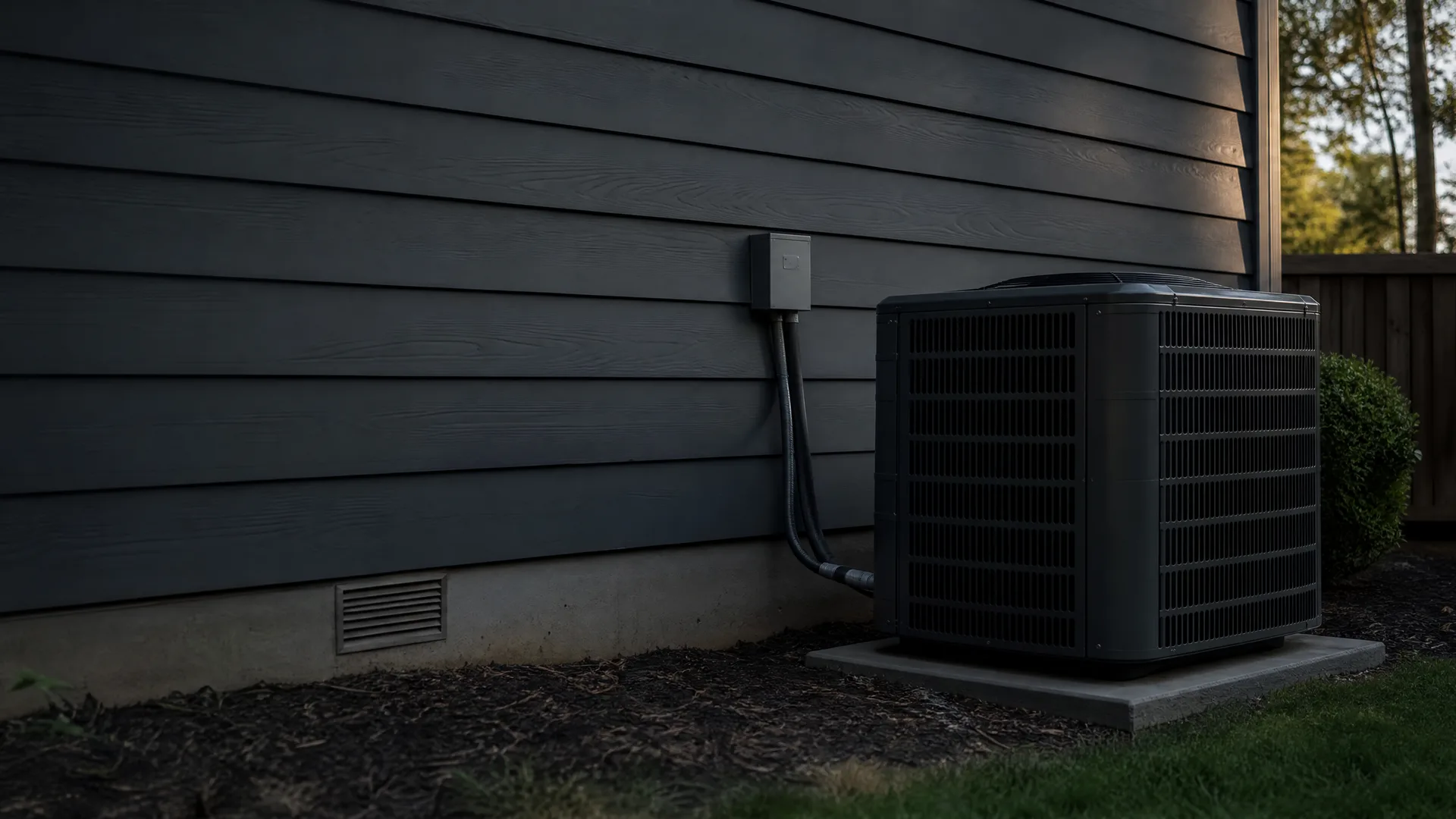
An outdoor air conditioning condenser unit on a concrete pad beside a dark gray horizontal lap-sided house wall, with a disconnect box and refrigerant lines on the wall, mulch bed and shrubs nearby.

An air conditioner pro near you

Explain the job once and skip repeating it on every call.

RepairCentral ACRiley County, KS
Step 1 of 2

What ZIP code is the job in?