






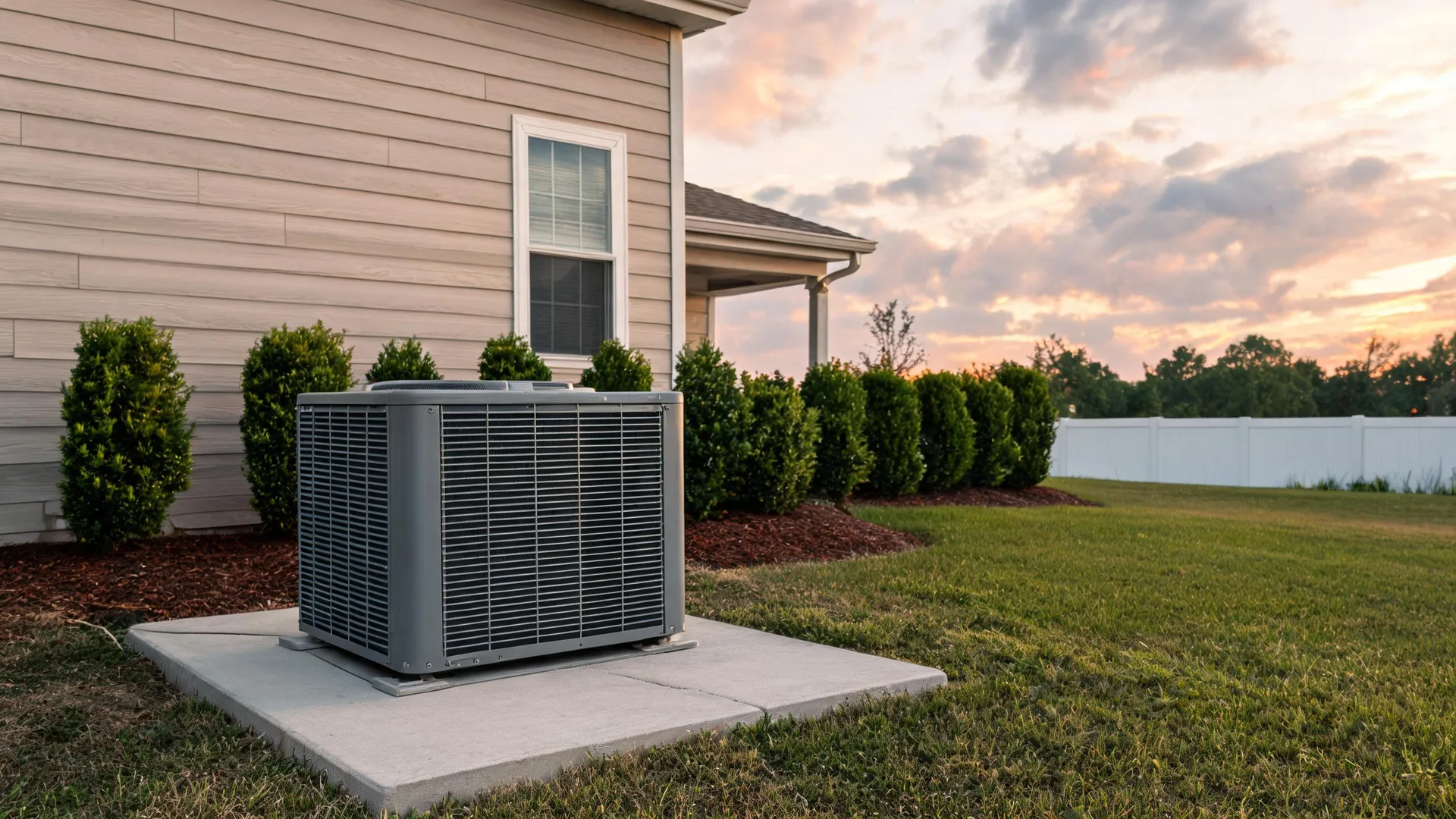
An outdoor air conditioning condenser unit on a concrete pad next to the gray vinyl siding of a residential home.

AC Installation in Overland Park, KS

Tell us about the job

Takes about a minute. No obligation.

New system or replacementCentral ACJohnson County, KS
Step 1 of 2

What ZIP code is the job in?

Johnson County logged 367 severe weather events between 2015 and 2024. Most of that was wind and hail: 179 damaging wind events and 170 hail events. Nine tornadoes touched down in that stretch, and winter storms hit 9 times. An outdoor AC unit sits outside through all of it, exposed to whatever hail or wind comes through. Power doesn't always hold up either. Nearly one in five Kansas households went at least 24 hours without power in 2024. A new system is worth planning around both of those facts, not just the heat.

5 months
May through September, your air conditioner is on duty
87°F
the average summer afternoon it cools against
170 hail events
in ten years, and hail bends the fins on outdoor coils
13.4 SEER2
the federal minimum any new unit must meet
Isometric cutaway illustration of a single-story house showing interior rooms, ductwork and an air handler in the attic space, and an outdoor condenser unit connected by lines at the exterior wall.
Your air conditioner works hardest from June through August.

NOAA nClimDiv, 1991–2020 normals

May starts the cooling months here, and the system runs clear through September.

Install in April and the new unit is already proven before the first hot week hits.

Five months of hard running, every year, is what this system signs up for

Cooling runs May through September
Summer afternoons average 87°F
179 damaging wind events from 2015 to 2024
Most Homes Here Run on Gas69.4% of homes in Johnson County heat with gas, so a matching AC install is the straightforward choice.

Any new split system installed here has to clear 13.4 SEER2, the federal minimum for units under 45,000 Btu an hour built from 2023 on. Johnson County falls in climate zone 4A, a mixed zone where both the furnace and the AC put in real work over the year. That rating isn't a ceiling, it's the floor a contractor starts from when sizing what goes in. Some homes will call for more than the minimum once duct losses and the size of the house are worked out.

Plan the install around what this county throws at it

Wind and hail are common here, and the outdoor unit has no choice but to sit outside and take it. Ask where it goes and what shields it before it's in the ground. With outages reaching one in five Kansas households for a day or more last year, it's also worth asking what keeps the house livable and the water hot when the power drops.

Find a contractor
A gray residential air conditioning condenser unit mounted on a concrete pad outdoors, surrounded by green grass under a partly cloudy blue sky.

Getting the size right, not just the brand

Sizing an AC isn't a matter of picking the biggest unit available. A system that's too big cools the air fast, shuts off, and starts again a few minutes later. That short cycle never runs long enough to pull moisture out of the air, so the house feels cold and clammy at the same time. It also wears the compressor harder, because the startup draw is the toughest moment in the whole cycle and a short-cycling unit does that over and over. Too small, and the system runs nonstop on the worst days, straining to catch up and never quite getting there. The right size runs in long, steady cycles that pull humidity down along with the temperature, and it doesn't labor to get through an afternoon.

A contractor works this out with a load calculation, not a guess based on square footage alone. That calculation accounts for how much sun the walls and windows take on, how much air leaks in and out, how the attic and insulation hold or lose heat, and how many people and appliances add heat to the rooms day to day. Two houses the same size can need different sized systems once those factors are worked through. The ductwork matters just as much as the unit itself. Supply and return ducts have to be sized to move the air the new system is rated for. An AC sized right but choked by undersized or leaky ductwork won't deliver the cooling it's capable of, and rooms far from the air handler end up warmer than the rest of the house.

What the number actually measures

SEER2 is a ratio of cooling delivered to power drawn over a full season of cycling on and off, not a single moment of peak performance. It only tells you what the system can do when the rest of the install is right behind it. A high rating paired with leaky ducts or a bad refrigerant charge won't deliver what the label promises.

Where the real spread shows up

The gap between a unit built to the minimum and one built above it isn't in how cold the air gets. Both will cool the house. The difference shows up in the compressor, the stage of cooling it runs, and how long the equipment lasts under steady use. That's what a higher rating is actually buying, not colder air, more consistent running.

Overhead view of an air conditioning condenser unit on a concrete pad next to a house with asphalt shingle roofing and vinyl siding.

A higher-efficiency unit would save about $40 a year to run in Johnson County compared with a new unit at the federal minimum.

  • A higher-efficiency unit$280 a year
  • A new unit at the federal minimum, 13.4 SEER2$320 a year

Estimates for a typical Johnson County home, from EIA household energy data, Kansas fuel prices and NOAA climate normals. Your home will differ.

Installation day starts with the old equipment coming out, the indoor coil, the outdoor unit, and the line set running between them. If the refrigerant lines are being reused, a tech checks them for the right size and condition before tying in new equipment. Most jobs call for new line sets, since the old ones carry residue and sizing that don't match the new system. The outdoor unit goes on a level pad, with clearance on all sides so it can pull in air and exhaust properly. Inside, the coil sits above or beside the furnace, matched to the new condenser. Once everything is connected, the whole system gets evacuated with a vacuum pump to pull out moisture and air, then charged with refrigerant to the exact weight the manufacturer specifies. A tech checks the charge against pressure and temperature readings rather than guessing, because too much or too little refrigerant costs efficiency and strains the compressor. The last steps are running the system through a full cycle, checking airflow at the vents, and confirming the thermostat is talking to the equipment the way it should.