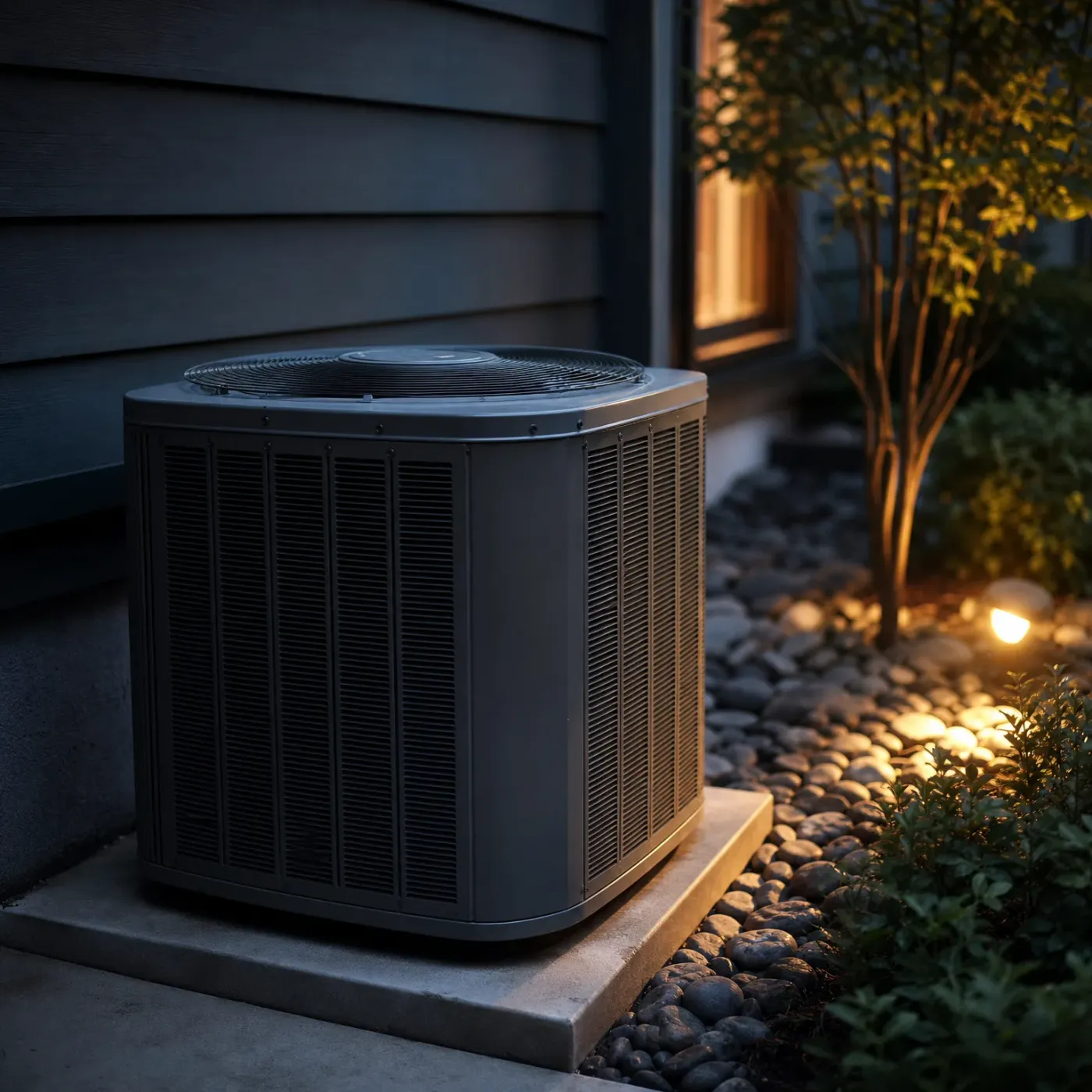







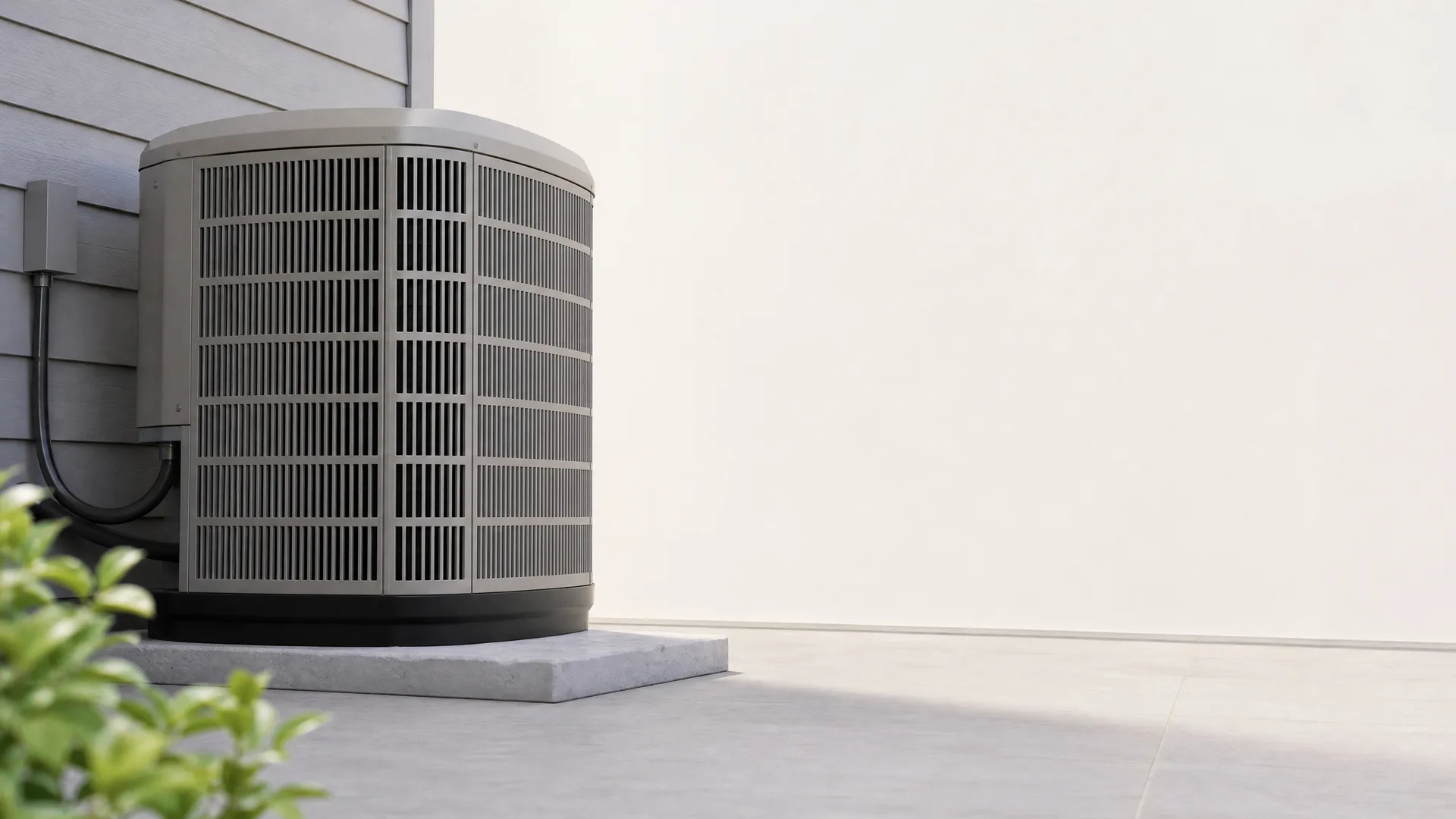

An outdoor air conditioning condenser unit on a concrete pad beside a dark horizontal-sided house, with river rock, shrubs and a small lit tree at dusk.

No calling every shop in Johnson County

AC blowing warm air in Overland Park, KS

Warm air from the vents when the AC is running usually means the system is low on refrigerant, the compressor isn't kicking on, or airflow is blocked somewhere. This page covers what's likely going on and what it takes to fix it. No need to search around, call a few places, and explain the problem over and over. One licensed Johnson County contractor who works on these systems all summer takes it from here.

Start one form

Warm air from the vents usually means the compressor outside isn't running, even though the indoor fan is. If the outdoor unit is silent or just humming, the compressor could be dead, or a capacitor that powers it has failed. That stops the whole cooling process even though air is still moving through the ducts. Low refrigerant from a slow leak causes the same thing, and running it that way further damages the compressor. A clogged filter or frozen evaporator coil can also choke off airflow until what comes out feels warm. With Johnson County summers running long and humid, a system stuck blowing warm air gets uncomfortable fast, and if the cause is the compressor or a refrigerant leak, it needs a licensed technician with gauges and the right tools to find the problem and fix it, not a filter swap.

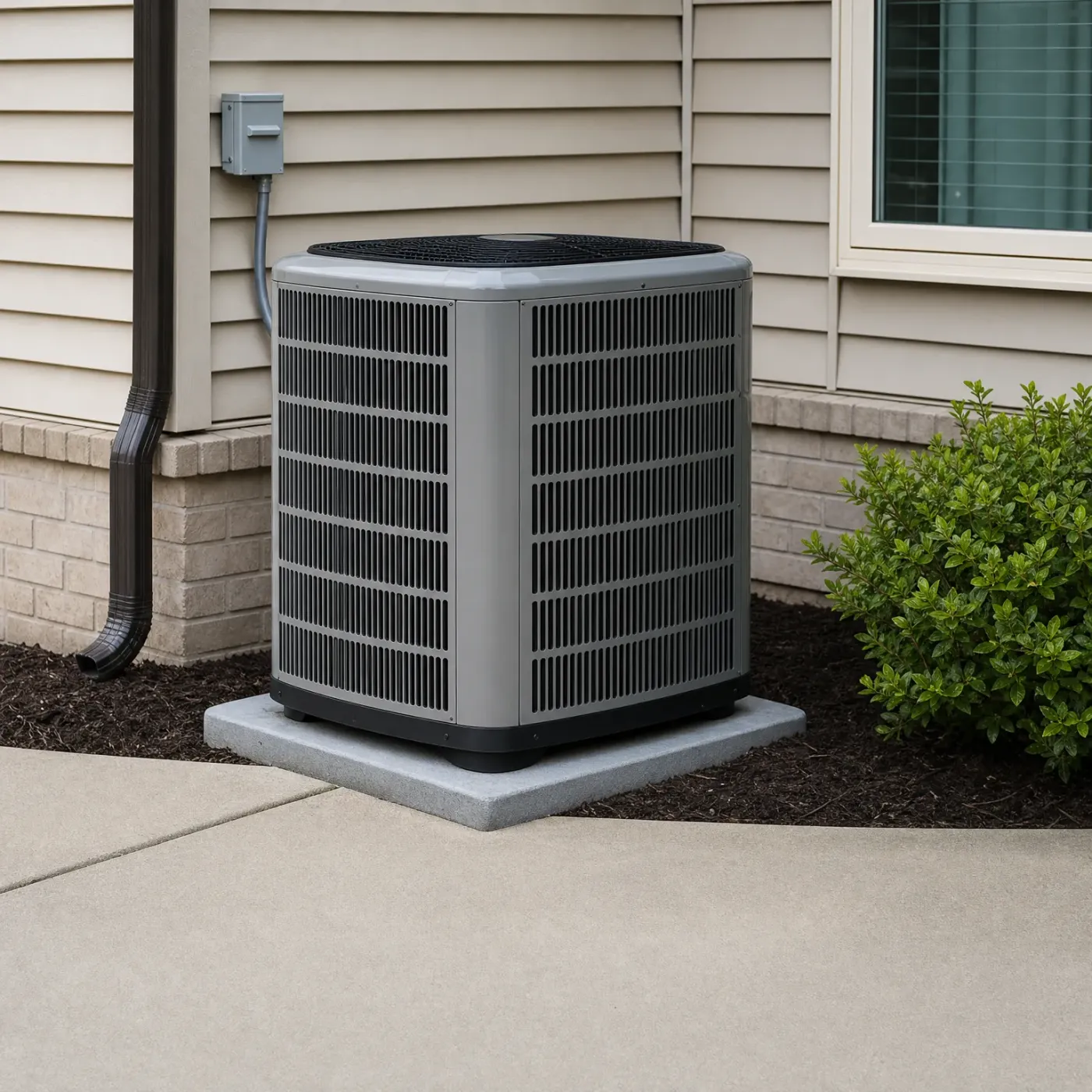
A gray outdoor air conditioning condenser unit on a concrete pad beside a house with horizontal vinyl siding, a brick foundation, downspout, electrical disconnect box, mulch bed and a green shrub.
A clean condenser pulls heat out of the house and moves it outside, which is the whole job it has.
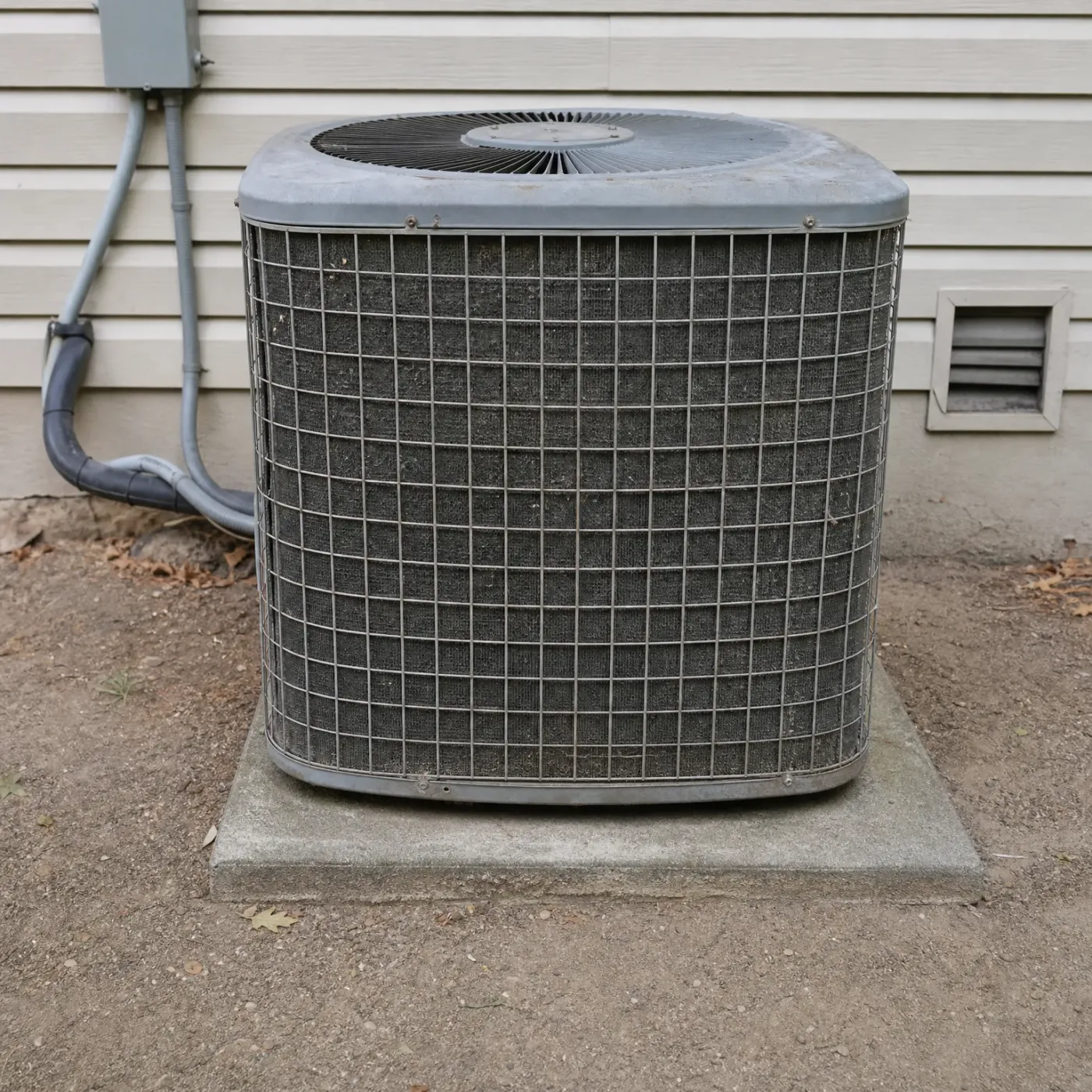
An outdoor air conditioning condenser unit with a dirty mesh coil guard sits on a concrete pad beside a house with horizontal lap siding, a wall vent, and conduit running to an electrical disconnect box.
Fins packed with dirt and mulch can't shed that heat, and a Johnson County summer gives it no break to catch up.

Most of this traces back to something telling the system not to cool, or something stopping it from cooling once it's told to. The thermostat is the first place to check. If the fan is set to On instead of Auto, the blower runs nonstop whether or not the compressor is working, so you get constant airflow that's never actually cold. A loose wire behind the thermostat or dead batteries can do the same thing by never sending the call for cooling in the first place. If you've got a heat pump, the part that switches it between heating and cooling, the reversing valve, can stick partway and leave you with air that's just room temperature. Some causes take longer to show themselves. A clogged condensate line will trip a safety switch and shut the system down outright. A coil that's frozen over needs time to thaw before cool air returns, even after a tech has already fixed what froze it. And low refrigerant is never just low. Refrigerant doesn't get used up, so if the level has dropped, it's leaking out somewhere along the line set.

Why Warm Air Keeps Coming

  • A thermostat set to Auto only calls for cooling when the room warms up, so a Fan setting stuck on On will push unconditioned air all day.
  • Behind the thermostat, a broken wire or a dead batteries can tell the system there's no call for cooling at all.
  • The reversing valve that switches a heat pump between modes can stick, which leaves it blowing room-temperature air instead of cold.
  • A condensate line clogged with algae can trip the float switch and shut the whole system down as a safety measure.
  • Low refrigerant almost always means a leak somewhere in the line set, not a system that just needs a top-off.
  • A frozen evaporator coil takes time to thaw, so warm air can keep coming for a while even after the real problem is fixed.
A man with gray-brown hair and stubble in a dark sweater sits on a light-colored sofa in a living room, looking off to the side, with a houseplant, framed picture, shelving and a sunlit window behind him.
A gray-haired bearded man in a dark blue shirt over a white t-shirt sits on a leather sofa in a living room with built-in shelves, a floor lamp, an armchair and large windows, looking off to the side.
A gray-haired man in a dark green sweater sits smiling on a sofa in a sunlit living room, with a houseplant, shelving unit, and dining table visible behind him.
A gray-haired man in a dark green knit sweater sits on a beige sofa with a dark cushion, looking to the side, with a potted plant, shelves and sunlit windows behind him.

What the compressor actually does

The compressor is what moves refrigerant through the system and lets it absorb heat inside and release it outside. When it won't start, the indoor fan still runs and still pushes air through the vents, but that air never gets cooled. That's why the system can sound like it's working and still send out air that's the same temperature as the room. A failed capacitor is a common reason the compressor won't start, since it's the part that gives the compressor the jolt it needs to turn on. A contractor can test the capacitor and the compressor itself to find out which one failed.

Why low refrigerant doesn't fix itself

Refrigerant doesn't get used up the way fuel does. A system that's low on it has a leak somewhere in the lines or the coil, and the level will keep dropping until that leak is found and sealed. Running the AC low on refrigerant for long stretches makes the compressor work harder than it's built for, which is how a refrigerant problem turns into a compressor replacement. Topping off the charge without finding the leak only buys a little time before the warm air comes back. A licensed contractor has the gauges to measure the charge and the tools to locate where it's escaping.

A woman with shoulder-length brown hair in a gray knit cardigan sits in an upholstered armchair indoors, looking toward a window with sunlit trees outside, with a bookshelf behind her.
A woman with her hair in a bun holds a sleeping child against her chest while both are wrapped in a grey knit blanket on a couch, with a lit lamp and potted plant blurred in the background.

Skip the search

The pro who gets in touch is licensed in Kansas and works in Johnson County.

No charge to send it. You decide if you hire them.

An outdoor air conditioning condenser unit on a concrete pad beside a house with horizontal lap siding, with an electrical disconnect box and conduit on the wall and a green shrub in the lower left foreground.

What this does to your house in July

A house that should sit at 72 climbs past 80 within a couple hours once the compressor quits. Upstairs bedrooms go first if yours is a two-story, since warm air settles there anyway. The thermostat reads the temperature right where it hangs, so a room at the far end of the house can run hotter than the number on the wall says. Humidity climbs with the heat, since a compressor that isn't running isn't pulling moisture out of the air either.

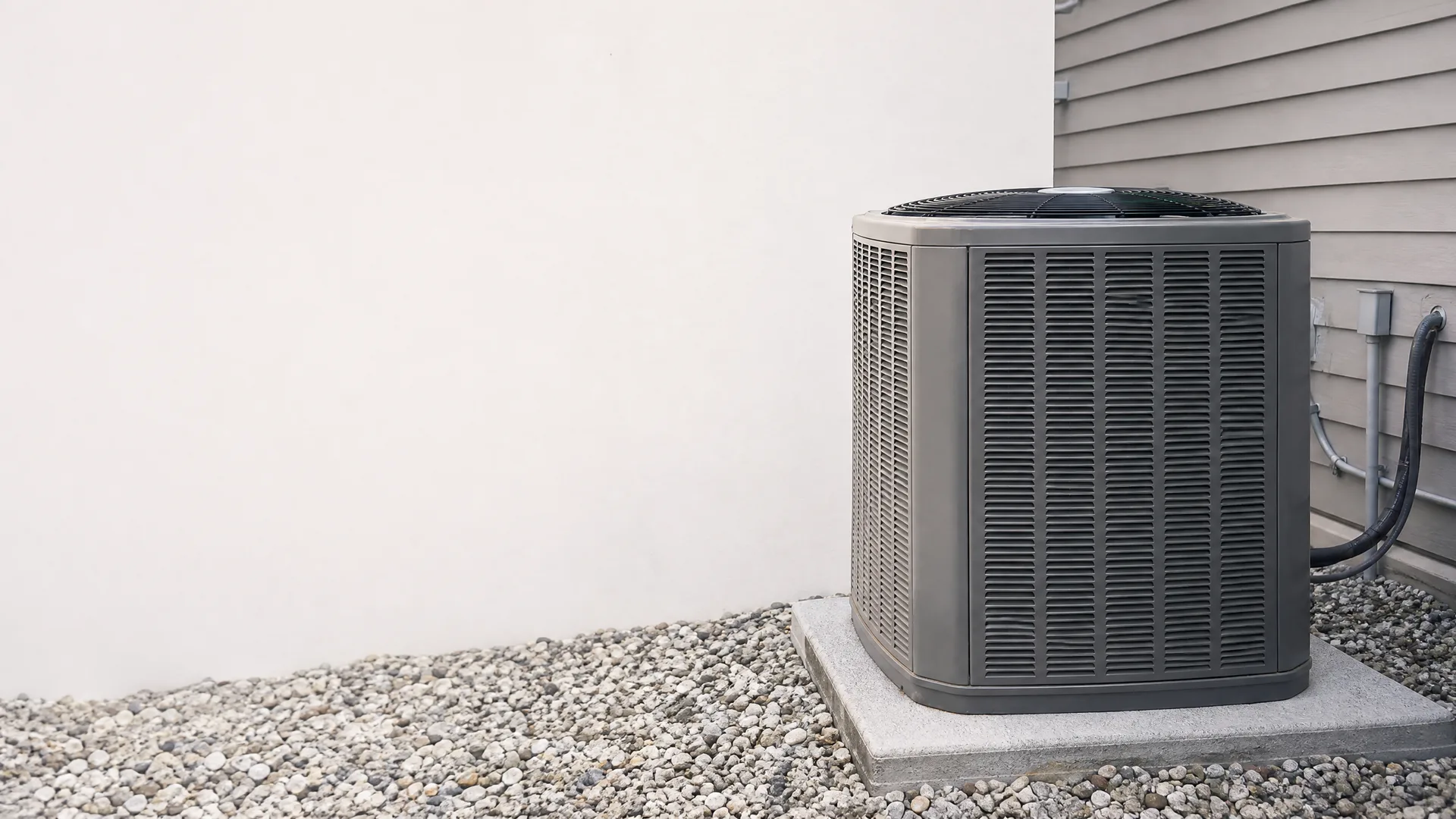
An outdoor air conditioner condenser unit on a concrete pad beside a light stucco wall and vinyl-sided wall, surrounded by gravel.

What keeps running anyway

The indoor blower doesn't know the compressor is down. It keeps pushing air through the vents on schedule, so the system looks like it's working from the sound of it. That means the meter keeps spinning too. A unit that runs all day moving air it never cools adds to the bill without cooling a single room, and it does this quietly, which is why a lot of people in Johnson County don't catch it until the house is already warm.

Low Refrigerant vs. Failed Compressor

Low Refrigerant

  • A system low on refrigerant usually means a leak somewhere in the coil or lines, not that it burned off from use.
  • You might notice ice forming on the outdoor unit or on the copper line running into the house.
  • Adding refrigerant without finding the leak just means the same warm air call again in a few weeks.
  • A leak has to be found and sealed before the system can hold a proper charge again.
  • Refrigerant work on a home system requires an EPA certification, so this isn't a DIY fix.

Failed Compressor

  • The compressor is the part that actually moves refrigerant, so when it's dead the whole system stops cooling even if the fan runs.
  • A bad capacitor can keep the compressor from starting even though the compressor itself is fine.
  • You'll often hear a hum from the outdoor unit instead of the normal running sound, or hear nothing at all.
  • A compressor that's seized or shorted usually means replacing it, since they aren't repaired in place.
  • If the unit is old, the cost of a new compressor can come close to the cost of a new outdoor unit.
An outdoor air conditioning condenser unit on a concrete pad beside a house with horizontal lap siding, with a gray electrical disconnect box and conduit on the wall, mulch bed and shrub to the right, and mown grass in the foreground.

A condenser that's keeping up

This is what a working unit looks like. The pad is clear, the coil guards are open to the air, and the disconnect box is easy to reach if a contractor needs to cut power. Air moves through the fins with nothing in the way.


An outdoor air conditioning condenser unit on a concrete pad beside a house with light blue horizontal siding, with a shrub to the left and a conduit and disconnect box on the wall to the right.

A condenser fighting its own coil

Dust and yard debris have packed into the coil guards here. The unit still runs, but it can't push heat outside the way it should, and the compressor inside works harder for less cooling. Left alone through a Johnson County summer, it only gets worse.

Cooling runs May through September

Five months a year your AC has to work, and most of that falls in the stretch when Johnson County stays hot day and night. A compressor that quits in July or August doesn't get an easy afternoon to make up for it, so warm air from the vents turns into a house that just keeps climbing.

NOAA nClimDiv 1991-2020

  1. A contractor checks refrigerant pressure at the service ports

  2. Low pressure points to a leak somewhere in the coil or lines

  3. A multimeter tests the capacitor and compressor windings for failure

  4. A dead capacitor or seized compressor gets replaced to restore cooling

An outdoor air conditioner condenser unit on a concrete pad beside a house with light gray horizontal siding, with mulch and green shrubs on either side and a concrete walkway in the foreground.
Before you get your air conditioner repair
A gray outdoor air conditioning condenser unit on a concrete pad beside a house with horizontal siding and a stone veneer base, with refrigerant line and electrical disconnect box on the wall and flowering shrubs to the left.
After you get your air conditioner repair
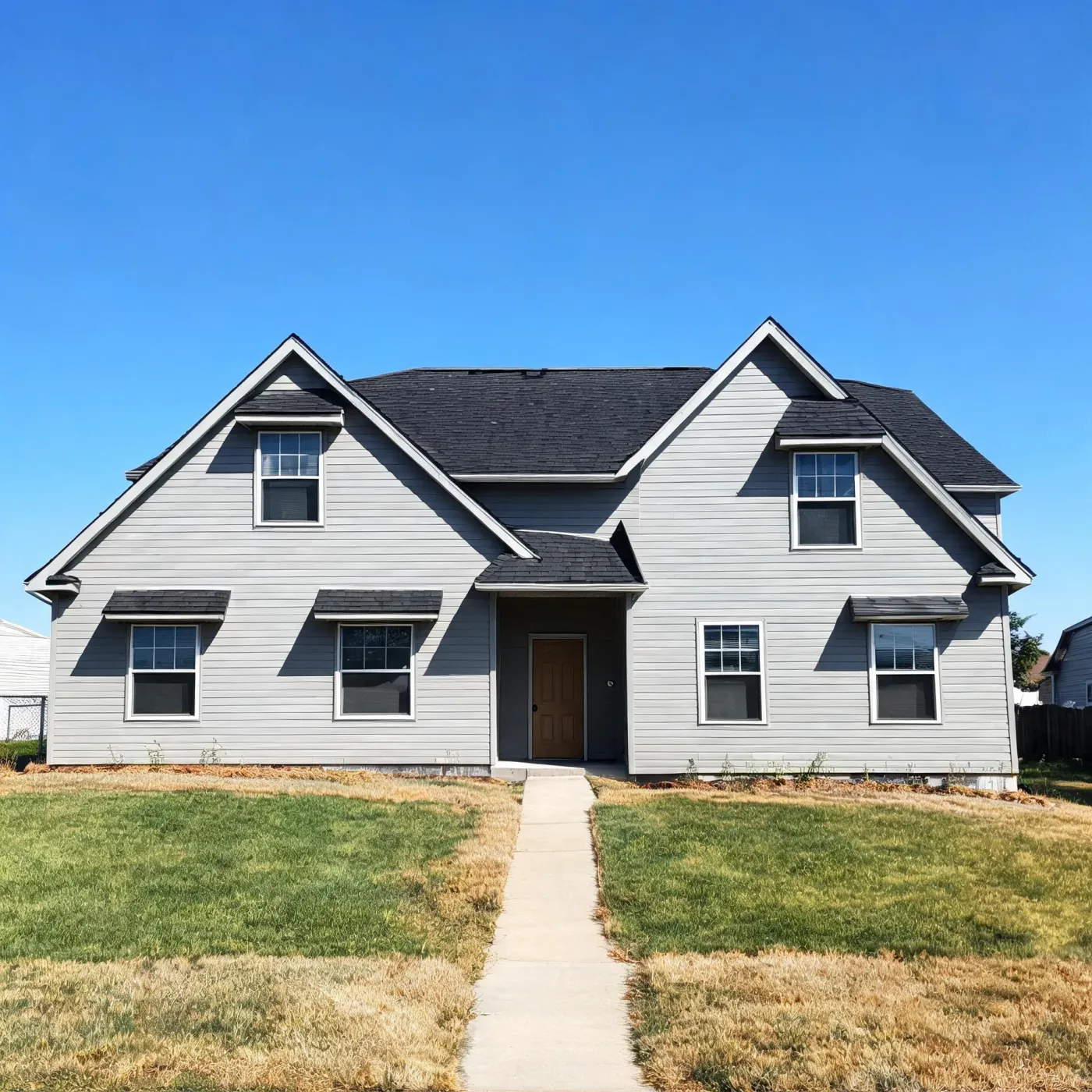
A two-story gray horizontal-siding house with dark shingled gable roofs, a brown front door, and a concrete walkway crossing a patchy green and dry lawn under a clear blue sky.

Johnson County summers hold a dew point around 65°F through June, July and August, according to NOAA climate records. That's heavy, damp air, and it's the air your condenser has to pull heat out of every time the system runs. Humid air carries more heat than dry air, so the compressor works harder and longer to get the house down to temperature even on a day that isn't especially hot. When that compressor is already weak, a failing capacitor or a low refrigerant charge gets exposed fast in air this sticky. You'll notice it as a house that cools slower than it used to, then one that doesn't cool at all.

NASA POWER T2MDEW

A closed laptop and a stoneware mug on a wooden table, with a kitchen counter, wood cabinets, white tile backsplash, potted plants and a window behind.

Warm air means something in the system stopped doing its job

A dead capacitor, a failed compressor, low refrigerant, a clogged condenser, a thermostat set wrong. One of those is why your vents are pushing warm air instead of cool. The fix depends on which one it is, and that takes someone checking pressures and testing the compressor with a meter, not guessing from the thermostat.

Finding that person is usually its own chore. Searching around, calling a few companies, explaining the same problem to each one, then sitting with quotes trying to compare them when you don't know the parts well enough to judge what you're being told. This page connects you with one licensed Johnson County contractor instead, someone who works on these systems all summer and knows what's likely failed before they even get to your door. You explain it once.

A shallow dark wooden bowl and a stack of books rest on a wooden table in front of a beige sofa with linen and green cushions, with a tall ceramic vase of thin branches beside a window in the background.
A lit flagstone walkway bordered by low path lights and shrubs leads to the covered front entry of a light-colored clapboard house with a dark door, flanking potted plants, and a glowing porch light at dusk.

Air Conditioner Repair

Explain it one time

RepairCentral ACJohnson County, KS
Step 1 of 2

What ZIP code is the job in?

  • A cream upholstered armchair with a textured pillow sits in a corner beside a small round wooden side table holding a vase of greenery and a book, under a framed landscape print, with a potted tree in a woven basket and a sheer curtain nearby.
    • A Johnson County pro who repairs air conditioners gets your request.
    • Your request goes to a Johnson County pro who takes air conditioner jobs.
  • A beige upholstered armchair with a green cushion and knitted fringed throw sits in a corner beside a wooden side table holding a stone vase of leafy branches, under a framed landscape picture, on a woven rug near a sheer curtain.
    • Send the request and finding a pro stops being your problem.
    • After this form, you can stop searching for an air conditioner pro.
  • A wood-framed armchair with light beige upholstery and a gray linen cushion sits in a corner beside a potted olive-like tree and a sheer curtain at a window, with a framed picture on the wall above.
    • Describe your air conditioner job once, to one pro.
    • Fill out one short form instead of calling around.
  • A ceramic vase holding leafy branches sits on a round wooden side table beside a sofa with a dark green cushion and gray throw, next to a sunlit window.
    • A licensed pro who repairs air conditioners in Johnson County gets your request.
    • Your request goes to one pro, not a list of companies.