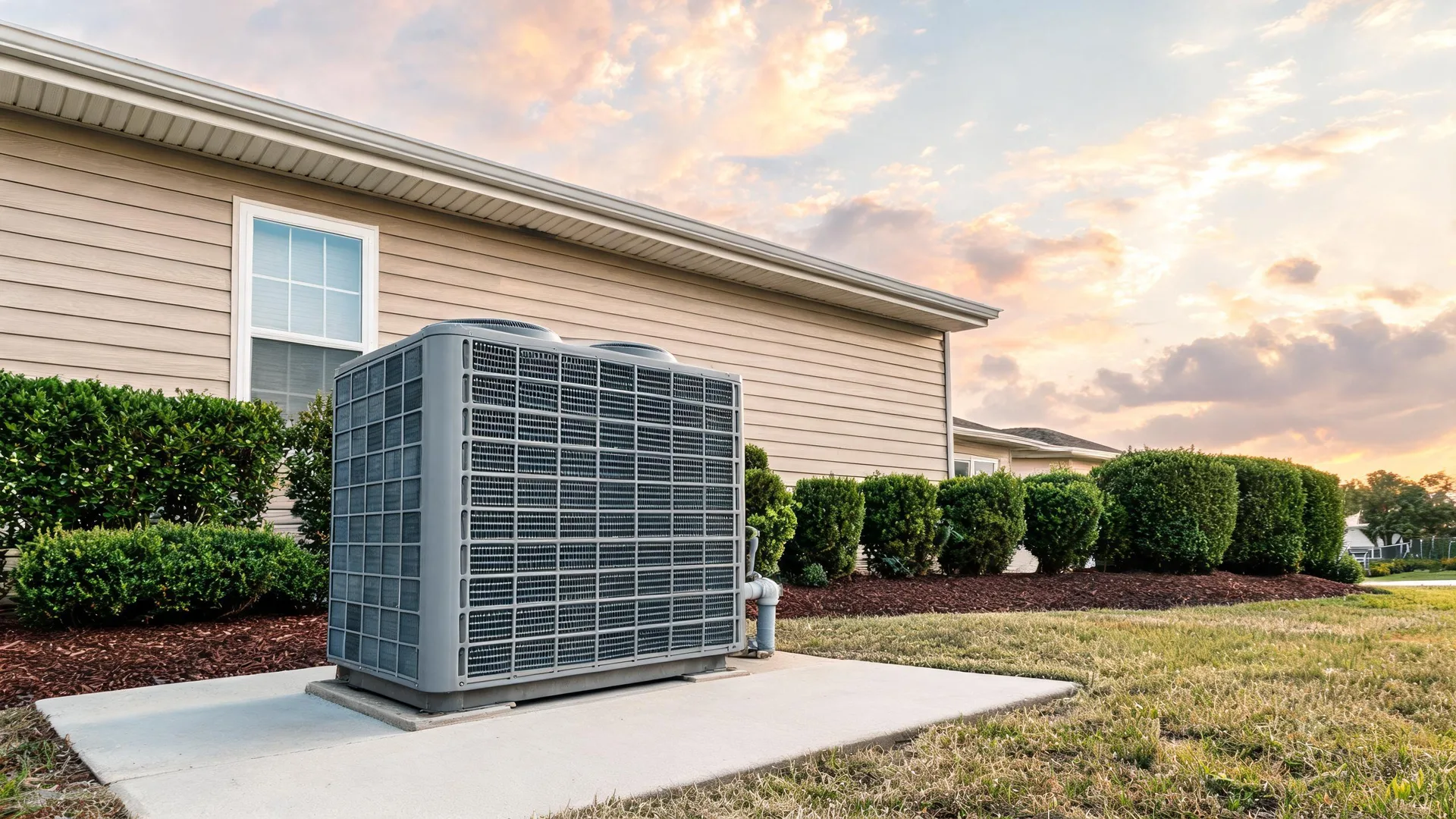
An outdoor air conditioning condenser unit installed beside the exterior wall of a blue vinyl-sided house at sunset.

AC Installation in Salina, KS

Tell us about the job

Takes about a minute. No obligation.

New system or replacementCentral ACSaline County, KS
Step 1 of 2

What ZIP code is the job in?

Most homes here run on gas

Utility gas heats 62.8% of homes in Saline County. Electricity is next at 26.1%, with propane making up most of the rest. A central air conditioner pairs with the furnace already in the house, sharing its ductwork and blower.


Matching what's there is the easier job

If the house has a gas furnace, the new AC unit sets outside and ties into that existing duct system. The contractor can confirm what's already in place and size the new unit to it rather than building a case for something different.

5 months
May through September, your air conditioner is on duty
90°F
the average summer afternoon it cools against
86 hail events
in ten years, and hail bends the fins on outdoor coils
13.4 SEER2
the federal minimum any new unit must meet
Isometric cutaway illustration of a house showing attic ductwork, an indoor air handler, and an outdoor condenser unit connected by lines.
Your air conditioner works hardest from June through August.

NOAA nClimDiv, 1991–2020 normals

Air conditioners here run May through September.

Get the new system in during April, so it's already running before the first hot week hits.

Five months of 90 degree afternoons, every year

Cooling runs May through September
Summer afternoons average 90°F
102 damaging wind events from 2015 to 2024

Salina falls in climate zone 4A, which asks real work of a system in both directions, humid summers and cold winters alike. Any split-system air conditioner installed here now has to meet 13.4 SEER2 at minimum, if it's rated below 45,000 Btu/h, which covers most residential systems. That's a federal floor, not a local one, so it applies whether the house is replacing a unit that's failed or adding central air for the first time. A contractor sizing the new system will work from this baseline up, matching it to the house rather than installing anything below it.

Electricity costs more here, so efficiency pays you back

Kansas homes paid 14.15 cents per kilowatthour for electricity in 2024, more than most states pay. The system installed now will run on that rate for years, so the efficiency it starts with keeps mattering on every bill after it.

Find a contractor
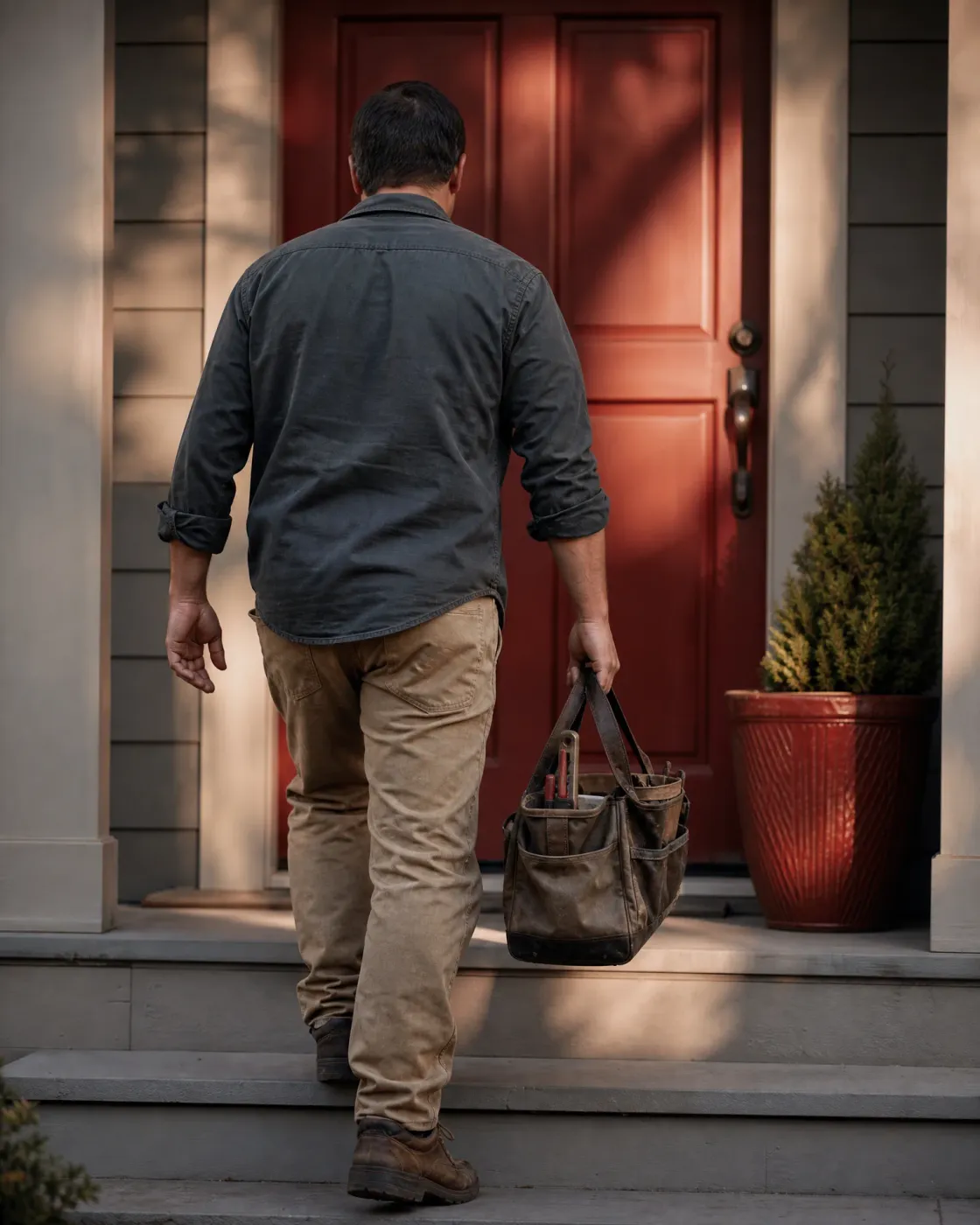
A man in a dark shirt and tan work pants, seen from behind, carries a worn canvas tool bag up concrete steps toward a red front door, with a potted evergreen shrub beside the entry.
An outdoor air conditioning condenser unit mounted on a concrete pad beside a house, with electrical conduit running to a wall-mounted disconnect box.

Half these homes date to 1966 or earlier

Half the homes in Saline County were built in 1966 or earlier. A house that age was built around whatever heating and cooling setup was standard at the time, and the ductwork and the electrical panel may still reflect that. None of that rules out central air. It just means the new system has to be sized to the house as it stands now, not to a guess about what's behind the walls. A contractor can check the ductwork and the panel before anything goes in, so the unit matches what's actually there.

Sizing is a calculation, not a guess from square footage

A contractor works out the right size using a load calculation, which weighs window area, insulation, ceiling height and how many walls face the sun. Houses the same size can need different tonnage depending on all of that. Going by floor space alone skips the parts that actually matter.

Oversized or undersized, the house loses either way

A system too big cools the air fast and shuts off before it pulls the humidity down, so the house feels clammy even at the right temperature. A system too small runs without stopping and still never catches up on the hottest afternoons. Either way the house is less comfortable than it should be, and the equipment wears out doing it.

An outdoor air conditioning condenser unit positioned beside a blue-sided house at sunset.

A higher-efficiency unit would save about $50 a year to run in Saline County compared with a new unit at the federal minimum.

  • A higher-efficiency unit$320 a year
  • A new unit at the federal minimum, 13.4 SEER2$370 a year

Estimates for a typical Saline County home, from EIA household energy data, Kansas fuel prices and NOAA climate normals. Your home will differ.

Installation day starts with the old equipment coming out, not the new unit going in. The contractor recovers the refrigerant from the existing system, disconnects the electrical, and pulls the old condenser and coil. If the ductwork is being reused, it gets inspected and sealed at the joints before anything new connects to it. The new coil sits in the plenum above or beside the furnace, the line set runs out to where the condenser will sit, and the whole refrigerant loop gets pressure tested before it's charged. That test matters because a leak found now is a quick fix, not a callback later. Once the system is charged and running, the contractor checks the temperature split at the vents and listens to the system cycle before calling the job done.