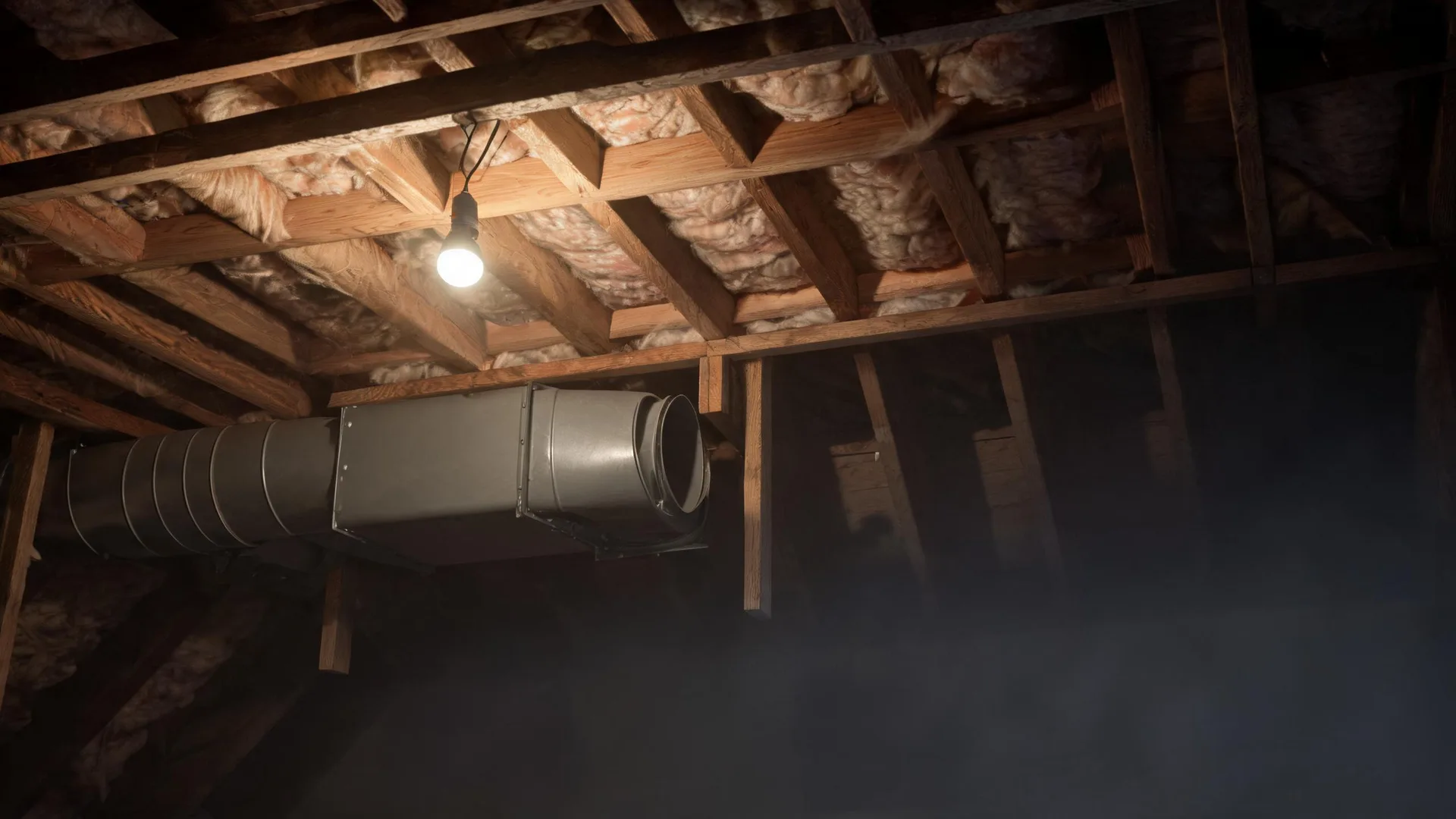
A few things tell you the system wants a look before it fails outright. Short cycling is one. The AC kicks on and off in quick bursts instead of running a steady stretch. Weak airflow from the vents is another, especially if one room never quite cools down like the rest. Listen for anything new too. A hum before startup that wasn't there before, a rattle from the outdoor unit, a hiss near the lines. Water pooling near the indoor unit or a musty smell when it runs usually points to a clogged drain line, and that's worth catching before it backs up. None of these mean the system is done. They mean it's asking for a look while the fix is still simple.
4 months
June through September, your air conditioner is on duty
86°F
the average summer afternoon it cools against
24 hail events
in ten years, and hail bends the fins on outdoor coils
23 wind events
in ten years, and wind drives debris into outdoor units
Your air conditioner works hardest from June through August.
Jan
Feb
Mar
Apr
May
Jun
Jul
Aug
Sep
Oct
Nov
Dec
NOAA nClimDiv, 1991–2020 normals
Cooling runs about four months here, June through September.
One check before summer is enough to cover the year.
Half the homes in Atchison County date to 1968 or earlier, and an older system is more likely to be running on its original parts
Half the homes here were built by 1968Cooling runs June through SeptemberSummer afternoons average 86°F
Cooling starts in June here, and that's the month the system has to work hardest right out of the gate, not ease into. May is the time for the check, while the unit is still sitting idle. A tech can test the capacitor under load and measure the refrigerant charge without the heat already pushing the system to its limit. Wait until June and any weak part gets found by failing on a hot day instead of during a calm inspection. The appointment calendar fills up once the heat hits too, so May is also when it's easiest to get on the schedule.
A tune-up opens the cabinet and checks things no homeowner sees from the thermostat. The refrigerant charge gets measured against what the system was built to run. Too little and the coil can ice over even on a hot day. The capacitor gets tested under load, not just looked at, because a capacitor can read fine sitting still and still fail to start the compressor. Electrical connections get checked for the kind of corrosion that builds slowly on a terminal and only shows up as a no-start months later. The condenser coil gets cleaned of the dirt and grass clippings that cut airflow without ever tripping a warning. None of this is visible from inside the house, and none of it announces itself until the day the system just doesn't come on.
Ask what gets tested, not just touched
A thorough visit checks the system against numbers. The refrigerant charge gets measured against what the system was built to hold. The capacitor gets tested under load. A quick visit skips the gauges and the meter and goes by what the tech can see or feel, which misses anything that hasn't failed yet.
Why that gap matters later
A system can look fine and still be running low on charge or on a capacitor that's about to quit, and nothing about that shows up from the thermostat. The only way to catch it ahead of time is to measure it directly, which is what separates a real tune-up from a once-over.
Book your AC tune-up in May, before homes here start needing cooling in June.
Jan
Feb
Mar
Apr
May
Jun
Jul
Aug
Sep
Oct
Nov
Dec
A tune-up checks the refrigerant charge, cleans the coils, tests the capacitor and tightens the electrical connections.
A proper tune-up starts outside, not at the thermostat. The condenser fan gets checked for a bent blade or a motor that's starting to drag, either of which cuts airflow across the coil. Inside, the evaporator coil gets inspected too, since a coil caked with dust loses contact with the air moving past it and can't pull heat out the way it's supposed to. The blower wheel gets looked at for the same reason. A wheel packed with dust moves less air even running at full speed, and the system ends up cooling less while drawing the same power. The drain line gets flushed, because algae and sludge build up slowly in there and a clogged line backs water up into the pan or the house before anyone notices. Thermostat calibration gets checked last, since a reading that's off by even a couple degrees makes the whole system run longer than it needs to.