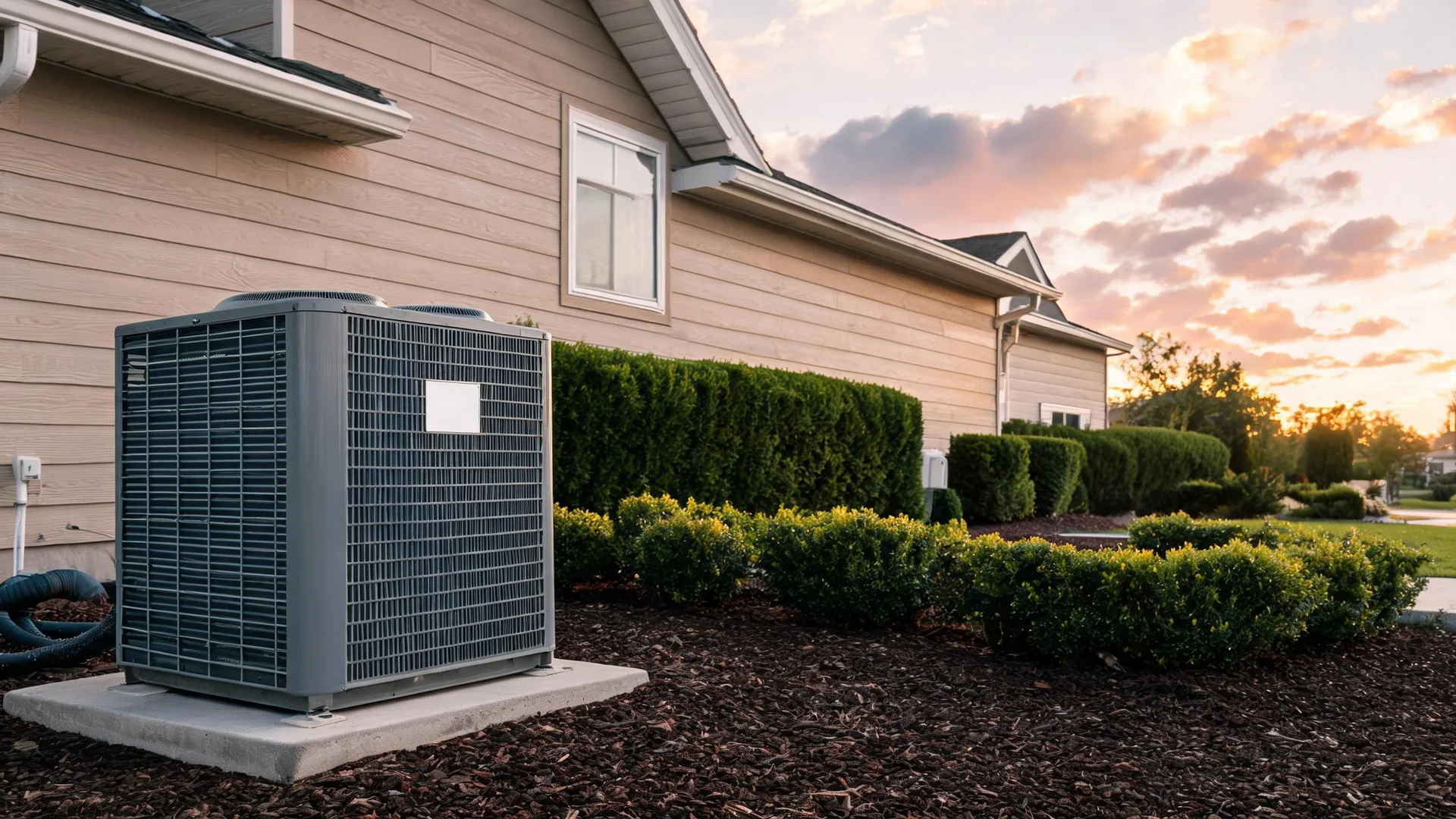
Aerial view of a residential air conditioning condenser unit mounted on a concrete pad next to a house with vinyl siding and a sliding glass door.

AC Maintenance in Chanute, KS

Tell us about the job

Takes about a minute. No obligation.

Tune-up, service, or cleaningCentral ACNeosho County, KS
Step 1 of 2

What ZIP code is the job in?

Electricity here runs 14.80 cents a kilowatt-hour

That's what homes in Neosho County paid on average in 2025. A dirty coil or a low charge makes the compressor work harder for the same cooling, and every extra minute it runs gets billed at that rate.


Muggy air makes the unit work harder to begin with

Summer dew points here average 67 degrees, higher than most of the country sees. An air conditioner already has to pull more moisture out of the air just to feel comfortable, so a unit that isn't running right has less room to spare.

5 months
May through September, your air conditioner is on duty
88°F
the average summer afternoon it cools against
28 hail events
in ten years, and hail bends the fins on outdoor coils
57 wind events
in ten years, and wind drives debris into outdoor units
Isometric cutaway illustration of a single-story house with a dark shingled roof, showing interior rooms with ductwork and an indoor air handler connected to an outdoor condenser unit beside the building.
Your air conditioner works hardest from June through August.

NOAA nClimDiv, 1991–2020 normals

A refrigerant charge that's low doesn't make the air blow warm right away, it just makes the compressor run longer to get the same cooling.

A tune-up checks the charge against what the unit calls for, so that extra run time gets caught before it shows up as wear on the compressor.

Half these homes were built in 1963 or earlier, and an old system shows it in the bill before it shows up broken

Half the homes here were built by 1963
Climate zone 4A
Power here costs 14.80 cents per kilowatt-hour
Get it checked in April, before May turns the compressor on for the summerCooling runs May through September here, five months straight

If the system in your house has been there since before you owned the place, a yearly check is the way to find out how it's holding up. A tech can tell you things you can't see from the thermostat: what the charge measures against the nameplate, whether the contactor is pitting, how the capacitor tests. None of that waits for a hot stretch to matter. Catching a weak part on a service call means replacing that part. Catching it mid-summer means replacing it after it's taken the compressor down with it. A yearly visit is what tells you which one you're looking at before the weather decides for you.

A system that runs right costs less to run here

A tune-up gets the coil clean and the charge right before the compressor spends the summer making up for it. That's less run time billed at the rate power costs here, for a unit that already works harder in this air than it would most places.

Find a contractor
A man in a gray shirt, cap, and work pants carries a canvas tool bag up white porch steps toward a red front door, with a potted shrub beside the entry.
An outdoor residential air conditioning condenser unit mounted on a concrete pad, surrounded by gravel with a blue sky in the background.

Filter, Coils, Drain: Where This Machine Actually Wears Out

A dirty filter is the start of most of this. Airflow drops, the coil behind it runs colder than it should, and that coil can ice over. Once it's iced, it's not cooling anything, it's just sitting there wrapped in frost until it melts. The outdoor coil has the opposite problem. It sits outside catching dust, grass clippings and cottonwood fluff, and once it's coated, it can't dump heat the way it needs to. The compressor still runs the same cycle, it just works harder to move the same heat through a dirty coil, and that extra strain is what shortens its life. The drain line is the quiet one. Condensate has to go somewhere, and the drain carries it out drop by drop all day. Algae builds up in that line over time, and when it clogs, the water backs up into the pan and then into the house. A yearly check clears that line before it's a puddle on the ceiling. None of these three are complicated. A clean filter, a clean coil, a clear drain. But the compressor is the expensive part in this machine, and all three of those exist to keep it from working harder than it has to.

The unit tells you before it quits

A capacitor that's starting to go makes the compressor hesitate before it kicks on. A contactor that's pitted makes a buzzing sound at startup. Warm air out of registers that used to run cold means the system is working but losing ground. None of these stop the air conditioner cold. They just make it worse at the job, a little more each week, until the day they don't start it at all.

Most failures were visible first

A tech checking a system before anything breaks is looking for the same handful of things every time: refrigerant pressure against what the unit calls for, amp draw on the compressor, a capacitor that's weak but not dead yet, a coil that's starting to cake up with dirt. Any one of those caught early is an adjustment or a part swap. Caught late, after it's taken the compressor with it, it's a different job entirely.

Aerial view of a square outdoor air conditioning condenser unit on a concrete pad beside a house wall with a sliding glass door.

Book your AC tune-up in April, before homes here start needing cooling in May.

  1. Jan
  2. Feb
  3. Mar
  4. Apr
  5. May
  6. Jun
  7. Jul
  8. Aug
  9. Sep
  10. Oct
  11. Nov
  12. Dec

A tune-up checks the refrigerant charge, cleans the coils, tests the capacitor and tightens the electrical connections.

A tune-up starts with the nameplate, not a checklist. Every unit has a refrigerant charge it was designed to run at, and that number is the baseline for everything else. From there a tech checks static pressure across the coil, tests the capacitor under load instead of just looking at it, and checks amp draw on the compressor against what it should be pulling. The contactor gets inspected for pitting, since that's a part that burns a little every time it closes. Electrical connections get tightened, because a loose one builds heat and heat is what takes out a control board. The condensate drain gets flushed so it isn't carrying algae into a clog nobody sees until it backs up. None of this is guesswork. Every reading gets compared against a number the manufacturer already set, and that's what tells a tech whether the system is running the way it's supposed to or just running.