







An outdoor air conditioning condenser unit mounted on a concrete pad next to a blue-sided residential house at sunset.

AC Maintenance in Fort Scott, KS

Tell us about the job

Takes about a minute. No obligation.

Tune-up, service, or cleaningCentral ACBourbon County, KS
Step 1 of 2

What ZIP code is the job in?

A quick tune-up has someone glance at the outdoor unit, hose off the coil if it's dusty, and check the refrigerant pressure before they leave. A thorough one takes longer because there's more to actually check. The tech should pull the capacitor and test it under load, not just look at it, since a capacitor can read fine sitting still and still fail once the compressor draws on it. They should check the contactor for pitting, since a pitted contactor burns through and leaves you with a unit that won't start. The condenser coil gets cleaned, not rinsed, because dirt packed between the fins blocks airflow even when the surface looks clear. Inside, the evaporator coil and blower wheel are worth a look too, since a dirty blower wheel throws off airflow the same way a dirty filter does. And before anyone leaves, they should check the refrigerant charge against what the system actually needs, not just whether the pressure looks roughly right.

5 months
May through September, your air conditioner is on duty
88°F
the average summer afternoon it cools against
26 hail events
in ten years, and hail bends the fins on outdoor coils
41 wind events
in ten years, and wind drives debris into outdoor units
Isometric line illustration of a cutaway house showing interior rooms, ceiling ductwork connected to an indoor air handler, and an outdoor condenser unit linked by refrigerant lines.
Your air conditioner works hardest from June through August.

NOAA nClimDiv, 1991–2020 normals

A dirty filter starves the system of airflow before the air ever reaches the coil.

A starved evaporator coil runs too cold, and a cold enough coil ices over and stops cooling altogether.

Half the homes in Bourbon County were built by 1957, so an aging system is common, not unusual, here

Half the homes here were built by 1957
Cooling runs May through September
Summer afternoons average 88°F
One check a yearKansas electricity ran 14.15 cents per kilowatt-hour in 2024, and a clean AC uses less of it.

Between visits, the filter is the one thing worth your attention. Check it monthly while the system is running, and swap it when it looks gray or clogged rather than on a fixed schedule. How fast it loads up depends on the filter itself and what's in the air passing through it. Keep the area around the outdoor unit clear, a couple feet of open space on all sides, so the condenser coil can actually move air. Grass clippings, leaves and mulch piled against it block that airflow the same way a dirty filter does. If you have a programmable thermostat, avoid swinging the setting wide when you leave for the day. A system recovering from a big temperature gap works harder than one holding steady. If you ever hear a new noise, a hum that wasn't there before or a rattle on startup, mention it rather than waiting for the next scheduled visit. A sound like that is usually the system telling you something early.

Catch it while it's small

If your system has been in the house a long time, a yearly check is how you catch problems while they're small.

Find a contractor
A man in a cap, dark shirt and tan work pants, seen from behind, climbs porch steps toward a red front door while carrying a canvas tool bag filled with screwdrivers.
An outdoor residential air conditioning condenser unit mounted on a concrete pad, surrounded by gravel with a blue sky in the background.

What the thermostat can't tell you

Run it season after season and a few things wear down in ways you'd never spot from the thermostat. The compressor is the part under the most strain. It runs every time the system calls for cooling, and anything that makes it work harder, low refrigerant, a weak capacitor, a dirty coil, shortens how long it lasts. You won't hear it struggling. It just runs longer to do the same job, then one year it doesn't start at all. The fan motor bearings wear slowly too, long before the motor seizes up or starts throwing a noise you'd notice. A tune-up catches that wear while the part can still be serviced on its own, rather than after it takes the compressor down with it.

Short cycling

If the system shuts off a few minutes after it starts, something is cutting it short before it finishes a normal cooling cycle. That could be a refrigerant problem, a coil icing over, or a sensor telling it to stop early. Short cycling wears on the compressor every time it happens, since starting up draws far more strain than running steady.

Weak airflow at the vents

Air that used to push out strong and now barely moves usually means the blower wheel is dirty, the duct is blocked, or the evaporator coil has iced over and is choking the airflow behind it. Weak airflow also means whatever cooling the system does make isn't reaching the rooms it's meant for, so the system runs longer to get nowhere.

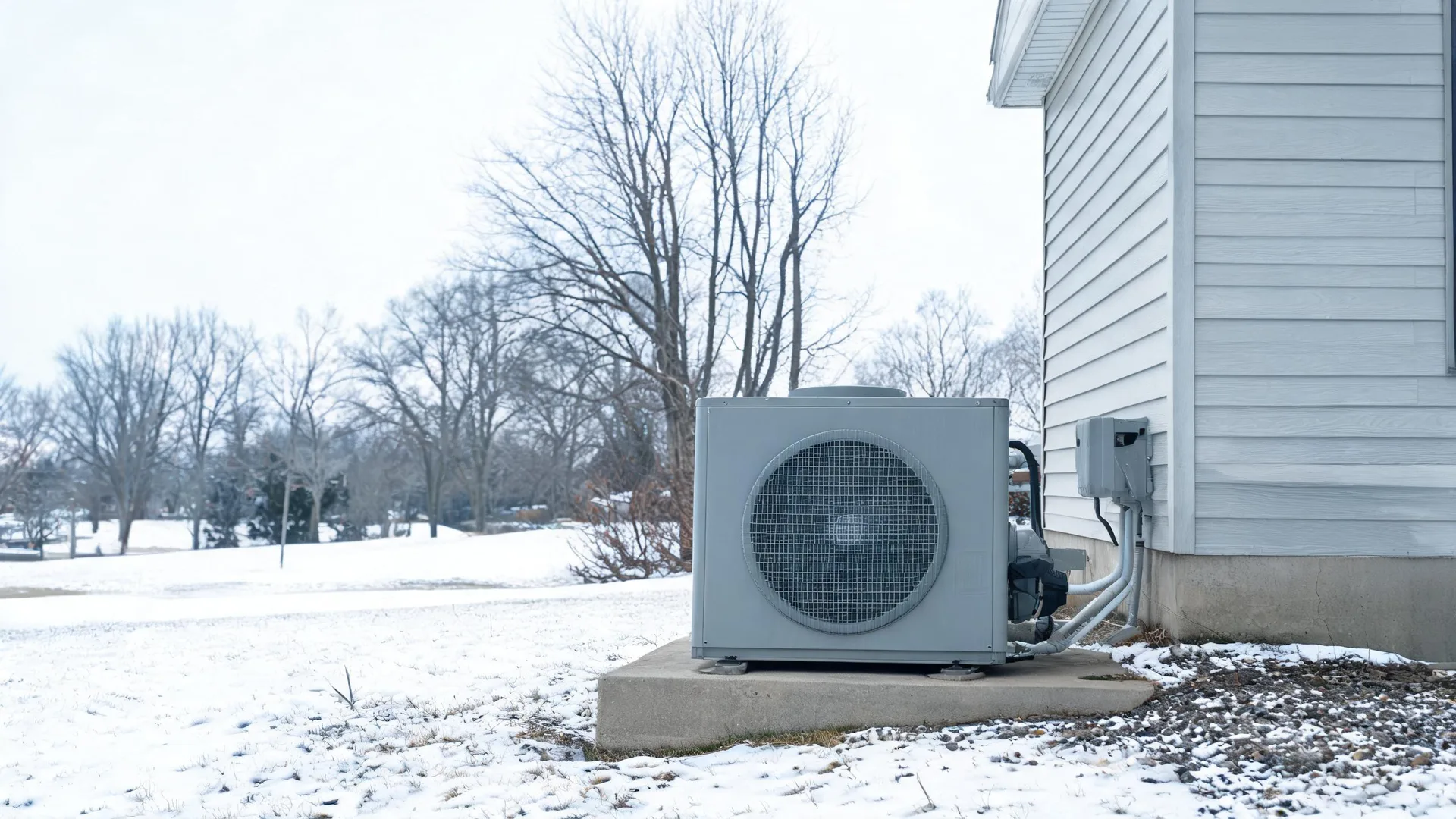
An outdoor air conditioning condenser unit installed beside the exterior wall of a blue vinyl-sided house at sunset.

Book your AC tune-up in April, before homes here start needing cooling in May.

  1. Jan
  2. Feb
  3. Mar
  4. Apr
  5. May
  6. Jun
  7. Jul
  8. Aug
  9. Sep
  10. Oct
  11. Nov
  12. Dec

A tune-up checks the refrigerant charge, cleans the coils, tests the capacitor and tightens the electrical connections.

A tune-up is also when someone checks the things you can't see from the thermostat. The drain line gets checked for algae growth, since a clogged drain backs up and shuts the system down as a safety measure, or worse, overflows where you won't notice right away. The blower motor gets inspected for wear at the bearings, not just wiped down, because a motor that's starting to go still runs fine most days. Electrical connections at the disconnect box and inside the unit get tightened, since a loose connection arcs and burns before it ever trips a breaker. The refrigerant lines get checked for rub spots where they pass through framing, since a slow leak there can run for a season before it shows up as weak cooling. None of this shows up on a thermostat display. It only shows up when someone opens the panel and looks.