







A snow-covered small-town street at dusk, lined with illuminated two-story houses and a grain elevator on the horizon.

AC Maintenance in Garden City, KS

Tell us about the job

Takes about a minute. No obligation.

Tune-up, service, or cleaningCentral ACFinney County, KS
Step 1 of 2

What ZIP code is the job in?

Finney County saw 252 damaging wind events and 75 hail events between 2015 and 2024, along with 15 tornadoes. That outdoor condenser sits outside through all of it, with nothing but a thin metal housing over the coil and fan. Wind-blown grit pits the fins. Hail dents the housing and can bend the fins enough to choke airflow. None of that announces itself. A unit can run and still be working harder than it should, pulling warm air through a coil that's half blocked. A tune-up before summer gets someone looking at the coil and the housing while the damage is still easy to see.

4 months
June through September, your air conditioner is on duty
91°F
the average summer afternoon it cools against
75 hail events
in ten years, and hail bends the fins on outdoor coils
252 wind events
in ten years, and wind drives debris into outdoor units
Isometric line illustration of a cutaway single-story house showing interior rooms, ductwork, an indoor air handler or furnace, and a refrigerant line running to an outdoor condenser unit on a pad.
Your air conditioner works hardest from June through August.

NOAA nClimDiv, 1991–2020 normals

A dirty air filter chokes airflow before anything else on the system fails.

Checking it is the one job that's actually yours between visits.

Four months of 91 degree afternoons is a full season of work for one machine

Cooling runs June through September
Summer afternoons average 91°F
252 damaging wind events from 2015 to 2024
Cooling starts in June. Book the tune-up in May.Homes here run air conditioning from June through September, and June asks the most of it.

A tune-up before June means someone is checking refrigerant charge and electrical connections while the unit is still idle, not after it has spent weeks pulling 91 degree air through the coil. A capacitor that is already weak tends to fail once the system is running long hours, not before. Catching that early costs a service call. Catching it in July costs a service call and a few days without cooling while every other AC in Garden City is also down for repair, since the same heat that wears out one unit wears out the rest at the same time.

Check it before storm season

Storm season beats up outdoor units here. Have it checked for damage and debris before you need it.

Find a contractor
A man in a dark long-sleeve shirt and tan work pants, seen from behind, steps onto a porch toward a red front door while carrying a worn leather tool bag, with a shrub in a red planter beside him.
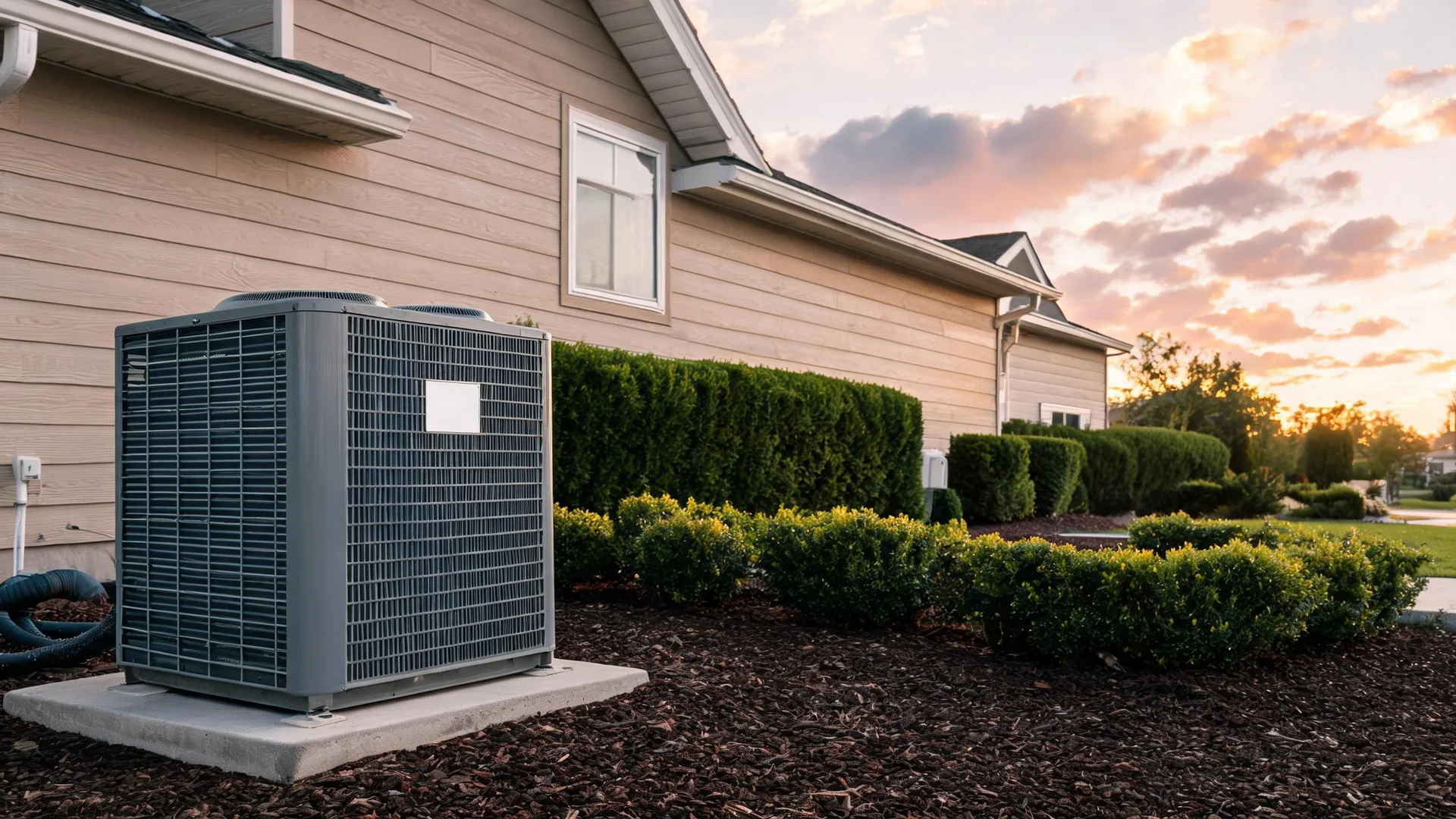
An outdoor residential air conditioning condenser unit mounted on a concrete pad, surrounded by gravel with a blue sky in the background.

What's wearing out while the unit still runs fine

A capacitor doesn't give out all at once. It weakens a little each time the compressor starts, and a worn one can still kick the system on for weeks before it finally fails to start it at all. From outside, both look the same: the unit runs fine, until the day it doesn't. A technician can test a capacitor's output against what it's rated for and see the wear before it ever costs you a cooling day. Contactors wear the same way, with the switch inside pitting a little more every cycle until it starts sticking. Bearings in the fan motor dry out slowly enough that the motor still spins, just louder and hotter than it should. None of this shows up by looking at the unit from the yard. It shows up with gauges on the refrigerant lines, a meter on the electrical components, and a panel off.

A tech checks numbers, not just the box they're in

Anyone can pull the panel and look. A thorough tune-up means measuring refrigerant pressure against what the system calls for, reading the temperature drop across the coil, and testing the capacitor's output against its rating. A quick visit skips the gauges and the meter and goes by whether the air coming out feels cold enough.

What gets skipped tells you more than what gets done

Washing the condenser coil, tightening electrical connections, and checking the blower wheel for buildup take time that a rushed visit won't spend. Loose connections run hot and wear out the parts around them. A dirty blower wheel throws off airflow the same way a clogged filter does. Ask what was actually touched, not just whether the unit was looked at.

Aerial view of a square outdoor air conditioning condenser unit on a concrete pad beside a house wall with a sliding glass door.

Book your AC tune-up in May, before homes here start needing cooling in June.

  1. Jan
  2. Feb
  3. Mar
  4. Apr
  5. May
  6. Jun
  7. Jul
  8. Aug
  9. Sep
  10. Oct
  11. Nov
  12. Dec

A tune-up checks the refrigerant charge, cleans the coils, tests the capacitor and tightens the electrical connections.

A full tune-up moves through the system in order, not just the parts that are easy to reach. Outside, that means the condenser coil, the fan motor, the capacitor and the contactor. Inside, it means the evacuator coil, the blower wheel, and the drain line that carries condensation away from it. A clogged drain line backs up quietly until water is pooling somewhere it shouldn't. Refrigerant lines get checked for the correct charge, not just topped off, because overcharging a system causes its own problems. The thermostat gets tested too, since a sensor reading the wrong temperature will run the compressor longer than it needs to or shut it off too soon. Each piece affects how the others wear, so a tune-up that skips the coil or the drain line is only doing part of the job, even if the unit blows cold air when it's done.