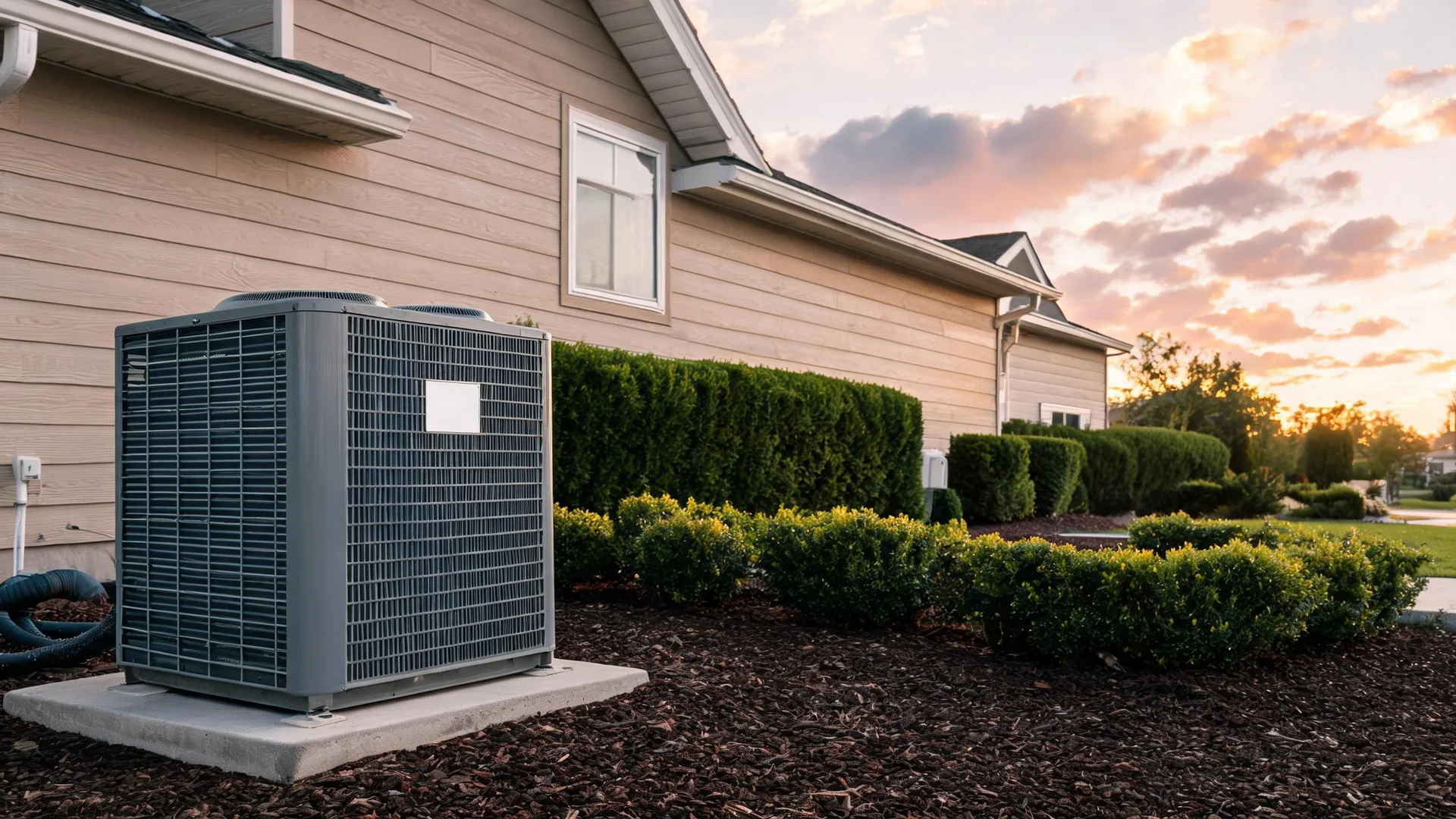
A thorough tune-up checks refrigerant pressure with gauges, checks the capacitor's actual output, and pulls the blower wheel to look for caked-on dirt. A quick visit means someone looks the system over, listens to it run, and maybe hoses off the condenser coil from the outside.
That difference shows up later, not today
A system that's low on charge or running on a weak capacitor will start every time you ask it to, right up until the day it doesn't. The checks that take longer are the ones built to catch the part that's failing before it fails, not just confirm the system turns on.
4 months
June through September, your air conditioner is on duty
86°F
the average summer afternoon it cools against
35 hail events
in ten years, and hail bends the fins on outdoor coils
33 wind events
in ten years, and wind drives debris into outdoor units
Your air conditioner works hardest from June through August.
Jan
Feb
Mar
Apr
May
Jun
Jul
Aug
Sep
Oct
Nov
Dec
NOAA nClimDiv, 1991–2020 normals
Cooling here runs June through September, about four months of real work.
One tune-up before June covers the season a Hiawatha AC actually has to carry.
Half the homes in Brown County were built by 1964, and the system cooling them may be just as old
Half the homes here were built by 1964Climate zone 4APower costs 14.15 cents a kWh statewide
One tune-up a year covers itKansas households paid 14.15 cents per kilowatt-hour for electricity in 2024.
A dirty filter is the start of most service calls that didn't need to happen. Air has to pull through it to get to the evaporator coil, and once that coil is coated in dust, it can't pull heat out of the air the way it should. Some of that same dust ends up on the coil itself, and a coated coil runs colder than it should, to the point where it ices over instead of just cooling. That ice melts into the drain pan below, and the drain line carries it outside. When that line clogs, which it does with algae over time, the pan fills and either trips a safety switch that shuts the system off or overflows onto the floor beneath it. None of this starts with a broken part. It starts with a filter nobody changed.
A system that skips its yearly check doesn't fail the first week it's missed. The wear just keeps stacking up with nobody looking at it. A dirty coil makes the compressor work harder to move the same heat, so it runs longer to hit the same temperature, and that longer runtime adds wear to a motor that was already due for attention. A weak capacitor that never gets tested under load keeps limping along until the morning it can't start the compressor at all. None of this shows up on the thermostat. It shows up later as a bigger repair, built out of smaller ones that nobody caught in time.
Change the filter
A filter clogged with dust and pet hair chokes off airflow to the evaporator coil, and that's the one thing a homeowner can check without opening a single panel. Hold it up to a light. If light doesn't pass through it easily, it needs to be swapped. Doing this between visits keeps the coil from icing over and keeps the system from working harder than it has to.
Keep the area around the condenser clear
The outdoor unit needs open air on all sides to shed the heat it's pulling out of the house. Grass clippings, leaves, mulch piled against the cabinet, or a trellis grown in too close all choke that airflow. Walking past it with a hose to rinse off loose debris is fine. Opening the cabinet or touching anything inside it is not a homeowner job.
Book your AC tune-up in May, before homes here start needing cooling in June.
Jan
Feb
Mar
Apr
May
Jun
Jul
Aug
Sep
Oct
Nov
Dec
A tune-up checks the refrigerant charge, cleans the coils, tests the capacitor and tightens the electrical connections.
A proper tune-up starts outside, with the condenser coil itself. A tech washes it from the inside out, so the dirt packed between the fins comes out instead of further in. Inside, the blower wheel comes out for a look, since caked-on dust throws it out of balance and makes the motor work harder to push the same air. The capacitor gets tested under load, not just glanced at, because a capacitor can look fine and still be too weak to start the compressor reliably. Refrigerant pressure gets checked against what the system is supposed to run at, not just whatever it happens to be sitting at that day. The drain line gets flushed too, since algae builds up in there whether the system is struggling or not. Each of these catches something a quick look at the thermostat never will.