






An overhead view of a residential air conditioning condenser unit mounted on a concrete pad next to a house with vinyl siding.

AC Maintenance in Hillsboro, KS

Tell us about the job

Takes about a minute. No obligation.

Tune-up, service, or cleaningCentral ACMarion County, KS
Step 1 of 2

What ZIP code is the job in?

Your air conditioner runs about five months a year here, May through September. Afternoons in June, July and August average 89°F, and the dew point sits around 64°F, which means the system is wringing moisture out of the air on top of fighting the heat. That is steady, long work for a condenser fan and a compressor. The outdoor unit also sits outside through the wind and hail this county sees most years, 75 damaging wind events and 69 hail events between 2015 and 2024. Parts that would hold up fine somewhere milder wear down sooner under that kind of load.

5 months
May through September, your air conditioner is on duty
89°F
the average summer afternoon it cools against
69 hail events
in ten years, and hail bends the fins on outdoor coils
75 wind events
in ten years, and wind drives debris into outdoor units
Isometric illustration of a cutaway house showing interior ductwork, an indoor air handler and furniture, connected by lines to an outdoor condenser unit on a pad.
Your air conditioner works hardest from June through August.

NOAA nClimDiv, 1991–2020 normals

Marion County logged 159 severe weather events between 2015 and 2024, including 5 tornadoes.

A condenser coil that takes hail or flying debris needs a look before the next storm finds the weak spot.

May is month one of five. April is when the check happens.

Cooling runs May through September
Summer afternoons average 89°F
75 damaging wind events from 2015 to 2024
Half the Homes Here Were Built in 1957 or EarlierHalf the homes in Marion County were built in 1957 or earlier. A system working this hard benefits from a yearly check, no matter the age of the house it's in.

A tune-up before summer is when a contractor can actually see what's wrong with the unit. Bent fins slow the coil down without stopping it outright, so the system still runs, just worse, and you would not know it from the thermostat. Loose panels and wiring shaken by wind get caught too. None of this shows up from inside the house. It shows up outside, with the cover off, before the first hot week puts the unit to work.

Get the Check Done Before May

Once the heat sets in, the unit runs for five straight months without a break. Any part that's already worn won't get a quiet stretch to fail gently. A check before May catches what the season would otherwise turn into a breakdown in July.

Find a contractor
A gray residential air conditioner condenser unit mounted on a concrete pad in an open grass field.

No Way to Know What You've Got Until Someone Looks

If the system in your house is original to it, or came in sometime after, there's usually no record of when parts were last checked. A yearly visit before summer gives you that record. The contractor can tell you what's held up and what hasn't, so you're working from what someone actually found, not a guess.

Dirt Is the Starting Point for Most of This

A coil caked with dust and grime can't shed heat the way it should, so the compressor runs longer to hit the same temperature. A clogged filter chokes the airflow across that coil, which makes the problem worse. None of this trips a breaker or throws a code. The system just quietly works harder every time it runs, and that extra strain is what turns a healthy part into a worn one.

Small Problems Don't Stay Small

A refrigerant charge that's a little low doesn't shut the unit down, it just makes the compressor labor to move heat it can no longer carry efficiently. A capacitor that's weakening still starts the fan motor, until the day it can't. Skipped maintenance means nobody catches these while they're minor, so they get found the way a homeowner finds them: when the air coming out stops being cold.

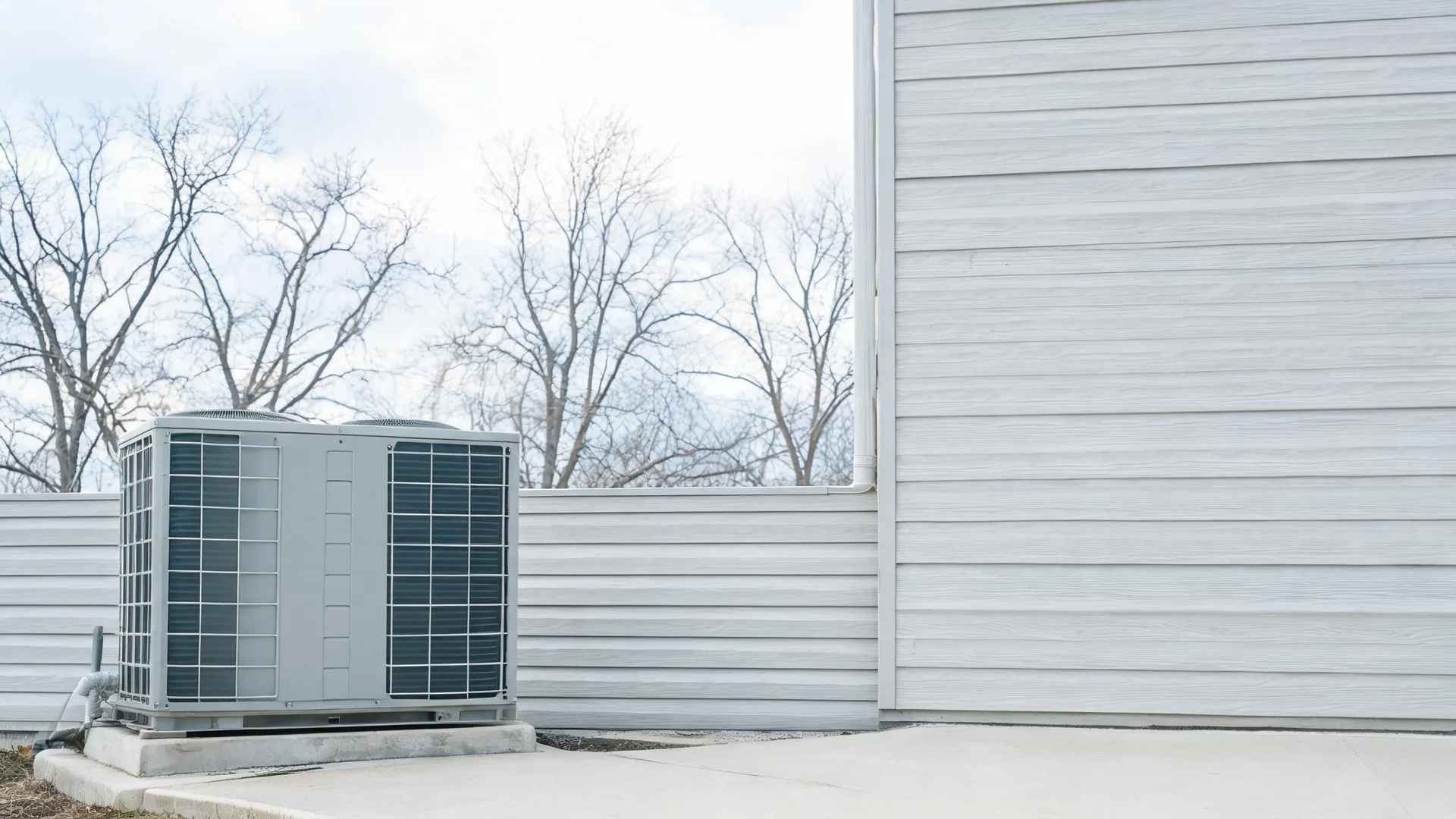
An outdoor air conditioning condenser unit on a concrete pad next to the gray vinyl siding of a residential home.

Book your AC tune-up in April, before homes here start needing cooling in May.

  1. Jan
  2. Feb
  3. Mar
  4. Apr
  5. May
  6. Jun
  7. Jul
  8. Aug
  9. Sep
  10. Oct
  11. Nov
  12. Dec

A tune-up checks the refrigerant charge, cleans the coils, tests the capacitor and tightens the electrical connections.

A real tune-up starts outside at the condenser. The contractor pulls the cover and checks the coil fins for dirt and bent spots, then straightens what can be straightened and cleans what's caked on. The fan motor and blades get checked for wobble and noise, since a bearing starting to go will announce itself there first. Refrigerant charge gets checked against what the system calls for, not topped off out of habit. Electrical connections get tightened, because a loose connection heats up under load and that heat damages whatever it touches. Inside, the evaporator coil and the drain line get checked too, since a clogged drain backs up and overflows before anyone notices a drop in cooling. The capacitor and contactor get tested under load, because both can look fine sitting still and still be close to failing.