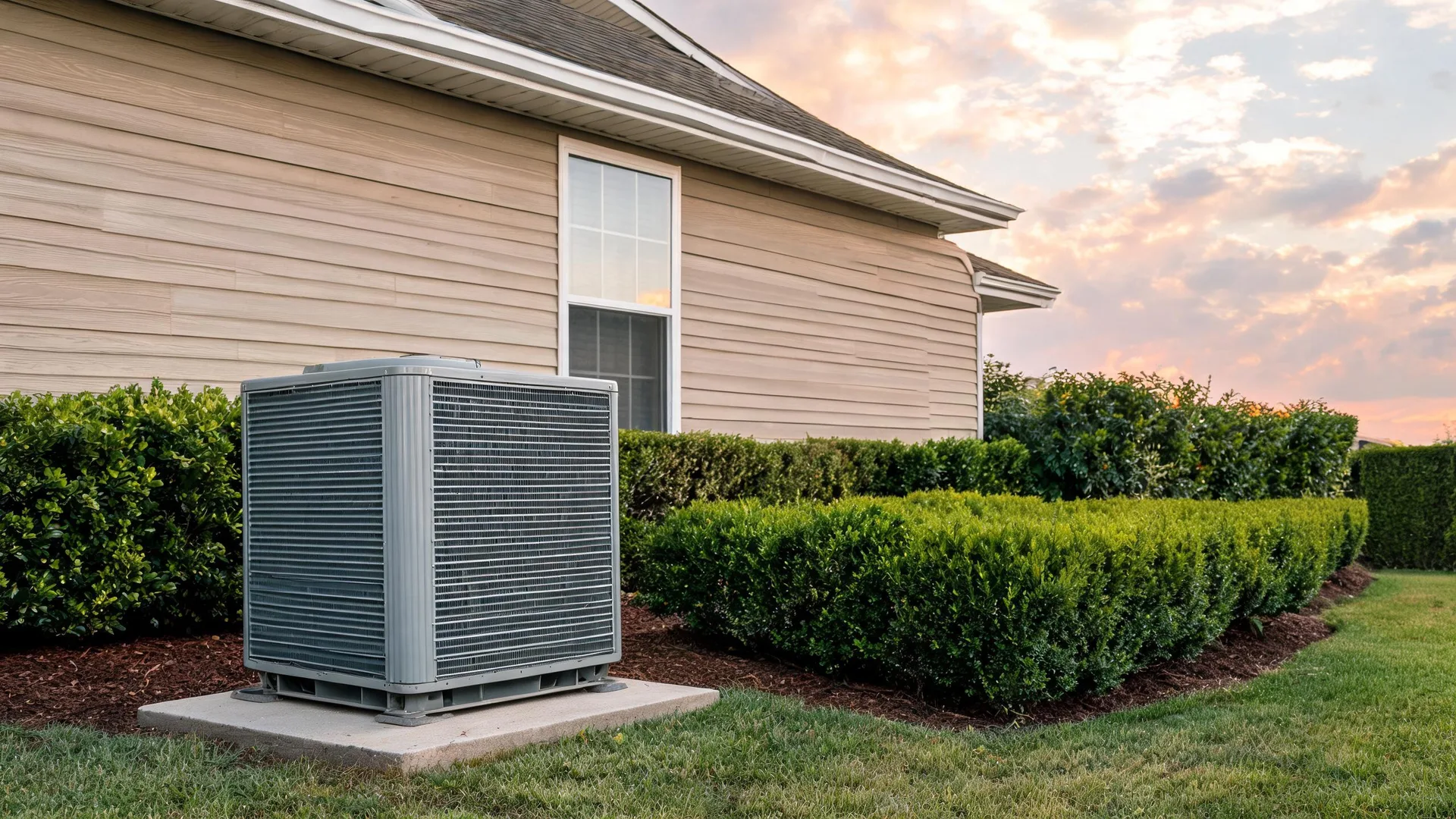
An outdoor air conditioning condenser unit positioned beside a blue-sided house at sunset.

AC Maintenance in Leavenworth, KS

Tell us about the job

Takes about a minute. No obligation.

Tune-up, service, or cleaningCentral ACLeavenworth County, KS
Step 1 of 2

What ZIP code is the job in?

The system tells you before it quits

Warm air from the vents when the thermostat is set low, short cycles that shut off before the room cools, or a unit that runs longer than it used to all point to the same thing. The system is working harder to do the same job. Caught early, that's a cleaned coil or a topped-off charge. Ignored, it's a compressor.


Some problems never get a warning

A refrigerant leak doesn't make noise. A weak capacitor doesn't dim the lights. The first sign can be the unit not starting at all, on the one day you need it. A technician checks these parts directly instead of waiting for them to announce themselves.

5 months
May through September, your air conditioner is on duty
87°F
the average summer afternoon it cools against
36 hail events
in ten years, and hail bends the fins on outdoor coils
92 wind events
in ten years, and wind drives debris into outdoor units
Isometric illustration of a cutaway house showing interior ductwork, an indoor air handler and furniture, connected by lines to an outdoor condenser unit on a pad.
Your air conditioner works hardest from June through August.

NOAA nClimDiv, 1991–2020 normals

A quick tune-up checks that the unit turns on and blows cold.

A thorough one pulls the panel, washes the coil, checks refrigerant pressure, and tests the capacitor under load.

Weather here doesn't ask more of your AC. A yearly check still covers it.

137 severe weather events from 2015 to 2024
19% of homes statewide lost power a day or more in 2024
92 damaging wind events from 2015 to 2024
Weather here doesn't ask more of your AC. A yearly check still covers it.Kansas homes paid 14.15 cents per kilowatt-hour in 2024, so a neglected unit costs more to run, not just more to fix.

Half the homes in Leavenworth County were built in 1982 or later. If yours is one of them, the system behind the wall may still have plenty of working life left in it, especially if it's been replaced even once since the house was built. A yearly check is what keeps it that way. Catching a weak capacitor or a dirty coil early means the compressor behind it never has to work past what it's built for. Skip enough checks and the unit still runs, right up until the day it doesn't.

Keep a newer system running like one

If your AC is one of the newer systems in the county, a yearly check is what keeps it that way through the next one.

Find a contractor
A man in a cap, gray long-sleeve shirt and tan work pants walks up wooden porch steps toward a red door, carrying a canvas tool bag, with a potted plant beside the entry.
A gray metal air conditioning condenser unit mounted on a concrete pad in a flat grassy field under a partly cloudy sky.

What's yours to do, and what isn't

The filter is the one piece of this a homeowner actually touches. Check it monthly during the months the system runs hardest, and change it when it's gray and matted rather than waiting for a set schedule, since how fast it loads up depends on the filter itself and what's in the air. Keep the area around the outdoor unit clear too. Grass clippings, leaves and anything piled against the cabinet block the airflow the coil needs to dump heat, and a plant growing into the fins does the same thing slowly over a season. Beyond that, leave the panel closed. Refrigerant charge, the capacitor, the contactor and the blower wheel are jobs for gauges and meters, not a flashlight and a guess, and opening the cabinet without the right tools risks more than it finds.

The filter is doing more than cleaning air

A clogged filter starves the coil of airflow. The coil gets colder than it should, ice forms on it, and that ice blocks airflow further. Left alone, the compressor ends up pulling liquid refrigerant back in instead of vapor, which is how compressors die early. A filter is the cheapest part in the system and the one most likely to take others down with it.

The drain line fails quietly, then all at once

Condensation off the coil has to go somewhere, and the drain line is a narrow path for algae and dust to build up in. Nothing looks wrong until the line clogs and water backs up into the drain pan. Some units shut themselves off when that pan fills. Others just overflow, straight into the ceiling or the closet floor underneath. Clearing that line is part of looking at the coil, not a separate job.

An outdoor air conditioning condenser unit positioned on a concrete pad next to a blue-sided house, surrounded by green shrubs and flowering hydrangeas at sunset.

Book your AC tune-up in April, before homes here start needing cooling in May.

  1. Jan
  2. Feb
  3. Mar
  4. Apr
  5. May
  6. Jun
  7. Jul
  8. Aug
  9. Sep
  10. Oct
  11. Nov
  12. Dec

A tune-up checks the refrigerant charge, cleans the coils, tests the capacitor and tightens the electrical connections.

A tune-up also means someone actually watches the system run a full cycle, not just checks it while it's off. Refrigerant charge is measured with gauges on the lines, not guessed at. The blower wheel gets checked for dust buildup, which throws off airflow the same way a dirty filter does, except changing the filter won't fix it. Electrical connections at the disconnect box and inside the unit get tightened, since a loose one generates heat and eventually fails right there. The outdoor fan motor gets checked for play in the bearing, something you can't hear until it's already grinding. None of this shows up on a thermostat reading. It shows up the day something doesn't start.