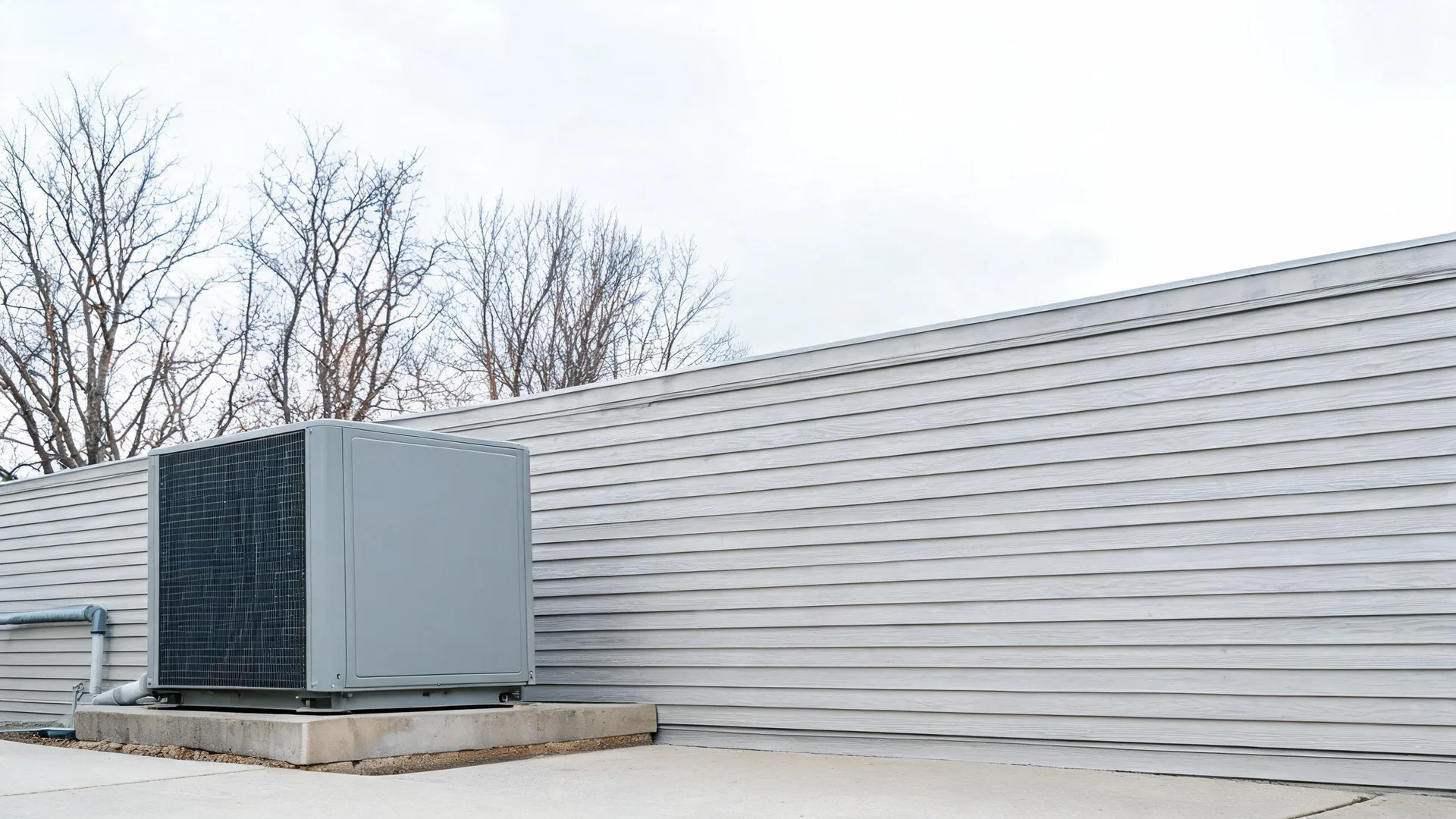
May starts the real work
Your AC runs from May through September here. Once May hits, it's on most days, not just the occasional warm afternoon.
Takes about a minute. No obligation.
Your AC runs from May through September here. Once May hits, it's on most days, not just the occasional warm afternoon.
A technician can check the refrigerant charge, the electrical connections and the condenser coil before the system has to run every day. A weak part found in April gets fixed before your AC needs to work at all.

NOAA nClimDiv, 1991–2020 normals
Five months of cooling a year is normal wear, nothing more.
One spring visit covers it, no need for a second check midsummer.



Franklin County sees its share of rough weather. Damaging wind came through 71 times between 2015 and 2024, and hail wasn't far behind. None of that wears on a condenser the way a long, hot summer does. A spring checkup covers the wear that actually matters to your AC. If a storm knocks the power out or a branch comes down near the unit, that's worth a separate look, but it's not a reason to schedule a second routine visit.
Half the homes in Franklin County were built in 1975 or earlier, half later. Neither one asks more of an AC than the other. The age of the house doesn't change what a spring checkup needs to cover. One visit before summer is still the right amount here.
Find a contractor
A missed checkup doesn't cause a breakdown in week one. It just lets small problems sit. Dirt builds up on the condenser coil and the unit has to run longer to move the same heat. A dirty blower wheel cuts airflow, so the evaporator coil runs colder than it should and can ice over. A refrigerant charge that's slipped low makes the compressor work harder for less cooling. None of that announces itself. It shows up as a system that runs longer than it used to, short cycles on hot days, or a compressor that gives out earlier than it should have.
When the filter clogs, less air moves across the evaporator coil. That coil can get cold enough to ice over, and once it does, airflow drops even further. The compressor keeps running but moves less heat, so it works harder and cools less.
The condenser coil is how the system dumps heat from inside the house into the outside air. Dirt, grass clippings and leaves on those fins trap heat against the coil instead of letting it release. A clean coil lets the refrigerant give up heat the way it's supposed to, so the compressor isn't fighting its own unit to get the job done.
A tune-up checks the refrigerant charge, cleans the coils, tests the capacitor and tightens the electrical connections.
A spring tune-up follows a set path. The technician checks refrigerant charge against what the system calls for, because too little makes the compressor work harder and too much can flood it. They test capacitors and contactors, the parts that get the compressor and fan motor started and keep them running without drawing more current than the wiring can handle. They clean the condenser coil and check that the fan spins freely. Inside, they check the evaporator coil for buildup and make sure the condensate drain isn't clogged, since a blocked drain backs up water into the house instead of outside. They check airflow at the vents, confirm the thermostat is calling for cooling correctly, and tighten any electrical connections that have worked loose from vibration. Each of these fails quietly on its own. Caught together in one visit, none of them gets the chance to take the compressor down with it.