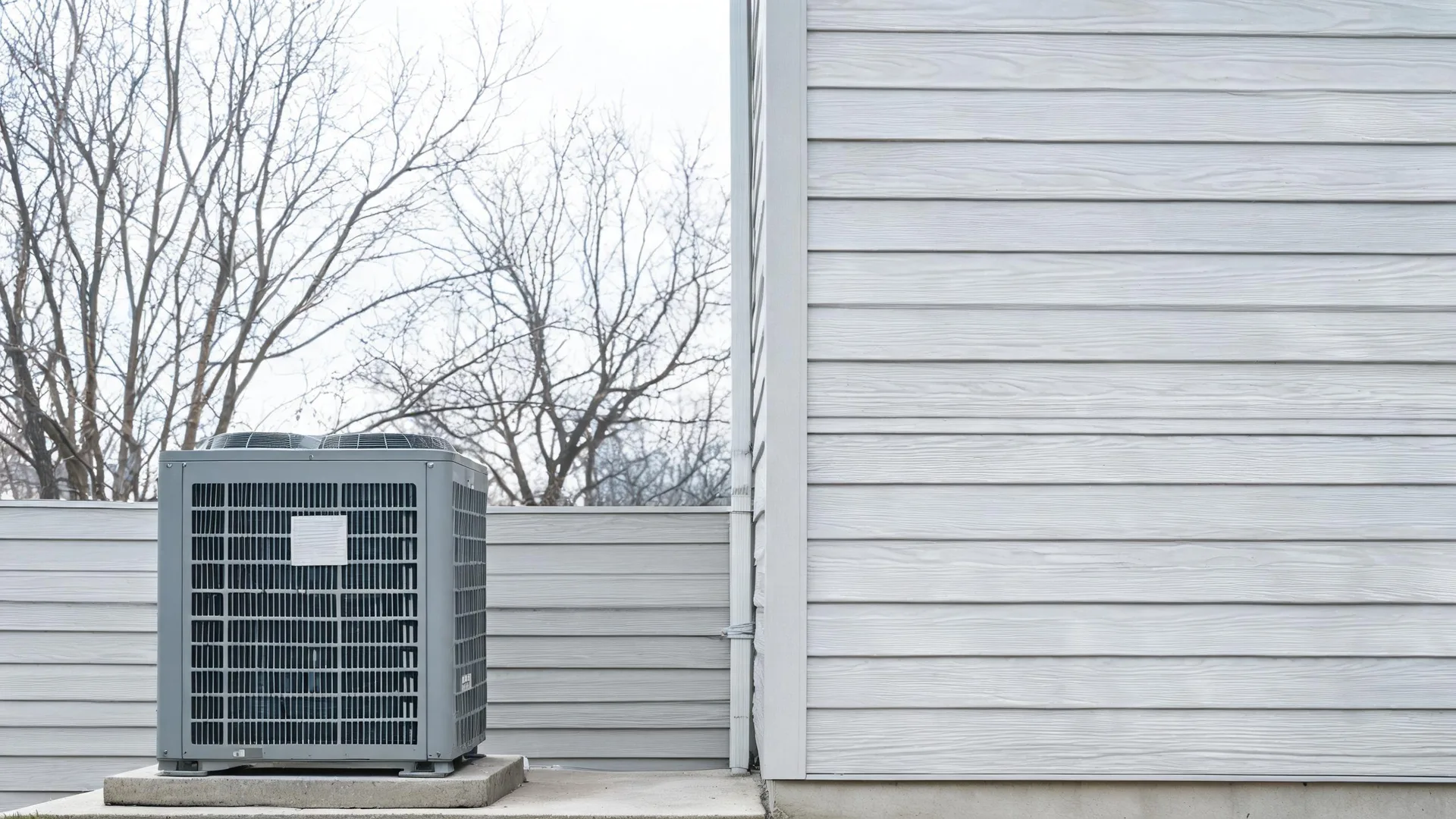
The refrigerant charge is never visible
A system can look fine and still be running low on refrigerant. A gauge set on the lines shows what the eye can't, and a charge that's off makes the compressor work harder every time it cycles on.

Takes about a minute. No obligation.
A system can look fine and still be running low on refrigerant. A gauge set on the lines shows what the eye can't, and a charge that's off makes the compressor work harder every time it cycles on.
A weak capacitor or a dirty coil won't stop your AC today. Left alone, they make the compressor run hotter and longer than it should, and the compressor is the part nobody wants to replace.

NOAA nClimDiv, 1991–2020 normals
Warm air from one vent and cold from another means the system is already struggling to keep up.
A short cycle, where the AC shuts off minutes after it starts, points to a problem worth finding before the compressor takes the damage.




Half the homes in Saline County were built in 1966 or earlier. An AC system doesn't last as long as the house does, which means a lot of the units running here are not the first one the house has had. An older system has had more years for a connection to loosen or a contact to wear down, the kind of small failure that doesn't announce itself ahead of time. A yearly check gets a gauge on the lines and eyes on the parts before summer asks the system to run every day for months. If your system came with the house, or you're not sure how old it is, that's worth finding out.
Five months of summer here puts hours on a system most places don't ask for, and afternoons in the 90s mean it runs hard, not just often. A check before May is how a loose part or a weak capacitor gets found before the season leans on it.
Find a contractor
A yearly check is the way to find out what's going on before summer finds out for you. A tech who has the unit open once a year sees it the same way each time, so a loosening part or a slow refrigerant leak shows up as a change from last year, not a mystery. That's harder to catch if the first look happens after something quits.
A coil caked with dust can't shed heat the way a clean one does. The system still runs, but it runs longer to reach the same temperature, and that extra runtime wears on everything downstream of it.
Airflow is what carries heat away from the coil. When a filter is packed with dust, less air moves across it, and the coil can get cold enough to ice over. Once that happens, the system cools worse, not better, until the ice melts off.
A tune-up checks the refrigerant charge, cleans the coils, tests the capacitor and tightens the electrical connections.
A tune-up starts with the filter and the coils, but it doesn't end there. A tech checks the refrigerant charge against what the system calls for, tests the capacitor and contactor, and looks at the condensate drain to make sure it isn't clogged or backed up. The blower wheel gets checked for dust buildup, since a dirty wheel moves less air even when the filter is clean. Electrical connections get tightened, because a loose connection generates heat and that heat damages the part it's attached to. The thermostat gets checked too, to confirm it's reading the temperature right and telling the system to cycle on and off when it should. None of this is guesswork. Each reading gets compared against what the manufacturer specifies for that unit, so the tech knows whether something is within range or starting to drift.