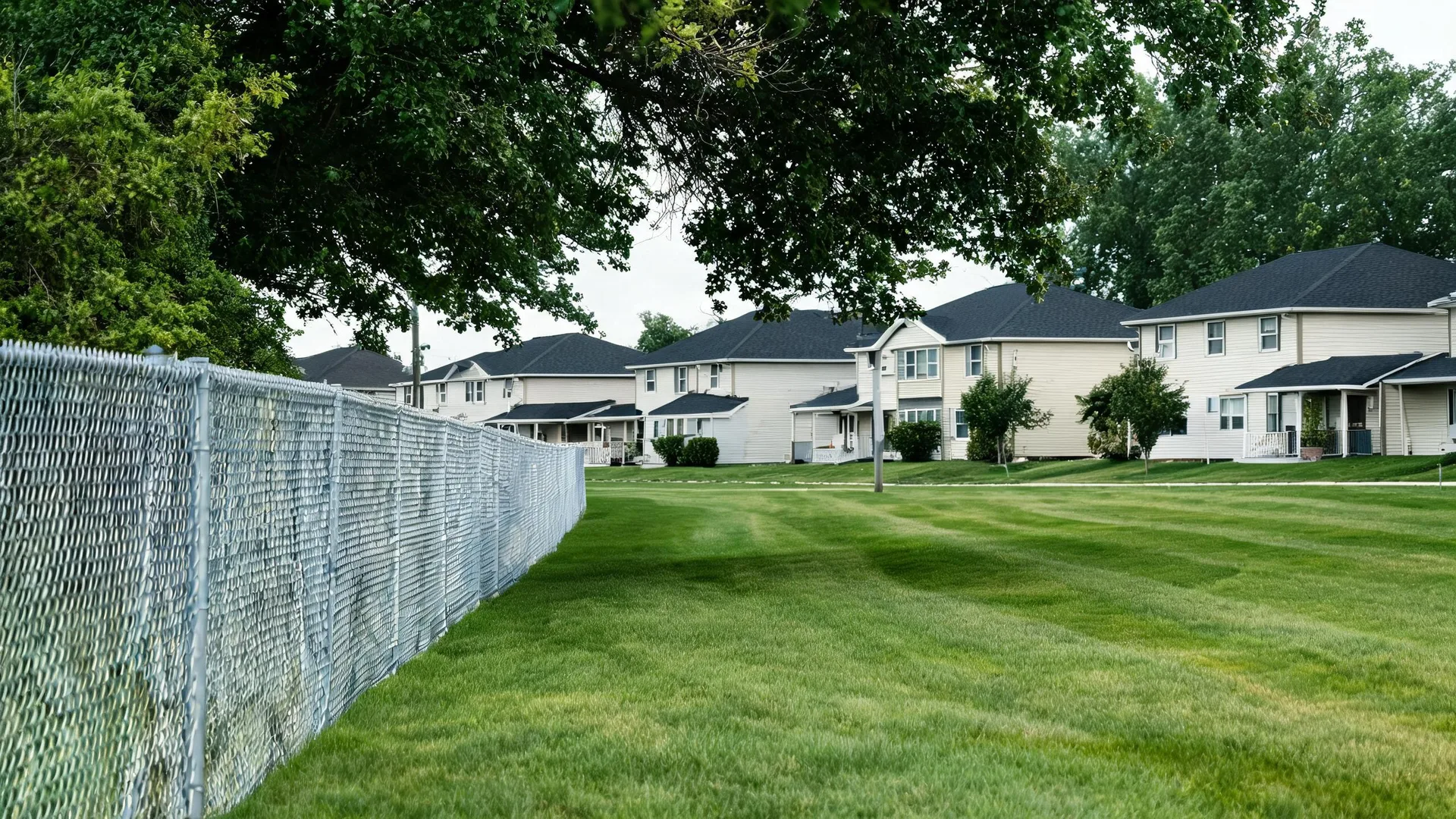






A mown grass lawn bordered on the left by a chain-link fence, with two-story light-colored houses and large deciduous trees in the background under an overcast sky.

AC Maintenance in Topeka, KS

Tell us about the job

Takes about a minute. No obligation.

Tune-up, service, or cleaningCentral ACShawnee County, KS
Step 1 of 2

What ZIP code is the job in?

Shawnee County saw 351 severe weather events between 2015 and 2024. Most of that was wind and hail, 224 damaging wind events and 108 hail events, with 7 tornadoes mixed in. An outdoor condenser sits outside through all of it. Hail dents the fins, and wind throws branches and debris into the coil and the fan. None of that announces itself right away. A bent fin or a cracked blade can cut airflow for weeks before it causes a real failure. Having the unit checked before storm season gets going means a cracked line or a damaged fan gets caught while it is still a small fix.

5 months
May through September, your air conditioner is on duty
88°F
the average summer afternoon it cools against
108 hail events
in ten years, and hail bends the fins on outdoor coils
224 wind events
in ten years, and wind drives debris into outdoor units
Isometric line illustration of a cutaway single-story building showing interior rooms, ceiling ductwork and an air handler, connected by lines to an outdoor condenser unit beside the exterior wall.
Your air conditioner works hardest from June through August.

NOAA nClimDiv, 1991–2020 normals

Electricity here runs 14.90 cents per kilowatt-hour.

A dirty coil or a low charge makes the compressor work harder for the same cooling, and that shows up on every bill until the tune-up happens.

Cooling starts working in May. Have it checked in April.

Cooling runs May through September
Summer afternoons average 88°F
224 damaging wind events from 2015 to 2024
An Older System Needs a Closer LookHalf the homes in Shawnee County were built in 1972 or earlier.

Five months of cooling is a long stretch, and summer here does not go easy on the system. Afternoons average 88°F through June, July and August, with a dew point around 65°F that keeps the air feeling heavy. The condenser runs long hours against that load, and the compressor inside it is doing the hardest work in the whole system. A unit that runs that much shows its weak points early, a capacitor on its way out or a coil that is not shedding heat like it should. Those problems do not wait for a slow week to show up. They show up when the heat is already here and the system cannot keep up.

Get the Outdoor Unit Checked Before Storm Season Finds the Weak Spot

That same unit outside is what takes the hit when hail and wind come through. Getting it checked before storm season means a bent fin or a cracked line gets caught while it is still a small fix, not after the first hot week finds it.

Find a contractor
A gray metal air conditioning condenser unit mounted on a concrete pad in a flat grassy field under a partly cloudy sky.

Five Months Is a Long Time to Run on a Bad Part

A tune-up in spring is when a worn capacitor or a dirty coil gets caught, before the system has to run on it for five straight months. Once May comes and the heat sets in, that same weak part is working every day, with no slow stretch left for it to fail quietly in. Catching it early costs you a part. Catching it in July costs you a system that can't keep up with an 88 degree afternoon.

The Filter Is the First Line of Defense

A dirty filter chokes airflow across the whole system. The evaporator coil needs that air moving over it to pull heat out of the house, and when the filter is clogged, the coil can get cold enough to ice over. Once ice builds up, the system is cooling less and running longer to do it.

The Coil and Drain Need a Clear Path

The outdoor coil has to shed heat, and a layer of dirt or cut grass across the fins slows that down the same way a dirty filter does, forcing the compressor to work harder for the same result. Inside, the condensate drain carries off the water the evaporator coil pulls from the air. A clogged drain backs that water up, and it ends up where it shouldn't, sometimes in the ductwork, sometimes on the floor.

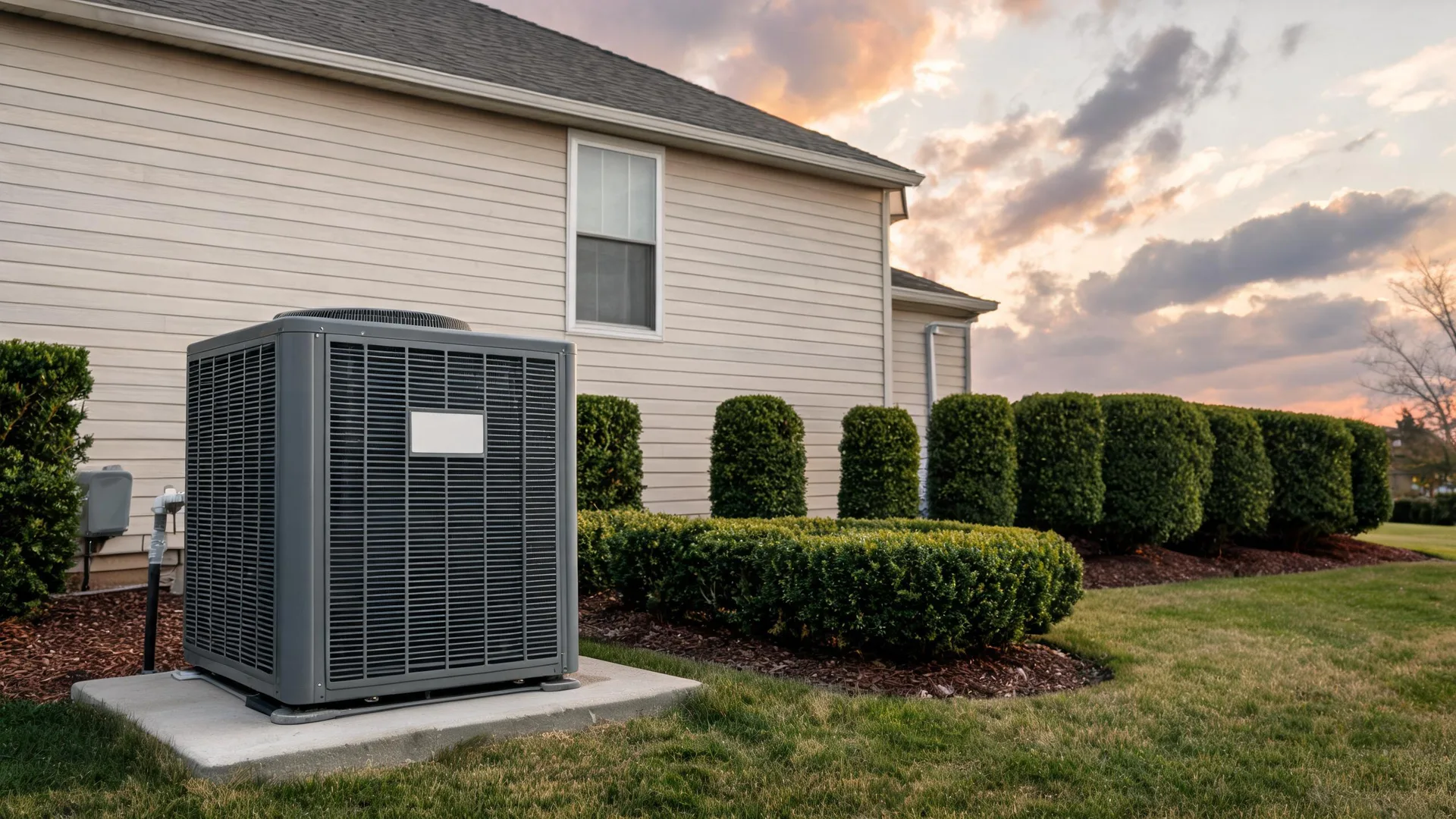
Overhead view of a gray outdoor AC condenser unit on a concrete pad beside a mulched garden bed and a house with vinyl siding.

Book your AC tune-up in April, before homes here start needing cooling in May.

  1. Jan
  2. Feb
  3. Mar
  4. Apr
  5. May
  6. Jun
  7. Jul
  8. Aug
  9. Sep
  10. Oct
  11. Nov
  12. Dec

A tune-up checks the refrigerant charge, cleans the coils, tests the capacitor and tightens the electrical connections.

A tune-up is a set sequence, not a once-over. The refrigerant charge gets checked against what the system calls for, since a unit that is even a little low loses capacity and runs longer to make up for it. The capacitor gets tested under load, because a weak one can still start the compressor and still be close to failing. Electrical connections get checked for corrosion and snugged down, since a loose connection builds heat at that spot every time the system cycles. The condenser fan motor gets checked for noise and end play in the bearing. Refrigerant lines get looked over for rubbed spots or cracked insulation. None of this takes long when a system is healthy. It takes longer when something is wrong, which is the point of doing it before the system has to run on it all summer.