







An outdoor air conditioning condenser unit positioned on a concrete pad next to a blue-sided house, surrounded by green shrubs and flowering hydrangeas at sunset.

AC Maintenance in Wamego, KS

Tell us about the job

Takes about a minute. No obligation.

Tune-up, service, or cleaningCentral ACPottawatomie County, KS
Step 1 of 2

What ZIP code is the job in?

Pottawatomie County saw 171 severe weather events between 2015 and 2024. Most of that was hail and wind. The county logged 82 hail events and 68 damaging wind events in that span, with 8 tornadoes and 13 winter storms mixed in. An outdoor AC unit sits through all of it, exposed to hail dents and wind-blown debris. Across Kansas, 19% of households went at least a full day without power in 2024, and a unit that already has a weak capacitor or a dirty coil is the one that won't start back up when the power does.

4 months
June through September, your air conditioner is on duty
87°F
the average summer afternoon it cools against
82 hail events
in ten years, and hail bends the fins on outdoor coils
68 wind events
in ten years, and wind drives debris into outdoor units
Isometric line illustration of a cutaway single-story house showing interior rooms, ducted air handler, ceiling ductwork, and an outdoor condenser unit connected by refrigerant lines.
Your air conditioner works hardest from June through August.

NOAA nClimDiv, 1991–2020 normals

Summer here holds at 87 degrees for four months straight, with thick, sticky air on top of the heat.

An AC running that hard that long shows its weak points fast, so a tune-up before June finds them first.

A unit that runs this much costs more to ignore

Power here costs 15.36 cents per kilowatt-hour
Cooling runs June through September
Summer afternoons average 87°F
Half the homes here are newerHalf the houses in Pottawatomie County were built in 1987 or later, and the AC in them still has working life worth protecting.

Cooling here runs June through September, four months straight. May is the month before that starts, and it's the month to get the system checked. Once June hits, the unit runs hard right away with no easy stretch to break it in. A weak capacitor or a dirty coil won't announce itself sitting idle over the winter. It shows up the first time the system has to run for hours straight, which is exactly what June asks of it here. Checking it in May catches that problem before the season does.

Have the outdoor unit checked before storm season leaves its mark

The outdoor unit sits outside through every hailstorm and windstorm that comes through. A check before summer catches a dented coil or a bent fan blade while it's still a simple fix, not a breakdown once the heat sets in.

Find a contractor
A man in a cap, dark jacket and tan work pants walks up concrete steps toward a red front door, carrying a worn canvas tool bag, with a potted shrub beside the entry.
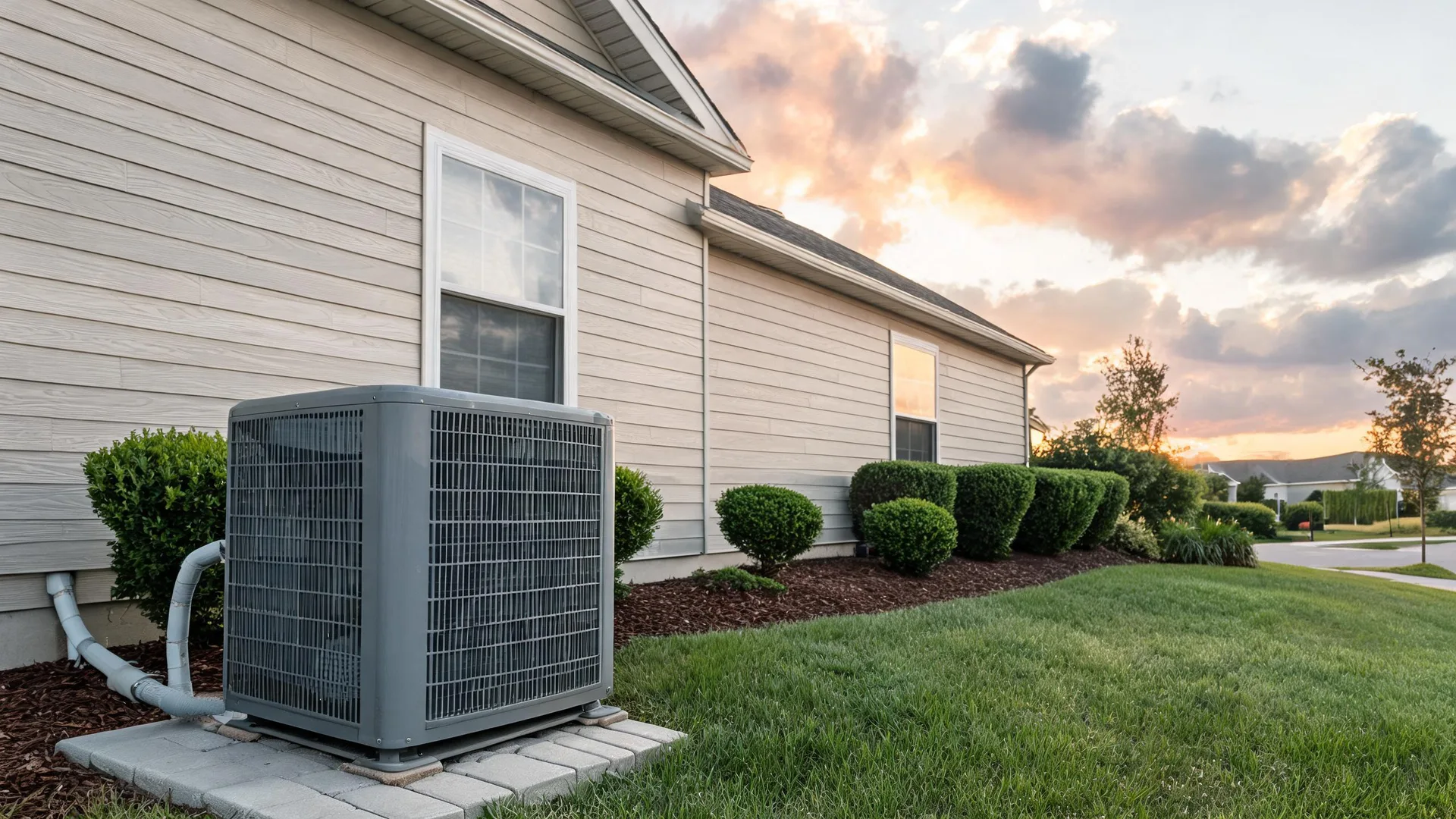
An outdoor air conditioning condenser unit mounted on a concrete pad beside a house, with electrical conduit running to a wall-mounted disconnect box.

Four months of running time, start to finish

Four months of cooling here, June through September, is four months the outdoor unit sits exposed to whatever the season brings. A check before that stretch starts catches a weak capacitor or a coil going bad while it's still a quick fix, not a no-cool call once the unit has to run all day.

Keep the airflow clear

A homeowner can change the air filter on a regular basis and keep leaves, grass clippings and dryer lint away from the outdoor unit. A clogged filter starves the system of airflow and makes the coil work harder than it should. A blocked outdoor unit can't shed heat properly, and that strain is what wears out a capacitor or a fan motor early.

Know what to leave alone

Anything past the filter and the area around the outdoor unit is a job for a contractor, not a homeowner. The refrigerant lines, the capacitor and the coil itself carry risks that aren't obvious from the outside, and opening the cabinet without the right tools can turn a small problem into a bigger one. Watching for warm air, strange noises or ice on the lines and calling it in early is the safest thing a homeowner can do.

Overhead view of a gray residential air conditioning condenser unit mounted on a concrete pad beside a house with asphalt shingle roofing.

Book your AC tune-up in May, before homes here start needing cooling in June.

  1. Jan
  2. Feb
  3. Mar
  4. Apr
  5. May
  6. Jun
  7. Jul
  8. Aug
  9. Sep
  10. Oct
  11. Nov
  12. Dec

A tune-up checks the refrigerant charge, cleans the coils, tests the capacitor and tightens the electrical connections.

A tune-up starts with the capacitor and the contactor, the two parts most likely to weaken from age and heat and least likely to show it until the system won't start. The tech checks refrigerant charge against what the system calls for, since too little or too much makes the compressor work harder than it should. The condenser coil gets cleaned so it can shed heat the way it's supposed to. The blower and the indoor coil get looked at too, since restricted airflow on either end drags down the whole system. Electrical connections get tightened, because a loose wire under load is how a component burns out early. The condensate drain gets checked so it isn't clogged and backing up. None of this is guesswork. It's the same handful of parts that cause most no-cool calls, checked while they're still working.