Running clean
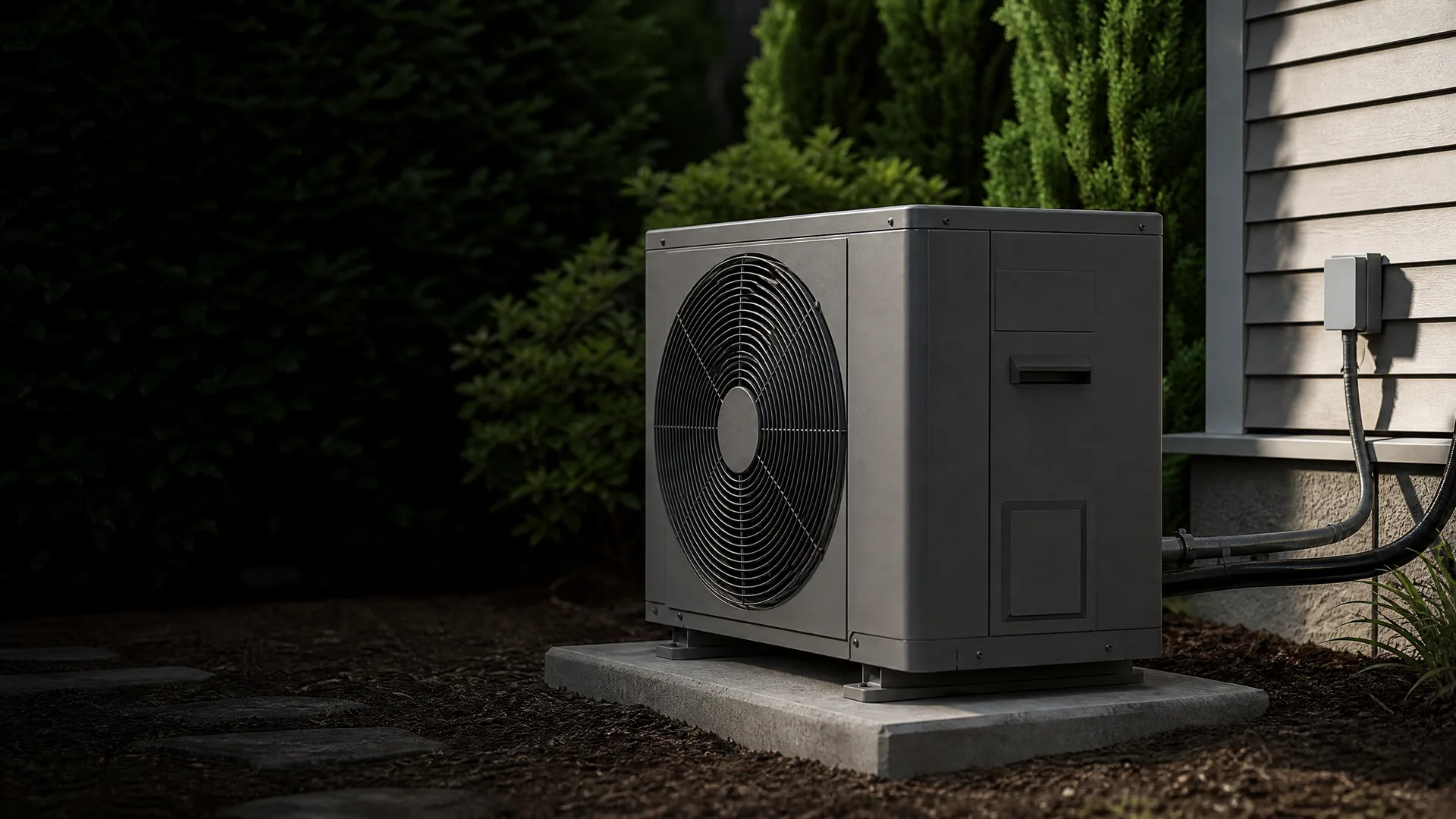
This is a heat pump that can handle a Salina winter. The coil is clear, the fan spins free, and air moves through without a fight. A unit kept clear like this can run its defrost cycle and shed a light frost on its own.
A heat pump caked in ice in the middle of a Salina winter is not something to watch and wait on. Some frost in cold weather is normal, the unit clears it on its own with a defrost cycle. A solid block of ice that stays is not that. It means the outdoor unit cannot do its job, and if your gas furnace is your backup heat, you still want the heat pump fixed rather than left to sit all winter. Right now that probably means getting on the phone, searching for someone who works on heat pumps in Saline County, waiting for a callback, then explaining the same problem again to whoever picks up. Send the form here instead and that part is handled. You are not the one tracking down who is available or free to take the call, and you are not repeating yourself to three different shops to find one that can come look at it.
You went out back and found the outdoor unit wrapped in ice, not the light frost that's normal on a cold Salina morning but a solid coating over the coils and sometimes the fan itself. The system might still be running, or it might have shut down. Either way you want to know what's causing it before it does more damage.
Every heat pump builds frost in cold weather and melts it off through a defrost cycle, usually a few times a day when temperatures sit near freezing. Salina winters push that cycle hard. If the outdoor coil is caked solid, the cycle either isn't firing on schedule or isn't clearing the ice once it does. That points to a few things: a defrost control board or sensor that isn't telling the system to switch over, a reversing valve that's stuck, low refrigerant charge, or a fan motor that's failed and stopped pulling air across the coil. Running the system with ice built up stresses the compressor and can cost you heat on the coldest nights of the year, so it needs a look before it's asked to work any harder.






Winter nights average 22°F
Winter nights here average 22°F, and that cold is exactly where a heat pump has to work hardest to keep ice off the coil.
Heat runs October through April
Heat runs October through April, nearly seven months of defrost cycles working against the cold, more chances for one to fail and let ice build.
Cooling runs May through September
Cooling runs May through September, so the unit sits idle through the coldest nights with no chance to clear ice until you run heat again.
NOAA nClimDiv 1991-2020

This is a heat pump that can handle a Salina winter. The coil is clear, the fan spins free, and air moves through without a fight. A unit kept clear like this can run its defrost cycle and shed a light frost on its own.

These fins are dark with dust and debris, and air cannot pass through them the way it needs to. A coil this dirty loses the airflow that defrost depends on, and once ice gets a hold here, it tends to stay.
Walk by the outdoor unit and you'll see the ice before you feel anything inside. Maybe the fan isn't spinning, or it's spinning slow and grinding against a coating on the housing. Inside, the air coming out of your vents feels cooler than it should, or barely moves at all. Some households notice the system running and running without the house ever getting comfortable. With gas heat backing up most homes in Salina, your furnace may pick up the slack and you might not notice the cold air right away, but the heat pump itself is not doing its job. Left alone, that ice can keep building against the coil and fan until something inside gives out.
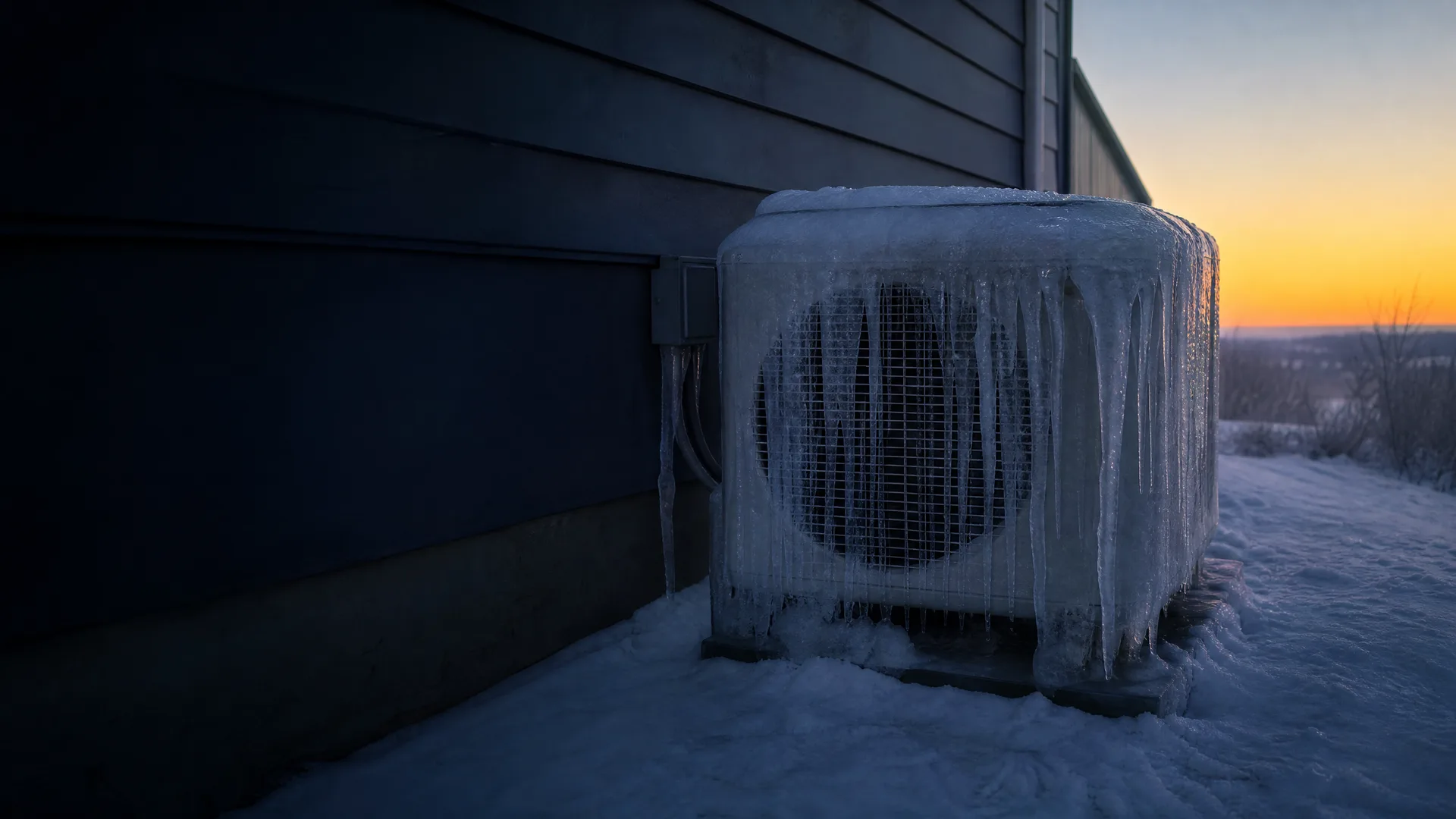
You walk out to the side yard a little after seven, coffee in hand, and the sky is just getting light. It's been cold all night, down near 22. The outdoor unit is the first thing you see: ice coating the coil, climbing up over the top, a thin crust even on the fan blades. No hum, no fan noise, nothing moving. You crouch down and touch the coil through your glove and feel how solid it is, not the thin white frost you've seen before on mornings like this. You head back inside already thinking about who to call, because you know this isn't the kind that melts off by nine.
A frozen heat pump in the middle of a Salina winter does not fix itself by waiting another day. Ice holds, the system strains to heat against it, and the house loses ground while you're stuck figuring out who to call. That's the part worth handing off. Instead of searching for a contractor who works on heat pumps, calling around to see who can come out, and explaining the same ice buildup over and over to each one, you send the request once. From there, finding someone to look at the unit is off your plate. You've already got cold mornings and a house that needs heat to deal with. The unit outside is caked in ice right now, maybe the fan is dragging against it, and that's enough to manage without also chasing down a contractor on your own.
A heat pump's outdoor coil drops below freezing every time it runs heat on a cold day. To handle that, the system reverses itself every so often, sends warm refrigerant through the outdoor coil, and melts off whatever frost built up. You'll see steam rising off the unit for a few minutes and the fan might stop. That's normal and it ends on its own. The defrost board that controls this runs off a timer and a sensor on the coil. When the sensor reads cold enough and the timer says it's time, defrost kicks in. If that sensor is coated in ice itself, or the board behind it has failed, the cycle never starts, and frost that should melt off every couple hours just keeps building.
Ice on a coil blocks airflow, and less airflow means the coil runs even colder, which grows more ice. It feeds itself. A fan that's iced over or grinding against a frozen housing can't move the air the system needs to shed that frost on its own, even if the defrost cycle does fire. Refrigerant also needs a minimum amount of airflow across that outdoor coil to do its job. Without it, liquid refrigerant can come back to the compressor instead of vapor, and a compressor isn't built to handle liquid. That's the difference between a day of lost heat and a repair bill for a part that didn't need to fail.
At 14.74 cents per kilowatt-hour, a heat pump that's iced over and straining to keep up costs you more every hour it runs that way. A unit fighting a frozen coil pulls harder and longer to push the same heat through your house, and that shows up on the next bill.
EIA-861 2025
You could give it a day, figure the next defrost cycle might catch up once temperatures climb a little. Some nights in Salina do warm up enough for that to work. But if the coil is already solid and the fan has stopped turning, the system can't reverse itself the way it's supposed to. The ice stays put or spreads while the compressor keeps straining against it. Every hour on gas backup or strip heat picking up the slack shows up on your bill, and the unit underneath the ice is still the thing that has to run your house through the rest of a Kansas winter.
A contractor can tell within minutes whether this is a refrigerant problem, a failed defrost control, or a fan motor that's seized and stopped clearing ice the way it should. That's not a guess you can make standing in the yard. Once it's diagnosed, the fix might be quick or it might take a part on order, but at least you know which one you're dealing with instead of watching the block of ice get thicker. You skip the part where you're calling around Salina trying to find someone who'll even come out this week.


The reversing valve is what lets one outdoor unit both heat and cool your house. When frost builds on the outdoor coil, a sensor out there tells the control board it's time, and the valve flips the system into cooling mode for a few minutes. That sends hot refrigerant through the outdoor coil instead of cold, and the ice melts off. The outdoor fan stops during this so the heat stays where it's needed instead of blowing out into the yard. Inside, heat strips usually kick on for those few minutes so the air coming through your vents doesn't go cold while the outdoor unit is busy thawing itself out. Then the valve flips back, the fan starts again, and the system goes back to heating your house like nothing happened. That's the cycle working the way it's built to. When the valve sticks, or the sensor stops calling for defrost, none of that happens. The coil just keeps collecting frost with no signal telling the system to stop and clear it, and that's how you end up with a block of ice instead of a light morning coating.


A heat pump frozen solid in Salina does not need watching, it needs someone out there to look at the coil, the fan and the reversing valve and say what stopped working. A light frost that melts off on its own is nothing. Ice that stays, a fan that won't turn, air coming out cold instead of warm, that's a system that needs a hand, not more time. You don't have to spend the evening scrolling through contractor listings, calling a few, explaining the ice on the coil and the cold air inside to each one, then sitting with quotes trying to guess who's worth trusting. Send the form once and that search is done, someone takes it from there. The ice on that unit outside isn't going anywhere until a contractor gets to it, and the house keeps losing ground to the cold in the meantime. Getting past the part where you have to find and vet someone yourself is the only thing that changes tonight, and it changes the moment you send it.
Send one request and you're done looking