A gray outdoor heat pump unit with a circular fan grille sits on a concrete pad beside a dark wood-clad house, next to a gravel bed with ornamental grasses and a stepping-stone path.

Stop chasing a heat pump pro

Why your heat pump has ice on it in a Kansas winter

Some ice on the outdoor unit in winter is normal for a heat pump and it melts off during the defrost cycle. A thick coat that doesn't go away, or a coil caked solid, means something's wrong and running it that way can damage the compressor. Send the form and skip the part where you're the one calling around to find a contractor who works on heat pumps.

Hand off my repair

A little frost on the outdoor unit is normal. Your heat pump pulls heat out of cold air, and that process can leave a thin layer of ice on the coil, especially on the damp, raw days Kansas gets between December and February. The unit is built to handle that. Every so often it runs a defrost cycle, reversing itself for a few minutes to melt that ice off before going back to heating. What's not normal is ice that keeps building, covers the whole coil, or sticks around for hours. That usually means the defrost cycle isn't kicking in when it should, or the unit is losing refrigerant, or the outdoor fan isn't moving air the way it needs to. Keep running it like that and you risk the compressor, which is the expensive part to replace. If the ice isn't melting off on its own within an hour or two, that's a sign to get it looked at rather than wait it out.

A gray outdoor condenser unit on a concrete pad beside a house with horizontal lap siding, connected by conduit and lines to a wall-mounted disconnect box, with a shrub and gravel bed to the left.
A thin, even frost that disappears within an hour or two means the defrost cycle is doing its job and the unit is running the way it should.
An outdoor air conditioner condenser unit on a concrete pad beside a house with horizontal lap siding, with refrigerant lines and a gray electrical disconnect box on the wall, surrounded by bare dirt.
A coil buried under solid ice, or a cabinet packed with built-up grime, means the unit is struggling and a repair call is overdue.

How the defrost cycle works

  • The reversing valve switches the system into defrost by routing hot refrigerant gas backward through the outdoor coil.
  • Outdoor fans shut off during defrost so the hot gas can melt the ice without cold air blowing back onto the coil.
  • A sensor or timer tells the unit when to start and stop defrost, usually based on coil temperature and how long the compressor has been running.
  • While defrost runs, your heat pump pulls heat from indoor air for a few minutes instead of warming the house, which is normal.
  • A stuck reversing valve, a failed defrost sensor, or a fan that won't shut off can keep the cycle from ever starting or finishing.
  • When defrost fails, ice builds in layers each time the compressor runs, which is why a bad unit gets worse day by day instead of overnight.

Your heat pump has a reversing valve, the same part that lets it switch between heating and cooling in a Kansas summer. In winter, that valve flips the other way for a few minutes at a time. It sends hot refrigerant gas backward through the outdoor coil instead of the indoor one. That hot gas melts the frost off the coil from the inside. The outdoor fan shuts off during this, because cold air blowing across the coil while it's trying to warm up would just work against it. A sensor on the coil, or a timer tied to how long the compressor has run, decides when defrost starts and when it's done. You might notice the house cool off slightly during defrost, or see steam rising off the outdoor unit. Both are normal. The system is pulling heat from indoor air for those few minutes instead of sending it to your rooms, then it switches back.

When one part of that sequence fails, the whole cycle can stop working. A reversing valve that sticks won't switch over at all. A bad sensor might never tell the system ice has built up. A fan that keeps running blows cold air right back onto the coil during what should be the melt. None of these failures clear the ice that's already there, so the next cycle adds to it instead of starting clean. That's why a failing unit tends to get worse over several days rather than all at once.

An outdoor air conditioner condenser unit with rust spots on its top grille sits on a concrete pad beside a house with light horizontal siding, with conduit lines and an electrical box on the wall and a mulch bed to the right.
Before you get your heat pump repair
A gray outdoor condenser unit on a concrete pad beside a light-colored lap-sided house, with a wall-mounted disconnect box, refrigerant lines, mulch bed and shrubs, and a concrete walkway in the foreground.
After you get your heat pump repair

Hand off the heat pump problem

Answer a few questions instead of calling shop after shop.

It costs nothing to send, and you don't have to hire anyone.

What a normal defrost looks like

A heat pump runs defrost for a few minutes every so often, not on a schedule you'd notice unless you're watching for it. The outdoor fan stops, the coil warms up, and the frost lets go on its own. You might see steam or light dripping underneath the unit right after. Once it finishes, the fan kicks back on and the unit goes back to pulling heat from the air like before. If you check on it an hour later and the coil looks clear, that cycle did what it's supposed to do.


When ice means a real problem

Ice that builds back up within an hour of a defrost, or a coil that stays white and solid through a whole afternoon, points to something keeping the system from finishing the cycle. A low refrigerant charge, a failed reversing valve, or a fan that won't shut off during defrost can all leave ice to keep piling on. The compressor is built to run warm. Forcing it to work behind a solid layer of ice stresses a part that's expensive to replace, and that damage keeps adding up the longer the unit runs this way.

A smiling bearded man in a dark green hooded jacket and blue t-shirt sits on a couch in a living room with shelves, a potted plant, and a bowl of popcorn on a wooden table.
A smiling man in a green long-sleeved shirt sits on a beige sofa in a living room, with a bowl of popcorn in the foreground, a large potted plant and shelving behind him.
A smiling man in a dark blue T-shirt sits on a couch in a dimly lit living room with a bowl of popcorn and a remote on a wooden table, a lit floor lamp and bookshelves behind him, and windows showing greenery.
A smiling bearded man in a dark green long-sleeved shirt sits on a leather couch in a living room, with a bowl of popcorn and a remote control on a wooden table in the foreground.

Ice that doesn't melt off

A heat pump stuck in a frozen coil pulls heat from the air less and less, so your house runs colder while the system works harder and your power bill climbs.

Send it today

A compressor under strain

Running a heat pump with an iced-over coil for days can push the compressor past what it's built for, turning a repair into a full replacement.

Send it today

What are you seeing on your unit right now

Walk out and look at it. If the frost is thin and you can see the coil fins through it, that's probably fine. If you're looking at a solid white or gray shell, thick enough that you can't see metal underneath, or ice built up around the base and the fan, that's the version worth paying attention to. Inside the house, you might notice the air coming from the vents feels cooler than usual, or the system seems to run longer to hold the same temperature. Left alone, a heat pump working against a frozen coil all winter puts real strain on the compressor, and that's the expensive part to replace.

Rear view of a single-story gray vinyl-sided house with a dark shingled hip roof, three windows, a center door, an outdoor air conditioning unit, and a patchy green and brown lawn under a clear sky.

Kansas summers run muggy, with dew points near 64°F on average across June, July and August, according to NOAA climate data. That matters for your heat pump even in winter, because the same outdoor coil that pulls humidity out of summer air is what frosts up when it pulls heat out of cold air. A coil that spent the summer handling heavy, wet air can carry more dirt and grime into winter, and a dirty coil holds onto ice longer during defrost instead of shedding it clean. If your unit's coil wasn't cleaned going into the cold months, that buildup is one more reason the ice you're seeing now isn't melting off like it should.

NASA POWER T2MDEW county cells weighted by homes

A woman in a cream knit sweater reclines on a beige couch with eyes closed and a slight smile, a gray hardcover book resting open on a textured blanket over her lap, with a lit table lamp and a leafy plant in the dim background.
A smiling middle-aged man in a dark green sweater sits at a candlelit table with a glass of red wine and a bowl of salad in the foreground.
A closed laptop and a ceramic mug of dark coffee sit on a wooden table, with a blurred kitchen counter, potted plant, wooden utensils and cutting boards, and a large window in the background.

Thin frost melts off. Thick ice doesn't.

That's the whole test. Walk out, look at the coil, and you'll know which one you've got. If it clears on its own within an hour or two, the defrost cycle is working and the unit doesn't need anyone's attention. If it's still there tomorrow, or it's thick enough to hide the coil fins, the system needs a repair before that compressor takes damage it won't recover from.

Once you know which side of that line you're on, the only question left is finding someone licensed to look at it. That usually means searching around, calling a few places, describing the ice and the noise and how long it's been like this, then doing it again for the next contractor so you can compare what they quote you. Send the form instead and that part is done. You're left with the actual repair, not the legwork of finding who does it.

A shallow dark wooden bowl and a stack of books rest on a wooden table in front of a beige sofa with linen and green cushions, with a tall ceramic vase of thin branches beside a window in the background.
A modern two-story house with dark siding and stone base at dusk, with lit soffit lights, a path of large rectangular pavers set in dark gravel, planting beds, a lawn, and an orange and blue sunset sky above distant trees and water.

Heat Pump Repair

Finding a pro stops being your job

RepairHeat PumpKansas
Step 1 of 2

What ZIP code is the job in?

  • A living room corner with a beige upholstered armchair holding a green pillow and knitted throw, a ceramic table lamp on a side table, white built-in bookshelves, a framed landscape print, a curtained window, and a round wooden table with a lit candle and bowl in the foreground.
    • Tell a local repair pro what your heat pump is doing.
    • Describe your heat pump job, and a local pro who handles it gets in touch.
  • A lit table lamp with a tapered beige fabric shade and a speckled rounded ceramic base sits on a wooden surface beside a potted plant, with curtains and a window in the background.
    • Send the request today and let a heat pump pro reach out to you.
    • Get the heat pump repair search off your mind today.
  • A cream upholstered armchair with a gray pillow and knit throw sits beside a wooden table with a eucalyptus-filled vase, in front of a lit stone fireplace with stacked firewood.
    • Skip searching for a heat pump pro and answer a few questions instead.
    • One form replaces the calls you'd make to find a heat pump pro.
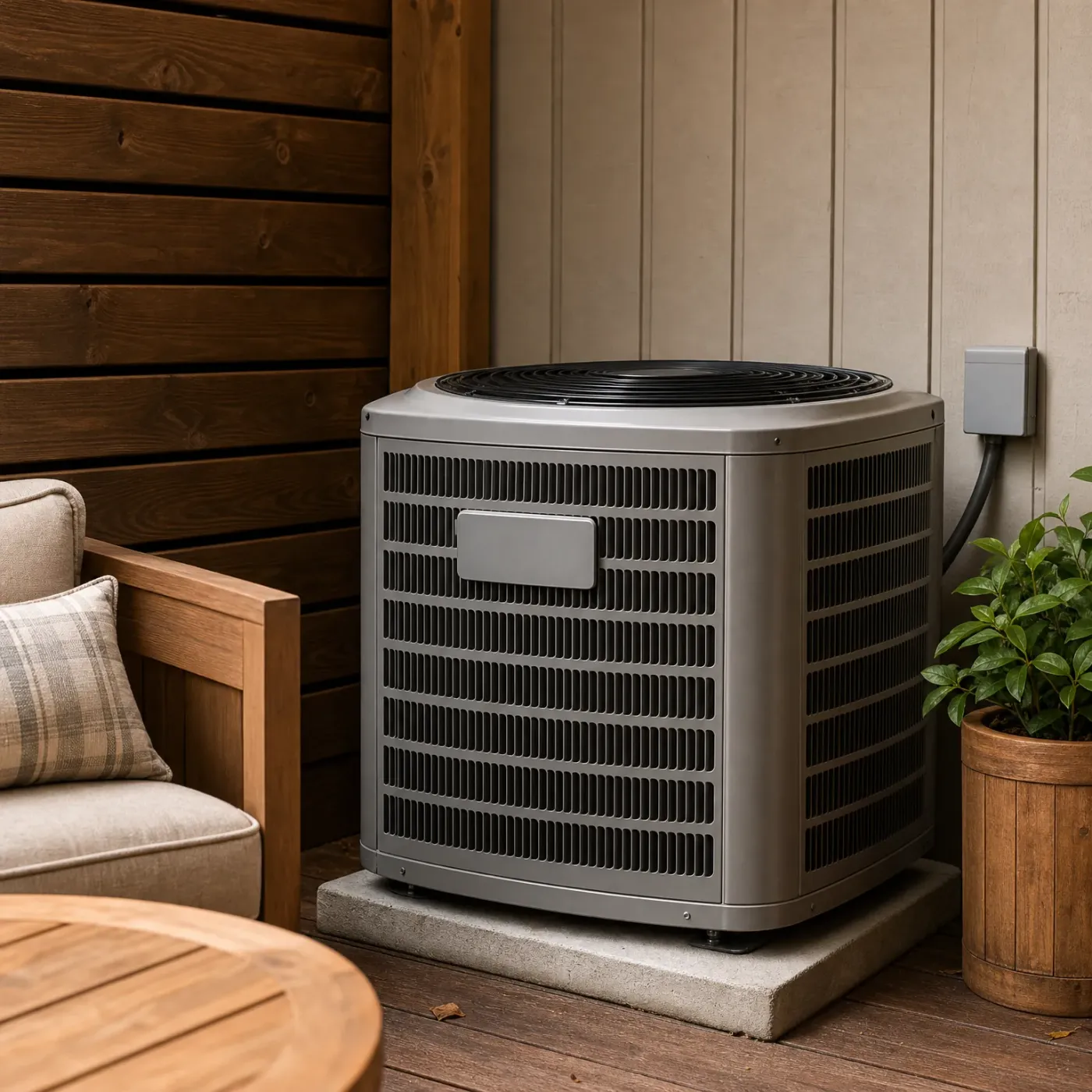
  • A gray outdoor air conditioner condenser unit on a concrete pad beside a wood-sided wall, with a horizontal wood slat fence, a cushioned patio chair, a wooden table, and a potted green plant nearby.
    • Your request goes to one pro, not a list of companies.
    • The pro who reaches out is licensed in Kansas.