
Why your heat pump runs nonstop in a Kansas winter

Tell a local repair pro what your heat pump is doing.

RepairHeat PumpKansas
Step 1 of 2

What ZIP code is the job in?

Why does my heat pump run nonstop in winter?

Cold mornings and it just doesn't shut off. You check the thermostat, the setting looks right, warm air is coming out, but the unit outside keeps going and going. You start wondering if something's wrong with it or if this is just how it's supposed to act once it gets cold.

Below a certain outdoor temperature, that's normal operation

A heat pump pulls heat from the outside air, and the colder that air gets, the harder it has to work to pull enough of it. Once outdoor temperatures drop into the 30s and below, which happens plenty through a Kansas winter, the unit may run continuously just to hold your house at the temperature you set. That's the machine doing its job, not failing at it. Where it crosses into a problem is if the house still feels cold, if you notice ice building up on the outdoor unit that doesn't melt off, or if the system was running nonstop even before the hard cold hit. Those point to something needing a look, not just winter asking more of the equipment.

A gray outdoor condenser unit sits on a concrete pad against a house wall with horizontal siding above a stone veneer base, with an electrical disconnect box and conduit on the wall and a leafy shrub in mulch to the left.

Running steady, keeping up

The outdoor unit cycles on and off as it should, coils clean, fins open to the air. On a cold morning it runs longer than it would in October, and that's normal for a heat pump. It still catches up between cycles and the house holds its temperature.


An outdoor air conditioner condenser unit on a concrete pad beside a house with beige vinyl siding, with a gray electrical disconnect box and insulated refrigerant lines on the wall and river rock to the right.

Running nonstop, falling behind

Dirt has packed into the coil fins, and the unit can't pull heat from the outside air the way it needs to. It runs straight through without cycling off, and the house still doesn't feel warm enough. That's a sign to have the coil looked at.

Is this normal, or is your heat pump struggling?

Look at the vents. If the air coming out feels barely warm, closer to room temperature than warm, the unit is running long because it's losing the fight against the cold, not because that's just how heat pumps work. Check the outdoor unit too. Ice building up beyond a thin frost, or a fan that sounds like it's straining, both point to the same thing. Meanwhile your thermostat still reads a few degrees under what you set it to, even after an hour of runtime. Left alone through a Kansas winter, a heat pump working this hard tends to keep working this hard, and the power bill moves with it.

A gray outdoor air conditioner condenser unit on a concrete pad beside a house with horizontal siding and an electrical disconnect box, surrounded by grass.

How a heat pump makes heat

A heat pump does not burn fuel. It pulls heat out of the outside air, even cold air, and moves it inside through the refrigerant coil. Below freezing there is less heat out there to grab, so the unit has to run longer to pull the same amount in. That is why the outdoor fan runs more on a 20 degree morning than it does at 50. It is working harder at the same job, not doing a different one.

A white outdoor heat pump unit on a concrete pad beside a house with horizontal lap siding, with a plain light wall and grass lawn to the left.

What the defrost cycle costs you

When frost builds on the outdoor coil, the system reverses itself for a few minutes to melt it off before going back to heating. You might notice steam coming off the unit or the fan stopping briefly. That's the defrost cycle doing its job. It adds to total runtime on cold, damp days, and it's a normal part of how the outdoor unit stays clear enough to keep pulling heat from the air.

Keeping Up or Falling Behind

Let it run

  • A heat pump running long on a cold morning is doing its job, not failing at it, when warm air keeps coming from the vents.
  • Below freezing the unit pulls less heat from each cubic foot of outside air, so it needs more time to heat the same house.
  • If the house holds steady or climbs a degree or two by afternoon, the long runtime is paying off even though it never shuts off.
  • Checking in on a system that's keeping up costs you nothing and catches a developing problem before it becomes a no-heat call.
  • A unit with clean coils and open fins outside can run nonstop for days during a cold snap and still be working exactly as it should.

Get it looked at

  • Air that feels barely warm at the vent, closer to room temperature, means the unit is losing ground, not just working harder.
  • A house that keeps sliding a degree or two despite nonstop running points to a system that can't keep up anymore.
  • Frost building up on the outdoor coil without clearing itself in the normal defrost cycle is a sign something in that cycle has failed.
  • Backup heat kicking on far earlier in the morning than it used to means the heat pump is leaning on it to make up a shortfall.
  • A contractor can check refrigerant charge, defrost controls, and airflow before a cold snap turns a struggling system into a dead one.
  • Waiting it out when the signs point to trouble usually means a harder, costlier fix once the unit finally stops running altogether.
A woman in a cream cowl-neck sweater sits by a window with snow outside, in a dimly lit living room with a sofa, lit lamp, mirror, candles and a fireplace.
A woman in a gray turtleneck sweater sits beside a large window looking out at snow-covered evergreen trees, in a dimly lit living room with a lit fireplace, lamps, couch and houseplant.
A woman in a cream turtleneck sweater stands beside a large window with snow-covered ground and bare trees outside, in a dimly lit living room with lamps, a sofa and framed art.
A woman in a grey cowl-neck sweater stands indoors near a window, looking out at falling snow, with a lamp, framed picture and couch in the warmly lit room behind her.

A pro who works on heat pumps

A heat pump that won't quit on a January morning in Kansas might be doing exactly what it should, and it might not. The difference matters because most homes here back up the heat pump with a gas furnace, and when the heat pump can't keep up, that backup should be carrying some of the load. If it's running nonstop and the house still isn't getting warm, or the backup heat never seems to kick in when it should, that's not weather, that's the system not doing what it's built to do. A frozen coil, a stuck defrost cycle, a thermostat not talking to the backup heat right, any of these can turn a long run into an endless one. You don't have to figure out which it is. Send the request and a contractor who works on heat pumps in this area will follow up, and from there it's their job to find out what's actually going on with yours.

A gray outdoor condenser unit sits on a concrete pad beside a house with horizontal lap siding, with a wall-mounted disconnect box and refrigerant lines, mulched beds and a shrub nearby, and a concrete walkway in the foreground.

Running long but keeping up

The unit sits clean on its pad, lines and conduit running to the disconnect box without obstruction. Mulch and shrubs stay clear of the coil. It runs through the cold morning and the air from the vents stays warm, which is what a heat pump does below freezing.

An outdoor air conditioner condenser unit on a concrete pad beside a light gray vinyl-sided house, with an electrical disconnect box and conduit on the wall and bare soil in the foreground.

Running long and losing ground

The outdoor unit looks the same from here, lines connected, disconnect box mounted and wired. But inside, the vents are putting out air that barely feels warm, and the thermostat won't climb. That's not a cold morning doing its work. That's a heat pump that needs a look.

A woman stands in the open front doorway of a single-story house with stone and wood siding while a man in a dark polo shirt and cap walks toward it along a concrete path.

What happens when the heat pump can't keep up

Most heat pumps in Kansas work alongside a gas furnace. The thermostat is set up to bring the furnace on when the outdoor unit alone can't hold the house at temperature, usually somewhere in the teens or lower. That switch is called the balance point, and it's supposed to happen without you noticing. If it's not happening, the heat pump keeps running on its own well past where it should have had help, and that's why the air at the vents turns lukewarm instead of warm.

A thermostat that's wired wrong, a defrost control that's stuck, or a furnace that isn't getting the signal can all cause this. None of it is something to diagnose by ear from the kitchen. A contractor who works on both sides of a dual fuel system, the heat pump and the furnace together, can check whether that handoff is set up right and get it fixed. Once you send in what's going on, that part isn't on you anymore. Someone who knows this setup will reach out and take it from there.

A speckled beige ceramic vase holding thin dried branches sits on a round wooden table near a window with sheer curtains, with a dark upholstered chair and draped blanket blurred in the background.
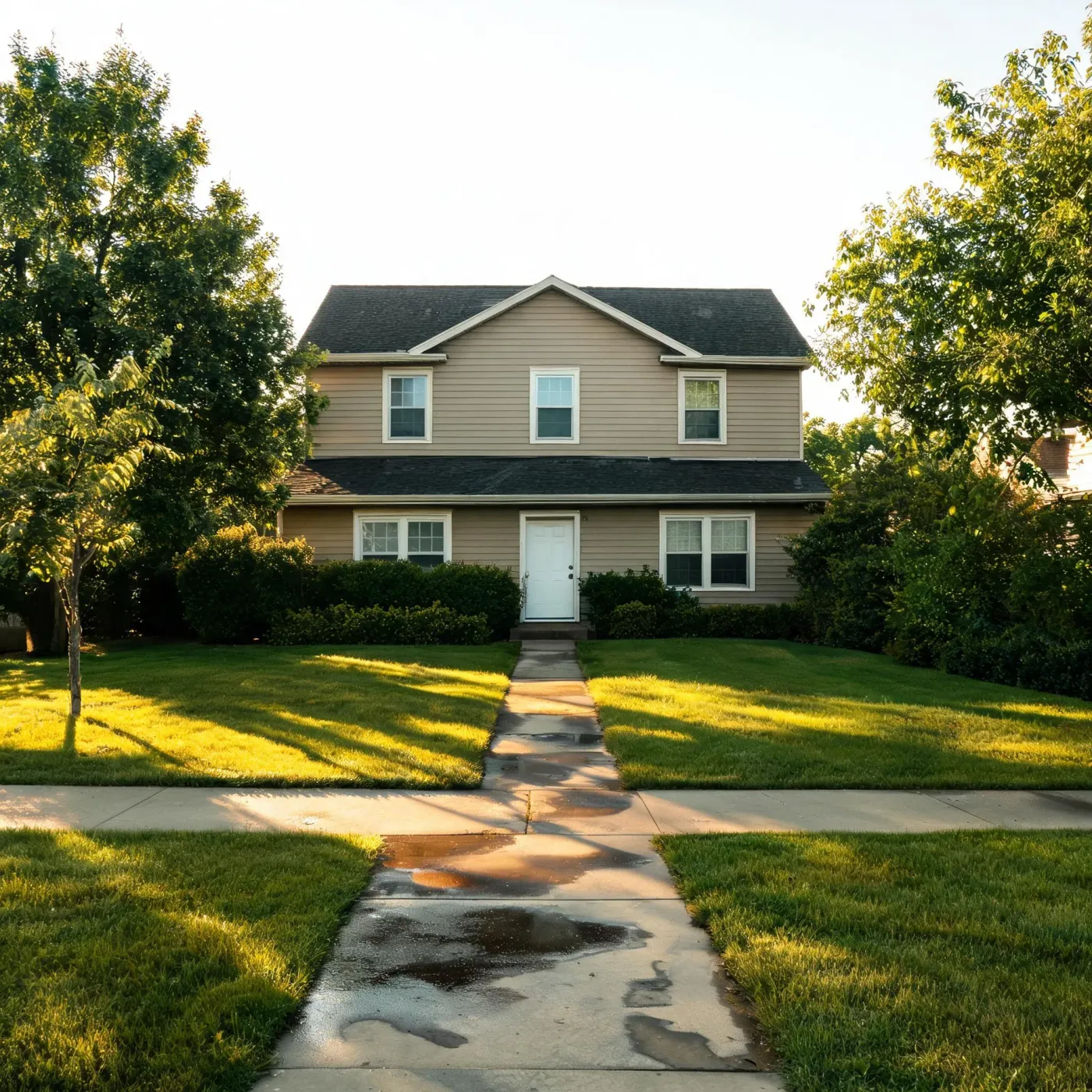
A two-story house with tan horizontal siding and a dark shingled roof, fronted by a mowed lawn, trimmed shrubs, leafy trees on both sides, and a concrete walkway leading from a wet sidewalk to the white front door.

Summers here run humid, with the dew point averaging 64°F across June, July and August, based on weather data for Kansas. That's the moisture your heat pump pulls out of the air every time it runs in cooling mode, and the coil has to work through it to do that job. It matters in winter too, because a coil that's been caked with dirt or grime from a humid summer doesn't give up heat as easily to the refrigerant. If yours has gone a few summers without a cleaning, that buildup is part of why it's working harder to keep the house warm now.

NASA POWER T2MDEW county cells weighted by homes

A gray outdoor condenser unit on a concrete pad beside a light-colored horizontal-siding house, with a disconnect box and refrigerant line on the wall, ornamental grasses and a shrub in mulch nearby, and a concrete patio in the foreground.
The unit sits clean on its pad, lines running straight to the disconnect box, mulch and shrubs kept clear of the coil.
An outdoor condenser unit sits on a concrete pad beside a house with horizontal vinyl siding, with a gray electrical disconnect box and conduit on the wall and a shrub at left.
Lines running to a disconnect box with no clear path tell you airflow to the coil is already working against the unit.
  1. Refrigerant inside the outdoor coil absorbs heat from the outside air.

  2. The compressor squeezes that refrigerant, raising its temperature further.

  3. Hot refrigerant moves inside and releases its heat through the indoor coil.

  4. A reversing valve switches the cycle to pull heat in instead of out.

An outdoor air conditioner condenser unit on a concrete pad beside a house with horizontal lap siding, with refrigerant lines entering the wall and a shrub on bare soil to the left.
Before you get your heat pump repair
A gray outdoor condenser unit on a concrete pad beside a light green lap-sided house, with a wall-mounted electrical disconnect box, mulch bed with shrubs, river rock, and a paved walkway in the foreground.
After you get your heat pump repair

Power costs 14.44 cents per kilowatt-hour statewide

At 14.44 cents a kilowatt-hour, every extra hour your heat pump runs on a cold morning shows up on the bill. A long cycle that still ends in warm air is just the cost of heat that day. One that never warms the house is paying that rate for nothing.

EIA-861 2025 statewide residential average

Running long or falling behind

  • Warm air from the vents during a long cycle means the heat pump is keeping up, not failing.
  • Air that comes out barely warm, closer to room temperature, means the unit is losing ground even while it keeps running.
  • A heat pump paired with a gas furnace should hand off to the furnace once the outdoor temperature drops into the teens or lower.
  • A clean coil with open airflow to the disconnect box lets the unit work as it was built to, even on the coldest mornings.
  • A long cycle that ends in a warm house costs what that day's heat costs; one that never catches up costs the same rate for nothing.
  • Checking the vents and the outdoor unit against what's normal tells you whether to wait it out or get someone to look at it.

A heat pump that runs nonstop on a cold Kansas morning is not automatically broken. Warm air still moving through the vents means it's keeping pace with the cold, just taking longer to do it, the way it's built to on the coldest days. The trouble starts when that air turns lukewarm, barely above room temperature, because that's the unit losing ground no matter how long it runs. Most homes here pair the heat pump with a gas furnace for exactly this reason. Once the outdoor temperature drops into the teens or lower, the furnace should take over, and if it isn't, that handoff is worth checking. So is the unit itself: a coil kept clear, with open airflow to the disconnect box, is what lets it keep working as the cold deepens. None of this changes what a long cycle costs. A cycle that ends in a warm house is paying for heat that got made. One that runs just as long and never catches up is paying the same rate for nothing, which is the real reason to stop guessing and have it looked at. Check the vents, check the outdoor unit, and you'll know which one you're dealing with. If it's the second, a contractor can get matched to your situation and take it from there, and once that happens, you're no longer the one tracking it down.

Interior room corner with sunlight from a window, showing peeling paint and damaged plaster on the wall above a white baseboard, a wooden cabinet with a pale bowl on top, hardwood floor and a patterned rug.
Interior corner of a room with tan walls, white profiled baseboard and window trim, a wood-plank floor in sunlight, and green foliage visible through the window.
An empty room corner with cream walls, white baseboard, two windows with deep sills showing green foliage outside, and a wood plank floor lit by sunlight.
Empty room corner with beige walls, white beadboard wainscoting, chair rail and baseboard, a window with green foliage outside, and sunlight casting leaf shadows on the wall above a wood floor.
Sunlit room corner with a multi-pane window, beige walls, white baseboard, wood floor with a woven rug, and a dark wooden cabinet holding a ceramic table lamp below a framed picture.

Get your heat pump to the right pro

After this form, you can stop searching for a heat pump pro.

Hand off the search

No fee to send it, and nothing to sign.