Side profile of a bearded man wearing a faded dark blue baseball cap and a matching dark T-shirt against a plain light gray background.

Why your heat pump blows cold air in a Kansas winter

RepairHeat PumpKansas
Step 1 of 2

What ZIP code is the job in?

A heat pump blowing cold air in a Kansas winter is often doing exactly what it's built to do. In heating mode, the air coming out of the vents is warmer than the outdoor air outside, but it's still cooler than your skin, so it can feel cold even when the system is working fine. Below about 30 to 35 degrees, a heat pump pulls less heat from the outside air and leans more on backup heat to keep up, and if that backup isn't kicking in, the air can feel truly cold rather than just mild. It can also mean something is wrong: low refrigerant, a stuck reversing valve, a frozen outdoor coil, or a backup heat strip that isn't firing. Since most homes in Kansas heat with gas furnaces, a heat pump here is often paired with one, and if the heat pump stops pulling its weight, the furnace should be picking up the slack. If yours isn't, that's worth having a contractor look at soon.

A bearded man in a plaid flannel shirt stands indoors looking out a window at snow-covered conifers, with a ceramic mug on the wooden sill and wooden cabinets behind him.
A smiling man in a dark blue T-shirt sits on a light gray sofa in a living room with a wooden shelf and window behind him, with a laptop edge visible in the foreground.

Why the air feels cool

A heat pump moves heat instead of burning gas to make it. Vent air in heating mode usually lands somewhere in the 90s, well below your body temperature of 98.6, so it reads as cool against your skin even though it's doing its job. That feeling gets more pronounced the colder it is outside, because the heat pump has less warmth in the outdoor air to pull from. On a day in the teens or single digits, the air at the vent will feel noticeably cooler than it did in November, and that alone doesn't mean anything is wrong.

When it stops being normal

If the air at the vent is truly cold, not just cool, and the house keeps losing ground, something has changed in how the system is working. A low refrigerant charge, a failed reversing valve, or a backup heat strip that isn't kicking in can all leave you with air that never gets past room temperature. Frost building up on the outdoor unit and staying there is another sign, since a working system defrosts itself on a cycle. A contractor who works on heat pumps in Kansas winters can check the charge, the valve, and the backup heat and tell you which one is behind it.

A woman in a gray turtleneck sweater stands near a window with snow outside, in a dimly lit living room with a lit Christmas tree, table lamp, sofa and bookshelf.
A woman in a cream knit sweater with her hair in a bun stands in a dimly lit living room looking out a large window at snow-covered evergreen trees, with a lamp, sofa, framed picture and lit candle behind her.
A woman in a thick gray knit sweater stands beside a window looking out at falling snow, with a dimly lit living room containing a lamp, sofa, string lights and a candle behind her.
A woman in a gray turtleneck sweater stands in a dimly lit room with a lit table lamp, framed picture and sofa, looking toward a window with snow outside.

When it's normal for your system

If the air is warm to the touch but just not hot, and the house still climbs toward the thermostat setting over time, the heat pump is working the way it's designed to. This is common on cold Kansas mornings when the outdoor unit is pulling heat from air in the 20s or 30s. Check the thermostat an hour later. If the house is a degree or two warmer than when you checked, the system is keeping up. That's worth knowing before you call anyone, since it can save you a service visit for something that isn't broken.


When it's worth a call

If the air coming out is truly cold, not just cool, or the house keeps losing ground no matter how long the system runs, something is off. Maybe the outdoor unit is iced over without defrosting itself, or the auxiliary heat strips aren't kicking in when they should, or the reversing valve is stuck between modes. These aren't things you can diagnose by feel alone, and running the system for days in this state can mean higher bills or added strain on parts that are already struggling.

Power costs 14.44 cents per kilowatt-hour statewide

At 14.44 cents per kilowatt-hour, every hour your heat pump runs on backup electric strips instead of its normal cycle costs more than straight heat pump operation would. If yours is blowing cold and leaning hard on backup heat to catch up, that's where the bill grows.

EIA-861 2025 statewide residential average

A gray outdoor condenser unit on a concrete pad beside a house with horizontal lap siding, with a metal disconnect box and refrigerant lines on the wall, river rock and mulch to the sides, and a green shrub at right.

Clear coils, normal operation

This outdoor unit sits clean on its pad, fins open and free of debris. Air moves through it the way it's supposed to, so the heat pump can pull warmth from the cold outside air without strain. If yours looks like this, a cold-feeling vent is likely just how the system runs.

A dirty outdoor air conditioner condenser unit with debris on its coil grille, sitting on a concrete pad beside a light-colored horizontal siding wall, with bare dirt ground in front and a shrub at right.

Clogged coils, real trouble

This unit's grille is packed with dirt, leaves, and plant matter. Airflow through the coil is blocked, so the heat pump works harder to move the same heat and may fall behind fast. If your outdoor unit looks like this, that's worth a technician's look, not just winter doing its thing.

Why does my heat pump blow cold air when it's defrosting?

You've noticed the air from your vents turns noticeably cold for a few minutes at a time, then warms back up, and it seems to happen on its own schedule rather than when you touch the thermostat. On a cold Kansas day you want to know if that cycle is the unit struggling or just part of how it runs.

It's running a defrost cycle, and the fan keeps blowing while it does

Frost builds up on the outdoor coil when it's cold and damp outside, and the heat pump has to melt it off every so often to keep working. To do that, it reverses itself and briefly acts like an air conditioner, pulling heat from inside the house to warm the outdoor coil. The indoor fan often keeps running during this, which is why you feel cold air for a few minutes. Once the coil is clear, the system switches back to heating and the warm air returns. A defrost cycle like this usually runs for several minutes at a time, not longer, and it should end on its own without you doing anything.

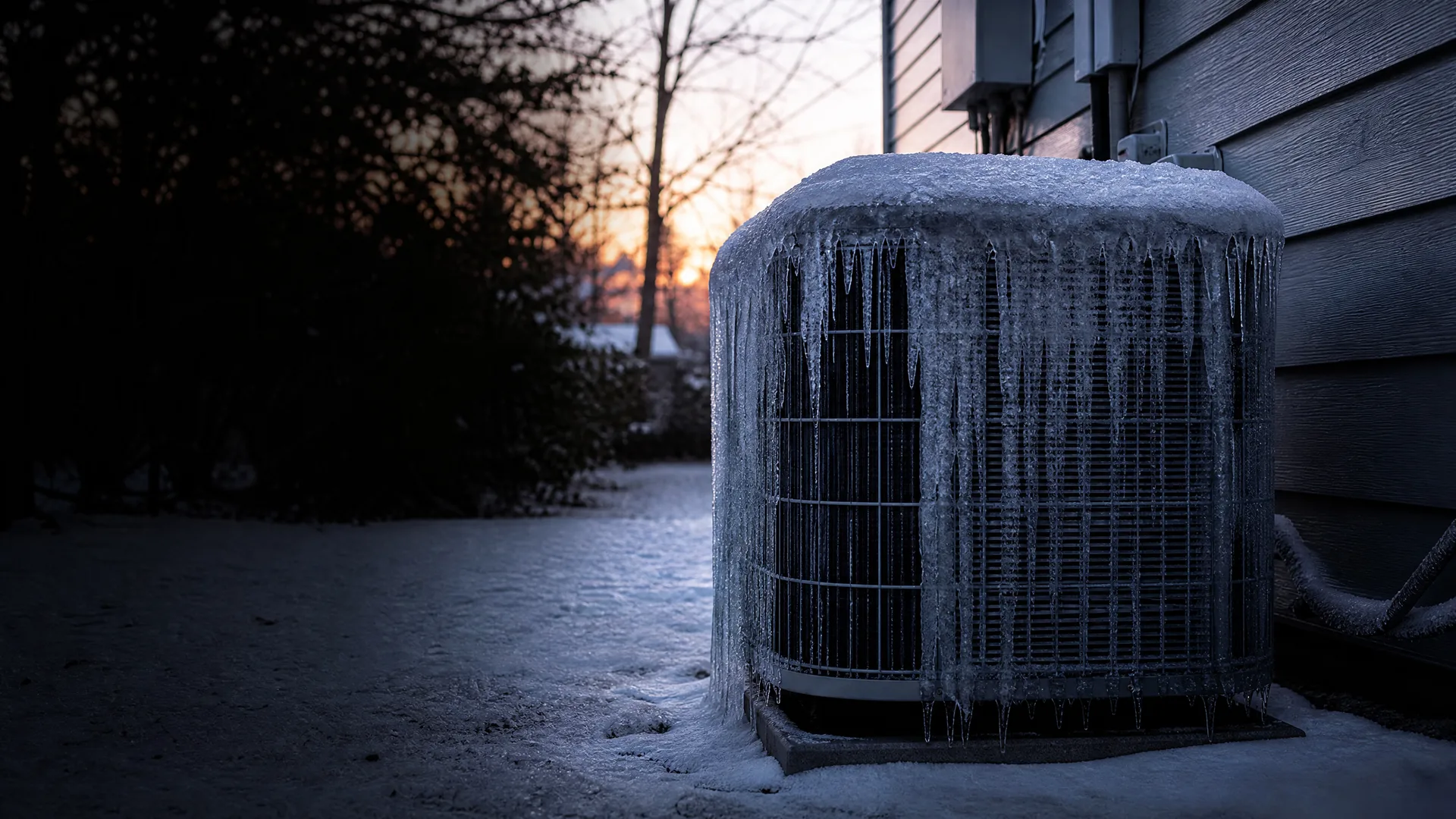
An outdoor condenser unit beside a horizontally sided house, encased in thick ice with hanging icicles, on snow-covered ground at dusk with bare trees and a sunset behind.

You go out for the paper a little after six and see it before you're even off the porch. The outdoor unit is sheathed in ice, thick over the fins, down over the sides of the cabinet. The sky is just starting to go gray. It's cold enough that your breath hangs in front of you, and the ground in the side yard is still hard with frost. Inside, the vents have been pushing cold air for the better part of twenty minutes now, longer than any defrost cycle should run. You stand there a second, coffee forgotten, looking at the ice, then go back in to feel the register again, already knowing you'll want someone to look at this before it gets worse.

A local pro for your heat pump repair

Describe your heat pump job once, to one pro.

You only hire the pro if you want to.

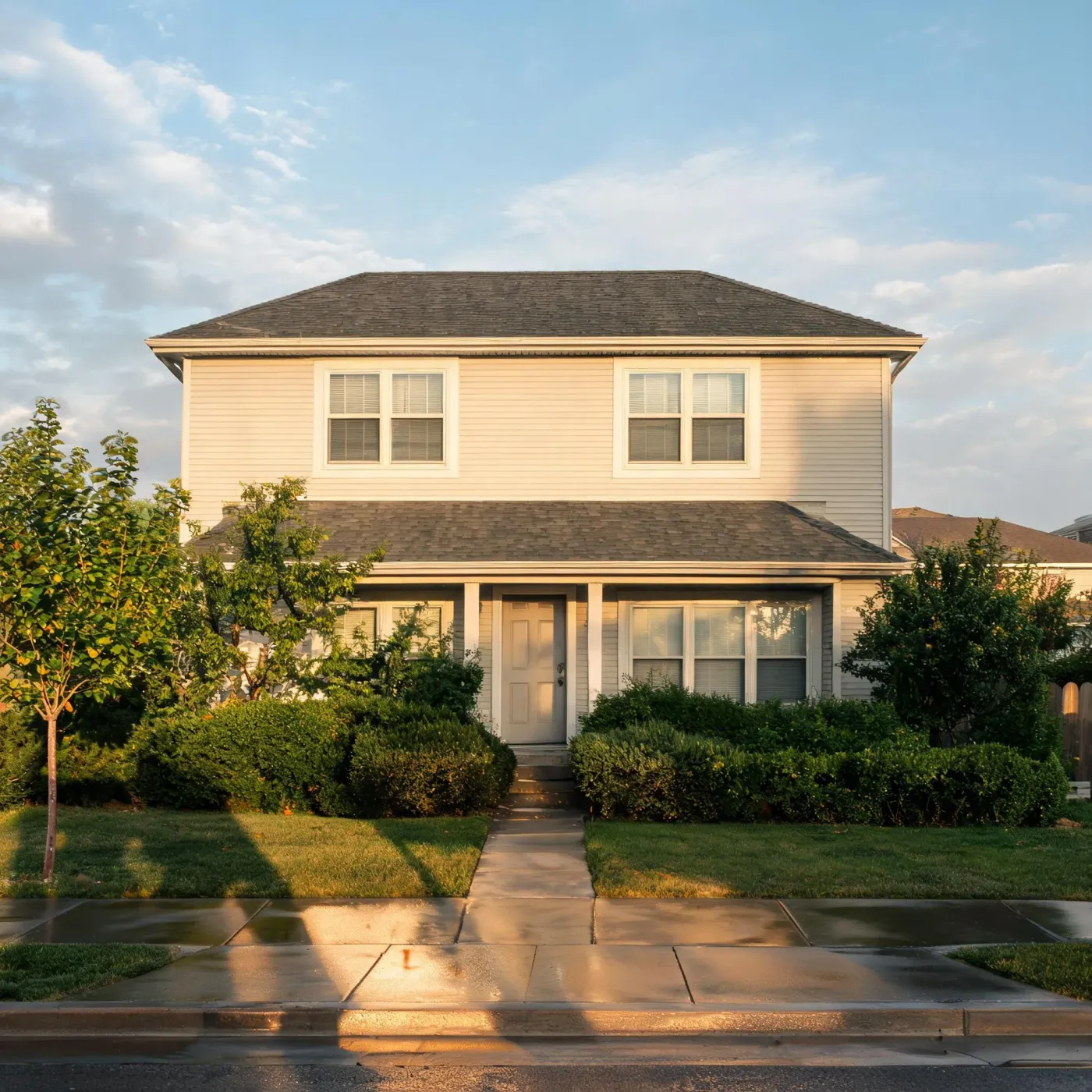
Two-story house with pale horizontal siding and a gray shingled roof, fronted by trimmed hedges, a small tree, a lawn, and a concrete walkway leading to the front door, photographed in low warm sunlight.

Summer here isn't just hot, the air sits heavy, with a dew point that averages 64°F across June, July and August, based on weather data for Kansas. That's the same system working the other direction come winter. A heat pump pulling moisture out of thick summer air all season is doing real work on its coils and its defrost cycle, and that wear carries over. Heading into winter, a unit that spent the summer fighting humidity is more likely to struggle reversing into heating mode, which is part of why you're feeling cold air from the vents now instead of warm.

NASA POWER T2MDEW county cells weighted by homes

Normal Defrost or a Repair Call

Normal for winter

  • Vent air that feels cool but is still warmer than the room will raise the house temperature over time if you check it with a thermometer.
  • A short burst of cold air every so often, then a return to warm, usually means the unit is mid defrost cycle rather than failing.
  • The house reaches the thermostat setting, even if it takes longer on the coldest Kansas mornings than it does in October or April.
  • Frost on the outdoor unit that clears within 10 or so minutes on its own is part of how the system sheds ice in freezing weather.
  • Backup electric strips kick in and the air gets noticeably hotter for a while when the outdoor temperature drops low enough that the heat pump alone can't keep up.

Needs a look

  • Air stays cold at the vent for more than a few minutes with no warm-up, not just during a brief defrost cycle.
  • The house keeps losing ground against the thermostat setting instead of slowly catching up over the course of the day.
  • Ice builds up on the outdoor unit and doesn't clear on its own, covering the fins or the sides of the cabinet.
  • Backup heat runs constantly instead of cycling on for short stretches, which shows up as a higher bill at 14.44 cents per kilowatt-hour than normal heat pump operation would.
  • The outdoor fan isn't turning, or you hear it straining, while the air inside stays cold no matter how long the system runs.
  • The system short cycles, turning on and off every few minutes rather than running a full heating cycle.
An outdoor air conditioning or heat pump condenser unit on a concrete pad beside a house with horizontal vinyl siding, a gray electrical disconnect box and conduit on the wall, and a concrete walkway in the foreground.
Before you get your heat pump repair
A gray outdoor condenser unit on a concrete pad beside a house with gray lap siding, connected by conduit and refrigerant lines to a wall-mounted disconnect box, with a green shrub and mulch bed at left.
After you get your heat pump repair
A gray outdoor air conditioner or heat pump unit on a concrete pad beside a house with horizontal lap siding, with conduit and refrigerant lines running up the wall and green shrubs and mulch at left.

Clean grille, open airflow

The outdoor unit sits on its pad with the grille clear and the fins open. Air pulls through it without strain, which is what lets the heat pump draw warmth out of cold outdoor air in the first place. A unit that looks like this is set up to run the way it's supposed to.

An outdoor air conditioning condenser unit on a concrete pad beside a house with horizontal siding and a concrete foundation, with refrigerant lines running to a wall-mounted disconnect box and shrubs at left.

Dust caked on the grille

Dirt and debris have built up over the metal grille, blocking the airflow the unit needs to pull heat from outside air. Coil that can't breathe has to work harder for the same result, and if it's blowing cold air now, this is one of the first things worth checking.

Is this just blowing cold, or is something actually wrong

Walk through the house and check a few rooms against each other. If every vent puts out that same cool-but-not-cold air and the house still gets to the temperature you set, that's the heat pump working. What's worth noticing is if one room runs colder than the rest, if the air at the vent feels no different from the room air, or if the unit outside is running constantly without the house ever catching up. That pattern usually means the heat pump is losing the fight, not just doing its normal job, and the house will cost more to heat every day it runs that way until someone looks at it.

  1. Indoor coil pulls heat from your home's air and refrigerant carries it outside

  2. A reversing valve switches the refrigerant flow to run the cycle in heating mode

  3. Outdoor coil gives up that heat to the colder outside air using the refrigerant

  4. Compressor pressurizes the refrigerant so it can release heat indoors at a higher temperature

A man in a dark jacket and khaki pants walks through an open gate in a stone wall toward a woman standing in the open front doorway of a single-story white house with a dark shingled roof and river-rock accents.

So is the cold air a problem or not

Most of the time, no. Cool-feeling air that still warms the house, short defrost cycles, a unit working harder on a 20-degree morning than a 45-degree one, all of that is a heat pump doing its job in Kansas winter weather. The air only means trouble when the house stops climbing to the thermostat setting, the unit ices over and stays that way, or the air stays cold no matter how long it runs.

If you've gone through the checks above and something still doesn't line up, you don't have to track down a contractor on your own, explain the ice and the vent temperatures over the phone to three different companies, and sort through whoever calls back first. Tell the page what you're seeing and you'll be matched with a contractor who works on heat pumps in Kansas, and they'll reach out to you directly.

A living room with a cream sofa and knit throw beside a window, with a wooden coffee table in the foreground holding a round woven tray, a small bowl, and a speckled vase of green leafy branches.
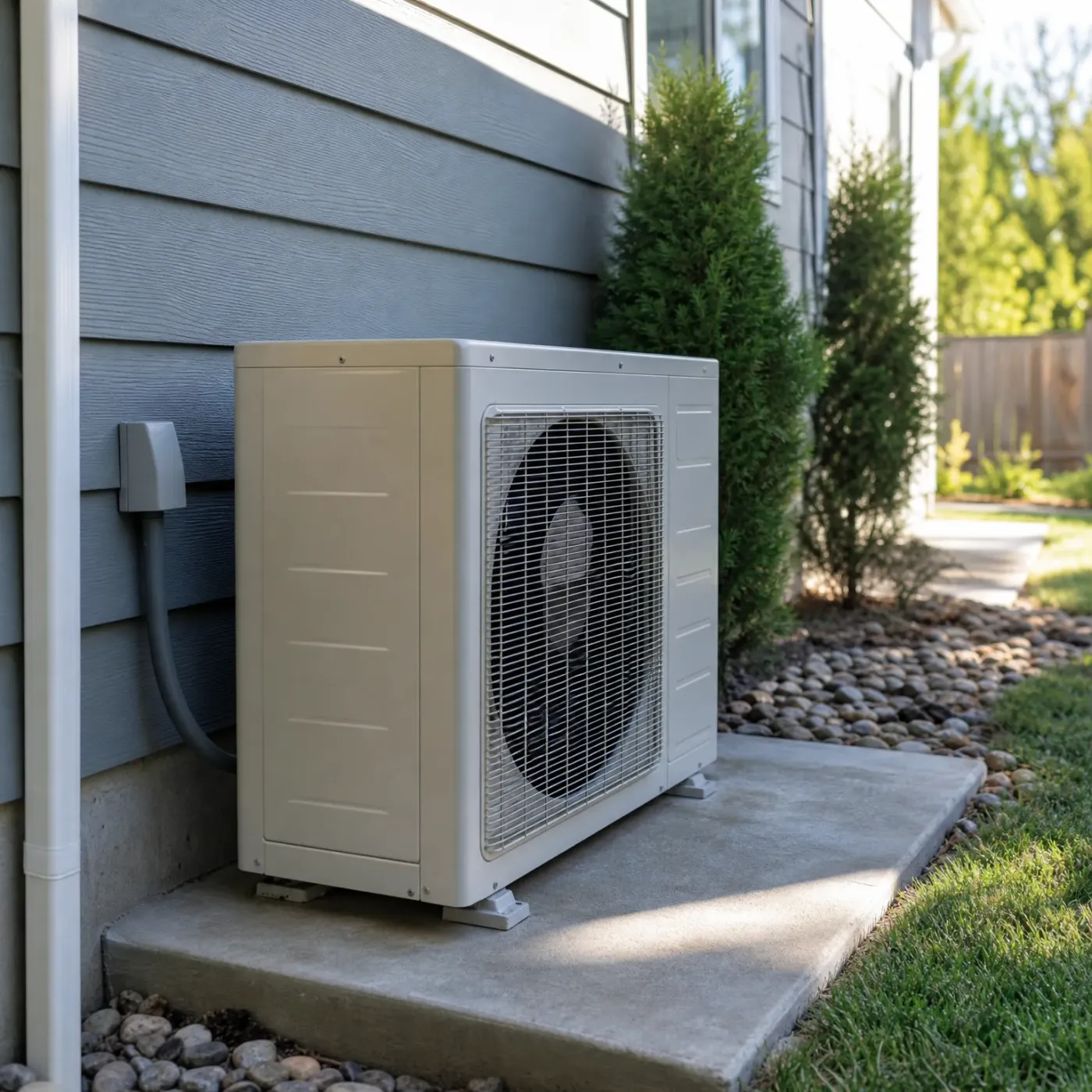
A beige outdoor heat pump or air conditioner condenser unit on a concrete pad beside a gray horizontal-siding house, with a disconnect box and conduit on the wall, shrubs, river rock and lawn nearby.

Get the right pro for your heat pump

Answer a few questions

Fill out one short form instead of calling around.

Asking costs nothing, and the choice to hire stays yours.