 Find a heat pump pro
Why your heat pump isn't cooling in Kansas summers
Tell a local repair pro what your heat pump is doing.
A Kansas summer gets sticky, and when your heat pump runs all day without cooling the house, you notice fast. Maybe it's blowing air that isn't cold. Maybe it's running nonstop and the thermostat won't budge. Maybe it cools fine until the afternoon heat hits and then gives up.
A heat pump works harder in summer than people expect, and a few things can stop it from keeping up: low refrigerant, a failing reversing valve, a dirty outdoor coil, a fan motor on its way out. Some of these you can check yourself. Most need someone who can get a gauge on the system and see what it's actually doing.
That's where this gets easier. Instead of searching for a contractor, calling a few, explaining the same problem three or four times, and comparing quotes that don't quite line up, you answer a few questions once. That goes to a contractor who works on heat pumps in your area and knows what Kansas summers do to them. They reach out to you directly.
You still have a diagnosis ahead of you, and whatever repair comes out of it. That part doesn't disappear. What disappears is the legwork of finding someone qualified to look at it. No calling around. No repeating yourself to five different shops. No guessing which quote is fair.
Below, you'll find what typically causes a heat pump to stop cooling, and what's worth checking before anyone comes out. But if you're ready to get someone on it, the next step is simple: tell us what's going on, and a contractor who handles this will be in touch.
Why isn't my heat pump cooling my house in the summer?
A heat pump that runs all day without bringing the house down to temperature usually means something specific is wrong, not that the system is simply overmatched by the heat. Before calling anyone, it helps to know what's actually likely going on, especially on the muggiest days when the system seems to be working its hardest for the least result.
Low refrigerant or a failing outdoor unit is the most common cause
A heat pump cools by moving heat out of the house, and that depends on refrigerant levels staying correct and the outdoor unit working the way it should. If the charge has dropped from a slow leak, the system can't pull enough heat out of the air inside, so it runs long and never catches up. A dirty or blocked outdoor coil causes the same result, because the unit can't release heat outside fast enough. A failing compressor or a weak fan motor will do it too. On a muggy Kansas afternoon, any of these show up worse, since the system is already working against higher humidity and heat. Once one of these parts is behind, the thermostat number stops moving no matter how long it runs.
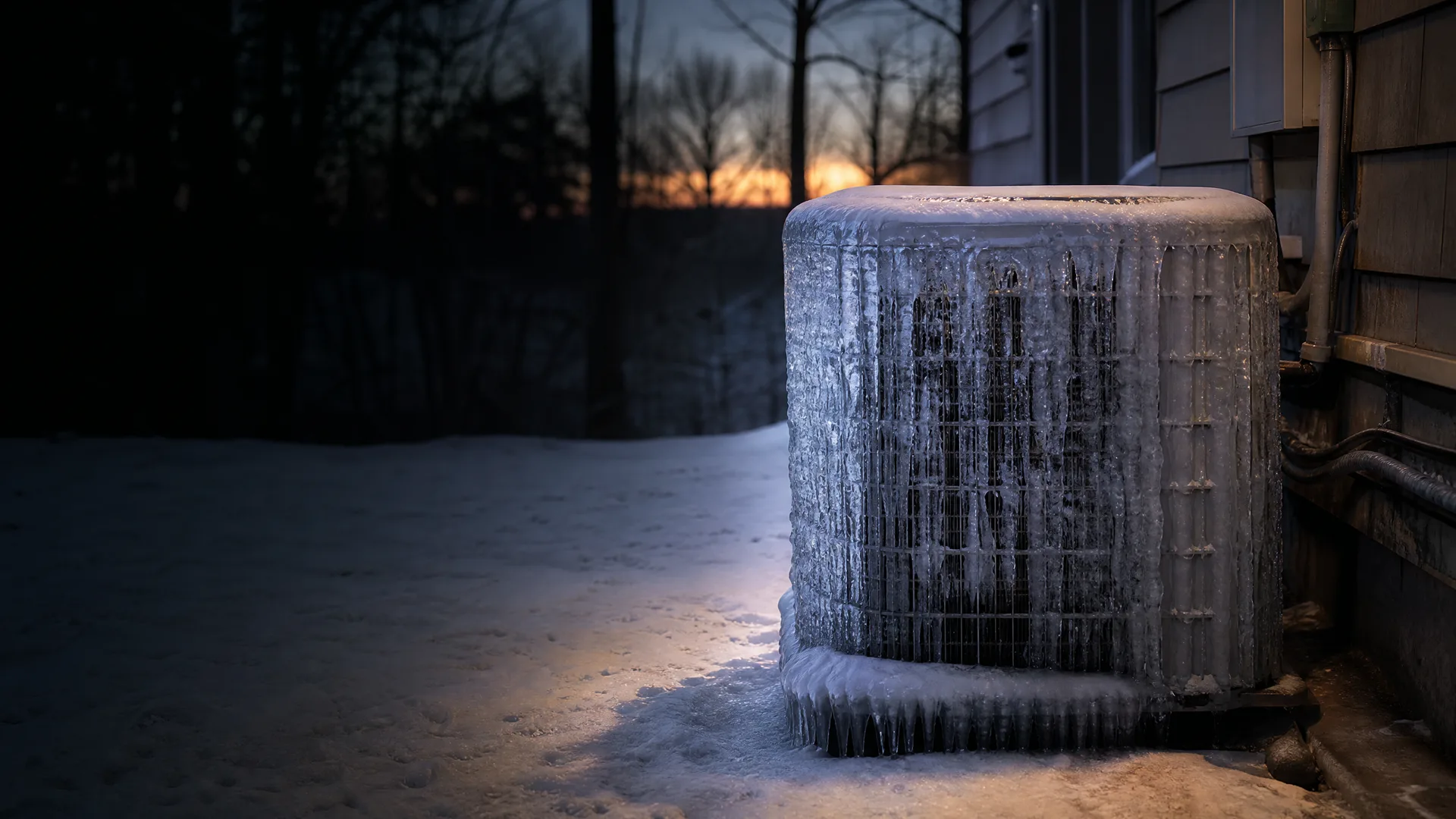
The outdoor unit sits iced over at dawn in January, thick white crust over the coils, a few inches of snow undisturbed around the pad. Inside, the house never got past 65 overnight, and the furnace has been covering for a system that stopped pulling its weight hours ago. You go out in the cold to look at it because the thermostat told you something was wrong before you ever opened the door. The ice tells you more plainly than any reading could. Right now it isn't a question of comfort. It's a unit that needs someone out to it before the day gets going, not a service plan or a filter change.
A local pro for your heat pump repair

Explain the job once and skip repeating it on every call.
There's no charge for the request.
How a Heat Pump Cools
- A heat pump cools by pulling heat out of indoor air and moving it outside through refrigerant, not by making cold air directly.
- The reversing valve is what switches the system between heating and cooling, and a stuck valve leaves it running in the wrong mode.
- Low refrigerant from a slow leak means the indoor coil can't absorb enough heat, so the air coming out feels barely cool.
- The outdoor fan has to move enough air across the condenser coil to dump that heat, and a failing motor or blocked coil stops that.
- A dirty indoor coil or a clogged filter cuts airflow across the evaporator, which drops its temperature below freezing and ices it over.
- Once ice builds on the coil, the system can run for hours without lowering the house temperature at all.
A heat pump doesn't make cold air. It pulls heat out of the air inside your house and moves it outdoors, using refrigerant that cycles between an indoor coil and an outdoor coil. A compressor pressurizes that refrigerant so it can give up its heat outside, then sends it back in to absorb more. For that to work in cooling mode, a part called the reversing valve has to be in the right position. If it sticks, the system can keep running like it's heating, even in July, and the house never cools down.
Everything downstream of that depends on refrigerant levels and airflow being right. A slow leak means there isn't enough refrigerant in the system to absorb heat properly at the indoor coil, so the air coming out of your vents feels weak, not cold. Outside, the condenser fan has to move enough air across its coil to get rid of the heat the refrigerant is carrying. A failing fan motor or a coil packed with cottonwood and dirt chokes that off. Inside, a dirty coil or a clogged filter cuts the airflow going the other direction, over the evaporator coil, and that coil can drop below freezing and ice over. Once that happens, the system can run nonstop and barely touch the thermostat, because the ice itself is blocking the heat transfer that's supposed to happen.




Why a stuck reversing valve fools people
A reversing valve that sticks in heating mode still runs the compressor and still moves air through the vents. The system sounds normal. The thermostat shows the set temperature you asked for. What's missing is the one thing a reader can actually check: hold your hand to a supply vent. If the air moving out is warm instead of cold while the thermostat calls for cooling, the valve is a likely reason, not a low charge or a dirty filter. Refrigerant leaks tend to show a slower slide, cooling a little less each week. A valve stuck wrong shows up all at once, usually on the first hot day when you switch the system over from heat to cool.
What the outdoor unit can tell you
Stand next to the outdoor unit while it runs. The fan should be turning and air should be blowing out the top, warmer than the air around it, because that's the heat being carried out of your house. If the fan isn't moving, or the unit is silent while the indoor blower runs, the compressor or a capacitor inside that outdoor unit may not be starting at all. A unit that's running but coated in dirt or hemmed in by grass and leaves can't shed that heat well either, and a system that can't reject heat outside can't pull heat out of your house, no matter how long it runs.


Power costs 14.44 cents per kilowatt-hour statewide
At 14.44 cents per kilowatt-hour, a heat pump stuck running nonstop doesn't just fail to cool your house, it drives the bill up while doing it. A unit stuck in the wrong mode or short on refrigerant works harder for less, and you pay full price for air that never gets cold.
EIA-861 2025 statewide residential average


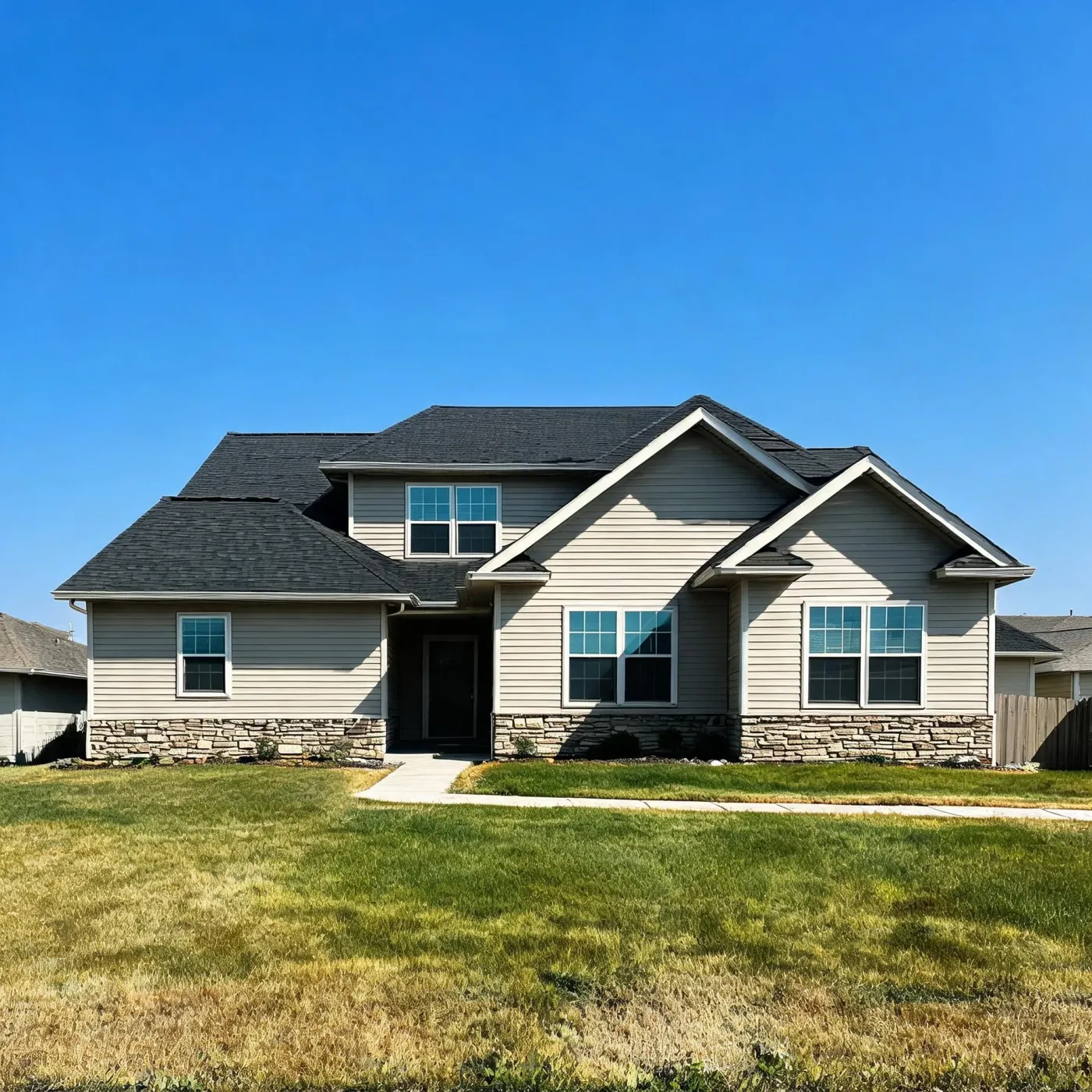
A dew point near 64°F is what makes a Kansas summer feel heavy, not just hot, and it's the average across June, July and August from NOAA climate data for the state. Air that thick holds a lot of moisture, and a heat pump has to pull that moisture out along with the heat to make a room feel comfortable. If yours isn't working right, you'll feel it before the thermostat shows it: the house reads the set temperature but still feels damp, floors feel clammy, and the air sits heavy instead of feeling cool.
NASA POWER T2MDEW county cells weighted by homes
A heat pump that runs all day without cooling the house has a reason behind it, and that reason has a fix. Low refrigerant, a stuck reversing valve, a dirty coil, a failing capacitor, each one shows up the same way from the thermostat: warm air, long run times, a house that never quite gets there. None of that gets better by waiting it out through another sticky Kansas afternoon. What usually takes the time isn't the repair itself, it's finding someone who can look at it: searching through contractors, calling a few to see who answers, explaining the same thing about your system over and over, then sorting through quotes that don't quite match up. You already know what's wrong with your evenings when the house won't cool down. What you need now is someone qualified standing in front of that outdoor unit, not another search result.

Get the right pro for your heat pump
Skip searching for a heat pump pro and answer a few questions instead.