Send the request today and stop worrying about who to call.
Most homes in Kansas heat with gas, so the heat pump is doing the cooling work when summer turns sticky, and sometimes the backup heat work too. When it won't turn on, you're not just locked out of one mode. You could be without air in July or without reliable heat on a cold morning, depending on how your system is set up.
A heat pump that stays dead at the thermostat can mean a few different things. The outdoor unit might not be getting power at all. The thermostat might be calling for a mode the system can't deliver right now. A breaker could be tripped, or a safety switch could be holding the whole thing off until something gets fixed. None of that is something to guess at from inside the house.
What it usually isn't is a quick reset you can do yourself twice and expect to fix. If it needed that, it would likely already be running.
Figuring out who to call, checking if they work on heat pumps and not just furnaces, getting someone out to look at it, and then doing that again if the first quote feels off: that's the part that eats an afternoon or a week, depending on how it goes. You don't have to do that here.
Send the form below and that search is over. You're not left comparing names or waiting on hold to ask if someone even services heat pumps. A licensed contractor who works on these systems gets your information and the problem you're having, and takes it from there.
Whether it's a dead thermostat, no power to the outdoor unit, or something about to short-cycle the whole system, you'll want someone who can look at it and tell you straight. That part starts once you send the form.
Why won't my heat pump turn on at all?
You go out to check the outdoor unit or look at the thermostat and nothing happens. No hum, no fan, no click. In Kansas, with gas heat covering most of the winter load, this unit is your cooling in July and maybe your backup heat too, so a dead system is not a small thing to wait on.
Most often it's power to the unit, not the heat pump itself
A heat pump that won't turn on at all is usually losing power before it ever gets a chance to run. That can mean a tripped breaker, a blown fuse at the disconnect box next to the outdoor unit, or a thermostat that isn't sending a call for power through to the system. It can also mean a safety switch has shut the unit down on purpose, which happens when something else is wrong and the system is protecting itself rather than failing on its own. Since this unit does your cooling through a Kansas summer and often backs up the gas furnace on the coldest days, a full no-power shutdown is worth checking the same day rather than waiting to see if it comes back on its own.
Running the way it should
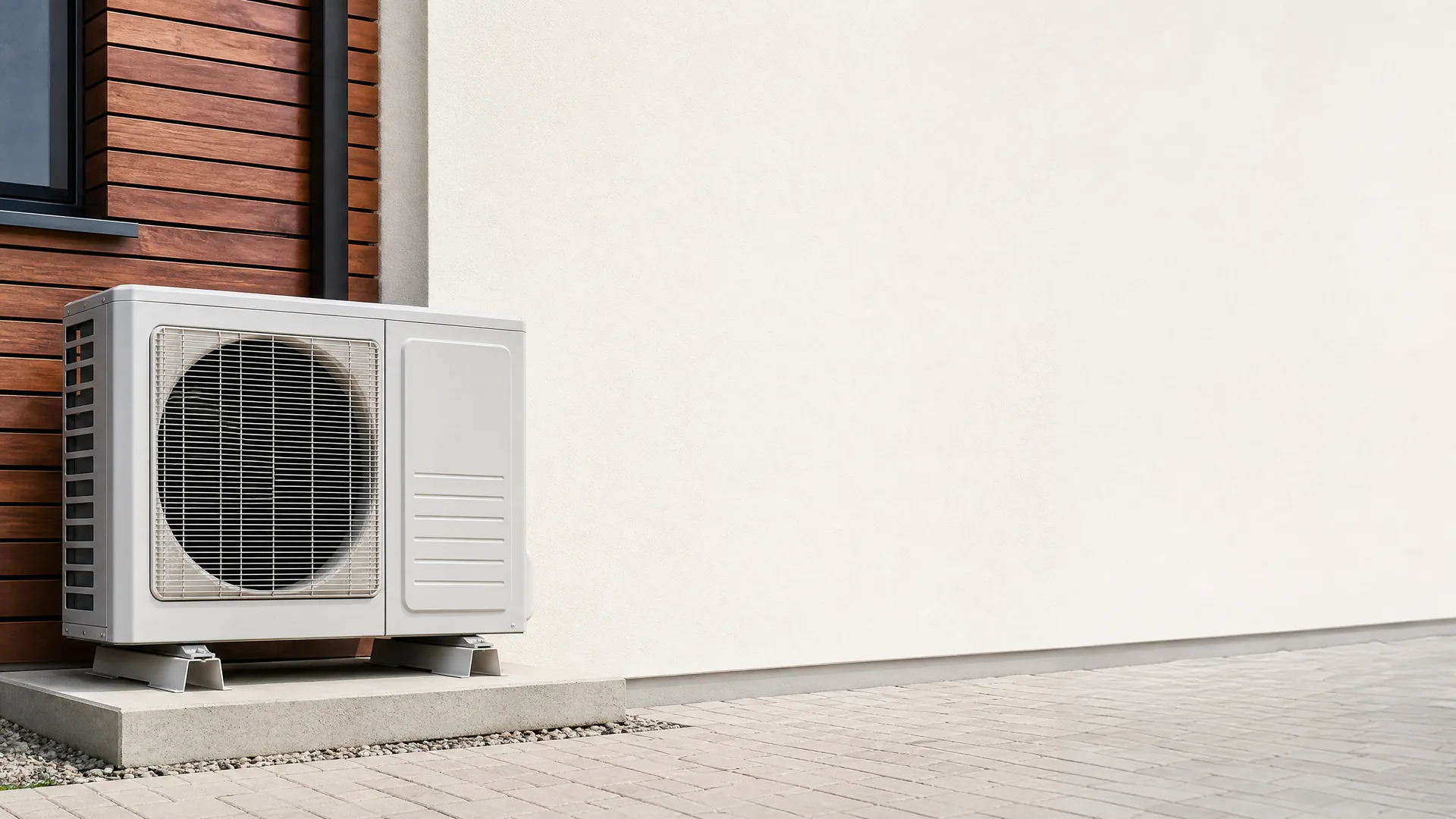
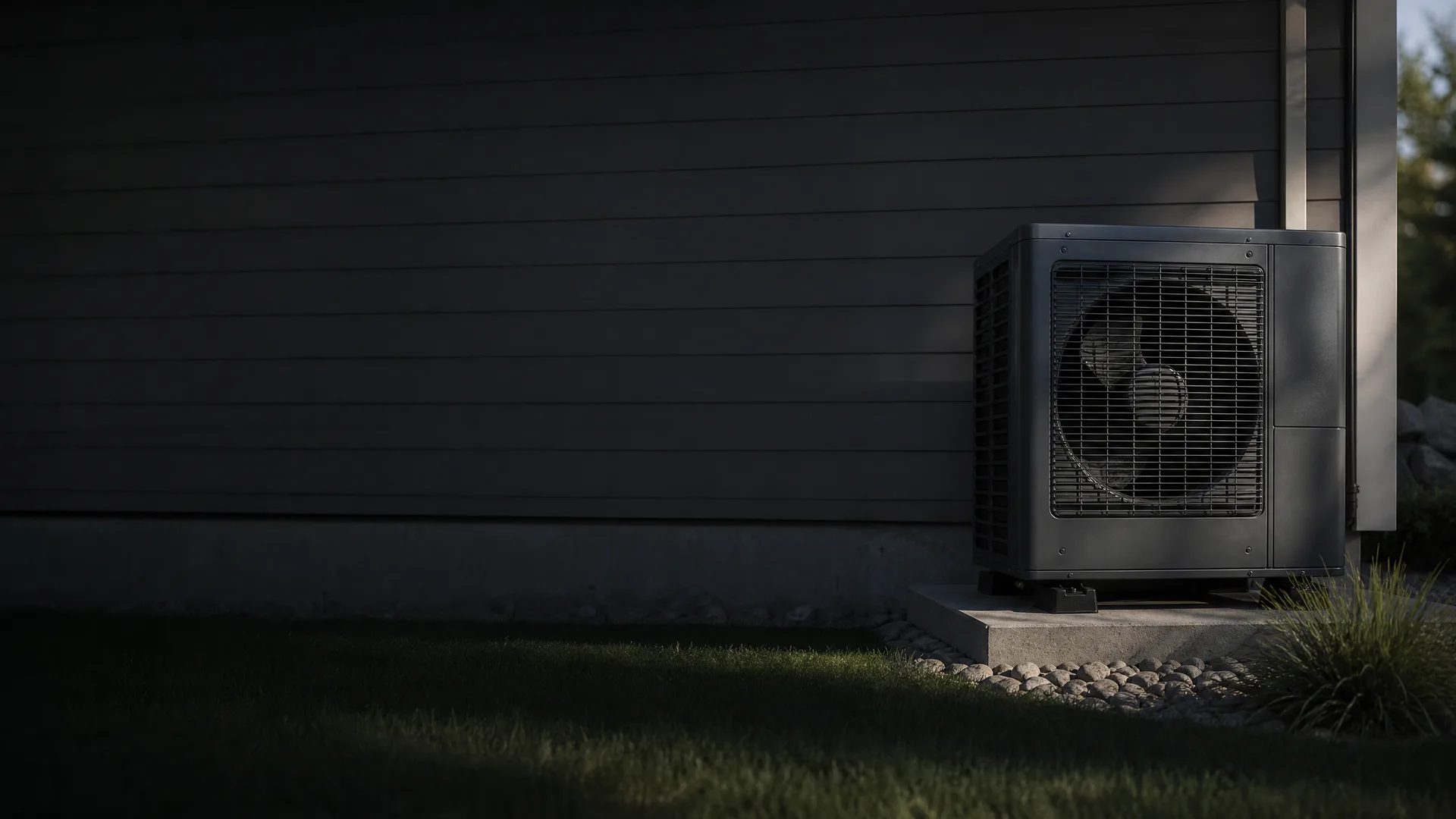
The outdoor unit hums along on its pad, fan turning, lines running clean into the wall. Nothing soiled, nothing loose at the disconnect. This is what you want to see when you check it, especially once Kansas summer turns sticky and the system is carrying the cooling load on its own.
Showing its age
Years of grime have built up on the cabinet and the coil underneath it. Nothing obviously broken, but a unit this soiled has to work harder to move the same air. If yours looks like this and won't start, the buildup may not be the whole story, but it rarely helps.
The thermostat is the easy check
Before anything else, look at the thermostat itself. If the screen is blank, dead batteries or a tripped breaker could be the whole story. Set it to cool and drop the temperature five degrees below the room. If the unit still doesn't answer, the problem sits past the thermostat, in the wiring or the outdoor unit, and that's a job for someone who can test voltage at the air handler and the disconnect box outside.
A tripped breaker hides the real cause
Flipping a breaker back on and watching the unit start again feels like the fix, but a breaker that trips once can trip again within days. Heat pumps pull a steady draw when they start, and a breaker that trips under that load is often telling you about a failing capacitor or a short somewhere in the unit, not about the breaker. Resetting it gets you cool air for now. It doesn't tell you why it tripped.
Explain the job once and skip repeating it on every call.
Asking costs nothing, and the choice to hire stays yours.
What a dead unit costs you in July
If the outdoor unit sits silent on a sticky afternoon, the house starts climbing right away. No fan, no hum, no cool air moving through the vents. With gas heat carrying your winters, this is the one system standing between you and a house that holds at 85 degrees while everyone inside waits it out. A short delay matters less in April. It matters a lot the week it's humid and the forecast says more of the same.
What a dead unit costs you in January
Plenty of Kansas homes lean on the heat pump for backup heat when the gas furnace can't keep up on the coldest mornings. If the unit won't start, that backup disappears right when the furnace needs it most. The house doesn't go cold all at once, but the furnace works harder with no help, and you lose the cushion you were counting on without knowing it was missing until the thermostat can't hold the number you set.
What happens between the thermostat call and the unit starting
A heat pump that won't start has a sequence working against it, not just one part. The thermostat sends a call for cooling to the air handler's control board. That board sends 24 volts out to the outdoor unit's contactor, a small switch that closes to let full power reach the compressor and fan. If the contactor is pitted or stuck, that 24 volts arrives and nothing closes. If the capacitor next to it has gone weak, the contactor closes fine but the compressor can't get moving. Either way, you get the same silence standing at the unit.
A low refrigerant charge or a tripped safety switch can stop the same sequence further along, after the electrical side has already done its job. Sorting out which point in that chain failed means testing voltage at the contactor and checking the capacitor's rating against what it's stamped for, not guessing from the outside. That's a different visit than calling around to find someone who works on heat pumps in Kansas, explaining the no-start problem over the phone two or three times, then waiting on quotes to see who's reasonable. One form here and that part of it is off your plate.
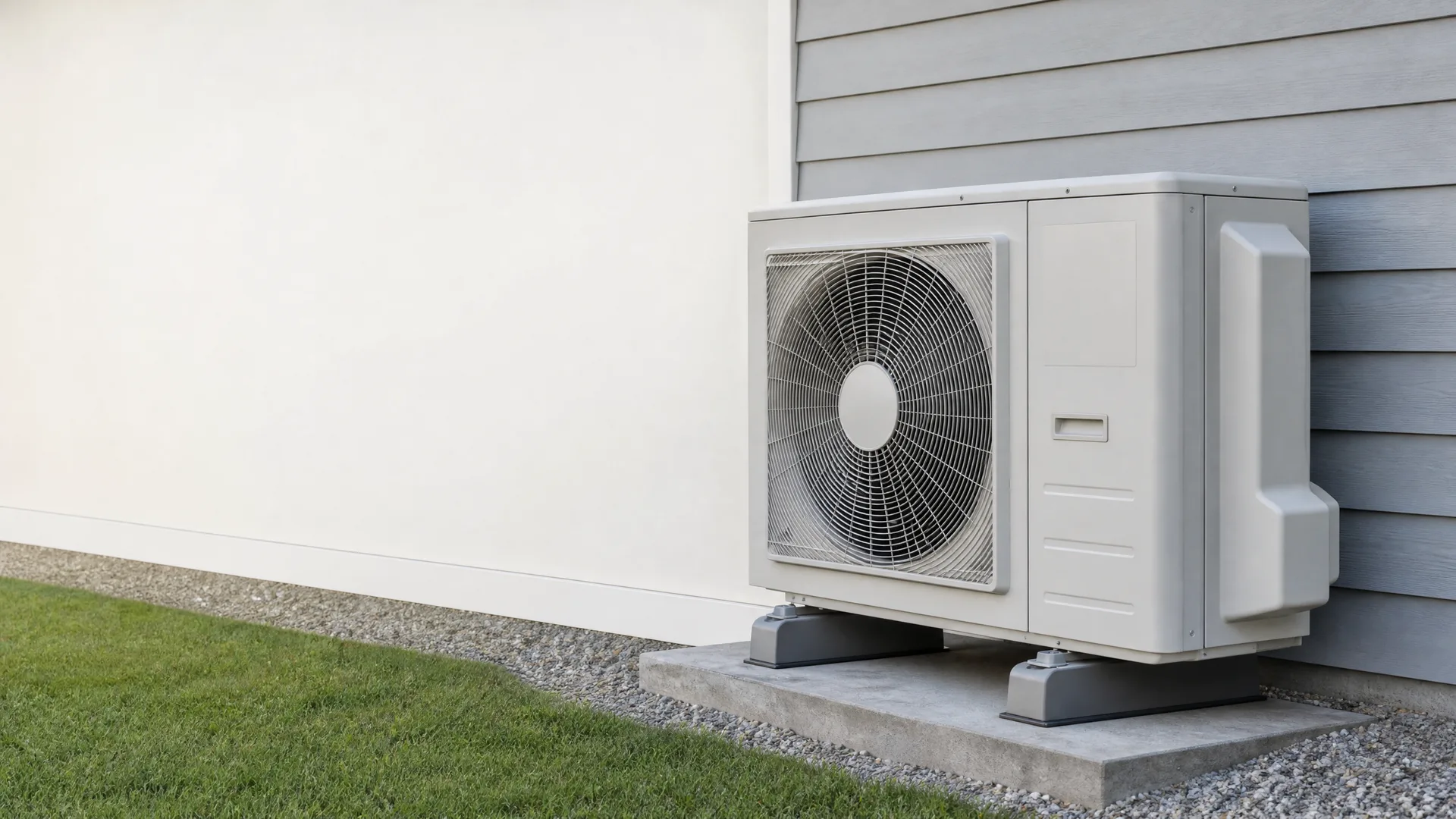
The unit doing its job
The fan spins, the lines run clean to the disconnect, and the pad underneath sits level and clear. Nothing rubs the cabinet, nothing blocks the grasses or the shrub nearby. You check it, hear the hum, and go back inside.
The unit gone quiet
Against the siding, the unit sits still. No fan turning, no hum from the pad, nothing at the disconnect box. The concrete around it is bare and the shrub beside it hasn't moved. This is the one that gets you on the phone.
Before you get your heat pump repairAfter you get your heat pump repair
Dead Unit, Working Unit
Before
You flip the thermostat to cool and nothing answers back, no hum from outside, no air at the vents.
You're checking the breaker panel, the disconnect box, the thermostat batteries, trying to find which one is the problem.
You don't know if this is a five minute fix or something that needs a part ordered, so you don't know what to tell anyone.
Every afternoon it sits dead is another afternoon the house climbs, with no backup plan if gas heat isn't the issue in July.
You're the one calling around, describing the same symptoms twice or three times to different contractors to see who can even come out.
After
The outdoor unit hums on its pad again, fan turning, cool air moving through the vents like it should.
A licensed contractor has already traced it back through the thermostat call, the control board, and the compressor itself to find the actual fault.
You're not holding the diagnosis yourself anymore, guessing between the breaker and the disconnect and the thermostat.
The house stops climbing on a sticky afternoon because the system standing between you and the heat is running again.
You sent one form instead of making call after call, and finding someone to show up stopped being your job.
That stuck, heavy feeling in a Kansas summer isn't just the heat. Averaged across the state, the summer dew point runs 64°F through June, July and August, per NOAA climate data, and that's the number that makes air feel thick even when the thermostat reads fine. Your heat pump has to pull that moisture out of the air as it cools, which is more work than just dropping the temperature. When it won't start at all, you lose that moisture removal along with the cool air, and a house in Kansas goes clammy fast, well before it feels hot.
NASA POWER T2MDEW county cells weighted by homes
The fan turns, the lines run clean to the wall, and the pad sits level under the unit.
The disconnect box is closed and intact, nothing pulled loose or hanging from the wall.
Power costs 14.44 cents per kilowatt-hour statewide
Power here runs 14.44 cents a kilowatt-hour, close to the national average. So when the heat pump is down and a contractor gets it running again, you're not bracing for a shock on the next bill. The cost of running it is ordinary. The cost of leaving it broken, in a Kansas July, is what adds up.
EIA-861 2025 statewide residential average
A heat pump that won't turn on comes down to one break in that chain, whether it's the thermostat, the breaker, the disconnect, or the board itself, and finding which one it is isn't something you have to sort out standing in the yard with a flashlight. You could spend the afternoon calling around, explaining the same dead-unit story to three different shops, and comparing quotes before anyone even looks at the unit. Send the form instead and that search becomes someone else's job. A licensed contractor gets the details and takes it from there, so you're not the one tracking down who's available or repeating yourself to the next name on the list. In a Kansas summer, with the outdoor unit silent and the house already climbing, that's the part worth handing off. The unit still needs a real diagnosis and a real fix. But finding the person to do it stops being the thing standing between you and a house that cools again.
It's off your list after this
Skip searching for a heat pump pro and answer a few questions instead.