A snow-covered residential street at twilight with illuminated houses, bare trees, and an orange horizon glow beneath a deep blue sky.

Heat Pump Repair in Manhattan, KS

Tell us about the job

Takes about a minute. No obligation.

RepairHeat PumpRiley County, KS
Step 1 of 2

What ZIP code is the job in?

Riley County sees its share of severe weather

Riley County logged 187 severe weather events between 2015 and 2024, with damaging wind alone hitting 88 times and hail 78 times. Seven tornadoes touched down in that same stretch, along with 14 winter storms bringing heavy snow, ice or blizzard conditions.


The outdoor unit takes the hit

A heat pump's outdoor unit sits outside year round, exposed to whatever wind and hail come through. It can take a hit and keep running for a while before the damage shows up as a bigger problem. Statewide, 19% of Kansas households lost power for 24 hours or more in 2024, which matters for a system that handles both heating and cooling.

7 months
October through April, your system heats
4 months
June through September, it cools
21°F
the average winter night it heats against
88°F
the average summer afternoon it cools against
Isometric cutaway illustration of a small house showing interior rooms with furniture, an indoor air handler with ductwork, and lines running to an outdoor condenser unit beside the building.
Your system heats October through April and cools June through September.

NOAA nClimDiv, 1991–2020 normals

Riley County's outdoor unit sits through 88 damaging wind events and 78 hail events between 2015 and 2024.

That kind of exposure wears parts down faster, so a repair needs a real diagnosis behind it, not a guess.

September and May are when a weak heat pump gets found out

Cooling runs June through September
Heat runs October through April
88 damaging wind events from 2015 to 2024
A heat pump that's struggling costs you every month it runs that wayElectricity in Riley County runs 15.04 cents per kilowatt-hour, and a bad repair left alone keeps drawing on it

Half the homes in Riley County were built in 1984 or later. If that includes yours, the heat pump giving you trouble isn't necessarily at the end of its life. Newer systems still have worn parts, loose connections, or a control board that's failed, and most of that is fixable. The age of the house doesn't tell a technician what's wrong, but it does say the equipment is often newer too, and newer equipment is usually worth putting money into. A repair makes more sense when there's life left to protect.

If the outdoor unit took a hit, get it checked even if it still runs

Hail and wind can damage a heat pump's outdoor unit without stopping it right away. If yours has been through a storm, have it looked at now rather than waiting for it to fail on a hot or cold day.

Find a contractor
A man in a gray shirt, cap, and work pants carries a canvas tool bag up white porch steps toward a red front door, with a potted shrub beside the entry.
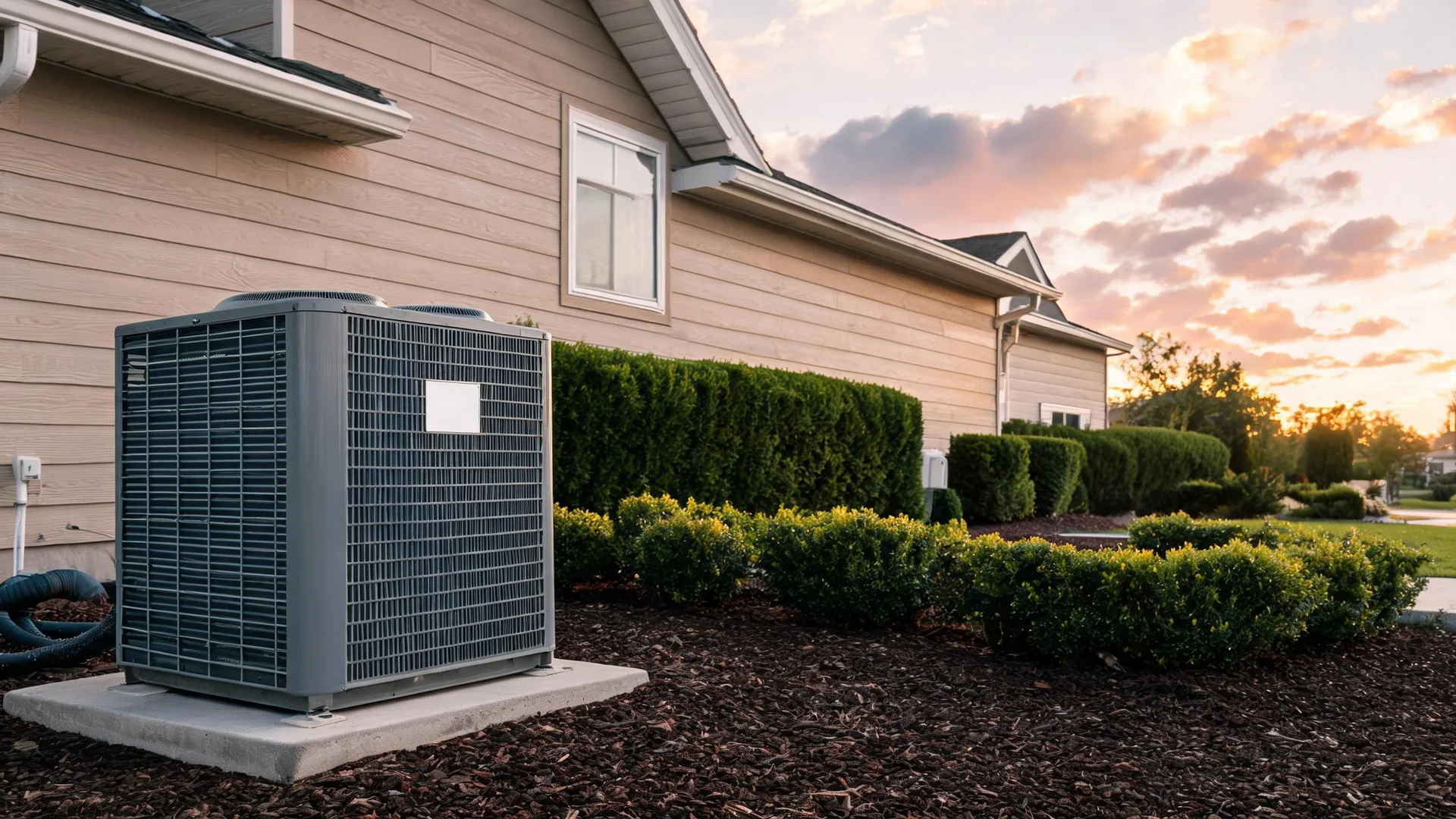
A gray heat pump condenser unit mounted on a concrete pad against the gray lap-siding exterior wall of a house.

The years on the house aren't the years on the heat pump

A heat pump in a newer home has usually logged fewer hours than the house's age suggests, since the system gets replaced on its own schedule. If yours is one of them, that counts for something when it's acting up. Get the repair done and let it keep running its full stretch.

A refrigerant leak gets worse while the system runs

A heat pump low on refrigerant makes the compressor work harder to move heat. Keep running it like that and the compressor can overheat or the oil circulating with the refrigerant stops lubricating it properly. A leak that starts small and cheap to fix can end with a compressor that needs replacing.

A failing part rarely fails alone

A weak capacitor makes the motor it starts draw more current than it should. A clogged coil makes the whole system run longer to do the same job. Left alone, the strain shifts to whatever's still working, and one bad part turns into a shorter repair list than you'd have waited for.

Before calling anyone, check the thermostat first. Make sure it is set to heat or cool as needed and the temperature is actually past where the system would kick on. Next look at the outdoor unit. If it is caked in ice, covered in debris, or something fell on it in a storm, that alone can stop it from running right. Check the air filter too. A filter clogged with dust chokes off airflow, and a heat pump starved for air can trip off or freeze up at the coil. Walk through the breaker panel and make sure nothing has tripped on either the indoor or outdoor side. If the system is running but blowing air that is not warm or cool enough, that points to something inside that needs a technician, not something you can fix from the panel.

If your outdoor unit has been sitting through storms for years, the smart move is to get it looked at before you decide anything about the repair itself. A tech can check the coil fins for hail dents, look for refrigerant leaks where a line took a hit, and test the capacitor and contactor for the kind of wear that comes from running through wind and heat cycles over and over. That's a different job than guessing at a part and swapping it. A proper diagnosis finds what the weather actually did to this unit, not just what's easiest to blame. Skip that step and you risk paying for a repair that doesn't address what's really worn down.