




A snow-covered residential street at twilight with illuminated houses, bare trees, and an orange horizon glow beneath a deep blue sky.

Mini Split Installation in Arkansas City, KS

Tell us about the job

Takes about a minute. No obligation.

New system or replacementMini-splitCowley County, KS
Step 1 of 2

What ZIP code is the job in?

Electricity in Kansas ran 14.15 cents per kilowatthour in 2024. A mini split earns that back by using a lot less of it than a furnace or baseboard heat to do the same job. It moves heat instead of making it, so every kilowatt goes further whether it's heating the house or cooling it. On a system that runs for most of the year, that difference shows up on every bill, not just a few. Picking one with a strong efficiency rating matters more here than in a place where power runs cheap.

7 months
October through April, your system heats
5 months
May through September, it cools
25°F
the average winter night it heats against
89°F
the average summer afternoon it cools against
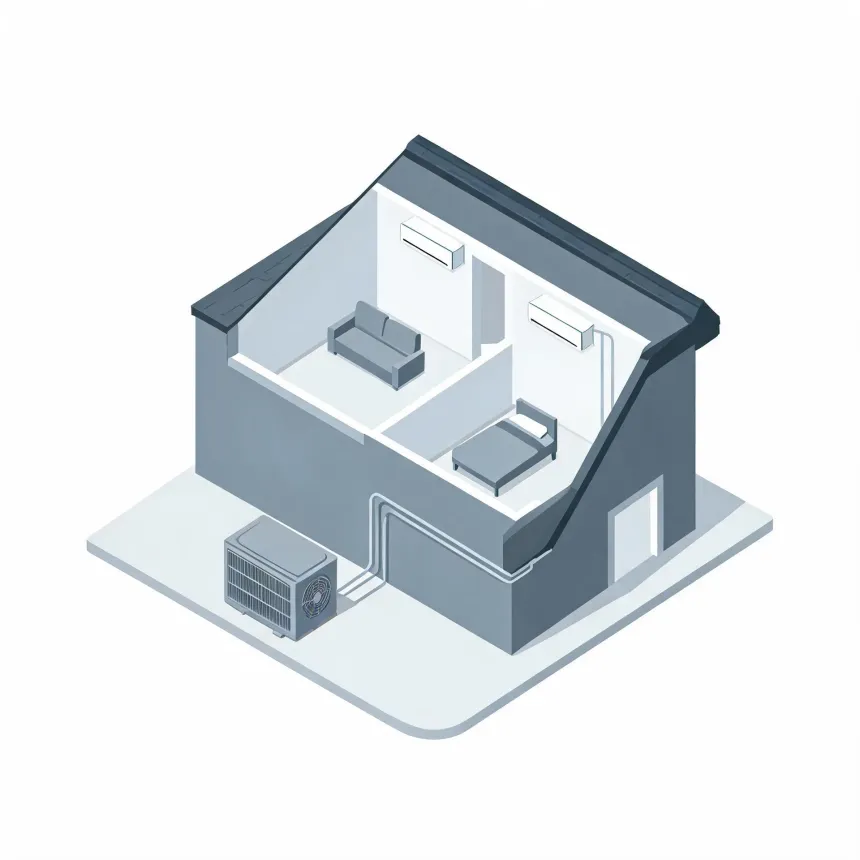
Isometric cutaway illustration of a two-room house showing two wall-mounted indoor air conditioning units connected by line sets to an outdoor condenser unit on the ground outside.
Your system heats October through April and cools May through September.

NOAA nClimDiv, 1991–2020 normals

Half the homes in Cowley County were built in 1961 or earlier.

A mini split going into a house that old has to work with the rooms and walls already there, not a layout built for it.

Most of Cowley County heats with gas, and that changes what a mini split is for here

60.2% of homes heat with gas
Cooling runs May through September
Summer afternoons average 89°F

Cooling starts in May here and runs through September. April is the month to get a mini split installed, before that first run of warm days. A crew working on your house before the season starts isn't racing a heat wave to finish. You also get the system running on your schedule instead of hers, with time to notice if something needs adjusting before it has to work for five straight months. Wait until May and you're booking the install at the same time everyone else decides they need cooling now.

A mini split here has to clear a federal efficiency floor, and clearing it can mean a tax credit too

Cowley County sits in climate zone 4A, which asks real work of both heating and cooling. A mini split here is still a split system under the federal standard. Units made from 2023 onward have to hit 14.3 SEER2 for cooling and 7.5 HSPF2 for heating. That floor rules out the cheapest units before you start comparing. Clear it and the system can also qualify for a federal tax credit, a real number against the cost of a unit built for this climate rather than one that just meets the minimum.

Find a contractor
A white mini-split air conditioner outdoor condenser unit mounted on metal brackets against a beige stucco exterior wall, with a blue sky and scattered clouds in the background.

Five months of hard running, and weather that doesn't help

Five months of cooling here, June through August averaging 89 degrees in the afternoon. That's the stretch a mini split has to handle every single year without a break. Add in the wind and hail this county sees on a regular basis and the outdoor unit is taking weather most of the country doesn't deal with. None of that means buy the cheapest thing that fits the wall. It means the unit, the line set and the mounting all have to be sized and installed for a machine that's going to run hard, season after season, in conditions that are rough on outdoor equipment.

How many rooms it has to reach

A mini split system can run one indoor head or several off the same outdoor unit. Every additional zone means another air handler, another line set run, and another spot to mount it cleanly. A single room costs less to cover than a whole house split across different zones with different needs.
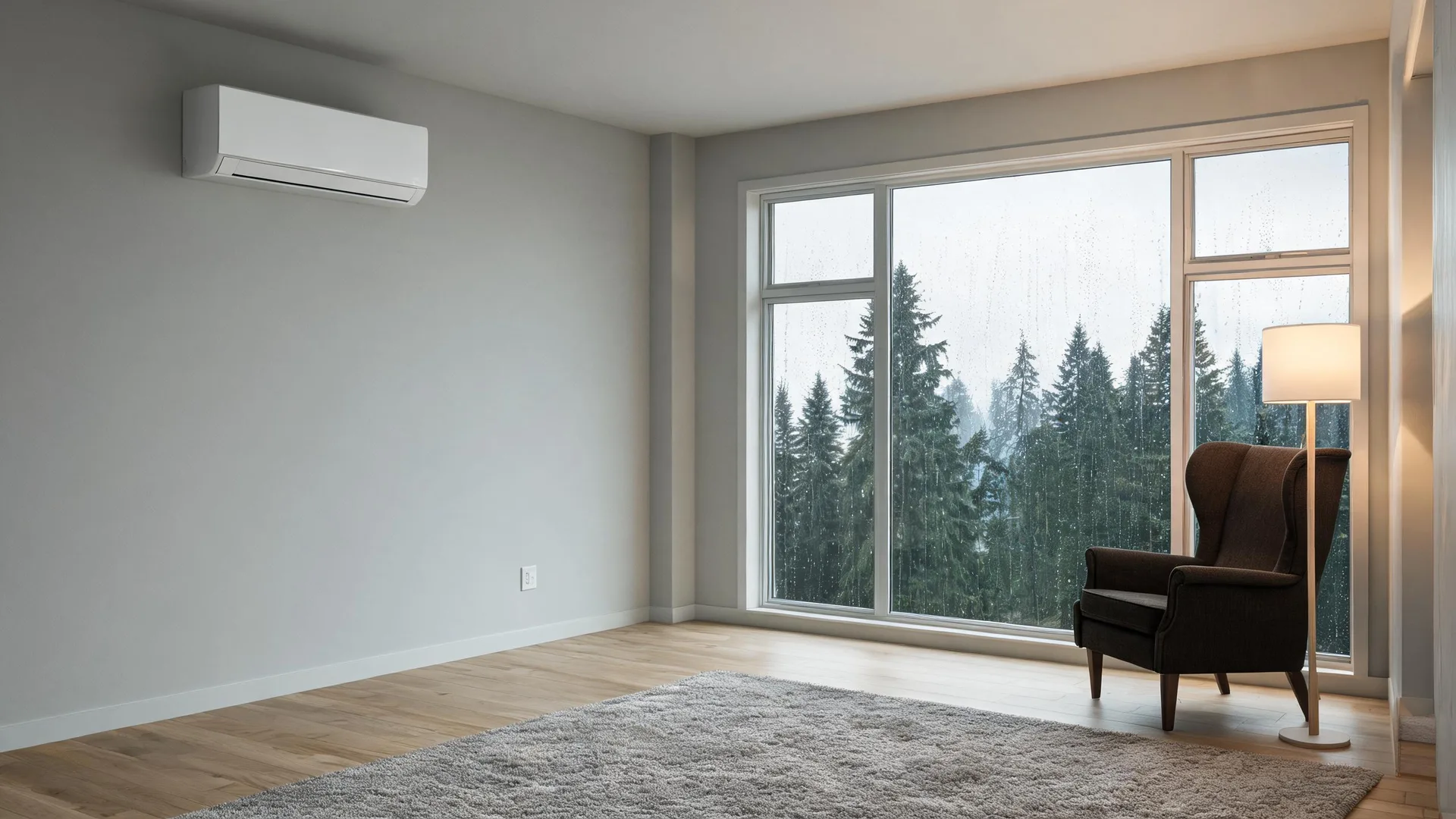
What the outdoor unit sits on and runs through

The outdoor unit needs a pad or bracket solid enough to hold it steady, and a clear path for the line set and drain to reach the indoor head without snaking through framing that fights them. A wall that lines up easily with the outdoor unit costs less to work with than one where the line set has to travel further or cut through more to get there.

Ask how many indoor heads one outdoor unit can actually run, and whether this quote has it running at the max or leaves room to spare. A compressor sized right at its limit has nothing left when every room calls for it at the same time. Ask what happens if a zone gets added later, whether the outdoor unit has the capacity or a second system has to go in next to it. Ask for the brand and model of the indoor head, not just the outdoor unit, since that's the part on the wall you'll look at and adjust every day. And ask who services it. A mini split is a specific trade, and not every heating and cooling contractor carries parts or training for every brand.

Installation starts with where the indoor head goes, and that gets decided before anyone drills. The wall needs clearance above and below, and a clean path back to the spot the outdoor unit will sit. Running the line set is most of the day's work. It carries refrigerant, power and a condensate drain through a hole in the wall, usually hidden behind the house if the layout allows it. Once the lines are connected, the system gets evacuated with a vacuum pump to pull out air and moisture before refrigerant ever enters the lines. Skip that step and the system can fail early, so it's not something to rush. After it holds vacuum, refrigerant is released, power goes to both units, and the tech runs it through a full cycle checking the temperature split between the air going in and the air coming out of the indoor head.