





A snow-covered small-town street at dusk, with lit white clapboard houses, bare trees, and a grain elevator silhouetted against an orange and blue twilight sky.

Mini Split Installation in Kansas City, KS

Tell us about the job

Takes about a minute. No obligation.

New system or replacementMini-splitWyandotte County, KS
Step 1 of 2

What ZIP code is the job in?

Most houses in Wyandotte County heat with utility gas, about 67.5% of them. Electricity accounts for 28.8%, and a small share runs on bottled or LP gas. A mini split works differently from all of these. It doesn't tie into a gas line or a central electric furnace, it runs on its own electric circuit and handles both heating and cooling from the same unit. That makes it a fit for a room or addition that the main system doesn't reach well, whatever that system happens to be. It's worth checking what your current setup is before comparing quotes, since that affects how the mini split gets installed alongside it.

7 months
October through April, your system heats
5 months
May through September, it cools
23°F
the average winter night it heats against
87°F
the average summer afternoon it cools against
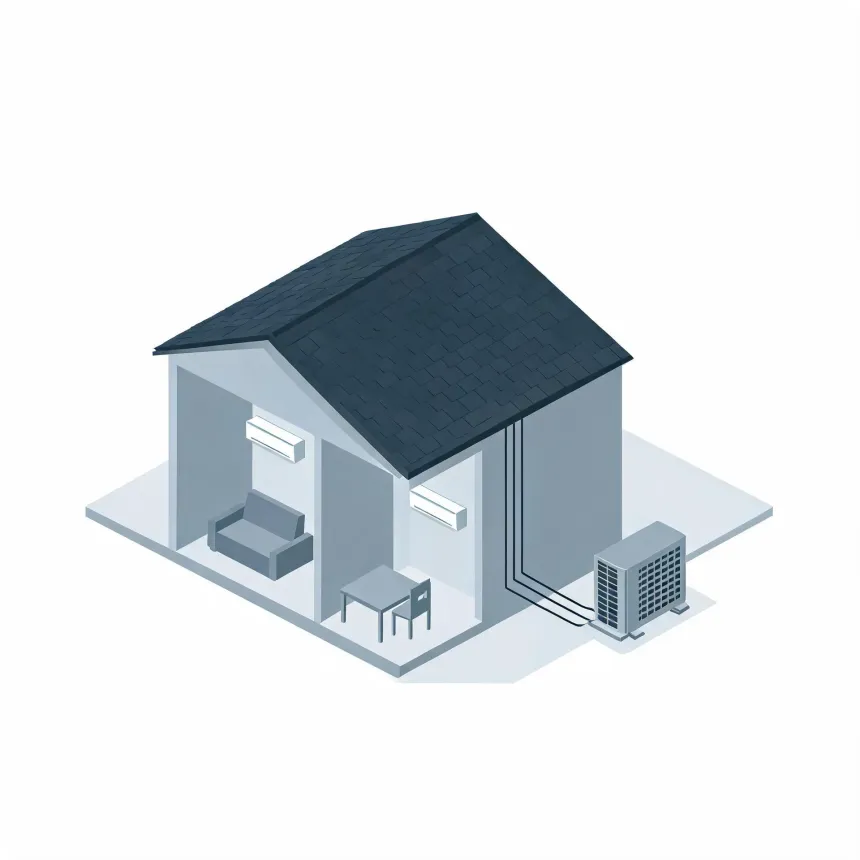
Isometric illustration of a cutaway house with a dark shingled gable roof, showing two wall-mounted indoor air handlers, a sofa, table and chair inside, and refrigerant lines running to an outdoor condenser unit beside the building.
Your system heats October through April and cools May through September.

NOAA nClimDiv, 1991–2020 normals

Cooling here runs May through September.

Get the mini split installed in April so it's ready before the first warm stretch.

A standard mini split handles this climate without upsizing

Power costs 14.15 cents a kWh statewide
Cooling runs May through September
Summer afternoons average 87°F

Half the homes in Wyandotte County were built in 1962 or earlier. A mini split going into a house that old is going in after the fact, not as part of the original plan. The install has to work around whatever wall construction and framing that house already has, since there's no existing ductwork it can share. That means the line set and the wall penetration need to go where they actually fit, not just where they'd be easiest in a newer build. Check with whoever quotes the job where they plan to run the line set and why, especially if your home dates to that era.

A standard mini split fits this climate, power outages just make the timing matter

Wyandotte County has recorded 103 severe weather events over the past ten years, including damaging wind and hail. Kansas households lose power often enough that a share of them went at least 24 hours without it last year. None of that calls for a bigger or pricier mini split than this climate normally needs, a standard size still handles it. It just means the outage risk is real, and a mini split on its own circuit keeps running when the rest of the house loses power.

Find a contractor
A man in a dark cap, dark long-sleeved shirt and tan work pants walks up porch steps toward a red front door, carrying a worn canvas tool bag.
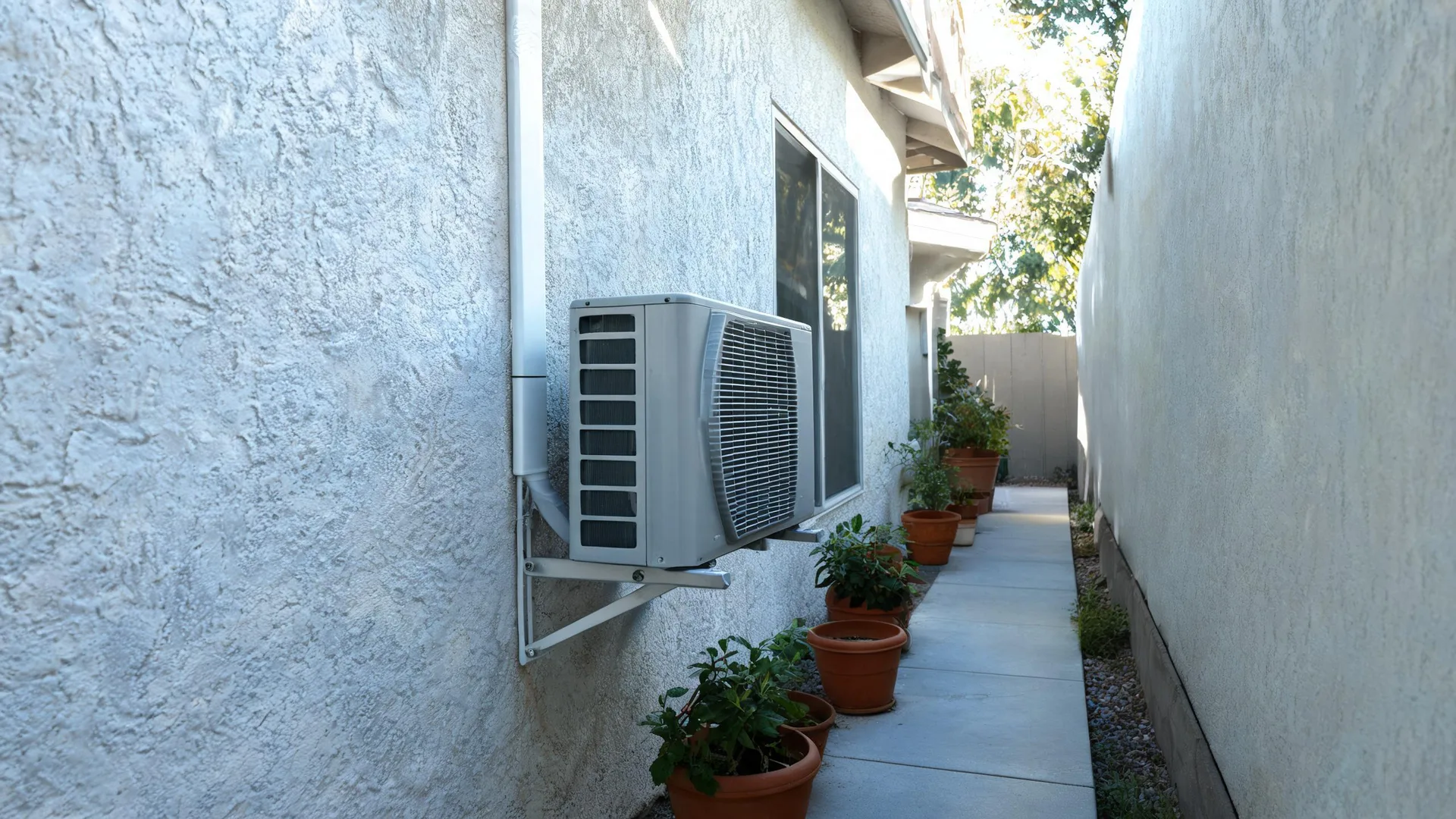
A beige split-system air conditioner outdoor condenser unit mounted on metal wall brackets atop a stucco wall.

Five months of real heat, not a reason to go bigger

Cooling runs May through September here, with afternoon highs averaging 87°F in June, July and August. That's a long stretch of real heat, and it's exactly what a standard mini split is sized for. Wyandotte County has also logged 43 hail events in recent years. The outdoor unit sits outside year round, which is worth asking about when it comes to mounting and placement, but it doesn't change what size unit the job needs.

Ask what size each zone needs, not just the total

A mini split gets sized room by room. Whoever quotes the job should walk each space, look at window area and wall exposure, and size the indoor head for that room, not just divide up a total number for the house. A unit sized too big for its room cycles on and off too fast and never pulls down humidity right. One sized too small runs constantly and still can't keep up.
Ask how many indoor heads one outdoor unit will run

Some systems run a single indoor head off one outdoor unit. Others split one outdoor unit across several rooms. The second setup costs less to install than separate systems for each room, but if the outdoor unit ever needs service, every room tied to it loses heating or cooling at the same time. Worth knowing which setup you're getting a quote for before comparing prices.

What drives the cost of this job is mostly the parts you don't see. The line set carries refrigerant between the outdoor unit and the indoor head, and it has to be the right length and the right diameter for that system, run through a wall penetration that's sealed and insulated properly. Longer runs or runs that have to go up through a floor or around framing take more time and more material than a short straight shot. The electrical side matters too, since the outdoor unit needs its own dedicated circuit, and if the panel doesn't have room for that, the job grows to include panel work. Mounting the outdoor unit also counts, since it needs a pad or bracket that holds it level and clear of debris. None of this shows up in the sticker price of the equipment itself.

Installation day starts with the walkthrough, confirming where each indoor head goes and where the outdoor unit will sit before anyone drills anything. The crew mounts the indoor head first, usually high on an interior wall, then cuts the wall penetration for the line set and runs it to the outdoor unit. That line set gets connected, then pressure tested before any refrigerant moves through it, since a leak at a joint is much easier to catch and fix before the system is charged. The electrical hookup for the outdoor unit happens alongside this, tying into its own dedicated circuit. Once everything is connected, the system gets charged, powered on, and run through both heating and cooling to check that each head is actually doing what it should. The crew should walk you through the controls before they leave, since a mini split's remote or thermostat works differently from a standard furnace or central AC setup.