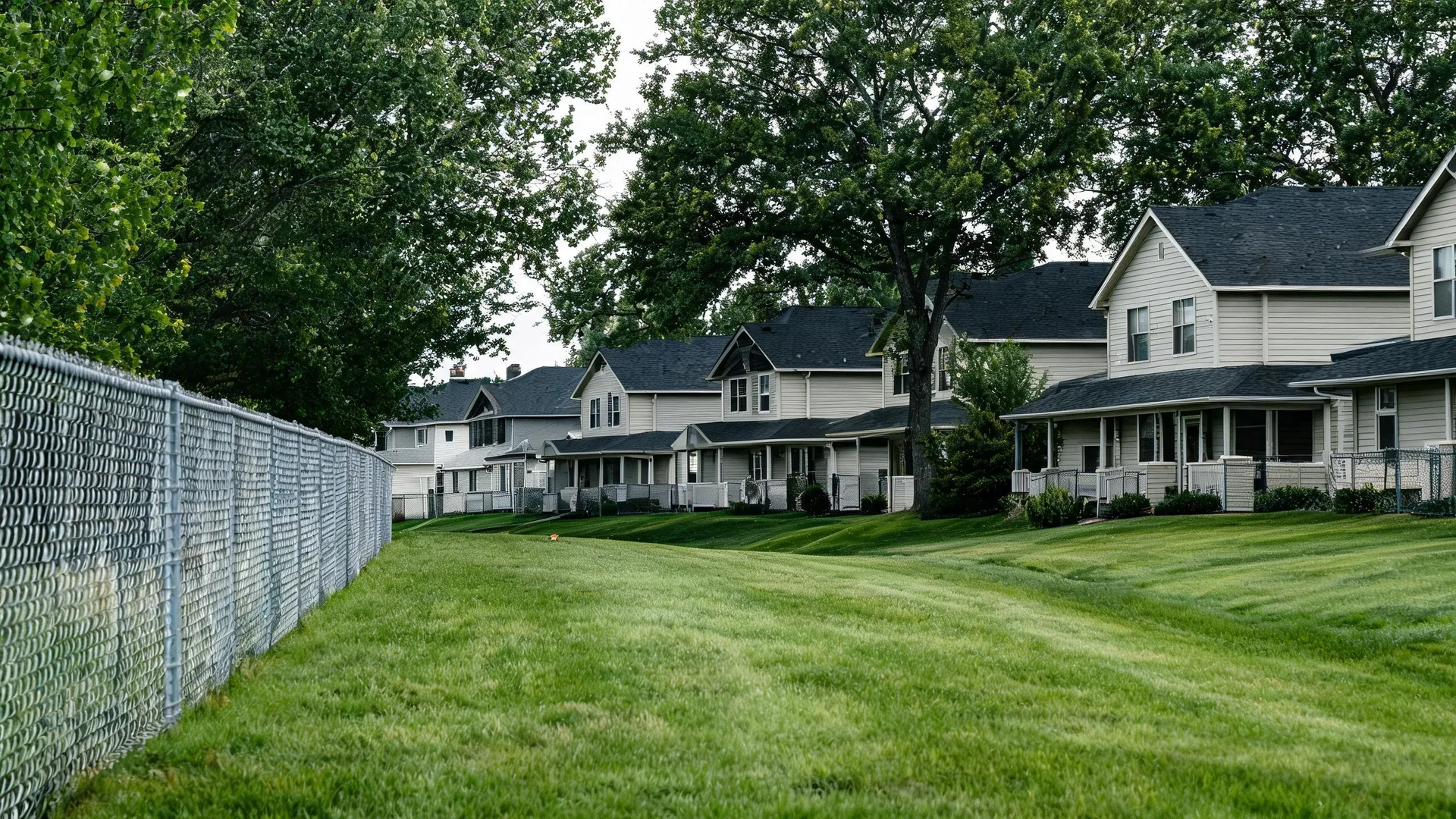






A mowed grassy field bordered on the left by a chain-link fence and on the right by a row of two-story houses with gray roofs and porches, with large leafy trees behind them.

Mini Split Installation in Paola, KS

Tell us about the job

Takes about a minute. No obligation.

New system or replacementMini-splitMiami County, KS
Step 1 of 2

What ZIP code is the job in?

Close to half the homes in Miami County heat with electricity, more than any other fuel. Utility gas comes in second at just over a third, and propane heats a smaller share on top of that. A mini split fits naturally into an electric home, since it runs on the same power the rest of the house already uses. For a home on gas or propane, a mini split can still work well for cooling or for shoulder-season heating, but check what your system is set up to handle before you count on it alone through a Kansas winter.

7 months
October through April, your system heats
5 months
May through September, it cools
24°F
the average winter night it heats against
87°F
the average summer afternoon it cools against
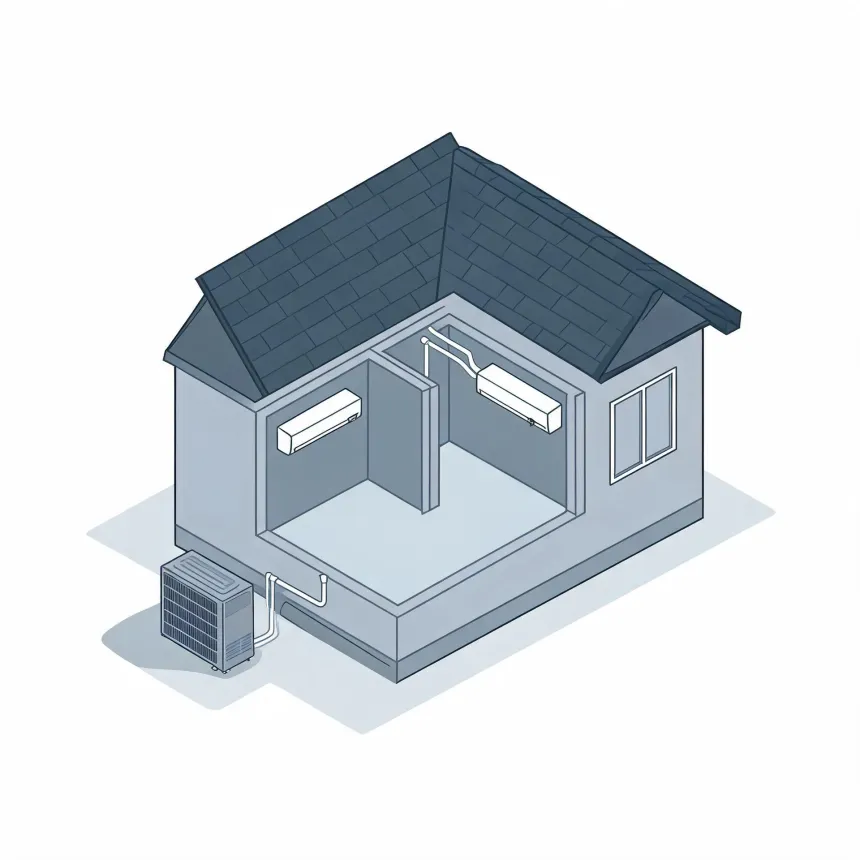
Isometric line illustration of a cutaway house with a shingled gable roof, showing two wall-mounted indoor air conditioning units connected by piping to an outdoor condenser unit on the ground outside.
Your system heats October through April and cools May through September.

NOAA nClimDiv, 1991–2020 normals

Cooling runs May through September in Miami County, five months straight.

Put the mini split in during April and it's ready on day one, not halfway installed while the house is already warming up.

Paola doesn't need an oversized system to handle its summers

Power costs 14.15 cents a kWh statewide
Cooling runs May through September
Summer afternoons average 87°F
Paola doesn't need an oversized system to handle its summersAfternoon highs average 87°F through June, July and August, well inside what a standard mini split is built for.

Paola falls in climate zone 4A, which asks real work of both heating and cooling, so a mini split going in here has to meet a federal minimum of 14.3 SEER2 for cooling and 7.5 HSPF2 for heating. That's the split-system standard, and it applies to ductless units the same as any other, since the rule doesn't carve out a separate class for them. Any mini split manufactured from 2023 onward and sold here has already cleared that bar. Where systems differ is above it, in how far past the minimum they go, and that's worth comparing when you're looking at quotes.

Replace it before the season

Replace it before the season starts, so it happens on your schedule, not in a hurry.

Find a contractor
A man in a brown jacket, cap, dark pants and work boots walks up concrete steps toward a red front door, carrying a waxed canvas tool tote with a hammer inside.
A white mini-split air conditioner outdoor condenser unit mounted on metal brackets against a beige stucco exterior wall, with a blue sky and scattered clouds in the background.

What the install involves changes the price more than the equipment does

What drives the cost of a mini split install has less to do with the equipment and more to do with what it takes to get it in place. The outdoor unit needs a pad or bracket with clear airflow around it, and the indoor head needs a spot with a straight run back to that outdoor unit. Every length of line set between them has to be run, insulated, and sealed, and drilling through brick or working around a finished ceiling costs more labor than running it through a stud wall. A system with one indoor head is a simpler job than one feeding several rooms, since each added head means another line set and another mounting spot. The electrical side matters just as much. A mini split needs its own dedicated circuit, and whether the panel already has room for that breaker or needs work to make room changes how much of the job is electrical rather than mechanical. None of this shows up on the spec sheet, but it is most of what makes one quote different from another.

The old unit doesn't have to shut off early

A window unit or an aging system can keep running right up until the new mini split is mounted and charged, since the install doesn't require the old equipment to come out first. There's no stretch where the house has to sit without cooling or heat while the new lines get run.
An old ductless system can't just hand off its lines

If what's coming out is an older ductless unit, its line set was sized and charged for that specific equipment and won't carry over to the new one. The new outdoor unit gets its own line set run to the indoor head rather than tying into what's already in the wall.

The SEER2 and HSPF2 numbers on the label tell you how much heat the system moves for the electricity it uses, one for cooling and one for heating. A higher number means it's moving more heat per watt, not that it has more capacity or can cool a bigger room. Capacity is a separate spec, and a unit sized wrong for the space won't perform to its rating no matter how high that rating is. The rating also assumes the line set is charged correctly and run cleanly, so a sloppy install can leave a high-rated system running like a lesser one. Units with matching ratings can still feel different day to day depending on where the indoor head was placed and how carefully it was charged.

Install day starts outside, with the condenser going onto its pad or wall bracket and the refrigerant lines run from there to the indoor head. That line set gets routed through a single hole in the wall, so the hole gets drilled and sealed before anything else goes up. The indoor head mounts to a plate on the wall first, then connects to the lines once they're fed through. After that comes vacuuming the lines to pull out moisture and air, since any left behind will hurt how the system runs. Once the lines hold vacuum, the refrigerant charge gets set and the system gets tested on both heating and cooling before anyone calls it done. The electrical work, running a dedicated circuit back to the panel, usually happens alongside the mechanical work rather than after it, so both finish close to the same time.