 Let a pro reach out
Should you cover your AC unit in a Kansas winter
Send the form, and lining up the air conditioner tune-up stops being yours to chase.
You don't need to cover your AC this winter. The unit sits outside all year already, built to take rain, snow and whatever wind comes through. A cover traps moisture against the cabinet instead of keeping it out, and that does more harm than a bare coil ever would. Mice and other small animals look for a warm, enclosed space to nest in, and a snug cover over the top gives them exactly that.
If you want to protect it, a flat piece of plywood or a purpose-made top cover, weighed down and open on the sides, keeps leaves and ice off the coil without sealing in damp air. Full cabinet covers, the kind that wrap down the sides, are the ones to skip.
What actually matters going into a Kansas winter is what shape the unit was in when you shut it down for the season. A low refrigerant charge, a dirty coil, or a capacitor already on its way out doesn't get better by sitting idle from November through March. It's the same unit in April, just older, and whatever was wrong with it is still wrong.
That's where a fall check earns its keep. A contractor can look at the coil, the charge, the electrical connections and the pad it sits on, and catch what's failing before summer forces the issue on the hottest day of the year with every other AC in the county needing a tech at the same time.
Finding that contractor is normally its own chore. Searching, calling a few numbers, explaining the unit and the situation again to each one, then sitting with quotes trying to compare them. Send the form here instead and that part of it is handled. No more calls to make, no more sorting through who's worth trusting. Someone qualified gets the details and takes it from there.
You don't need to cover your outdoor AC unit for a Kansas winter. It's built to sit outside year round, through rain, snow, ice and whatever wind comes across the plains. A full cover usually does more harm than good, because it traps moisture against the cabinet and gives mice and other small animals a dry place to nest inside the unit. If you want to protect it, a flat piece of plywood or a small cover over just the top, weighted or tied down, keeps falling ice and debris out of the fan without sealing in moisture. What matters more than any cover is having the system looked at before next summer, since a unit that sat through a hard winter with cracked insulation or a nest inside the housing is worth checking before the heat turns the cooling back on.




The condenser outside your house is built for weather, not shelter from it. The coil and fan motor are sealed against rain and snow, so the cabinet doesn't need a cover to survive December through February. What it doesn't need is a cover that traps humidity inside, where it sits against the electrical contacts and the coil fins all winter instead of draining off like it would in the open. That dampness does more damage over a few cold months than open exposure ever does. A full cover also makes a fine nesting spot once the fan stops turning, since mice and other small animals look for exactly that kind of dry, enclosed space. If you want to keep ice and falling branches off the fan, a flat piece of plywood or a top-only cover does that without sealing the sides. The other fall habit worth keeping is clearing leaves and grass clippings out of the fan housing before the cold sets in, since debris pulled in now causes more trouble by spring than snow sitting on top ever will. Cutting power at the disconnect box does more for the unit than anything you'd lay over it.
What Actually Protects Your Unit
- The condenser coil and fan motor are sealed to handle direct rain and snow without a cover.
- A full cover traps humidity against the cabinet, and that moisture works on the electrical contacts and the coil fins over a winter.
- Small animals look for a dry spot to nest in once the fan stops running, and a snug cover gives them cover to do it.
- A flat piece of plywood or a purpose-made top cover keeps falling ice and branches off the fan without sealing the sides shut.
- Leaves and grass clippings pulled into the fan housing in fall cause more trouble by spring than open exposure to snow ever does.
- Shutting off power to the unit at the disconnect box matters more for winter than anything placed over it.


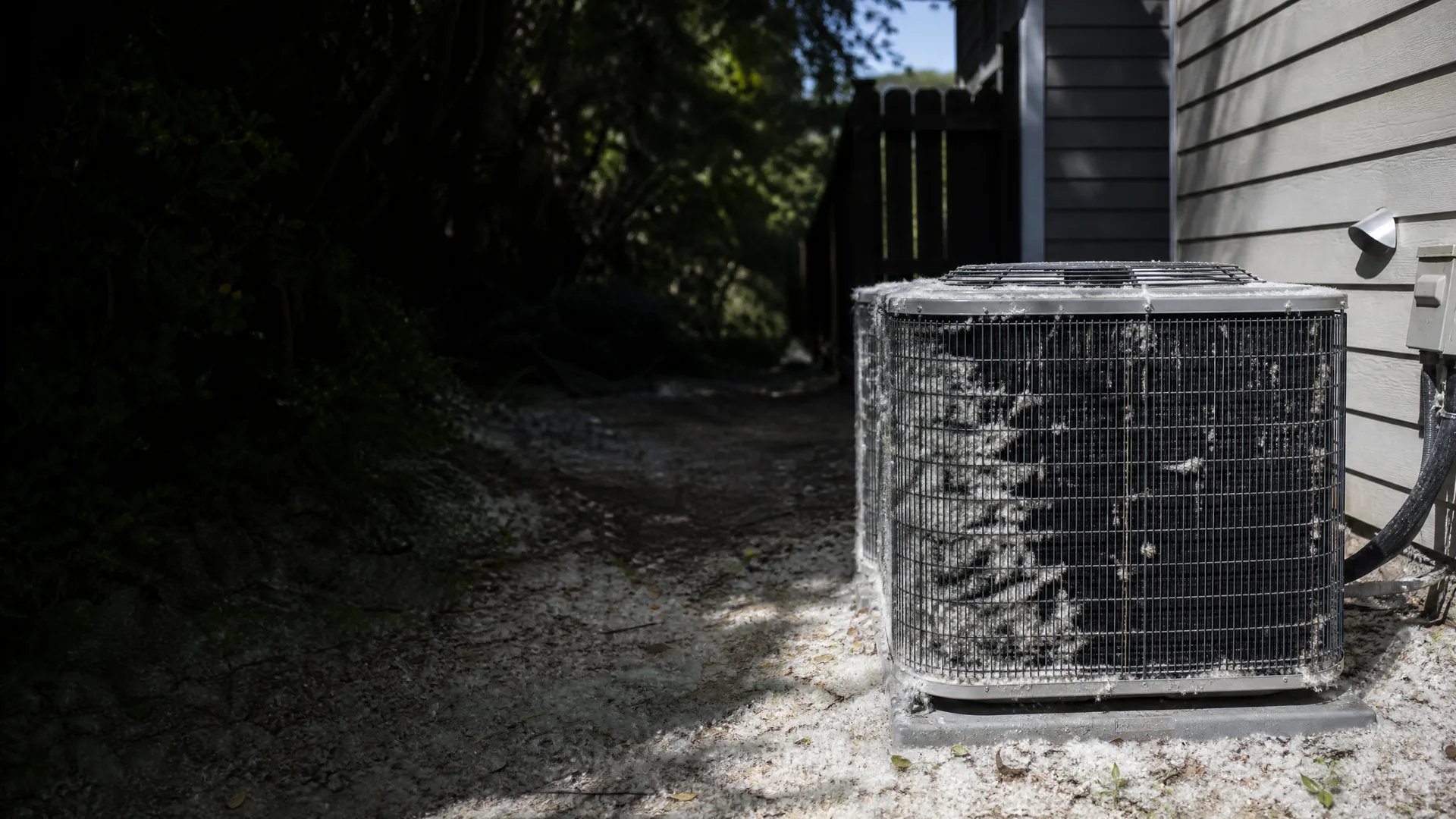
The fluff comes off the cottonwoods along the fence line in late May, and by afternoon it's caught on everything low to the ground. You walk out to the side yard and the condenser is covered in it, a gray-white mat pressed into the fins where the fan pulls air through. You crouch down and see it's packed in deeper than it looks from the porch, right down into the coil. You run a hand across it and some comes away, but most is stuck fast, the way it gets after a few days of wind doing the work for it. The unit is still running. You just can't tell anymore how hard it's working to do it.
Stop chasing an air conditioner pro
Leave the unit alone through the winter, and the thing you'll actually need to watch for is spring. Cottonwood fluff, dust, and whatever blew against the cabinet over those cold months settles into the coil fins, and a unit that sits like that before the first hot day in Kansas often struggles to keep up once you switch it back on. A technician can check the coil, the fan motor, and the electrical contacts before summer gets sticky, and catch what a winter outside left behind. Instead of searching around for someone to take the job, calling a few places, explaining the same thing twice, and sitting on quotes trying to sort out who's worth hiring, you send one request and a licensed contractor near you takes it from there. The unit outside your house doesn't need a cover. It does need someone to look at it before the heat sets in, and that part doesn't have to be on you to chase down.
If You're Still Tempted to Cover It
- A top panel sheds rain by itself, so covering just the top traps condensation underneath it instead.
- Mesh or breathable covers over the whole cabinet still slow the air that would otherwise dry out the coil after a wet snow.
- If you cover anything, cover it loosely and pull it off once the snow or ice has passed, not for the whole winter.
- Mice and other small animals look for the kind of dry, enclosed space a snug cover creates against the cabinet.
- A tech checking the unit in spring looks first at the coil fins and the electrical contacts for the corrosion a winter under cover leaves behind.
- The breaker for the outdoor unit can stay on all winter since the system is built to sit idle through cold weather without harm.
Some homeowners split the difference and cover just the top of the unit, thinking that keeps the worst of the weather out. The top panel already sheds rain on its own. Set a piece of plywood or a makeshift cap over it and you've made a lid that traps condensation underneath, right where the coil sits. A breathable mesh cover sounds like a better compromise, since it's not sealed tight like a tarp, but it still slows the airflow a coil needs to dry out after wet snow sits on it. Either way, you've made the cabinet damper than if you'd left it alone.
If you do cover the unit for a specific stretch, say ahead of an ice storm, drape something loose and take it off once the weather's passed. Left on for the season, a snug cover does something else too. It gives mice and other small animals a dry, enclosed spot to get into, right against the cabinet and the wiring inside it. That's part of what a tech ends up checking for in spring, along with corrosion on the coil fins and the electrical contacts, both signs of a winter spent trapped under cover rather than exposed to open air.
One thing you don't need to worry about either way is the breaker. The outdoor unit's breaker can stay on all winter. The system is built to sit idle through cold weather without any harm from the cold itself.



That same air that feels heavy in July, a dew point averaging 64°F across June, July and August in Kansas, is what your AC spends all summer pulling out of the house. Leaving the unit bare over winter keeps it ready for that work. A dry coil come April pulls moisture out of the air without fighting a winter's worth of trapped damp underneath a cover first. You'd notice the difference as a system that cools evenly from the first hot week on, instead of one that feels sluggish or runs long while it works through grime a cover held against the fins.
NASA POWER T2MDEW county cells weighted by homes
Can I at least cover the top of the unit to keep leaves off?
It seems like a reasonable compromise. Leave the sides open, just keep leaves and debris from dropping straight down into the fan on top. A lot of people landing on this question already decided a full cover is out, but a top panel still sounds like a smart middle ground before the leaves start coming down.
A flat piece over the top traps moisture underneath it, same as a full cover
A solid panel on top stops rain from running off the way the cabinet is built to shed it. Instead it sits there, and water that lands on the panel either pools or runs down the sides into the same gap a full cover creates. Underneath, the air stays damp longer than it would in the open, and that's the condition that works on the coil fins and the electrical contacts over a winter. If leaves are the actual worry, a light mesh screen laid over the top, not strapped down, lets rain and air through while still keeping big debris from falling straight into the fan. Anything solid defeats the purpose.


Power costs 14.44 cents per kilowatt-hour statewide
At 14.44 cents a kilowatt-hour, a coil that's been sitting clean under a dry cabinet all winter doesn't have to work as hard to cool your house in July. A dirty coil pulls more current to move the same amount of heat, and that shows up on your bill before you ever notice the airflow dropping.
EIA-861 2025 statewide residential average

Leave it bare, and let spring maintenance handle the rest
Your AC unit doesn't need a winter cover in Kansas. It was built to sit outside through rain, snow and wind, and a cover traps moisture against the cabinet instead of keeping it out. The one thing worth doing before summer is having the coil checked and cleaned so it's not working harder than it has to in July.
If you'd rather not spend an afternoon searching contractor listings, calling around for quotes, and explaining the same thing to three different companies before picking one, sending the form does that part for you. You still get the coil cleaned and the unit checked before the heat sets in. You just don't have to be the one who tracks down who does it.

Send one request and you're done looking