Send the request today and let an air conditioner pro reach out to you.
You walk outside and the air handler is running but the outdoor unit has a block of ice on the lines. Or the vents inside have stopped blowing cold, just air. In Kansas humidity, that is almost always what this is. Ice forms when warm, wet air keeps meeting a coil that has gone too cold, and once it starts, it builds on itself until the whole system is choked.
Shutting it off and letting the ice melt will buy you a few hours, not an answer. The coil froze for a reason, low refrigerant, a dirty filter cutting off airflow, a failing blower, and until that reason gets fixed it will freeze again the next humid afternoon.
Finding the right contractor for this is its own chore. Normally you would be searching listings, calling a few, explaining the same thing about the ice and the vents to each one, then waiting to see who can actually get out to you and comparing what they quote. In a Kansas summer, every day spent on that is a day without cooling in your own house.
Send the form here and that search is done. You stop being the one who has to track down a contractor, vet them, and sort through estimates. That part becomes someone else's job instead of yours, and you can go back to waiting for the knock on the door instead of waiting on hold.
The rest of this page walks through why AC units freeze up in weather like this, what a contractor will check, and what it takes to get yours running again without it happening next week.
A frozen AC unit almost always comes down to airflow. Warm air has to move across the indoor coil for the system to work right, and anything that slows that air down lets the coil get cold enough to freeze the moisture in it. A dirty filter, a closed vent, a failing blower motor, all of these cut the airflow the coil needs. Kansas humidity makes this worse than it would be in a dry climate, because there is more moisture in the air to begin with, so once airflow drops, ice builds fast and keeps building as long as the system keeps running. Low refrigerant does the same thing from the other direction, dropping the coil temperature below freezing even with normal airflow. Either way, the fix is not to let the unit keep running iced over. That just strains the compressor. Turn the system off, let the ice melt, and have the actual cause found before running it again.
It's off your list after this
One form replaces the calls you'd make to find an air conditioner pro.
Get the air conditioner repair search off your mind today.
The ice stays put or spreads, and the vents keep blowing warm air or none at all in the thick of a Kansas summer.
The compressor still has to work against a frozen coil, and that strain is how a simple airflow problem turns into a failed compressor.
Water from the melt has somewhere to go once the system is off, but running it iced up usually means it overflows the pan instead.
Whatever is blocking airflow, a dirty filter, a closed vent, a low charge, stays unfixed and the ice just comes back.
Every hour it runs iced up is an hour of electricity going toward moving warm air over ice instead of cooling the house.
Call for repair
A technician can tell you in one visit whether it's a filter, a blocked vent, a weak blower motor, or low refrigerant behind the ice.
The coil gets thawed out properly and checked, instead of you guessing at how long to leave the system off.
Once the cause is found, it gets fixed, so the same ice doesn't show up again next week.
You skip calling around to find someone available, explaining the ice and the warm vents more than once, and sorting through quotes yourself.
Sending the request is the last step on your end. Finding the right contractor becomes someone else's job from there.
Airflow moving the way it should
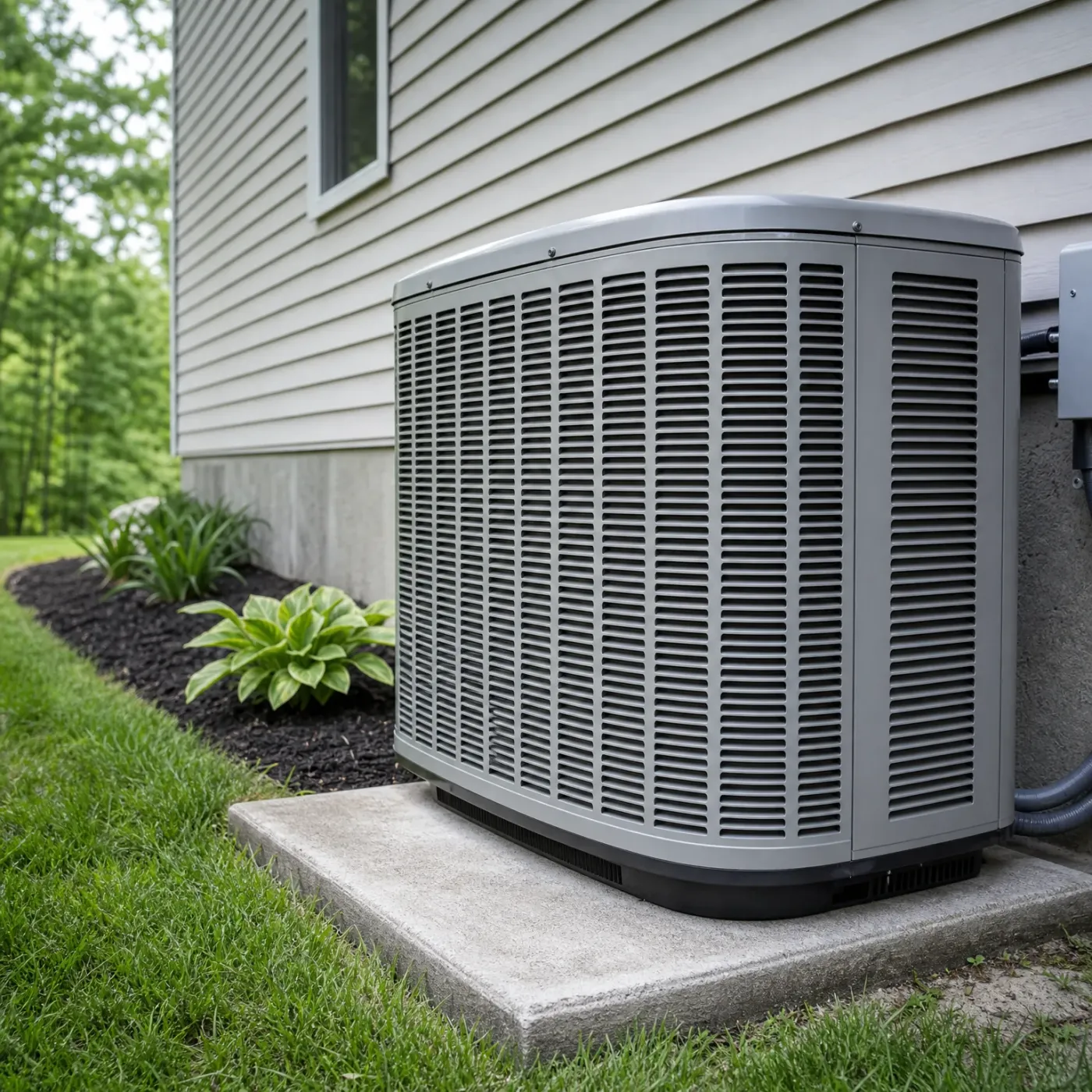
This is what the coil needs to stay clear. Air pulls through the filter, across the coil, and out to the vents without a fight, so the coil stays cold but never cold enough to ice over. The pad is clean, the conduit is tight, and the unit just runs.
A coil losing that fight
Dirt built up on the guard and years of dust on the coil behind it choke the airflow down. Once less air gets through, the coil drops below freezing and starts icing instead of cooling. Left alone, that ice spreads and the compressor keeps straining against it.
Power costs 14.44 cents per kilowatt-hour statewide
At 14.44 cents a kilowatt-hour, every hour a frozen system runs is an hour it's pulling power without cooling your house. A coil iced over still draws current trying to push air through it, so the meter keeps spinning while the vents blow warm.
EIA-861 2025 statewide residential average
A frozen coil has one real fix
Ice on the lines or warm air at the vents both point to the same thing: airflow got blocked somewhere, and the coil froze because of it. Shutting the system off and letting it thaw buys time. It doesn't tell you what's choking the airflow or stop it from happening again the next muggy week. That part takes someone who can trace it back to the actual cause and fix that, not just the ice.
You don't have to spend the evening on that part. Finding a contractor, calling around to see who's free, explaining the same thing twice, sorting through quotes, none of that has to be yours to do. Send the form and that search is someone else's job now. What's left for you is the part that matters: a system that runs cold through the rest of a Kansas summer without icing up again.
Air Conditioner Repair
Hand off the search today
Describe what your air conditioner is doing once, in one form.