




AC unit frozen up in Manhattan, KS

RepairCentral ACRiley County, KS
Step 1 of 2

What ZIP code is the job in?

A frozen AC unit means warm, moist air is hitting a cold evaporator coil and freezing instead of draining away as condensation. That usually points to airflow blocked by a dirty filter or closed vents, or refrigerant running low from a slow leak. Either way, the coil gets too cold for the air moving across it. Running the system longer to "push through" it only keeps ice building. In Riley County, where summers turn sticky and the AC works hard for months, a unit already straining to keep up with the humidity has less room for a blocked filter or low charge before it ices over. Turn the system off and let it thaw completely, which can take several hours, before anyone runs it again. Running a frozen unit can damage the compressor, turning a filter change into a far bigger repair. Once it's thawed, the cause still needs to be found and fixed.

A smiling man in a green sweater stands at a kitchen counter with a dark mug, with an open-plan dining area and large windows behind him.
A smiling man in a dark green sweatshirt sits at a kitchen island with a gray mug, with cabinets, plants, and a dining area near large windows behind him.
A smiling bearded man in a green sweater sits at a white marble kitchen island with a mug, potted plant and bowl of fruit, in a bright white interior with open shelving and an arched doorway.
A smiling man in a gray long-sleeved shirt stands in a kitchen looking to the side, with open shelves of dishes, a white mug on the counter, a potted plant, and a view through a doorway into a living room.

Why does ice keep building on the coil or the lines

Look at the indoor unit and you might see frost on the copper lines, or a solid sheet of ice across the coil itself. Some units keep running anyway, blowing warm air instead of cool because the ice is blocking the airflow that's supposed to carry cold air into the house. You may hear the system running louder or longer than usual, trying to keep up. Water can show up around the indoor unit too, as that ice melts onto the floor or into the pan below it. Left alone, the compressor is doing the same work for less cooling, and a system that runs like that in the Manhattan heat can end up with a bigger repair than the one you're looking at now.

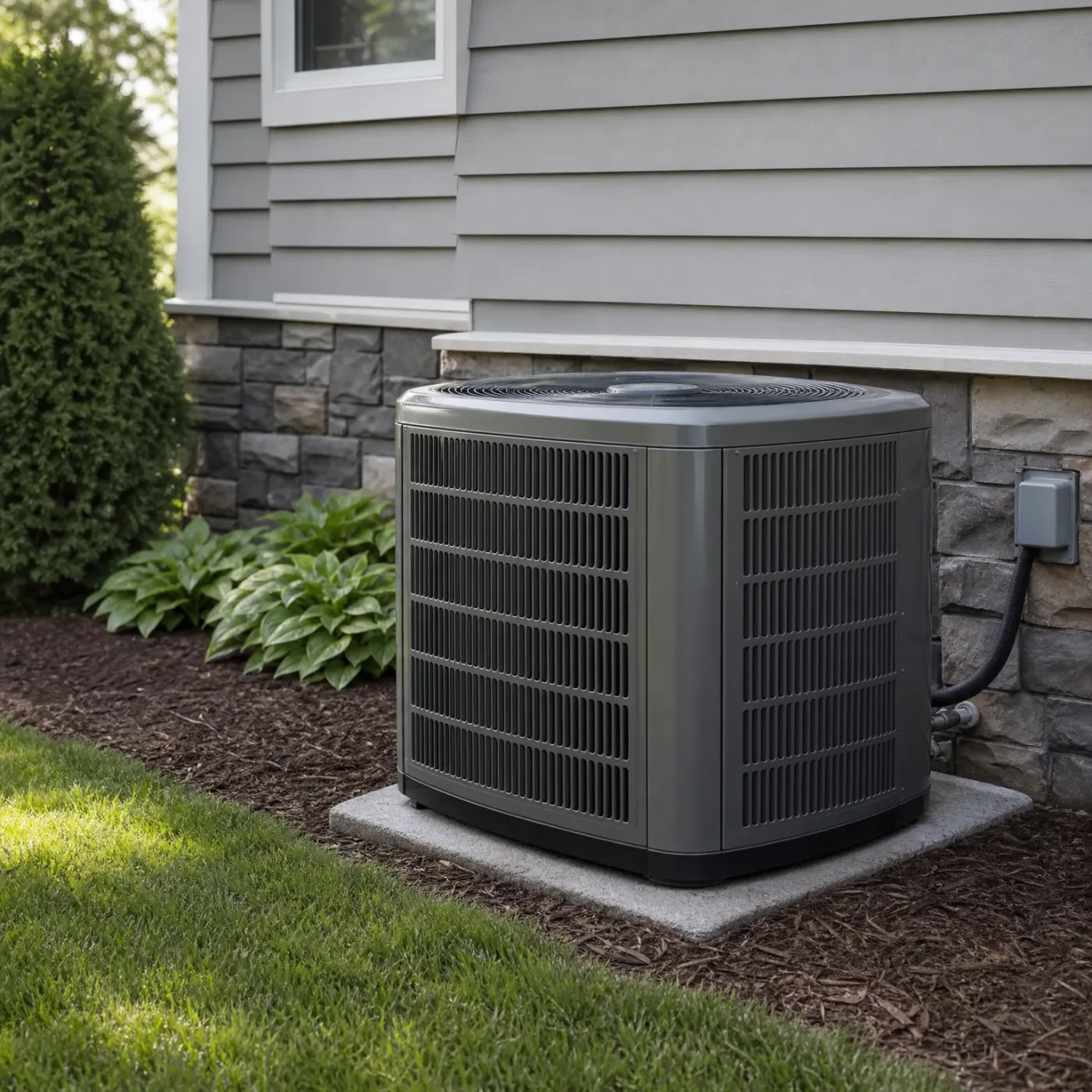
A gray outdoor air conditioning condenser unit on a concrete pad beside a house with horizontal lap siding, with a wall-mounted disconnect box and conduit to the left and a green shrub with mulch to the right.

Running clean

This is what the outdoor unit should look like: coil fins open, cabinet clear, nothing stacked against the sides. Air moves through it freely, so heat pulls off the refrigerant the way it's supposed to. A unit that looks like this can still freeze up, but the cause is somewhere else.


A dirty outdoor air conditioning condenser unit on a concrete pad beside a house wall with horizontal siding above a painted brick foundation, with a gray electrical disconnect box and conduit on the wall.

Caked with grime

Dirt and grass clippings have packed into the fins and the wire cage until air barely gets through. The coil can't shed heat, pressure inside drops, and the line running back into the house starts icing over. Once it's this dirty, a hose and a rinse won't fully clear it.

Why is my AC blowing warm air if it's frozen up?

Why is my AC blowing warm air if it's frozen up?

The ice blocks the airflow, so the air coming through the vents never touches cold coil

A frozen coil stops being able to do its job. Warm air from your house is supposed to pass over the cold coil and come out the vents cooled down. Once ice covers the coil, air either can't get through it or slides past the ice without losing any heat, so it comes out close to room temperature. The blower is still running, you can still feel air moving, it just isn't cold anymore. Some units will keep running like this for hours, which only adds more ice. Turning the system off and letting the coil thaw fully, which can take several hours, is what lets a contractor actually see what caused it once they get there.

An outdoor air conditioning condenser unit on a concrete pad beside a house with horizontal lap siding, with an electrical disconnect box and conduit on the wall and a green shrub to the right.

Running normally

This is what the condenser should look like outside your house. The disconnect box sits mounted on the siding, conduit feeding down to the unit, and nothing crowding it. Air pulls through the coil and off it goes, no ice anywhere in sight.

An outdoor air conditioner condenser unit on a concrete pad beside a house with horizontal siding and a lower concrete foundation wall, with coiled refrigerant lines at right.

Worn and struggling

This unit has years on it, dirt built up across the louvered panels and the fan grille on top. Refrigerant lines run out the back same as always, but a unit this weathered is more likely to be low on charge, and a low charge is one of the ways a coil ices over.

An outdoor air conditioner condenser unit on a concrete pad beside a house wall with stucco lower section, horizontal siding above, and a white downspout to the right.
Before you get your air conditioner repair
A gray outdoor air conditioning condenser unit on a concrete pad beside a house with horizontal lap siding, with a wall-mounted electrical disconnect box and refrigerant lines, shrubs, mulch and lawn around it.
After you get your air conditioner repair
A gray outdoor air conditioning condenser unit on a concrete pad beside a house with horizontal siding and a stone veneer base, surrounded by mulch, hostas, a shrub, and lawn.

Finding a pro stops being your job

Describe what your air conditioner is doing once, in one form.

Get the air conditioner repair search off your mind today.

Send it today

Sending the form costs nothing.

A gray outdoor air conditioning condenser unit on a composite pad beside a house with horizontal lap siding, with a wall-mounted disconnect box, refrigerant lines, and a wooden fence and shrubs to the left.
The condenser sits on its pad doing its job, lines and conduit running up the wall clean and undisturbed.
An outdoor air conditioning condenser unit on a concrete pad beside a house with light vinyl siding, with electrical conduit running to a wall-mounted disconnect box and a shrub in mulch to the right.
Same kind of unit, same wall, but wiring and conduit feeding a system that's already lost the battle to ice inside.
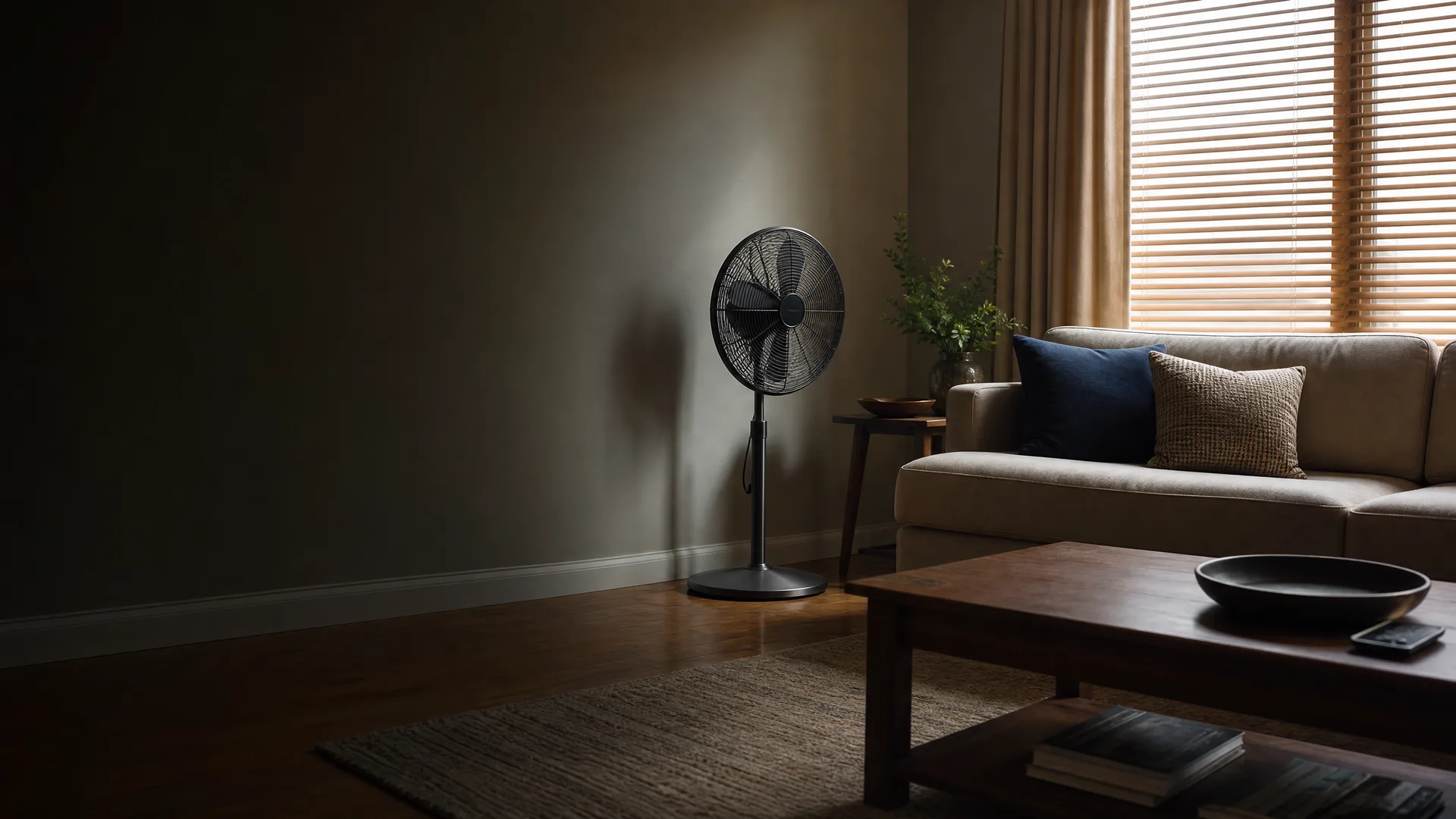
A dark pedestal fan stands near a wall in a dimly lit living room with a beige sofa, cushions, a side table with a plant, a wooden coffee table holding a dark bowl, and window blinds admitting light.

The blinds are drawn but the light still gets in at the edges. It's past two o'clock and the floor fan next to the couch is doing most of the work the AC should be doing. You've been in front of it for twenty minutes and you're still damp at the back of the neck. The vents are putting out air but it's barely cooler than the room. Outside, Riley County is sitting in the kind of July heat that doesn't let up until after dark, and in here the house is holding onto it. You get up to check the thermostat again, like the number might have changed since the last time you looked.

Cooling runs June through September

Four months is most of what your AC owes you all year, June through September. When a unit freezes up in the middle of that stretch, you feel it fast, since there's no slow season to fall back on while it sits broken.

NOAA nClimDiv 1991-2020

What a Frozen AC Means

  • Ice on the coil almost always traces back to blocked airflow or low refrigerant, not a failing unit.
  • A dirty filter, closed vents, or a dusty coil can each cut off the airflow the system needs to keep from freezing.
  • A slow refrigerant leak drops pressure in the coil low enough that moisture in the air freezes on contact.
  • Running a frozen unit without shutting it off can push liquid refrigerant back into the compressor and damage it.
  • Thawing the ice is only the first step; whatever caused it will freeze the coil again until it's found and fixed.
  • A unit stuck blowing warm air during a Manhattan summer afternoon needs a diagnosis, not just a reset.

A frozen coil has one of two causes. Either something is choking off airflow across it, like a dirty filter, closed vents, or a coil caked in dust, or the system is low on refrigerant from a slow leak and running too cold to stay above freezing. Both end the same way: ice where there should be condensation, and warm air coming through your vents instead of cool. The unit itself usually isn't the problem. It's reacting correctly to a condition that's gone wrong somewhere else in the system. That's worth knowing because it means switching it off matters more than it might seem. A frozen coil left running can push liquid refrigerant into the compressor, and a compressor is not a part that gets repaired cheaply or quickly if it fails. Shutting the system down and letting the ice melt on its own, without chipping at it, stops that risk while you wait for someone to find the actual cause. Thawing the ice doesn't fix anything on its own. Whatever cut off the airflow or let the refrigerant drop will do it again the next time the system runs, often within hours in a Manhattan summer. A technician checks the filter, the vents, the coil, and the refrigerant charge to find which one failed, then deals with that, not just the ice sitting on top of it. Until that happens, the unit is going to keep freezing, no matter how many times it gets reset.

A bearded man in a blue T-shirt sits on a gray couch smiling while looking down at a laptop screen, with a houseplant and window in the blurred background.
A bearded man in a red and blue plaid shirt stands indoors looking out a frosted window at snow-covered foliage, with a steaming brown mug on the sill and wooden shelves behind him.

Let someone else find the pro

A frozen coil in a Manhattan summer does not thaw itself out and leave you fixed. It points to blocked airflow or low refrigerant, and both need a contractor to find and correct. Send the form and you skip calling around Riley County, explaining the ice and the warm air to one company after another, and weighing quotes against each other. Someone qualified gets matched to your job, and from there it is off your plate.

Start one form

Skip calling shops to ask who repairs air conditioners in Riley County.

You're not committing to anything by asking.