Send the form, and lining up the air conditioner tune-up stops being yours to chase.
Kansas summers put a lot of water through your AC. The air is thick with moisture most days from June through September, and that moisture comes off the evaporator coil and runs out through the condensate drain line. Algae and dirt build up inside that line over a summer of steady use, and once it's blocked the water has nowhere to go but back into the system or out onto your floor.
A clogged drain line usually shows up as a puddle near the indoor unit, a musty smell, or the AC shutting itself off because a safety switch caught the standing water. None of that means the unit is broken. It means the line needs to be cleared, and that it probably needs checking again before next summer so it doesn't happen twice in one season.
Finding someone for this on your own means the same slog every time something goes wrong with the house: searching for AC contractors near you, calling a few, explaining what the water is doing and where, then waiting to hear back and comparing what each one quotes before you pick one. All of that takes time you don't have when water is sitting next to your furnace or soaking into the carpet.
Send the request through this page and that part is done. You're not the one tracking down who's available or chasing a callback. A licensed contractor gets your information and the job of finding help is off your plate, not rushed, just handled.
What's below walks through why the line clogs in weather like this, what it costs you if it's left alone, and what a contractor actually does to clear it and keep it clear. The button is there when you're ready to stop dealing with it yourself.
Why does my AC drain line keep clogging in the summer?
Your AC has been running most days since June, and now water is backing up or the system has shut itself off. You want to know why this keeps happening, especially when it never did in the cooler months. It usually comes down to what the long muggy stretch does to the drain line, and once you know the cause, the fix and the way to stop it from repeating make a lot more sense.
Algae and dirt build up faster when the AC runs long hours in heavy humidity
The drain line carries off the water your evaporator coil pulls out of the air, and in Kansas that coil is wet for months at a stretch, June through September most years. That constant moisture inside a dark, narrow pipe is exactly what algae and mold need to grow. Dust and dirt pulled through the return air stick to that growth and narrow the line further. A system that runs for a few hours a day in spring might go all summer without trouble, but one running most of the day for weeks builds up a clog much faster. Once enough buildup collects, water backs up, trips the float switch, and shuts the system down or starts dripping where it shouldn't.
Draining like it should
Water moves through the line and out the end of the pipe outside, steady and quiet. The coil stays wet all day in Kansas humidity, but the line carries that water away as fast as it collects. No standing water, no musty smell near the unit, no shutoff.
Clogged and backing up
Algae and dirt have built a plug somewhere in the line. Water backs up into the drain pan, trips the float switch, and shuts the system off, or it finds another way out and drips where it shouldn't. The louvers and grille gathering grime outside are often matched by the same buildup inside the drain.
How the drain line clogs
Warm, humid air moving across the evaporator coil condenses into water almost constantly from June through September.
That water drips into a pan under the coil, then runs through the condensate line to a drain outside or into a floor drain.
The line is usually PVC pipe about three quarters of an inch wide, with little slope to help water along.
Algae feeds on the constant moisture and dark, slow-moving conditions inside the line, building up on the walls like a clogged artery.
Dust and dirt that bypass the filter settle in the trap built into the line, giving algae something to grip as it spreads.
A clog usually forms near the trap or the outdoor end first, since both are low points where water slows down and debris collects.
Your AC pulls moisture out of the air every time it runs, and in a Kansas summer that's most of the day. That water lands in a pan under the evaporator coil, then follows a drain line out of the house, usually PVC about three quarters of an inch across. The pipe has little slope, so the water moves slowly, and slow water in a dark pipe is exactly what algae needs to take hold. It grows along the inside walls the way plaque builds up in an artery, narrowing the path a little more each week. Dust and dirt that get past the filter don't just float through. They settle at the trap built into the line, and that grit gives the algae something rough to grip as it spreads. Once enough has built up, water backs up behind it instead of draining out. The low points in the line fill first, which is why clogs tend to start near the trap or right at the outdoor end, wherever water naturally slows down and debris has a place to collect. A line that drains fine in May can be most of the way blocked by August, because the conditions that cause the clog, warm air and constant moisture, are exactly what a Kansas summer provides from June through September. None of this depends on the age of your system or how your ductwork is laid out. It happens in the pipe itself.
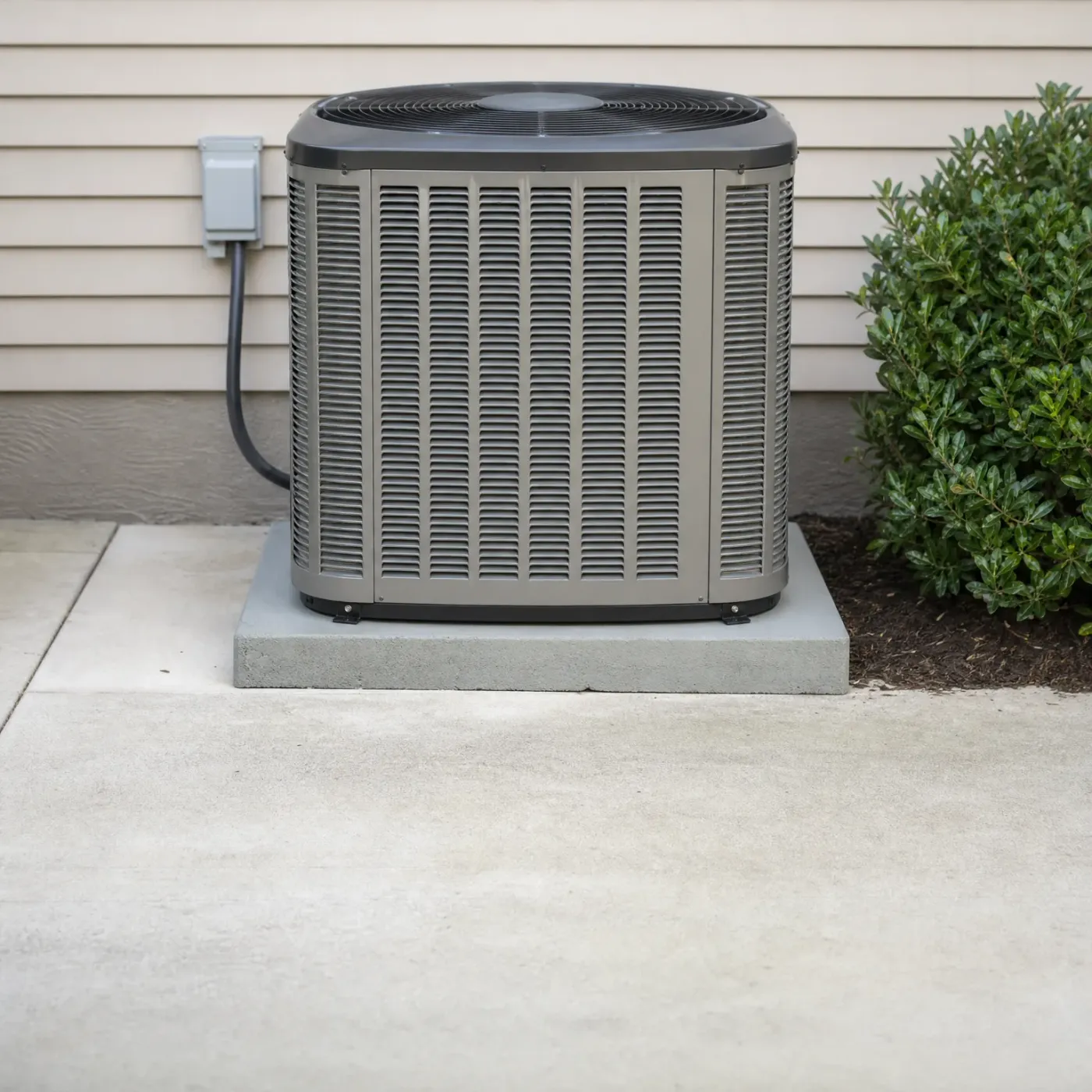
A clean condenser like this one outside means the drain line behind it is likely still running clear.
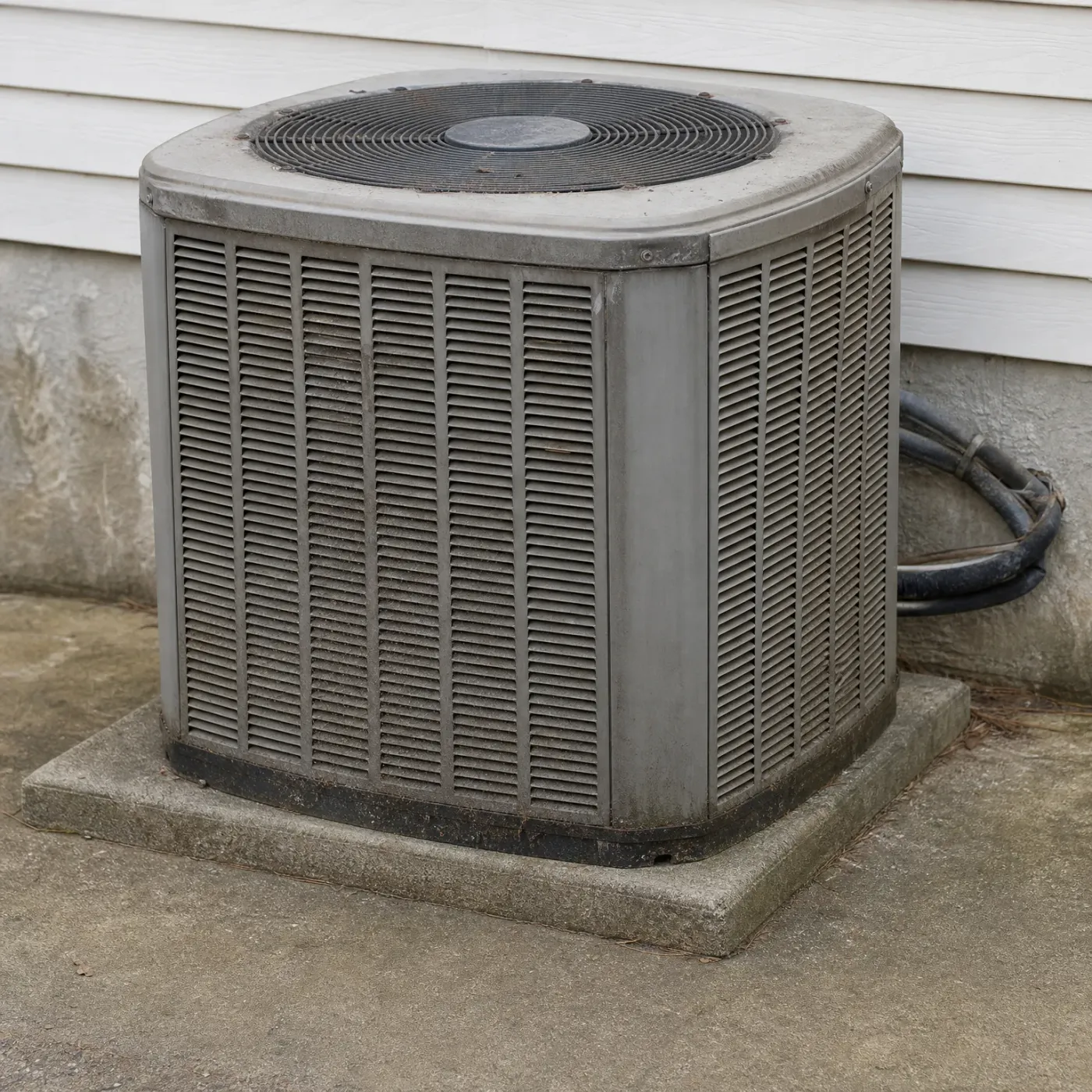
Grime coating the fins like this often goes with a drain line close to backing up inside.
Why is water showing up where it shouldn't?
You might see a drip or a small puddle under the indoor unit, a stain spreading across the ceiling if it sits below an attic system, or a damp patch near the furnace closet. Some homeowners notice a musty smell first, before any water shows. If the AC has shut itself off on its own, that's usually a float switch doing its job, stopping the system before the pan overflows. Left alone, standing water in the pan can soak into the floor or ceiling below it and feed mold in places you can't see. The longer a clog sits, the more likely that water finds a way out somewhere you'd rather it didn't.
Fill out one form instead of calling around for an air conditioner tune-up.
It costs nothing to send, and you don't have to hire anyone.
A properly running drain line moves roughly a pint of water or more out of your house on a humid afternoon, all of it coming off that one coil.
It only takes a few inches of algae buildup inside the line to slow that flow enough for the pan to start backing up.
Power costs 14.44 cents per kilowatt-hour statewide
At 14.44 cents a kilowatt-hour, every hour your AC runs costs you something, and a clogged drain line makes it run longer than it should. Once water backs up, a lot of systems shut down or short cycle trying to keep the coil from flooding, and that extra cycling shows up on your bill before you ever see the puddle.
EIA-861 2025 statewide residential average
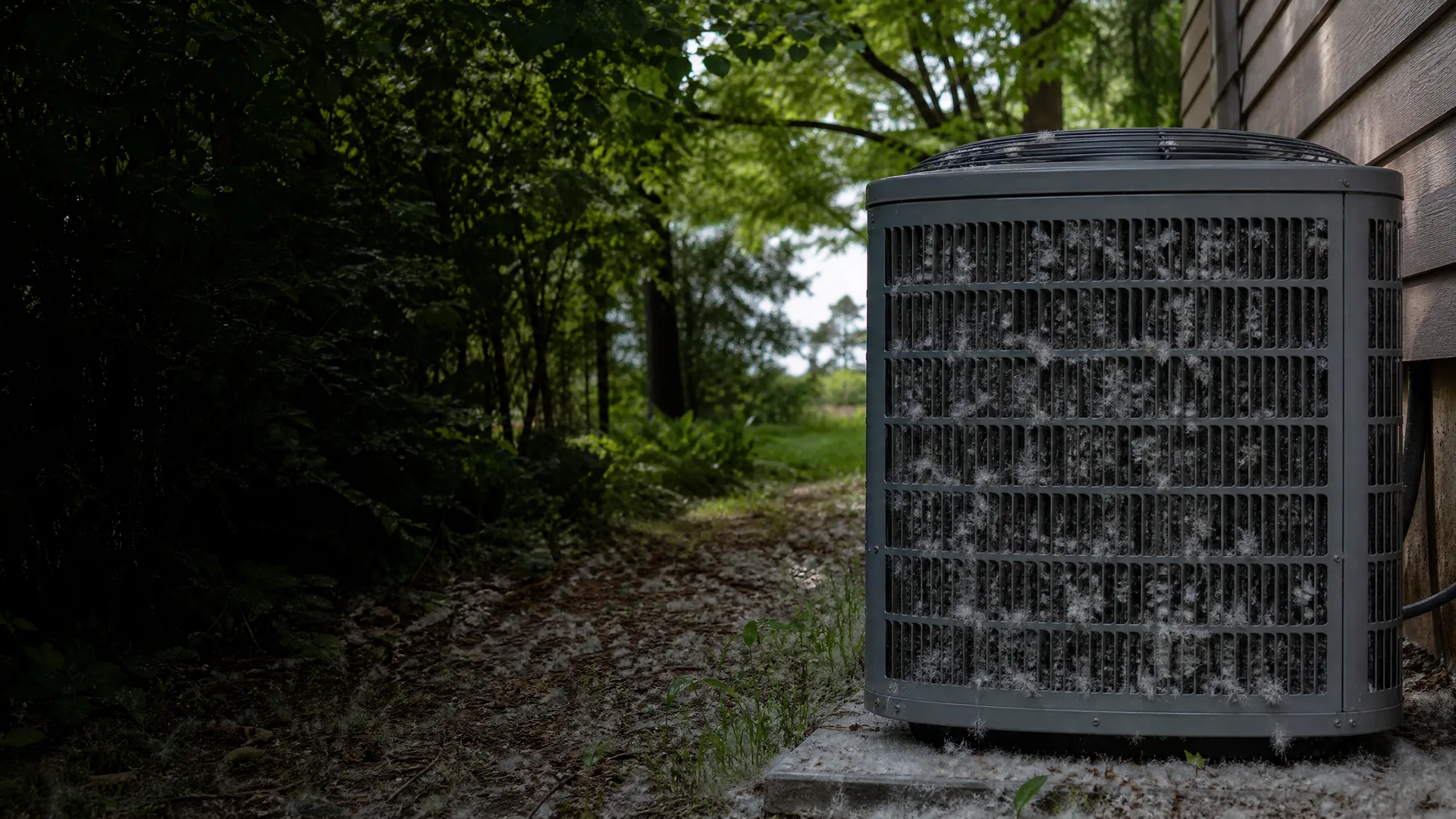
You're out pulling weeds along the side yard in late May when you notice the condenser running and go to check on it. The fins are coated white, almost furry, with the fluff the cottonwoods have been dropping for a week straight. Some of it's packed in tight between the fins, more of it collecting at the base where the unit meets the concrete pad. You brush a handful off the top and it just gets replaced by more drifting over from the tree line. Inside, the AC keeps cycling like normal. You make a note to hose it down this weekend, then head back to the weeds.
Clear It Yourself or Call It In
Clear the line yourself
You need the shutoff location, the access point on the line, and a wet/dry vacuum or a length of stiff wire to push through the clog.
If you've never traced your own line from the coil to the outside termination, finding the right access point to open can take real trial and error.
A vacuum pulled against the wrong fitting can crack PVC that's already brittle from years of sun and condensation.
Pouring anything down the line without knowing what the system can handle risks pushing the clog further in rather than out.
You're doing this while the house is already humid and the coil may already be wet, so there's no slack if it goes wrong.
If the clog is past where you can reach, you're back to square one with water still backing up.
Have it cleared and checked
A maintenance visit clears the line and also checks the pan, the coil, and the drain slope so the same clog doesn't form again in a month.
You stop guessing at which fitting to open or how hard to push a vacuum against old PVC.
Instead of calling around and explaining a shutdown system over and over, you send one form and the search for who to call is no longer yours to carry.
Finding someone who handles this routinely is off your plate the moment the form goes in, and that's real relief whether or not you ever touch the line again.
Algae growth and dirt buildup get addressed at the source, not just pushed out of the immediate blockage.
You get a second set of eyes on whether the pan is already showing wear from past backups, which you wouldn't catch on your own.
A dew point of 64°F is what a Kansas summer averages across June, July and August, by NOAA's long-term figures. That's the number that tells you how heavy the air actually feels, not just the temperature on the thermometer. At that level your coil is pulling water out of the air almost nonstop, all day, every day, for three straight months. That's three months of steady runoff through the same stretch of drain line, not the occasional afternoon storm. The more water that moves through it, the more chances algae and dirt have to build up along the walls of the pipe and start narrowing it down.
NASA POWER T2MDEW county cells weighted by homes
Before you get your air conditioner maintenanceAfter you get your air conditioner maintenance
Condenser running clean
The lines running up to the disconnect are clear, the pad is clean, and the unit sits there doing its job without strain. A condenser kept clean like this has one less thing working against it when the drain line is already carrying all that coil water.
Condenser caked in grime
Dirt coats the fins and housing, thick enough to see from across the yard. A unit left like this is working harder to move air across the coil, and a homeowner who hasn't looked at the outside unit often hasn't looked at the drain line either.
A clogged drain line in a Kansas summer comes down to algae and dirt slowing water that has nowhere else to go. Clearing it now, before the next humid stretch backs it up again, keeps the pan from overflowing and the system from short cycling. You could spend an evening searching for a contractor, calling a few, explaining the same backed-up line each time, then sitting with quotes trying to compare one against another. Send this form instead and that work is off your plate. You won't be the one tracking down who's available or repeating yourself on the phone. Someone qualified gets the details and reaches out, and from there it's off your hands. The water will keep coming off that coil all summer. Whether it drains out the way it should or backs up into your house again comes down to whether that line gets cleared and kept clear.
It's off your list after this
Skip calling around to set up an air conditioner tune-up.