AC leaking water inside in sticky Kansas summers

RepairCentral ACKansas
Step 1 of 2

What ZIP code is the job in?

Why is my AC leaking water inside my house?

You walked in and found water pooling near the vents or dripping from the ceiling, and now you're wiping it up before it soaks into the floor or the drywall. With Kansas summers running muggy for months, your AC is working hard, and you want to know what's causing this before it turns into a bigger repair.

A clogged drain line is usually the cause

Your AC pulls moisture out of the air as it cools your home, and that water is supposed to run out through a drain line to the outside. When that line clogs with algae or dirt, the water backs up and overflows inside, often from the drain pan under the indoor unit or through the ceiling if the unit sits in the attic. A dirty air filter can cause the same problem a different way: it restricts airflow, the coil gets too cold, ice builds up on it, and when that ice melts faster than the drain can handle, water spills past the pan. Either way, the leak means something is blocking the water from going where it should, not that your AC is broken beyond repair.

A gray outdoor air conditioner condenser unit on a concrete pad beside a house with horizontal lap siding, with a wall-mounted disconnect box and conduit at left and a green shrub and mulch bed at right.

Draining the way it should

A healthy AC pulls moisture out of the air and sends it down the condensate line to a drain outside, away from the house. The pan stays dry, the line stays clear, and nothing backs up. You'd never know the water was there at all.

An outdoor air conditioner condenser unit on a concrete pad beside a house with horizontal lap siding, with a conduit running to a gray electrical disconnect box on the wall.

Backing up instead

Once the drain line clogs or the pan cracks, that same water has nowhere to go but back into the house. It shows up near the vents, along the ceiling below the ductwork, or pooling by the unit itself, and it keeps coming as long as the AC keeps running.

Clogged Line or Broken Pan

Clogged drain line

  • Algae and dirt build up inside the condensate line over a humid summer and slow the water moving through it.
  • Once the line backs up, water has nowhere to go but the drain pan, and from there onto the floor.
  • A wet-dry vacuum at the outside end of the line can sometimes pull the clog free before it needs a tech.
  • If the clog sits further up the line, a contractor has to clear it from inside at the unit.
  • A float switch that shuts the system off when the pan fills is a sign the line already backed up once.

Cracked or rusted pan

  • A pan that has rusted through or cracked no longer holds the water the coil drips into.
  • Water finds the crack and runs straight onto the floor below the unit instead of down the drain.
  • This shows up more in older units, where the pan has had years of condensation to wear through.
  • No amount of clearing the drain line fixes a pan that is physically broken.
  • A contractor can swap the pan without replacing the whole system if the rest of the unit is sound.
A smiling man in a dark green shirt over a white t-shirt sits at a kitchen counter with a dark mug, looking off to the side, with shelves, plants and a bright living area behind him.
A man in a gray long-sleeve waffle-knit shirt smiles and looks off to the side in a kitchen with open shelving, a refrigerator, a wooden sideboard with a potted plant, and a glass door to the right.
A man in a dark green ribbed sweater stands smiling and looking off to the side beside a stone kitchen counter with a ceramic mug, with a dining table, pendant lights, and large windows in the background.
A bearded man in a gray long-sleeve shirt stands smiling and looking off-camera beside a kitchen counter with a white mug, with a living room, fireplace and wall-mounted television behind him.
A gray outdoor air conditioning condenser unit on a concrete pad beside a house with horizontal lap siding, with a wall-mounted disconnect box and conduit, and shrubs to the left.
The condenser outside sits level, the pad is clean, and the lines running to the wall are doing their job without strain.
An outdoor air conditioning condenser unit on a concrete pad beside a house with horizontal siding and a concrete foundation, with dry brown leaves on the ground to either side.
Leaves piled against a dirty, aged condenser like this choke airflow, and a struggling unit upsets the balance that keeps condensation draining where it should.
  1. Warm house air passes over the cold evaporator coil.

  2. Moisture in the air condenses on the coil's surface.

  3. Water drips off the coil into the drain pan below.

  4. The pan feeds the condensate line toward the drain.

What's this leak actually doing to your house

Look at where the water is showing up. A stain spreading across the ceiling below an upstairs unit, a warped section of floor near a vent, or a musty smell in a closet that shares a wall with the ductwork. If the pan has been overflowing for a while, you might find soft drywall or a ring around the stain that keeps coming back no matter how many times you wipe it. Carpet or wood near the air handler can stay damp long enough to grow mold, and that's a different problem than the one you started with. None of this means the AC itself is failing. It means water that should be going outside through the drain line is going into your house instead, and every day it keeps doing that is a day it has to be cleaned up and dried out.

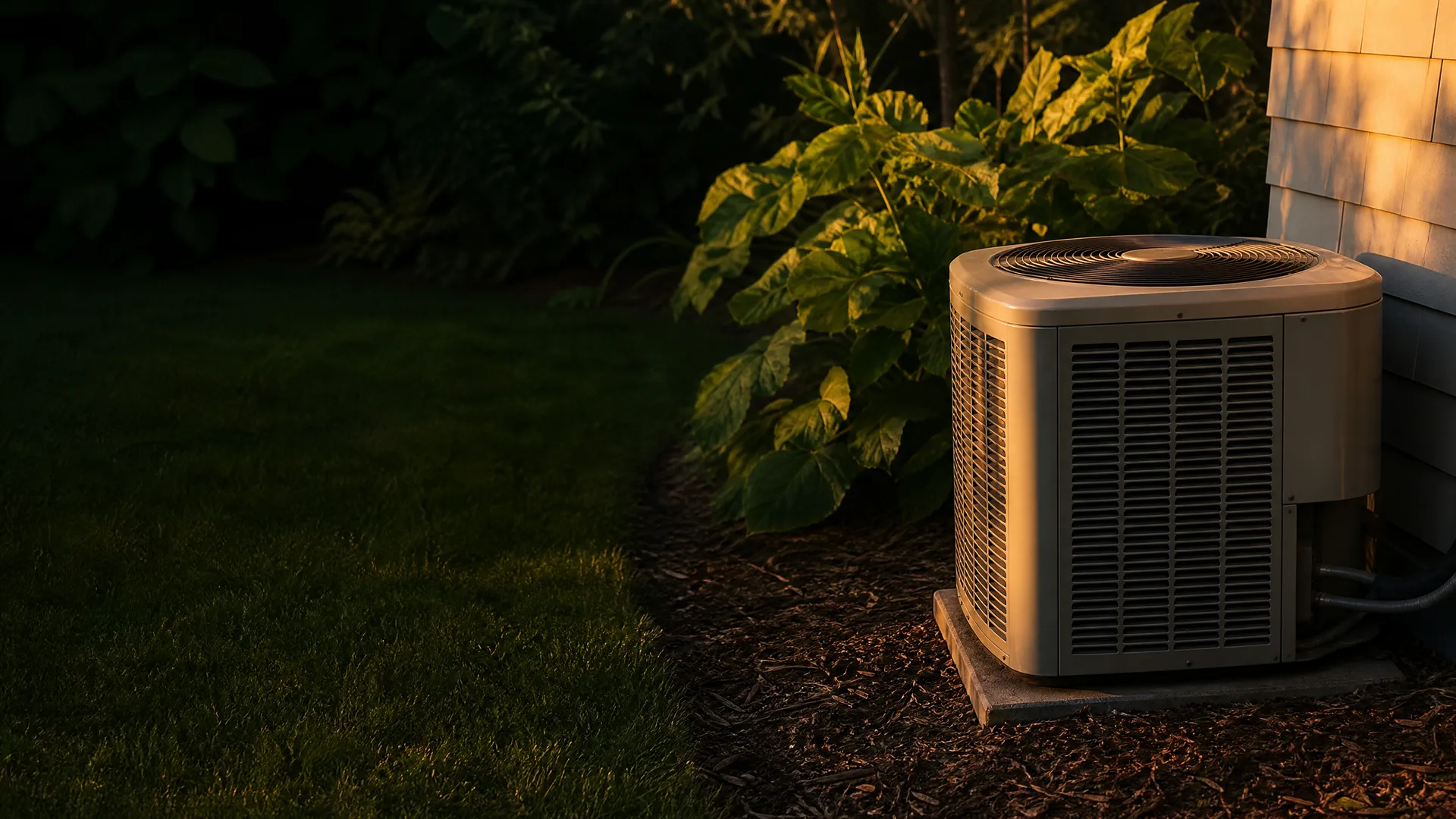
An outdoor air conditioner condenser unit sits on a concrete pad beside a shingled house wall, surrounded by mulch, broad-leaved shrubs and a lawn in low evening light.

The sun is low over the fence line, throwing that flat gold light across the yard. You walked out to see why the air feels thick again inside, and the condenser is just sitting there, quiet. No hum, no fan turning. You crouch down and look at the blades through the grille. Still. Somewhere behind you, through the kitchen window, you can picture the water already working its way across the floor near the vent. The grass around the unit is damp from the sprinkler earlier, and a few leaves sit against the side of the cabinet. You stand there a second, listening for a sound that isn't coming, the evening heat pressing in while the house behind you stays warm and getting wetter.


Power costs 14.44 cents per kilowatt-hour statewide

At 14.44 cents a kilowatt-hour, a struggling AC costs you more than a wet ceiling. A unit fighting a clogged drain or a dirty coil runs longer to keep up, and that extra runtime shows up on the bill before you've even dealt with the leak.

EIA-861 2025 statewide residential average

A bearded man in a dark blue T-shirt sits on a gray couch, smiling and looking down to his left, with a bookshelf and a bright window behind him.
A man with graying hair and a beard in a plaid flannel shirt stands indoors looking out a frosted window at snow-covered trees, with a ceramic mug on the sill.
A two-story light-colored house with horizontal siding, two front gables and a small porch, seen from the street across a green lawn with a straight concrete walkway and leafy trees on both sides in low sunlight.

That muggy feeling in Kansas has a number behind it. Average out June, July and August and the dew point sits at 64°F, high enough that the air stays heavy from morning to night. Your AC has to pull more water out of that air to keep the house comfortable, and all of it has to pass through the same drain line and pan. More moisture means more chances for the line to clog or the pan to overflow before you notice. A local contractor who works on these systems all summer has seen what that kind of load does to a condensate line here, and knows where to look first.

NASA POWER T2MDEW county cells weighted by homes

Finding a pro stops being your job

You've already seen where the water is coming from and what feeds it. Clogged line, tipped pan, a coil that's not draining right, any of these stop being a guess once someone's hands are on the unit. A tech who works AC repair in Kansas all summer has seen a dozen drain lines clogged the same way this one is, and knows which part to check first instead of working through the whole system by trial and error. Send the request and it goes to one licensed contractor near you, not a pile of them competing for your callback. That's the water sorted and the floor and ceiling protected from more of it while the house finally dries out behind the walls where you can't see it. You've been wiping up water and watching for new stains. Handing this off means that stops being something you have to manage today.

The parts behind the leak

  • The float switch sits in the drain pan or the line and shuts the AC off when water rises too high.
  • That switch is a safety device, not a repair, so the unit staying off means the clog or tilt still needs fixing.
  • A primary pan catches normal condensate, and a secondary pan underneath catches overflow if the first one fails.
  • PVC condensate lines usually include a cleanout tee, a capped fitting where a tech can clear a clog without cutting the pipe.
  • Some systems use a condensate pump to push water uphill to a drain, and that pump can fail on its own.
  • A coil that's iced over will leak once it thaws, dumping more water than the drain line can carry at once.

Most AC systems have a few safeguards built in before water ever reaches your floor, and knowing them helps you understand what a tech is actually checking. The float switch is the first line of defense. It sits right in the drain pan or inside the line itself, and once water rises past a certain point, it cuts power to the unit. That's not a fix, it's the system protecting itself, so if your AC won't turn on, the switch may be doing exactly what it's supposed to do while the real problem, usually a clogged line, still sits there waiting.

Behind the scenes there's often a second pan mounted underneath the first one, there specifically to catch overflow if the primary pan ever fails or backs up. If you're seeing water, something has already gotten past both of those.

The drain line itself usually has a cleanout tee somewhere along its run, a capped fitting that lets a tech clear a clog without cutting into the pipe. On systems where the drain can't run downhill to the outside, a condensate pump does the work instead, pushing water uphill, and that pump is one more thing that can quietly fail on its own.

And if the coil has iced over from low airflow or a low charge, the leak shows up later, once it thaws and dumps more water than the line was built to carry at once.

An outdoor air conditioning condenser unit on a concrete pad beside a house with light vinyl siding, an electrical disconnect box and conduit on the wall, bare shrubs and mulch to the right, and a concrete walkway in the foreground.
Before you get your air conditioner repair
An outdoor air conditioner condenser unit on a concrete pad beside a house with beige horizontal siding and a stone-veneer base, with refrigerant lines running to a gray wall-mounted electrical box, surrounded by dark mulch, a flowering shrub and an evergreen on the left.
After you get your air conditioner repair

Before you get your air conditioner repair

You're watching the pan and wiping up water, and the house stays sticky no matter how long the AC runs. The clog or tilt causing it is still there.

Get a licensed local pro

After you get your air conditioner repair

The line runs clear, the pan drains like it should, and you're not checking the ceiling every time the AC kicks on. One call found the person to fix it.

Get a licensed local pro

A leaking AC almost always comes down to a clogged line, a tilted pan, or a coil that's icing over and melting faster than it can drain. None of that clears itself, and with the dew point sitting where it does here all summer, the moisture keeps coming no matter how long you wait. A local tech who works on Kansas AC units all season has seen the same clog and the same tipped pan more times than you'd guess, and knows which one is causing yours before the panel's even off. You're matched with one licensed contractor, not a handful of companies competing for your callback, so there's no juggling quotes or explaining the problem five times over. Once you send the request, it's someone else's job to track that down. The water stops being something you manage and becomes something that gets fixed.

View from above a shingled roof peak toward a single tall spruce tree and a flat, partly snow-covered landscape with trees and fields under a clear blue sky.

One request and it's handed off

I'm done searching

You're not committing to anything by asking.

A clogged line or a tipped pan won't fix itself, and every muggy day adds more water for it to deal with. Getting a local tech out to look at it now is the difference between one dry afternoon and another stain spreading across your ceiling or floor.