





Why your AC smells musty in sticky Kansas summers

Send the request today and stop worrying about who to call.

Hand it off

Why does my AC smell musty in the summer?

You walk in from the heat and the air coming out of the vents smells off, like a wet basement. It is not constant, but it shows up most on the first cold blast when the system kicks on, and it lingers through the muggy stretch of summer when the AC barely shuts off.

Mold or mildew is growing on the evaporator coil or in the drain pan

Your AC pulls moisture out of the air every time it runs, and that water has to go somewhere. It collects on the evaporator coil and drips into a drain pan, then out through a condensate line. In Kansas, with summers sticky enough that the system runs for hours at a stretch, that coil stays wet most of the day. Any dust or debris sitting on it mixes with the moisture and mold takes hold. The smell is that mold, and it rides the airflow straight into your rooms. A clogged drain line makes it worse, since standing water has nowhere to go and sits there breeding the smell. Once mold is established on the coil, running the system longer only spreads more of it through the house.

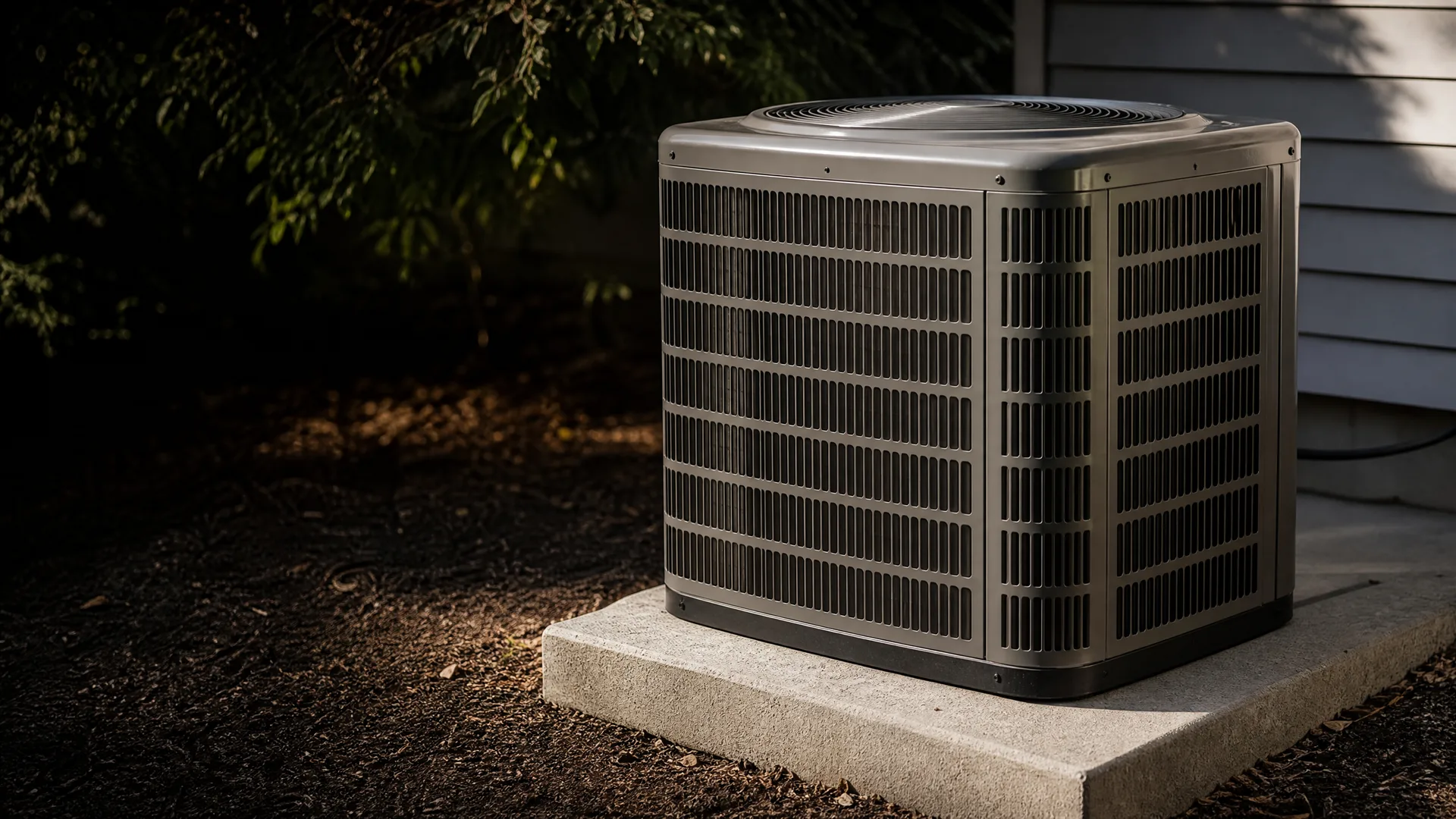
An outdoor air conditioner condenser unit on a concrete pad beside a house with horizontal lap siding and a light stucco wall, surrounded by dark mulch and an ornamental grass.

Where the smell actually starts

The evaporator coil sits inside the air handler and runs cold and wet all summer. Humid Kansas air passes over it and the moisture that collects has to drain out through a condensate line. When that line clogs or the pan underneath holds standing water, mold grows right where the air passes on its way to your ducts. That smell you notice is the coil and drain pan, not the ducts themselves.

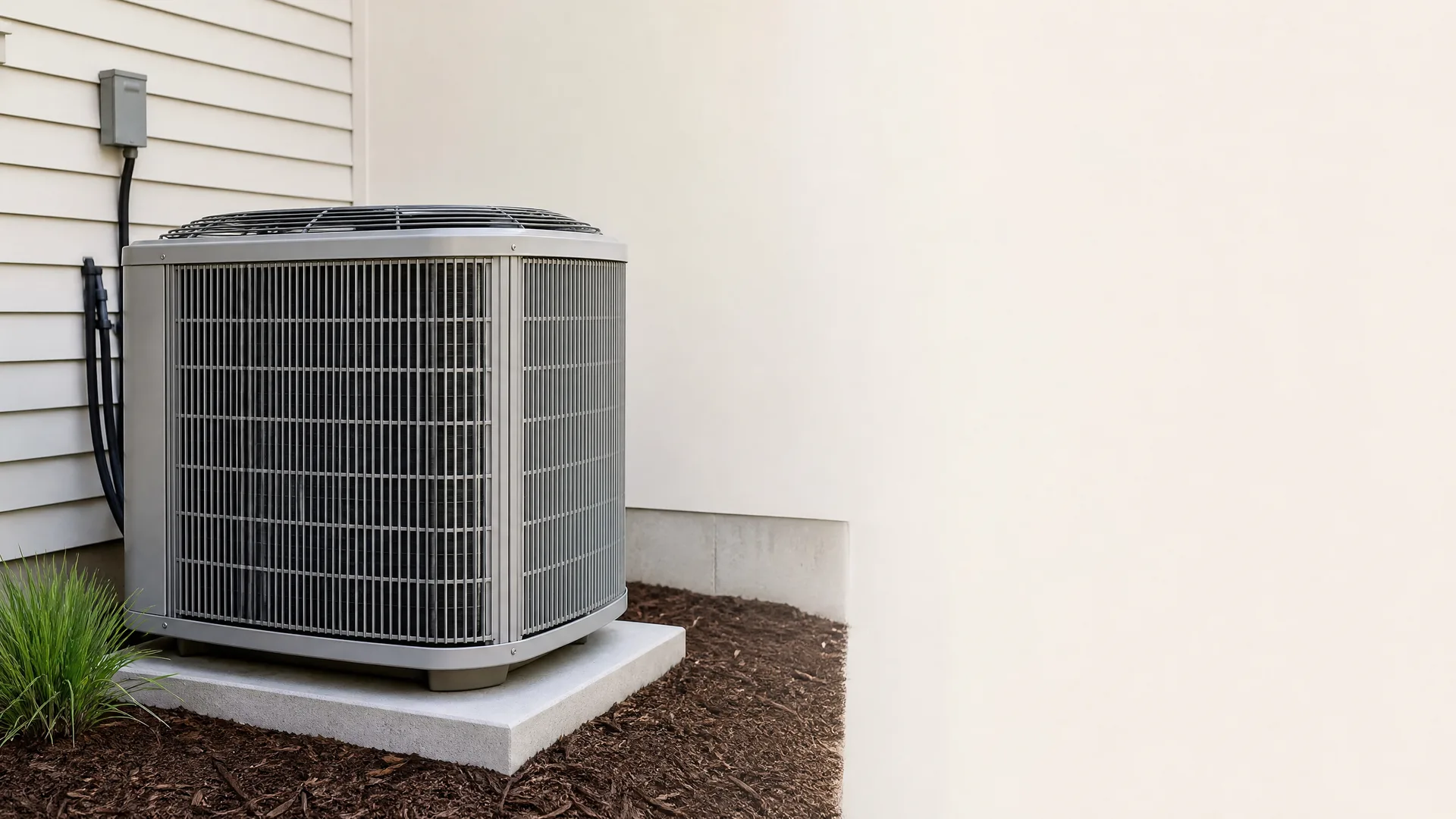
An outdoor air conditioning condenser unit on a concrete pad beside a light stucco wall, with a disconnect box and refrigerant lines running to adjacent lap siding.

Why it hits hardest on startup

A system that sits idle between cycles stays damp inside, especially overnight when it runs less. The first blast of air after it kicks back on pushes whatever grew on the coil straight into the room, then fades as dry air keeps moving. A contractor can check the coil, the drain pan, and the line itself to find where the water is sitting instead of draining like it should.

Is that smell a sign of something you should worry about?

Walk through the house room by room and the smell is usually worse near the vents themselves, not just floating in the air generally. You might notice it most in a bedroom with the door closed overnight, or in a room you keep shut off during the day. Sometimes there is a faint drip sound from the air handler, or a damp spot on the ceiling or floor nearby if the condensate pan has overflowed. Left alone, standing water in that pan grows mold that spreads past the unit itself, and a clogged drain line can back up and damage the floor or ceiling around the air handler. Musty air moving through the house all summer is also just unpleasant to breathe, night after night.

A smiling bearded man in a dark blue henley shirt sits leaning back on a light grey sofa in a living room, with a bowl of popcorn on a wooden coffee table and a large window behind him.
A bearded man in a dark quarter-zip sweater sits smiling on a brown sofa in a dimly lit living room, with a bowl of popcorn and a mug on a table in the foreground and a potted plant near a window behind him.
A smiling man with graying dark hair and a beard, wearing an olive sweater, sits on a sofa in a living room beside a bowl of popcorn on a wooden table.
A smiling man in a dark green henley shirt sits on a gray sofa in a living room with a lit table lamp, wooden shelving unit, and a bowl of popcorn in the foreground.

Will the Smell Clear or Does It Need a Repair

Musty Smell Fades on Its Own

  • It usually means the coil dried out and the drain line is clearing itself, which can happen after a stretch of lower humidity.
  • The smell was likely tied to a dirty filter that has since been changed and is no longer feeding dust and moisture buildup on the coil.
  • If the system was recently serviced and the pan and line were cleaned out, the smell may just be the last of it working through the ducts.
  • Some smell right after start-up each day is common if the house sits closed up overnight and the air gets a chance to go stale near the vents.

Musty Smell Needs a Repair Call

  • If the smell keeps coming back week after week, standing water is probably sitting in the pan or line instead of draining out.
  • A smell that gets stronger rather than fading points to mold growing on the coil itself, which will not clear up without cleaning.
  • Water stains or a damp smell on the floor near the air handler means the condensate line is clogged or the pan is cracked.
  • If the smell is strongest in rooms with longer duct runs, moisture may be sitting inside the ductwork itself and not just at the coil.
  • A contractor can run a dye test on the drain line and check the coil directly, something that is hard to confirm just by smell alone.
A gray outdoor air conditioning condenser unit on a concrete pad beside a house with horizontal siding and a stone veneer base, with refrigerant line and electrical disconnect box on the wall and flowering shrubs to the left.

A coil draining the way it should

This unit sits clean on its pad, lines running tight into the wall. Inside, the coil drains as fast as summer humidity loads it up. No standing water, no film building on the pan, no musty air pushed out through the vents when the system cycles on.


An outdoor air conditioner condenser unit on a concrete pad beside a house with light gray horizontal siding, with mulch and green shrubs on either side and a concrete walkway in the foreground.

A coil that's been fighting all summer

Years of dirt packed into the fins slow the airflow this unit needs to shed heat. Inside, that same neglect usually means a drain line gone slow or clogged, water sitting instead of draining, and the smell riding the air every time it kicks on.

A closed silver laptop and a dark ceramic mug of coffee sit on a wooden table in a dim kitchen, with a window showing a sunset at left and a wall shelf, plant, and stove in the background.

What a tech checks first, and in what order

A tech coming to a musty AC does not start by pulling the coil. They start at the drain line, because it is the easiest thing to clear and the most common reason water backs up into the pan. From there they check the pan itself for cracks or rust, then look at the coil for the slime that builds up when water sits too long against warm, dusty aluminum. Only after that do they talk about the coil needing a real cleaning, since pulling an evaporator coil apart is more work than most of what causes the smell in the first place.

That order matters because it is the difference between a twenty minute fix and a half day one. You do not know which one you need until someone with a vacuum and a flashlight has actually looked at your line and your pan. Finding that person yourself means calling a few numbers, explaining the smell three different ways to three different people, and waiting on quotes that are hard to compare because nobody looked at the same unit. Send the form once and that part is off your plate.

Interior corner with a beige sofa holding a dark green and a light cushion and a textured throw, a potted small-leaved tree beside a white-framed window, and a dark shallow bowl on a wooden coffee table in the foreground.
A gray outdoor air conditioner condenser unit on a concrete pad beside a house with horizontal vinyl siding, surrounded by mulch, flowering shrubs, and lawn.

Outside unit, running clean

This condenser sits beside the house with grass and mulch around it, nothing blocking the sides or the top. Air moves through the fins and out the top without a fight. Inside, the coil sheds the moisture it collects as fast as it picks it up, so nothing backs up toward the vents.

A weathered outdoor air conditioning condenser unit on a concrete pad beside a house with light horizontal siding, an electrical disconnect box and conduit on the wall, and mulched soil on either side.

Outside unit, choked with grime

This one is coated in dirt and plant debris, the fins packed tight enough to slow the airflow the whole system depends on. A unit working this hard to breathe runs warmer and wetter inside, and that extra moisture is what starts feeding a musty smell indoors.

A woman in a cream knit sweater reclines on a sofa with her eyes closed and a slight smile, a closed dark book resting on a blanket in the foreground and a lit lamp and small potted plant behind her.
A smiling bearded man in a dark green sweater sits at a dinner table with a glass of red wine, a bowl of salad and a lit candle in the foreground, in a dimly lit room with a framed picture, lamp and potted plants behind him.

Hand off the air conditioner problem

That musty smell isn't going to clear up on its own in the middle of a Kansas summer, not with the humidity you're dealing with feeding the coil all season. You could call around and try to find someone who answers the phone, describe the smell over again to three or four companies, wait on callbacks, and sort through quotes before anyone even looks at the unit. Or you can send this request once and be done with that part of it. A contractor who works on these systems takes it from there, checking the drain line, the pan, and the coil itself to find where the water is actually backing up. You still have a sticky summer ahead of you and a system that needs to run through it. What you don't have to carry anymore is the job of tracking down who's going to fix it.

Letting it ride out the summer

You keep the windows shut, run the AC the way you always have, and figure the smell is just part of a sticky Kansas summer. Maybe it fades for a stretch and you stop noticing it, until the next humid week brings it back. Nothing about the system changes on its own. The drain line that is slow to clear stays slow. The coil that is holding onto moisture keeps holding onto it. Meanwhile the air moving through that damp space picks up more of whatever is growing there each time the system runs, which in a Kansas summer is most of the day. You are not fixing anything by waiting. You are just living with it through the months when you need the AC the most.

Having a tech clear it now

A tech can get to the drain line, the pan, and the coil itself before the smell has months to build on itself. Clearing a clogged line or cleaning a pan is routine work, and it stops the moisture from sitting where it breeds the smell in the first place. You stop smelling it when the system kicks on, and you stop wondering whether the air your house is breathing all summer is coming off a wet coil. It does not mean the heat or the humidity outside changes. It means the machine handling both of those things is working the way it is supposed to, instead of adding its own problem on top of what the weather is already giving you.

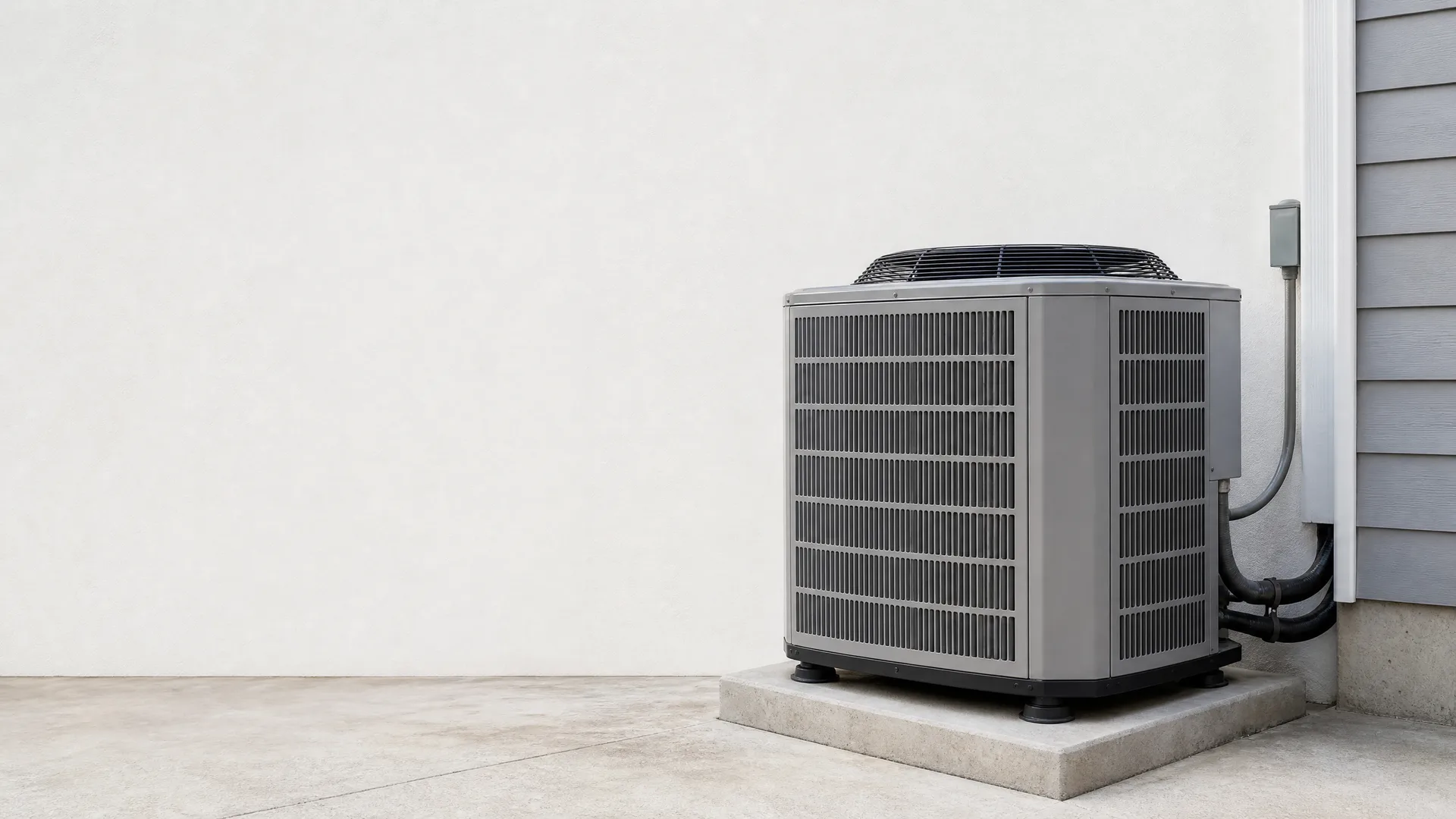
An outdoor air conditioning condenser unit on a concrete pad beside a house with horizontal lap siding, with a conduit and electrical disconnect box on the wall at right.
Before you get your air conditioner repair
A gray outdoor air conditioner condenser unit on a concrete pad beside a house with horizontal lap siding, with a wall-mounted disconnect box and conduit to its right and shrubs to the left.
After you get your air conditioner repair

Power costs 14.44 cents per kilowatt-hour statewide

That coil has to run all through a muggy Kansas summer to keep up, and every hour it's on is an hour on the meter. A clogged drain or dirty coil makes it work harder and run longer to cool the same rooms, and at 14.44 cents a kilowatt-hour that extra runtime shows up on your bill before you ever smell why.

EIA-861 2025 statewide residential average

  1. Condensate pan fills faster than the clogged drain line can empty it

  2. Standing water sits against the coil and the pan instead of draining away

  3. Algae and mold start growing in that trapped water within days

  4. Air moving past the coil picks up the smell and carries it through the ducts

A gray outdoor air conditioning condenser unit on a concrete pad beside a house with horizontal siding and a stone veneer base, with a wall-mounted disconnect box and conduit, next to a shrub bed and a concrete patio.
This condenser sits on a clean pad with clear sides, running the way it was set up to run.
An outdoor air conditioner condenser unit on a concrete pad beside a house with light gray vinyl siding, with a gray electrical disconnect box and conduit on the wall, gravel beds and dried plants nearby, and a concrete sidewalk in the foreground.
This one sits low against the siding in bare dirt and dead weeds, with nothing clearing the air around it.
A two-story house with beige horizontal vinyl siding, gray shingled gables and dormer, white-framed windows, a central entry door, and an outdoor air conditioning unit, set on a partly dry lawn under a clear blue sky.

The weather service puts the average summer dew point for Kansas at 64°F across June, July and August. That's the number that tells you how heavy the air actually feels, more than the temperature does. Air that wet means the coil inside your air handler stays wet longer between cycles, because it's pulling moisture out of the air nonstop just to keep the house comfortable. The condensate line has more water to carry away, all season, without much of a break. That's the steady load behind the musty smell. It's not one bad day. It's three months of the coil and drain line working against air this heavy, night after night.

NASA POWER T2MDEW county cells weighted by homes

The smell means water is sitting somewhere it shouldn't, usually in a drain line or pan that isn't clearing the way it's supposed to. A clean, properly draining system doesn't smell. That's the whole answer. What's left is finding out which part of the drain is holding water, and that means someone looking at the actual unit, not another round of guessing from the couch. You could spend an evening calling around, telling one contractor after another about the smell near the bedroom vent and the water you found by the furnace, then waiting to see who calls back and comparing what each one quotes you before you even know what's wrong. Sending the form here means you stop being the one who has to track that down. You explain it once, and the work of finding someone who can get out to a Kansas house in the middle of a humid summer and actually look at the coil and the drain line is no longer something you're carrying around on top of everything else this evening.

A gray outdoor air conditioner condenser unit sits on a concrete pad beside a house with horizontal lap siding, with shrubs and bare soil to the left.

Send one request and you're done looking

RepairCentral ACKansas
Step 1 of 2

What ZIP code is the job in?