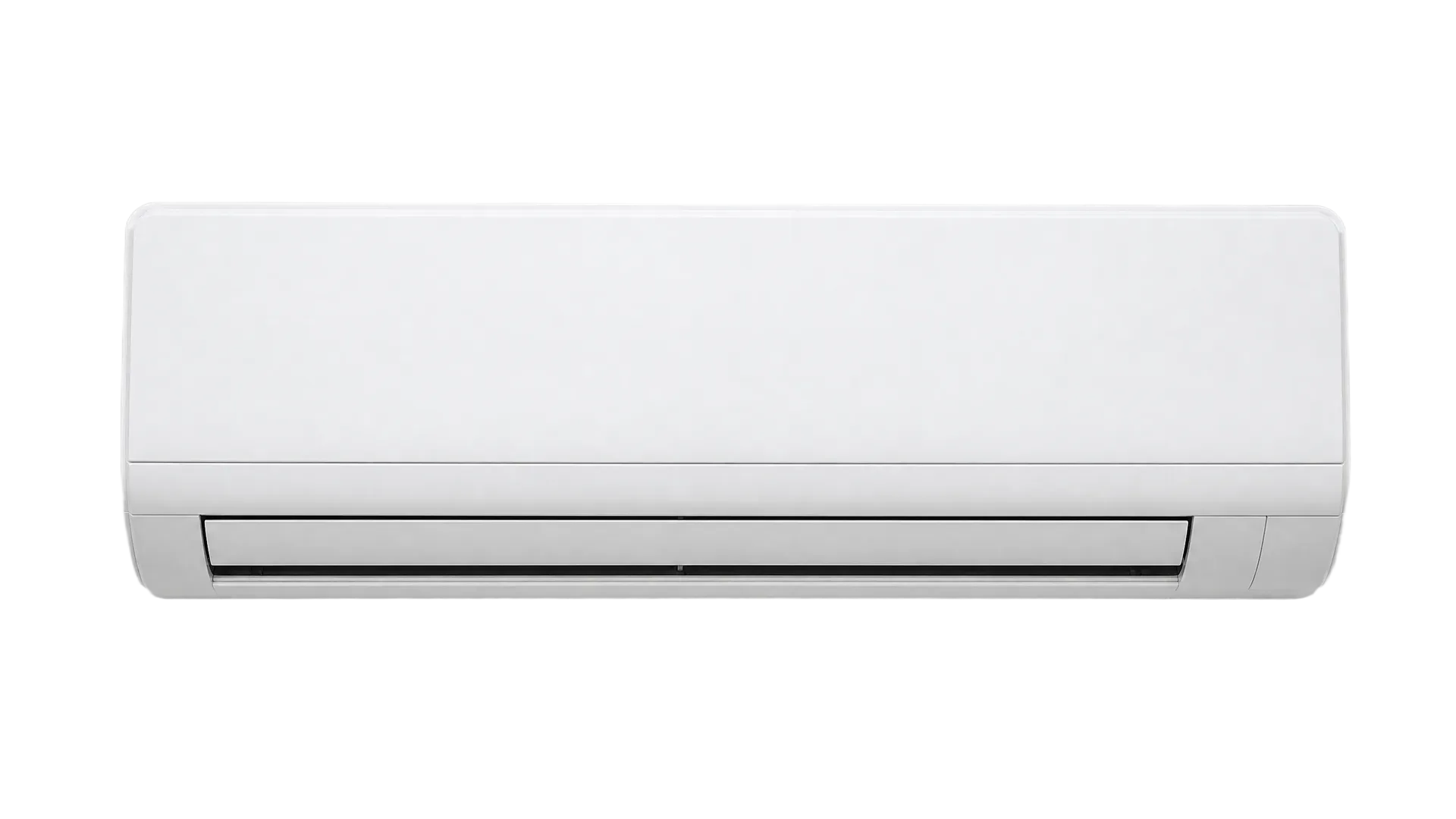
Running clean
Air moves through the coil and out into the room with no odor at all. The casing stays white, the drain line stays clear, and the unit only turns on when the room needs it, not all day on its own.
A musty smell from a mini split usually shows up when you first turn on cooling after it's sat idle, or on a muggy day when the unit is running a lot. It's a common enough complaint around Manhattan, where summers get sticky enough that the system is working hard to pull moisture out of the air. The smell isn't dangerous, but it's a sign something inside the unit is growing that shouldn't be there.
The coil inside the indoor unit stays wet while it cools, and in a Riley County summer it can stay damp for hours at a stretch. Dust and pollen settle on that wet surface, and mold starts growing on the coil or in the drain pan underneath it. Every time the fan runs, it pushes air across that mold and carries the smell into the room. A clogged condensate drain makes it worse, since standing water gives mold even more to work with. The smell tends to be strongest right when the unit kicks on, then fade some as air keeps moving. It won't go away on its own, since whatever is growing on the coil stays there until it's cleaned off.






Cooling runs June through September
Cooling runs June through September. That's four months of damp air passing over the coil, and a wet coil that doesn't dry out between cycles is where the smell starts.
Heat runs October through April
Heat runs October through April. For seven months the coil sits unused on the cooling side, giving any moisture or buildup left behind time to turn musty before summer.
Power here costs 15.04 cents per kilowatt-hour
Power here costs 15.04 cents per kilowatt-hour. A clean coil and clear drain line keep the unit running the way it's rated to, instead of working harder to cool through buildup.
NOAA nClimDiv 1991-2020 · EIA-861 2025

Air moves through the coil and out into the room with no odor at all. The casing stays white, the drain line stays clear, and the unit only turns on when the room needs it, not all day on its own.

The casing has gone yellow and collects dust along the vents. That's usually a sign the coil behind it has stayed wet and dirty for a long stretch, which is what gives the air passing over it that musty edge.
You'd notice it first walking into the room, before the air even feels cool. It might fade after the unit runs a while, or it might sit there all afternoon, getting worse the longer the mini split runs on a muggy day. Some households notice it more in one bedroom than another, if that's the room with the indoor unit. Left alone, the smell usually means mold is established on the coil or inside the drain pan, and it tends to spread to anything the air blows across, bedding, clothes in a closet nearby. It's not dangerous to shrug off for a week, but it doesn't go away on its own either.

This is what it should look like. The casing stays white, the wall under the unit stays clean, and air comes out without any smell attached to it. A unit kept up with regular maintenance runs like this year round, through the muggy months and the cold ones.

Dust has built up across the casing and into the vents, and the panel is open here to show the filter underneath, which is likely in the same shape. A mini split that looks like this has probably been running with a dirty coil for a while, and that's usually where the musty smell is coming from.


A musty mini split doesn't sort itself out on its own. The coil stays wet, the smell keeps coming back every time the unit kicks on, and most of the summer is still ahead of you. Finding someone who works on these units can take a few calls, checking who's licensed, who answers, who actually knows mini splits instead of window units and central air. Send the request once and that search is done. It goes to one contractor local to Riley County, someone who sees this exact complaint every June when the coil's been sitting damp since last summer, and who knows whether it's a cleaning or something further in the line. You're not waiting on a callback from five different companies or sorting through quotes. The smell is the part you noticed. What's behind it is the part worth having someone look at before you're running this unit daily through another muggy stretch.
A mini split coil holds moisture by design. Air passes over cold metal, water collects, and most of it drips down into the drain pan and out through the line. What doesn't drain sits on the coil fins between cycles. In a closed room with the door shut, that trapped moisture has nowhere to go, and mold on a wet coil finds enough to grow on in dust and skin cells pulled in with the room air. Nothing about the unit needs to be broken for this to happen. It just needs a coil that stays wet longer than it stays dry, which is normal for a unit running hard through a muggy Manhattan summer.
Cleaning the coil strips off the layer mold grows on, so the smell doesn't have anything to come from once the unit starts up again. Clearing the drain line matters just as much. A line that's slow to drain leaves water sitting in the pan longer, which is often what let the smell take hold in the first place. Neither fix changes how the unit cools your room. A mini split that's had its coil cleaned and its line cleared runs the same as any other, just without the smell attached to it, through the rest of the months it's working hardest.
Four months of cooling is still four months of a wet coil in your mini split, every June through September. That's the stretch where the smell shows up and keeps coming back, since the coil barely gets a chance to dry between cycles once the muggy days settle in.
NOAA nClimDiv 1991-2020
Ignore the smell and keep running the unit as is, and it keeps pulling damp air over a coil that never fully dries, so the smell stays part of how the room feels all summer.
Get the coil and drain line cleaned before the muggy months set in, and the unit goes back to doing what it's supposed to do: moving cool air through a dry coil, with nothing riding along with it.


A musty mini split isn't broken, it just has a coil that never gets the chance to dry out, and cleaning it is what stops the smell from coming back. That's the whole answer. What's left is getting it done before you're running the unit every day through a muggy stretch. A contractor who works on mini splits all over Riley County has seen this exact coil and drain line problem more times than almost anything else that comes up with these units, in homes right around Manhattan. You'll get matched with one licensed local contractor, not a handful of companies calling you back at once, so there's one name to expect and one visit to plan around. Once that request is sent, the job of tracking someone down is off your plate. The coil gets cleaned, the drain line gets cleared, and the unit goes back to running the way it did when it was new, cool air with nothing riding along with it.

The pro who gets in touch is licensed in Kansas and works in Riley County.