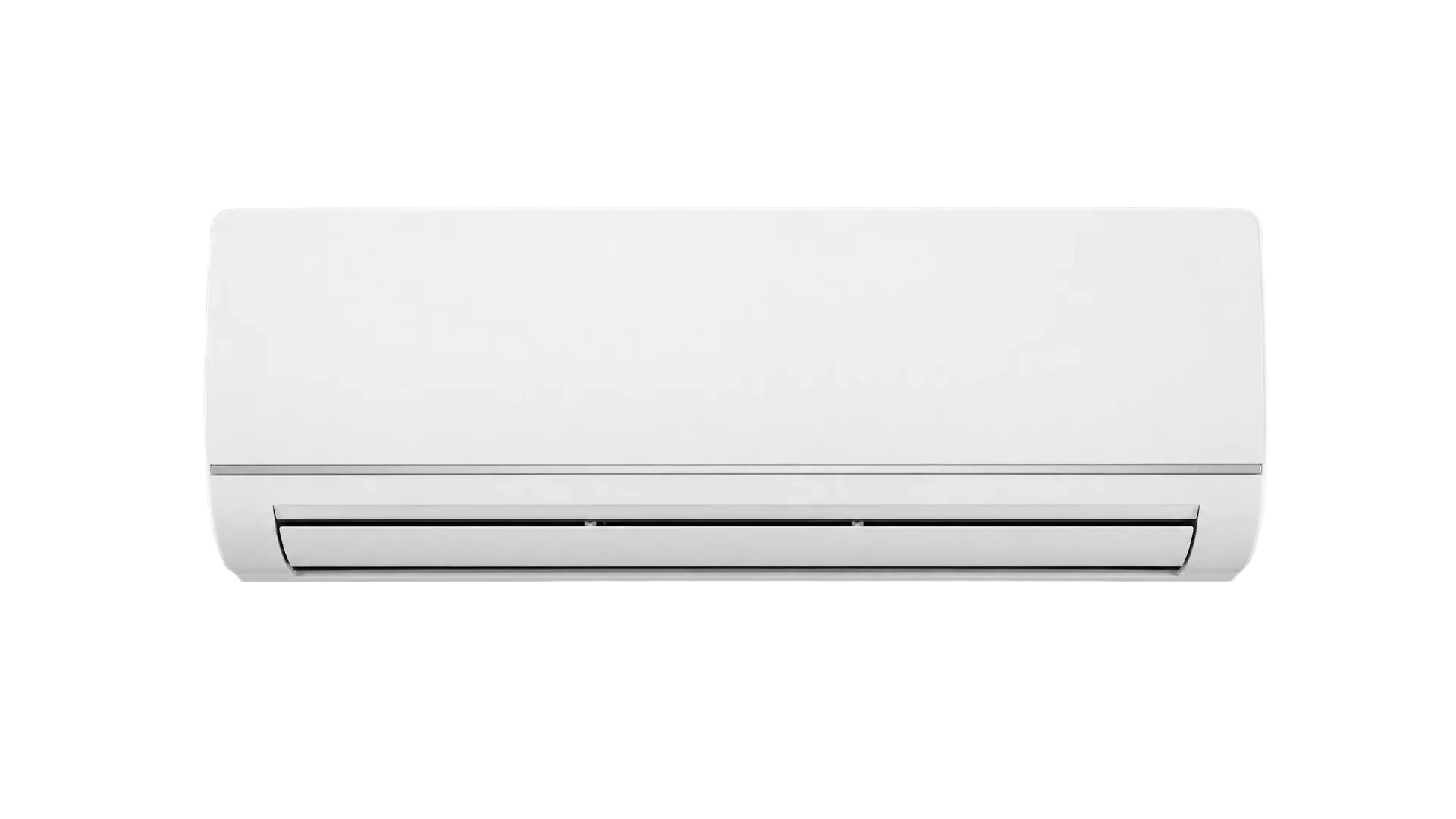
That musty smell is mold or mildew growing on the evaporator coil and inside the drain pan, and in Kansas it shows up fast because the air outside carries so much moisture all summer. A mini split pulls humidity out of the air as it cools, and that water is supposed to drip down through a condensate line and out of the house. When the coil stays wet between cycles, or the drain line is slow, or the filter is coated in dust, mold gets a damp surface to grow on and the smell comes through the vents every time the unit runs. It is not a sign the unit is broken. It means moisture is sitting somewhere it should be draining, and it will keep coming back each time the system cycles until that moisture gets cleared out and the coil and drain are cleaned.


The coil inside the indoor unit sits at an angle so water runs off it into a pan, then out through a drain line no wider than a pencil. That line runs all summer in Kansas, and algae builds a film inside it the same way it would in a gutter that never dries out. Once the line slows down, water backs up in the pan and sits against the coil instead of draining away. Mold is already on that coil. Standing water just gives it what it needs to spread. Behind the coil, the blower wheel has rows of small curved blades, and dust sticks in the narrow gaps between them once it's damp. A mini split doesn't run that air through a furnace filter first, so more dust reaches the coil and the blower directly than it would with central air. Switching the system to fan-only for a few minutes after it stops cooling will dry the coil's surface. It won't touch a clogged drain line or a blower wheel that's already caked.
Where the smell actually builds
- The indoor unit's coil sits tilted so condensation runs into the drain pan and out through a small plastic drain line.
- That drain line is narrow enough that algae and dust can build a clog inside it over a summer of steady runtime.
- Once the pan drains slowly or not at all, standing water sits against the coil fins where mold already has a foothold.
- The blower wheel behind the coil has dozens of small blades that trap moisture and dust in the gaps between them.
- A mini split has no furnace filter doing the heavy filtering, so more of that dust reaches the coil and blower directly.
- Running the fan-only mode for a few minutes after cooling shuts off helps dry the coil, but it does not clear a clogged drain or a dirty blower wheel.





Finding a pro stops being your job
Skip calling around to set up a mini split tune-up.
Send the form and the mini split tune-up stops being something to remember.
Asking costs nothing, and the choice to hire stays yours.
Why does the smell get worse every time the mini split kicks on
You probably catch it most in the first minute after the unit starts, a damp, closed-up smell that fades once air has been moving a while. You might also notice the airflow isn't as strong as it used to be, or that the wall by the indoor unit feels a little clammy. Some homeowners find water spotting on the wall or floor beneath the unit, which means the drain pan or line is backed up and water is finding another way out. Left alone, that standing water keeps feeding the mold, the smell keeps coming back stronger, and the moisture sitting inside the unit and against your wall can eventually mean more than a repair to the mini split itself.

NOAA's averages put the summer dew point here at 64°F across June, July and August. That's the number that tells you how heavy the air actually feels, not just the temperature. Air that sticky means your mini split is pulling a steady load of water out of the room all day, and that water has to cross the coil and sit in the drain pan before it ever reaches the drain line. The wetter the air, the more the pan stays full and the more time mold has to get going. In a dry climate the pan would mostly sit empty. Here it rarely gets the chance.
NASA POWER T2MDEW county cells weighted by homes


What the Musty Smell Means
- Musty smell from a mini split means moisture sitting on the coil or in the drain pan, not dirty air.
- Kansas summer humidity keeps that moisture coming back faster than it would in a drier climate.
- A coil and drain line cleaning removes the buildup that the smell is coming from.
- Left alone, a clogged drain line can back up and let water spill from the indoor unit.
- Finding a contractor, calling around, and explaining the same problem twice is the part maintenance skips, not the work itself.
- Catching it before next summer keeps the smell from settling back in once the sticky air returns.
The smell comes from standing moisture, not stale air, and it builds back up every summer here because the air itself carries so much water. That's mechanical, not something a filter or an air freshener fixes. The coil and the drain pan need to be cleaned out, and the drain line needs to run clear, or the moisture just sits there and keeps feeding whatever is growing on it. Left long enough, a clogged line stops draining the way it should and water finds its way out of the indoor unit instead, onto the wall or the floor below it. That's a bigger problem than a smell.
None of that requires guessing. A mini split that's maintained before the humidity sets in has a clean coil and a clear drain line going into the months that would otherwise build up on them. The part that takes actual time, for most people, isn't the cleaning. It's finding someone licensed to do it, calling a few numbers, describing the smell and the unit over again to each one, then sitting with quotes trying to work out who to trust. Sending this request once replaces all of that. You're not left to sort through who's available or who to call back. Someone shows up knowing what the job is.
Get it done before next summer's humidity comes back, and the smell has nothing to return to.

Let someone else find the pro
One form instead of hunting for a pro who does mini split tune-ups.