
















Side profile of a bearded man wearing a dark faded baseball cap and a dark gray t-shirt against a plain light background.

What size heat pump a Kansas home needs

New system or replacementHeat PumpKansas
Step 1 of 2

What ZIP code is the job in?

What size heat pump do I need for my house in Kansas?

You want a straight answer before a contractor even sets foot in your house. A heat pump that's too big or too small costs you comfort and money either way, and you'd rather know what's actually true for a home in Kansas before someone starts talking numbers at you.

It depends on your home's size and how well it holds heat, not a simple chart

There's no single tonnage that fits every house, even two houses the same square footage can need different sizes. The right number comes from a load calculation: a contractor measures your square footage, your windows, your insulation, and how your walls and ceiling hold heat or let it go. In Kansas, that calculation has to account for both sides of your weather, the humid summers and the cold stretches in winter, since the unit has to handle both. A heat pump sized by square footage alone often ends up too big, which short-cycles and leaves the air clammy in summer, or too small, which struggles when it's coldest outside. A proper installer runs the numbers on your house specifically before they tell you a size.

A gray outdoor condenser unit on a concrete pad beside a beige vinyl-sided house, with a wall-mounted disconnect box, flexible conduit, mulch bed, shrubs and a concrete walkway in front.
A properly sized heat pump keeps a steady load through the humid Kansas summer and runs long, even cycles instead of short bursts.
A weathered gray outdoor condenser unit on a concrete pad beside a house with horizontal vinyl siding, with conduit, refrigerant lines, and an electrical disconnect box on the wall behind it.
An undersized or oversized unit builds up grime fast and strains through summer, leaving you with higher bills and a shorter lifespan.
A gray-haired man in a dark green knit sweater sits on a beige sofa with a dark cushion, looking to the side, with a potted plant, shelves and sunlit windows behind him.
A gray-haired man in a dark green sweater sits smiling on a sofa in a sunlit living room, with a houseplant, shelving unit, and dining table visible behind him.
A middle-aged man in a dark denim shirt sits on a light beige sofa in a living room with wooden shelving and a potted plant, looking off to the side.
A gray-haired bearded man in a dark green sweater sits on a light sofa indoors, looking to the side, with a houseplant, framed picture, table lamp and sunlit window behind him.
A closed laptop and a ceramic mug of coffee on a wooden table, with a blurred kitchen counter, cutting board, utensil jar and plant in the background.

What the wrong size costs you at home

Get the size wrong and you'll feel it in August, when the heat pump runs most and matters most. A unit too small won't keep up once it's sticky outside, so you'll notice rooms that never quite cool down and a system that runs almost constantly trying to catch up. One too big cools the air fast but shuts off before it pulls the moisture out, so the house feels clammy even with the thermostat satisfied. Either way you're paying for it on the power bill, since power here is typical in price but a heat pump working against its own sizing still runs up the cost month after month.

Getting the sizing right means someone qualified actually calculating it for your house, not guessing off a chart or the size of the unit it's replacing. That's a different search than most people want to make twice: finding a contractor, explaining the house over the phone, waiting on a callback, then doing it again with another company to compare. You'd rather hand that off once, to someone licensed and local who can look at your house and tell you the number that fits it.

Interior corner of a living room with a beige upholstered armchair holding a textured pillow and throw, a eucalyptus arrangement in a ceramic vase on a wooden table in the foreground, a blurred glass-front cabinet behind, and a potted plant on a sunlit window sill.
A white outdoor heat pump unit on rubber feet atop a concrete pad beside a light stucco wall, with gray siding and a small shrub at the left edge.

Why a load calculation matters

Sizing a heat pump right means a contractor runs a load calculation on your house, not just a swap based on square footage. That calculation looks at your insulation, your windows, how much shade your house gets and how many people live there. Two houses the same size down the street from each other can need different size units. Skipping this step is how homes end up with equipment that doesn't match what the house actually needs.

A gray outdoor heat pump unit with a large circular fan grille sits on a concrete pad beside a house with horizontal siding, surrounded by gravel and grass, with a conduit and junction box on the wall.

What the rating plate tells you

Every heat pump has a rating plate that lists its capacity in tons or BTUs per hour. If you're replacing a unit, that number tells you what was installed before, but it doesn't tell you whether it was sized correctly in the first place. A contractor checking your ductwork and your home's heat loss and heat gain can tell you if the old number still makes sense or if your house needs something different this time around.

Power costs 14.44 cents per kilowatt-hour statewide

At 14.44 cents a kilowatt-hour, every degree your heat pump has to fight for shows up on the bill. A unit sized right for your house covers that sticky Kansas heat without running longer than it needs to, which keeps those kilowatt-hours from adding up on you.

EIA-861 2025 statewide residential average

  1. A contractor measures every room and window in your house.

  2. That load calculation sets the exact heating and cooling demand.

  3. The contractor matches a heat pump's capacity to that number.

  4. Ductwork gets checked to confirm it can move that much air.

A woman with shoulder-length graying hair, wearing a light knit cardigan over a striped shirt, sits in an upholstered armchair and looks off to the side, with a bookshelf and houseplant behind her.
A woman with her hair in a bun holds a sleeping boy against her shoulder, both wrapped in a thick cream knit blanket on a couch in a dim room with a lit lamp, potted plants and a shelf behind them.

No quotes to chase

You could spend an afternoon calling around Kansas for someone who'll run a proper load calculation instead of guessing off square footage, then do it again explaining your house a second and third time so you can compare quotes. That's time you're not getting back, and it still leaves you guessing which contractor actually knows heat pumps versus whoever picked up the phone. A local contractor who installs these year-round has already seen what undersized units do to a Kansas house by August and what oversized ones do to your bills and your ductwork. Your request goes to one contractor, not a handful competing for your attention, so you're not sorting through five different opinions on what size you need. You already know your summers are sticky and your winters need a gas furnace backing up that heat pump. Getting the sizing right the first time means you're not revisiting this decision in a year.

Guess the size off square footage and you might land close, or you might end up with a unit that short cycles all summer and leaves the upstairs bedrooms warm anyway.

Have a contractor size it off a real load calculation for your house, and the installed unit matches what your walls, windows and shade actually demand, not a rule of thumb.

An outdoor air conditioning condenser unit with a top fan grille sits on a concrete pad beside a house with horizontal siding and a concrete step.
Before you get your heat pump installation
A gray outdoor condenser unit on a concrete pad beside a house with horizontal lap siding, a conduit and disconnect box on the wall, a shrub with white flowers at right and evergreen foliage at left.
After you get your heat pump installation
A beige outdoor air conditioning condenser unit on a concrete pad beside a house with horizontal vinyl siding, with refrigerant lines and a disconnect box on the wall, surrounded by dark mulch and a green shrub at left.

Sized right

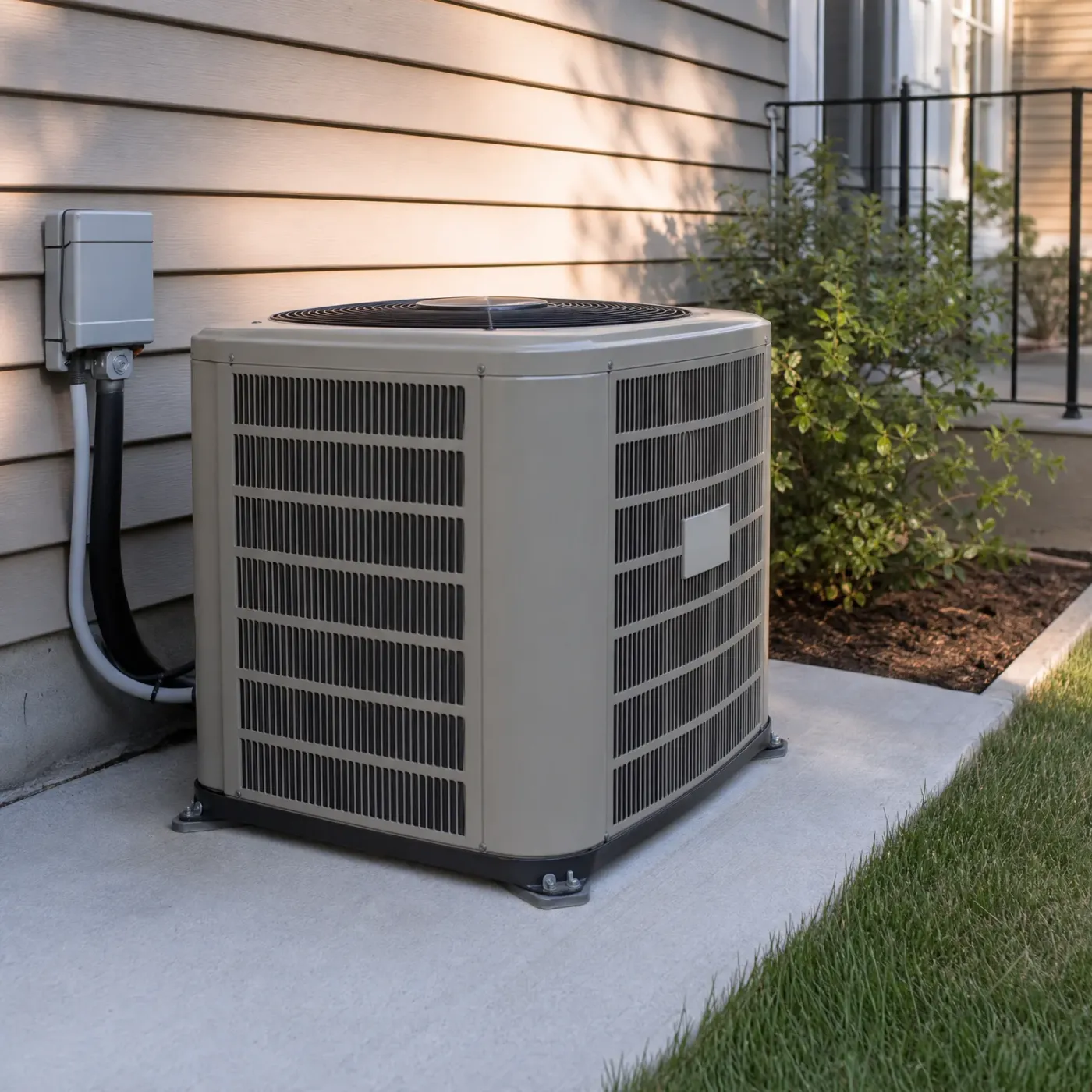
This is a heat pump matched to your house, sitting on its pad with a clean line to the disconnect. It runs long, steady cycles through a muggy Kansas summer and switches over without strain once the gas furnace takes over for winter. Nothing about it looks or sounds like it's working too hard.

An outdoor air conditioner condenser unit on a concrete pad beside a house with horizontal lap siding, with a shrub to the left, bare dirt in front, and conduit and a metal disconnect box on the wall.

Sized wrong

Here the unit is fighting a load it was never built for, whether that's too much house for it or too little. It short cycles or runs flat out, and either way the strain shows up fast in a Kansas summer. The disconnect and conduit look the same. What's inside doesn't match what your house needs.

The right size for your heat pump comes from a load calculation on your house, not a guess off square footage. That's the answer, and everything above shows why it holds up. Once a contractor runs that number, the install itself is straightforward: the unit gets matched to your house, the ductwork gets checked, and it goes in. What makes the difference is who does that work. A contractor who services heat pumps in Kansas all year, through muggy summers and the cold stretches when the furnace takes over, has seen what usually goes wrong with a poorly sized unit and knows how to avoid it on yours. You'll hear from one licensed, local contractor, not a handful of companies working your number at once. No sorting through bids, no re-explaining your house to a second or third caller. Just someone who knows this equipment sizing it for the place you actually live.

A beige outdoor air conditioner condenser unit on a concrete pad beside a house with horizontal lap siding, with a gray electrical disconnect box and refrigerant lines on the wall and a shrub and lawn nearby.

Skip the calls to every shop

Start one form

Your request goes to one pro, not a list of companies.

You only hire the pro if you want to.