A snow-covered small-town street at dusk, with lit white clapboard houses, bare trees, and a grain elevator silhouetted against an orange and blue twilight sky.

AC Installation in Abilene, KS

Tell us about the job

Takes about a minute. No obligation.

New system or replacementCentral ACDickinson County, KS
Step 1 of 2

What ZIP code is the job in?

Five months of real heat

Air conditioners in Dickinson County run from May through September, and the afternoon high averages 89°F through June, July and August. A new system here is working through most of its first year on the job, not sitting idle most months like it would somewhere cooler.


Hail and wind add to the load

Dickinson County saw 96 hail events and 84 damaging wind events between 2015 and 2024. An outdoor unit here takes more weather than most compressors ever see, on top of the long cooling season. That's reason enough to size the new system for this place, not for a national average.

5 months
May through September, your air conditioner is on duty
89°F
the average summer afternoon it cools against
96 hail events
in ten years, and hail bends the fins on outdoor coils
13.4 SEER2
the federal minimum any new unit must meet
Isometric cutaway illustration of a small house showing interior rooms with furniture, an indoor air handler with ducts in the attic space, and refrigerant lines running to an outdoor condenser unit on a pad.
Your air conditioner works hardest from June through August.

NOAA nClimDiv, 1991–2020 normals

Half the homes in Dickinson County were built in 1956 or earlier.

A new system going into a house that old has to match the house, not the one it's replacing.

April is the month to get this done, before May turns the cooling on

Cooling runs May through September
Climate zone 4A
Power here costs 15.12 cents per kilowatt-hour

Dickinson County falls in climate zone 4A, a mixed zone that asks real work of both the furnace and the air conditioner. Any split-system air conditioner under 45,000 Btu an hour has to meet the federal minimum if it was manufactured on or after January 1, 2023, which is 13.4 Btu of heat removed for every watt-hour it uses over the summer. That rating measures efficiency, not size, so it narrows which units qualify without deciding how big a system this house needs. A contractor can size the system to the house and still land on something well above that floor. There's also a federal tax credit available for qualifying high-efficiency equipment, worth asking about before the install is scheduled.

Size this one for Dickinson County, not for the last one

Get the new system sized for what it actually has to do here, five months of real heat plus whatever hail and wind bring to the outdoor unit. A contractor who knows this area can size it right the first time instead of matching the one that's coming out.

Find a contractor
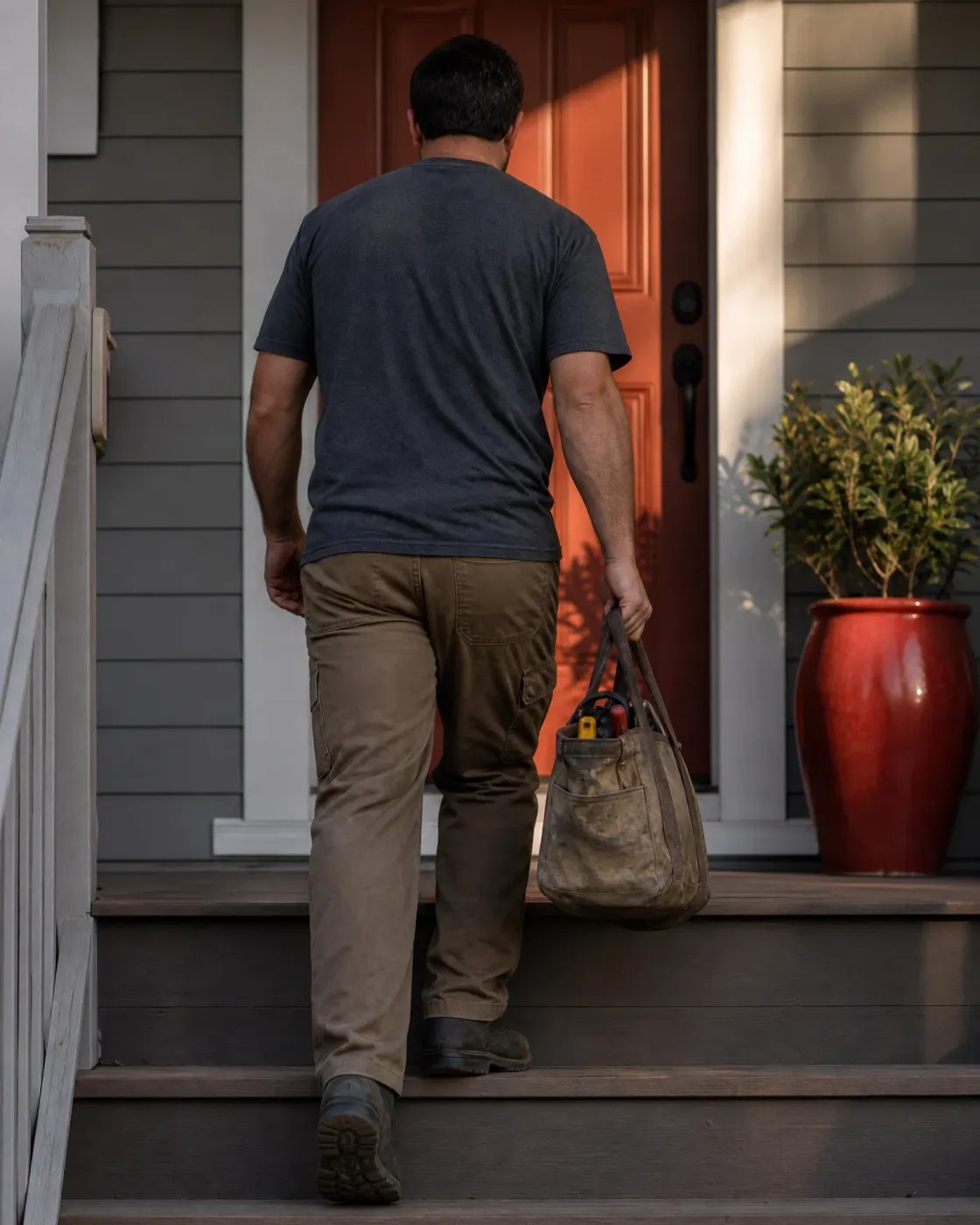
A man in a dark t-shirt and tan work pants carries a worn canvas tool bag up wooden porch steps toward a red-orange front door of a gray-sided house, with a red ceramic planter holding a shrub to the right.
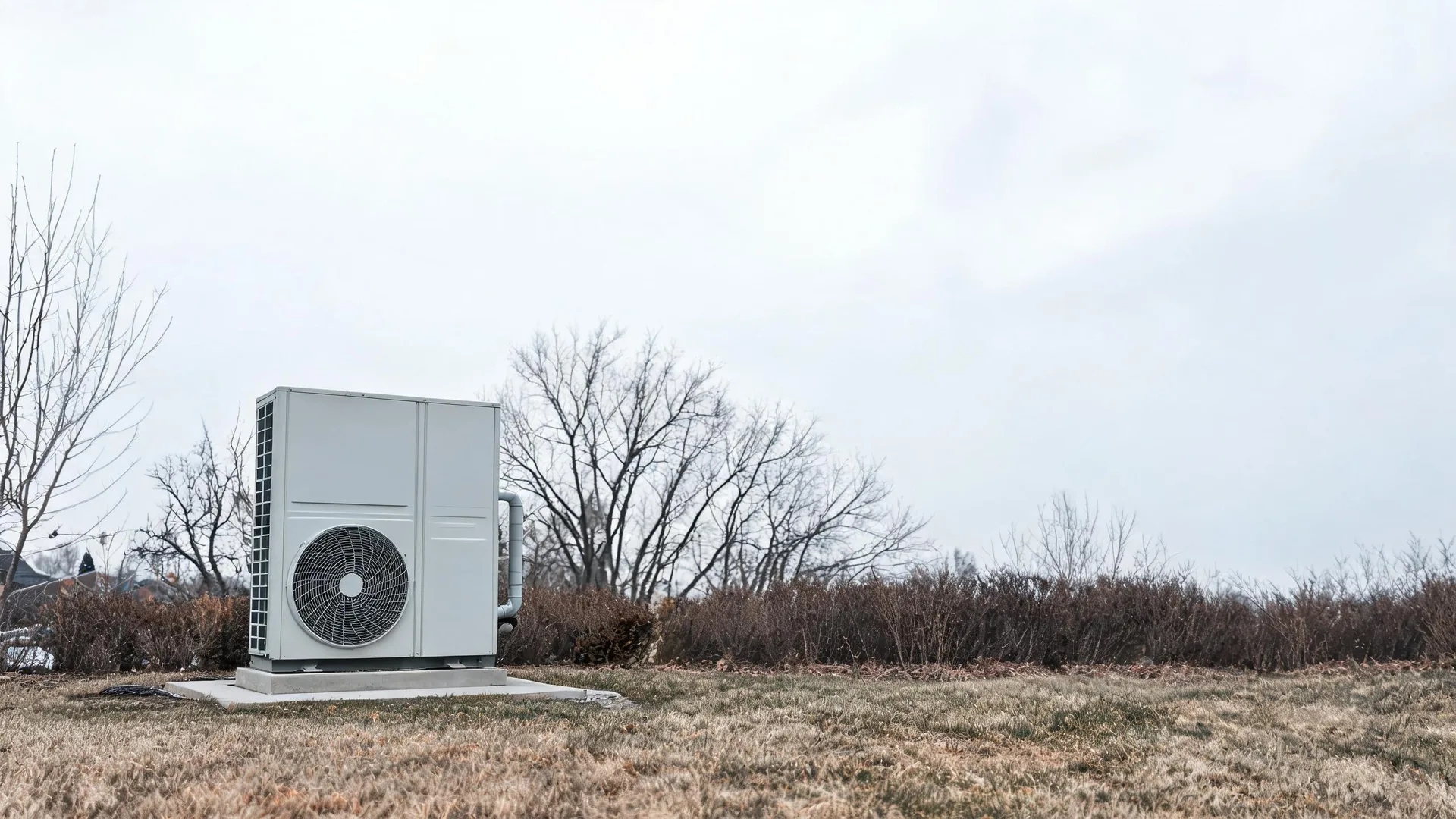
An outdoor residential air conditioning condenser unit mounted on a concrete pad, surrounded by gravel with a blue sky in the background.

What actually sets the price

Price mostly comes down to size and difficulty. A contractor has to calculate the heat load for the house, the square footage, the windows, the insulation, the ductwork, before quoting anything, because an oversized system cycles on and off too fast and never pulls the moisture out of the air, and an undersized one runs constantly and still can't keep up. Beyond the equipment itself, the labor depends on what's already there. Running new line sets, modifying ductwork, upgrading the electrical disconnect or the breaker, adding a new pad for the outdoor unit, all of that adds time on top of swapping one box for another. The condition of the existing ductwork matters too. Leaky or undersized ducts choke even a well-matched system, and sealing or resizing them is its own job separate from the install. None of this shows up until a contractor is actually in the attic or the crawlspace looking at what's there, which is why two installs on paper-identical houses can take different amounts of work.

Match the tonnage to the house, not the brochure

Ask how the contractor arrived at the size, not just what size they landed on. A proper load calculation looks at square footage, window area, insulation and duct layout together. If the number came from the old system's nameplate or a quick square-footage rule, push back. A ton too big short-cycles and leaves the house clammy even at the right temperature. A ton too small runs nonstop and never catches up on the hottest afternoons.

Ask what happens to the ductwork and the line set

A new outdoor unit and air handler are only part of the job. Ask whether the existing ducts were tested or just reused, since leaky or undersized runs can choke even a well-matched system. Ask whether the line set is being replaced or reconnected, since reusing old refrigerant lines can introduce contamination into a new compressor. Ask what happens to the electrical disconnect and breaker too, since older ones aren't always rated for new equipment.

An outdoor air conditioning condenser unit on a concrete pad next to the gray vinyl siding of a residential home.

A higher-efficiency unit would save about $40 a year to run in Dickinson County compared with a new unit at the federal minimum.

  • A higher-efficiency unit$310 a year
  • A new unit at the federal minimum, 13.4 SEER2$350 a year

Estimates for a typical Dickinson County home, from EIA household energy data, Kansas fuel prices and NOAA climate normals. Your home will differ.

Installation day starts before anyone touches the old unit. A contractor confirms the new equipment matches what was quoted, then recovers the refrigerant from the old system before disconnecting anything, since it can't just be vented to the air. The old outdoor unit and indoor coil come out, and the line set either gets reused or replaced depending on its condition. A new or re-poured pad goes down for the outdoor unit so it sits level and clear of the wall. Inside, the coil gets set above or beside the furnace, the line set gets connected and the system gets evacuated with a vacuum pump to pull out air and moisture before any refrigerant goes in. Once it's charged, a tech checks the refrigerant level against the manufacturer's spec, tests airflow at the vents, and confirms the thermostat is talking to the new system correctly before calling it done.