A two-story black wood-clad house with a gabled roof and covered porch stands behind a wire fence and shrubs, backed by tall deciduous trees under an overcast sky, with blurred green grass in the foreground.

AC Installation in Arkansas City, KS

Tell us about the job

Takes about a minute. No obligation.

New system or replacementCentral ACCowley County, KS
Step 1 of 2

What ZIP code is the job in?

Ask for the load calculation, not just a quote

A contractor should size the new system by doing a load calculation on the house, not by matching the tonnage of the unit being replaced. Too big and the system short cycles, cooling the air fast but never running long enough to pull moisture out. Too small and it runs constantly without catching up on the hottest days. The only way to get the size right is to measure the house.

Ask what happens to the ductwork

The new outdoor unit and coil matter less than whether the existing ducts can actually move the air that system is built to push. Old ducts sized for an older, smaller system can choke a new one, so ask whether the ducts were inspected and whether they need any changes as part of the job. A system can be installed correctly and still perform poorly if the ducts underneath it were never looked at.

5 months
May through September, your air conditioner is on duty
89°F
the average summer afternoon it cools against
125 hail events
in ten years, and hail bends the fins on outdoor coils
13.4 SEER2
the federal minimum any new unit must meet
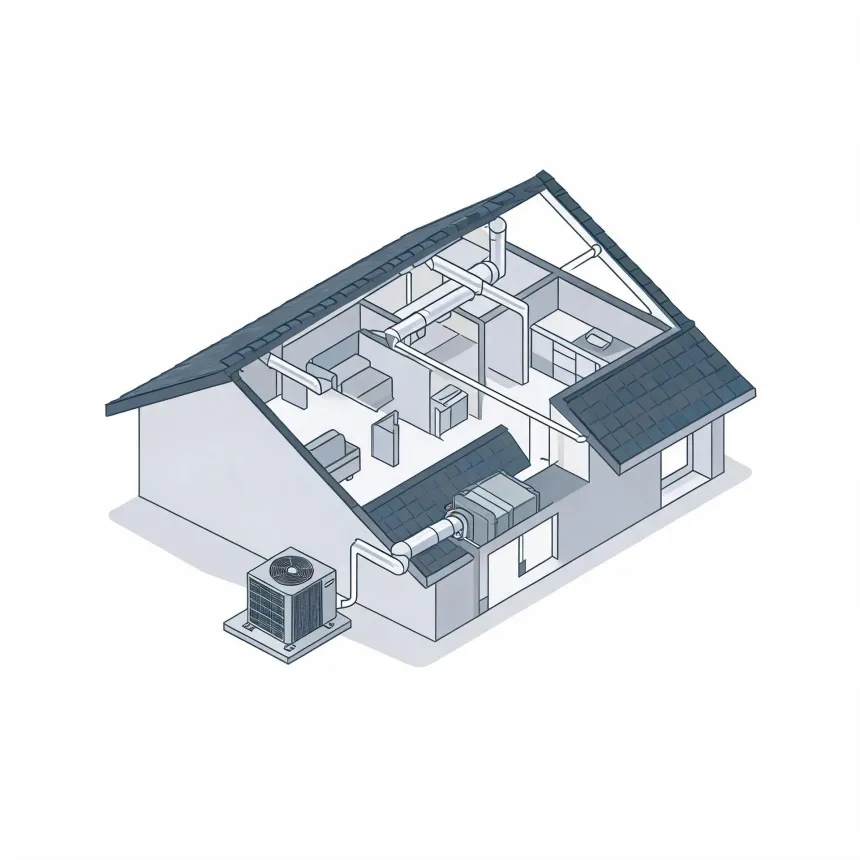
Isometric line illustration of a cutaway single-story house showing interior rooms, ceiling ductwork and an air handler, connected to an outdoor condenser unit on a pad beside the building.
Your air conditioner works hardest from June through August.

NOAA nClimDiv, 1991–2020 normals

The condenser and coil are only part of what gets priced.

Ductwork changes, a new line set, or an electrical upgrade to meet code can move the number as much as the equipment does.

Most homes here run on gas, so a gas furnace paired with the new AC is the straightforward replacement

60.2% of homes heat with gas
Cooling runs May through September
Summer afternoons average 89°F
An efficient system earns its keep hereKansas electricity ran 14.15 cents per kilowatthour in 2024.

Half the homes in Cowley County were built in 1961 or earlier. If yours is one of them, the ductwork was likely sized for whatever system came with the house, not for what's being installed now. That matters more than the brand on the new condenser. A load calculation tells the contractor what size system the house needs, but it won't tell you if the existing ducts can deliver that air to every room. Ask whether the ducts were inspected as part of the job, not just measured for the quote. A new system dropped onto old, undersized ductwork will run and still leave rooms too warm.

The new system has to meet Kansas City's climate zone minimum

Cowley County falls in climate zone 4A, which asks real work of both heating and cooling here. Any split-system air conditioner under 45,000 Btu/h installed now has to meet a federal minimum of 13.4 SEER2. That floor narrows what a contractor can legally put in, and a federal tax credit is available for qualifying equipment.

Find a contractor
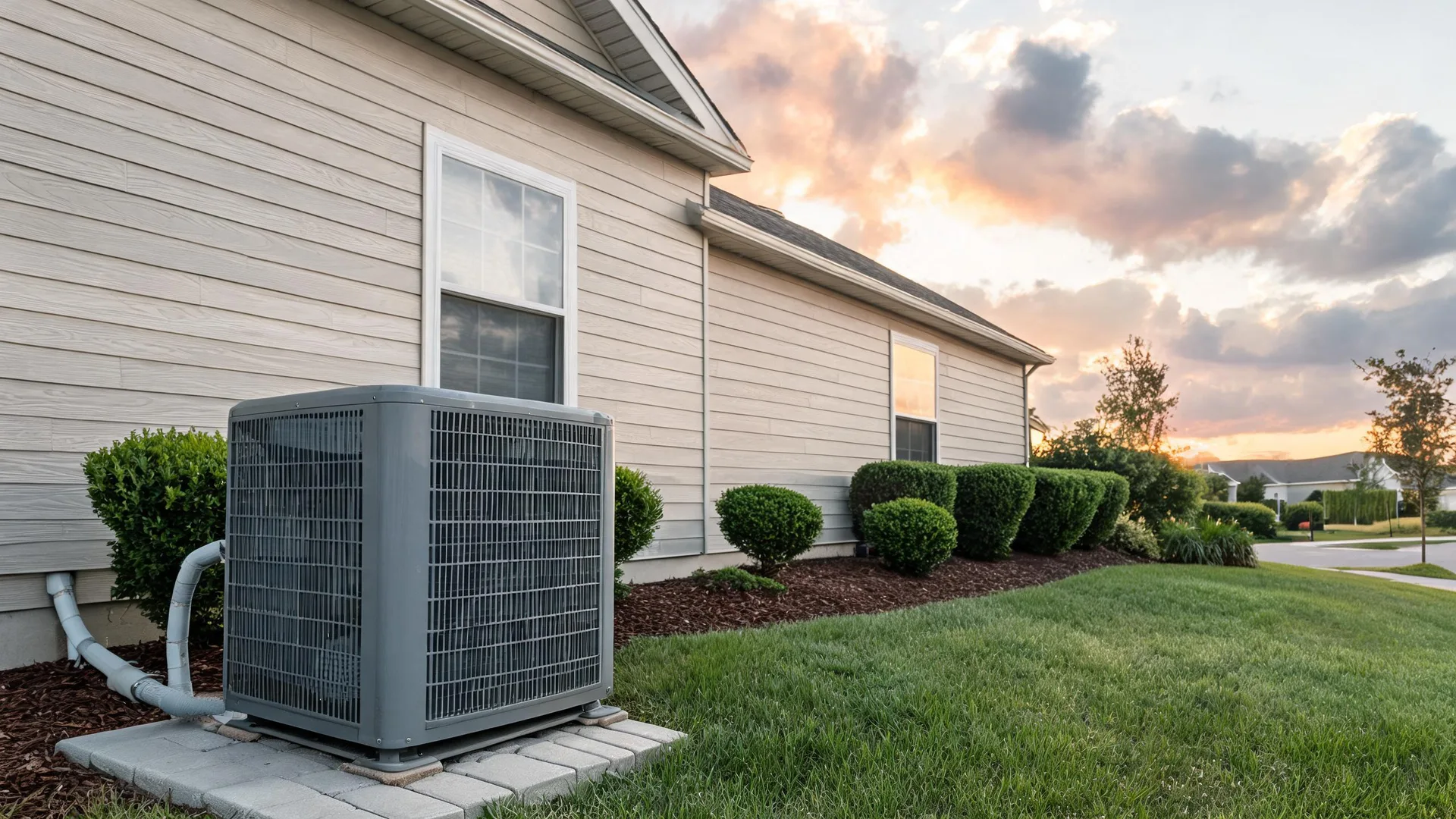
An outdoor air conditioning condenser unit mounted on a concrete pad beside a house, with electrical conduit running to a wall-mounted disconnect box.

Put the new system in before May, not during it

Cooling runs here from May through September, five months straight once it starts. Get the new system in during April and it goes in on your terms, with time to size it right and check the ducts before anything is urgent. Wait for the first hot week and you're choosing from whatever's in stock, installed by whoever's free.

The old equipment gets hauled away

A contractor pulls the old outdoor unit, the indoor coil, and drains and recovers the refrigerant rather than venting it. Refrigerant recovery isn't optional. The refrigerant has to be captured in tanks and handled under EPA rules, so ask whether that's included in the job rather than assumed.

The old pad and lines don't always go

The concrete pad outside often stays and holds the new condenser, and the existing line set sometimes gets reused if it's the right size and in good shape. A contractor checks the line set for corrosion or the wrong diameter before deciding whether to reuse it or run new copper.

Overhead view of a gray residential air conditioning condenser unit mounted on a concrete pad beside a house with asphalt shingle roofing.

A higher-efficiency unit would save about $40 a year to run in Cowley County compared with a new unit at the federal minimum.

  • A higher-efficiency unit$330 a year
  • A new unit at the federal minimum, 13.4 SEER2$370 a year

Estimates for a typical Cowley County home, from EIA household energy data, Kansas fuel prices and NOAA climate normals. Your home will differ.

The old system comes out first, and that takes longer than people expect. Refrigerant gets recovered into tanks, the old coil and condenser come off the line set, then the contractor looks at what's underneath before setting anything new in place. Setting the new coil and condenser is usually the fast part of the day. Brazing the line set, pulling a vacuum on it, and wiring the unit to the thermostat and disconnect take most of the time. Pulling a vacuum clears out moisture and air that would otherwise sit in the lines and cause problems later. Once it's charged to the weight the manufacturer specifies, someone runs the system and checks airflow at the vents along with the temperature difference between the air going in and the air coming out. A system can be wired correctly and still run poorly if it was charged wrong.