Electricity here isn't cheap
Homes in Neosho County paid an average of 14.80 cents per kilowatt-hour in 2025. That rate applies to every month your air conditioner runs.
Takes about a minute. No obligation.
Homes in Neosho County paid an average of 14.80 cents per kilowatt-hour in 2025. That rate applies to every month your air conditioner runs.
Summer dew points here average 67°F, higher than most of the country sees. A new system has to pull more moisture out of the air to keep the house comfortable, and that takes more power to do it.

NOAA nClimDiv, 1991–2020 normals
Cooling in Neosho County starts up in May.
A new system put in before then is already broken in and running right when the heat and humidity hit.




Neosho County falls under zone 4A in the 2021 energy code, a mixed climate that asks real work of both heating and cooling systems. Any split-system air conditioner installed here under 45,000 Btu an hour has to meet the federal minimum for units built from 2023 on: at least 13.4 Btu of heat removed for every watt-hour of electricity it uses over a season. That floor narrows what a contractor can offer you. It also means the system going in is built to handle the pull this climate puts on it, not just the mild stretches.
The efficiency rating stamped on the new system determines how much of that power bill turns into cooling and how much just goes to waste. Ask what rating the units you're comparing carry, and get that number in writing before you decide.
Find a contractorIf your ductwork and the rest of the system came with the house, it was likely sized for whatever cooled the place decades ago, not for a system rated and installed today. Ask the contractor to size the new unit to your house as it stands now, not to match what's being pulled out. Running the right size for this house is what keeps the time this system spends running from turning into money wasted.
Refrigerant doesn't just get dumped into the air. A licensed contractor has to recover it with a machine built for that before the old condenser gets disconnected. That's the law, not just good practice, and it's one reason this isn't a job to do piece by piece.
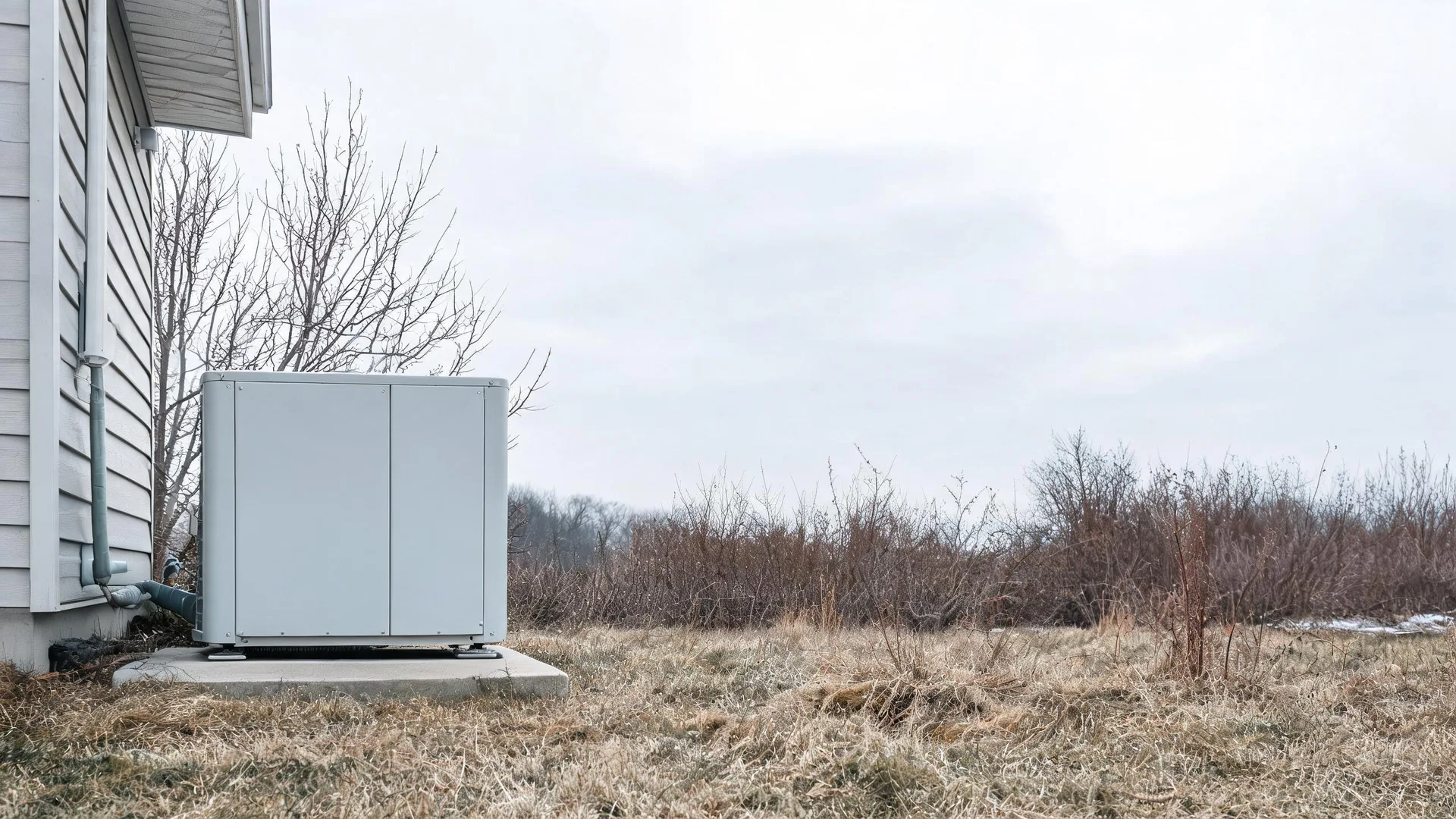
The concrete slab outside and the line set running into the house often get reused if they're in good shape. What gets replaced is the condenser, the coil, and sometimes the lines themselves if they're worn or the wrong size for the new unit. A contractor can tell you which parts of the old setup are worth keeping.
Estimates for a typical Neosho County home, from EIA household energy data, Kansas fuel prices and NOAA climate normals. Your home will differ.
Installation starts with the old system coming out, and the new equipment doesn't go in until that's done right. The contractor sets the condenser on its pad outside, runs or reuses the line set, and mounts the indoor coil above the furnace. Those lines get connected, then pulled into a vacuum to clear out air and moisture before any refrigerant goes in. Skipping that step leaves moisture in the lines, and moisture in a sealed refrigerant system causes corrosion over time. Once the system holds vacuum, the contractor charges it to the exact weight the manufacturer specifies, not by guesswork. Then it gets run through its paces: checking the temperature drop across the coil, the pressures in the lines, and the airflow at the vents, before anyone calls the job finished.