Storms come through here a lot
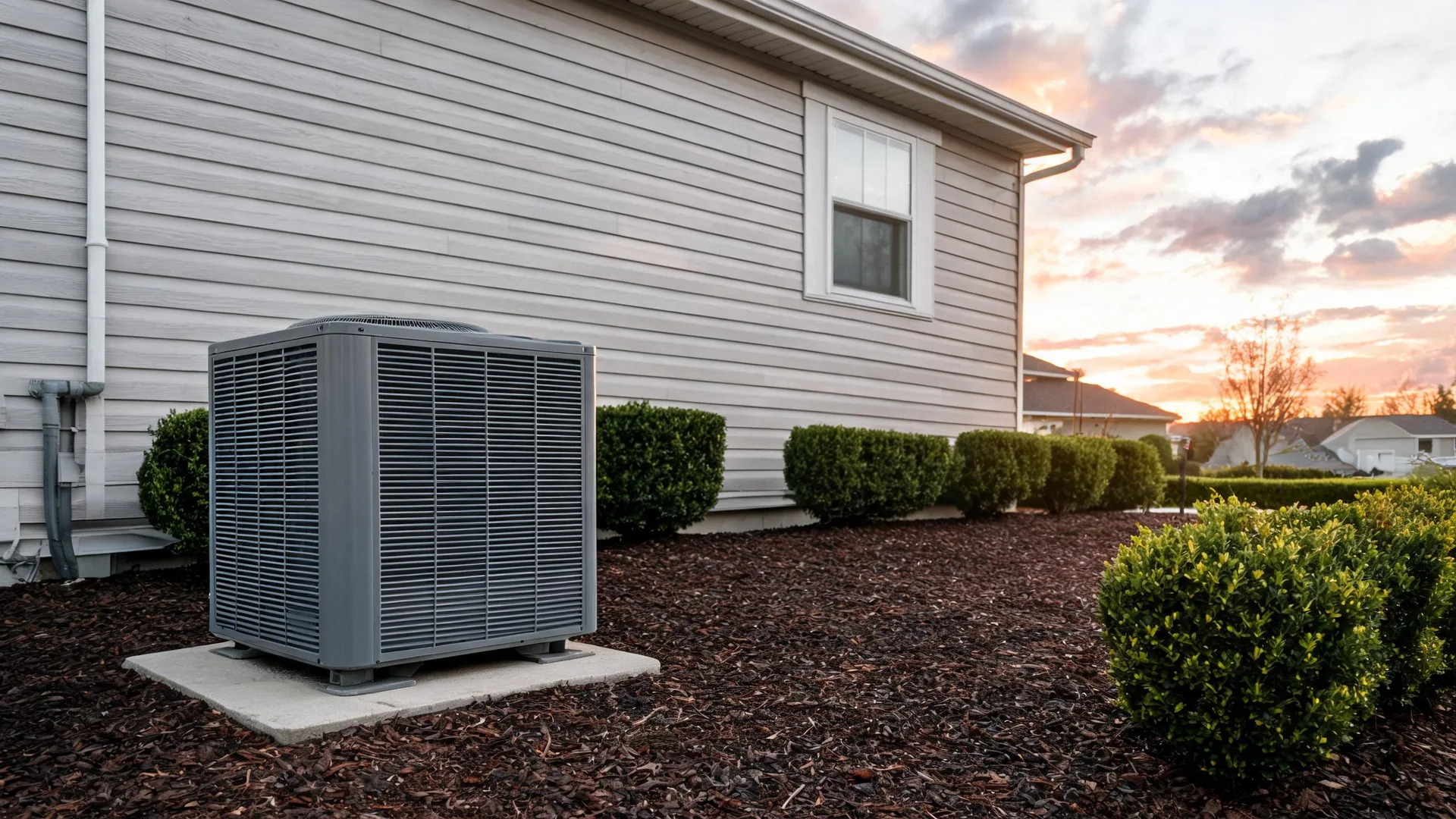
Ford County saw 484 severe weather events between 2015 and 2024. That includes 251 damaging wind events, 163 hail events, and 33 tornadoes. A new AC sits outside through all of it.
Takes about a minute. No obligation.
Ford County saw 484 severe weather events between 2015 and 2024. That includes 251 damaging wind events, 163 hail events, and 33 tornadoes. A new AC sits outside through all of it.
Almost one in five Kansas households went at least a full day without power in 2024. An outage that long means no cooling and, for a lot of homes here, no hot water either.

NOAA nClimDiv, 1991–2020 normals
Cooling season in Ford County runs June through September.
May is the month to put in a new system, before the heat and the storms it brings along with it.




Gas heats 72.5% of homes in Ford County. A new AC here almost always pairs with a gas furnace already in place, so the job is matching an outdoor condenser to indoor coil and ductwork that mostly exist already, not building a system from scratch. Electric heat accounts for 19.3% of homes and LP gas another 6.3%, and either changes what the installation involves. If your home runs on electric heat, the air handler and the cooling system share more of the same equipment, which is worth asking about when you're comparing quotes.
Have the installer walk you through where the condenser will sit and what will shield it, and ask what happens to your cooling and your hot water when the power drops. Get that settled as part of this install, not after a storm already found the gap.
Find a contractorJune through September, the afternoon high here averages 90°F. That's the stretch this system has to carry, four months of real load, not a handful of hot afternoons. A compressor running at that temperature day after day wears differently than one that gets to ease in and out of mild weeks. The dew point averages 60°F those same months, lower than most of the country, so the air is heavy but not the heaviest it gets elsewhere. None of that changes what the heat alone does to a condenser left running through a full Kansas summer. Size it for four months at 90°F, not for a cooler average somewhere else, and the parts built to handle that load will be the ones still working when the mild-climate equipment would already be struggling.
An oversized air conditioner cools the room fast, then shuts off before it pulls the moisture out of the air. The space feels clammy even though the thermostat is satisfied. It also cycles on and off more often, and that stop-start is harder on the compressor than one long steady run.
A contractor works out the load by looking at square footage, window area and direction, ceiling height, insulation, and how many people and appliances add heat to the space. Each room gets sized on its own, not just the house as a whole, since a condenser matched to the whole house can still leave one room short if the ductwork feeding it is undersized.
Estimates for a typical Ford County home, from EIA household energy data, Kansas fuel prices and NOAA climate normals. Your home will differ.
Installation starts with the old system coming out, the indoor coil, the outdoor condenser, and the line set running between them. The installer checks the ductwork before anything new goes in, since the new coil and blower have to move air through what's already there. Setting the new condenser means a level pad, enough clearance on all sides for airflow, and a spot away from the dryer vent and downspouts. Running new line set or reusing the old depends on what condition it's in, and a tech will pressure test the lines before charging the system to make sure there are no leaks. Once the refrigerant is charged to the right level, the system gets run through its paces, checking the temperature drop across the coil, the airflow at the vents, and the static pressure in the ducts. The thermostat gets wired and set last, after the installer confirms the system actually cools the way it's supposed to, not before.