Storms come through often here
Lyon County logged 194 severe weather events between 2015 and 2024, including 90 damaging wind events, 85 hail events, and 6 tornadoes. An outdoor AC unit sits exposed to all of it.
Takes about a minute. No obligation.
Lyon County logged 194 severe weather events between 2015 and 2024, including 90 damaging wind events, 85 hail events, and 6 tornadoes. An outdoor AC unit sits exposed to all of it.
Almost one in five Kansas households went at least 24 hours without power in 2024. A new AC install is a chance to plan for that, not just for the heat.

NOAA nClimDiv, 1991–2020 normals
Emporia summers run four months of 88 degree afternoons with the air sitting heavy at a 65 degree dew point.
A new system has to be sized for that load, not just for the sticker price.



Lyon County falls under zone 4A in the 2021 energy code, a mixed climate that works both the heating and the cooling side of a system hard over the year. That rating sets a floor on what can legally go into a new install here. Any split-system central air conditioner under 45,000 Btu an hour built from 2023 onward has to remove at least 13.4 Btu of heat for every watt-hour it draws over the summer. That is the federal minimum, not an upgrade a contractor is selling you. A system sized for your house has to clear that bar already, and some clear it by more than others.
Where the install goes and what's on its circuit matters as much as the size of the unit. Decide now where the outdoor unit sits and what protects it, and make sure the furnace and water heater can restart on their own once power comes back. That's a decision made at install, not after a storm.
Find a contractorCooling here runs June through September, four months. May is the month to get a new system in, before that stretch starts. An install done in May is running before the first hot day, not scrambling to catch up after one. It also falls before the worst of storm season, which means the unit goes in on a calm day, with time to pick where it sits and what protects it, instead of going in fast because wind or hail already took the old one out.
A contractor works out the right size by looking at the square footage, the windows, the insulation, and how much shade the house gets, then runs that through a load calculation. Matching whatever size was there before skips that step, and whoever built the old system may have just matched the one before that.
An oversized air conditioner cools the air fast and shuts off before it pulls the moisture out, so the house ends up cold and clammy. It also cycles on and off more often, and every startup puts more wear on the compressor than it would see running a longer, steady cycle.
Estimates for a typical Lyon County home, from EIA household energy data, Kansas fuel prices and NOAA climate normals. Your home will differ.
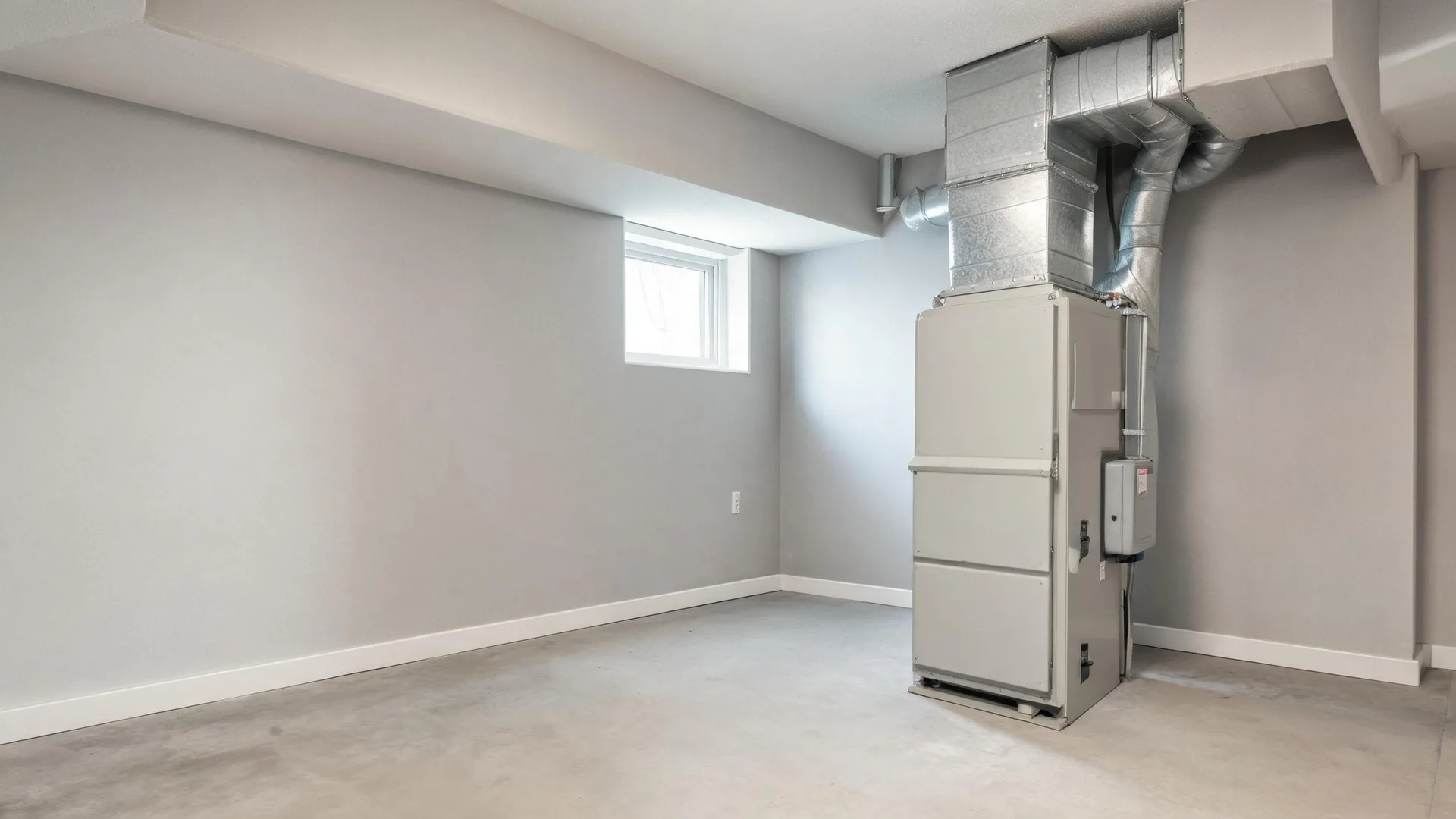
Installation day starts outside, with the old condenser disconnected and hauled off before the new one goes on its pad. Inside, the coil that sits on top of the furnace gets swapped too, since a new outdoor unit needs a matched indoor coil to run the way it's rated to. The line set connecting the two either gets reused, if it checks out, or replaced, because any crimp or corrosion in that line gives the system a slow leak later. Once everything's connected, the contractor pulls a vacuum on the line set to clear out air and moisture before the refrigerant goes in, since either one left behind will foul the system. Then it's a charge check, a run cycle to watch pressures and airflow, and a check of the thermostat wiring before anyone calls it done. None of that happens fast. A rushed charge or a skipped vacuum doesn't show up as a problem that day. It shows up as a system that struggles a year in.