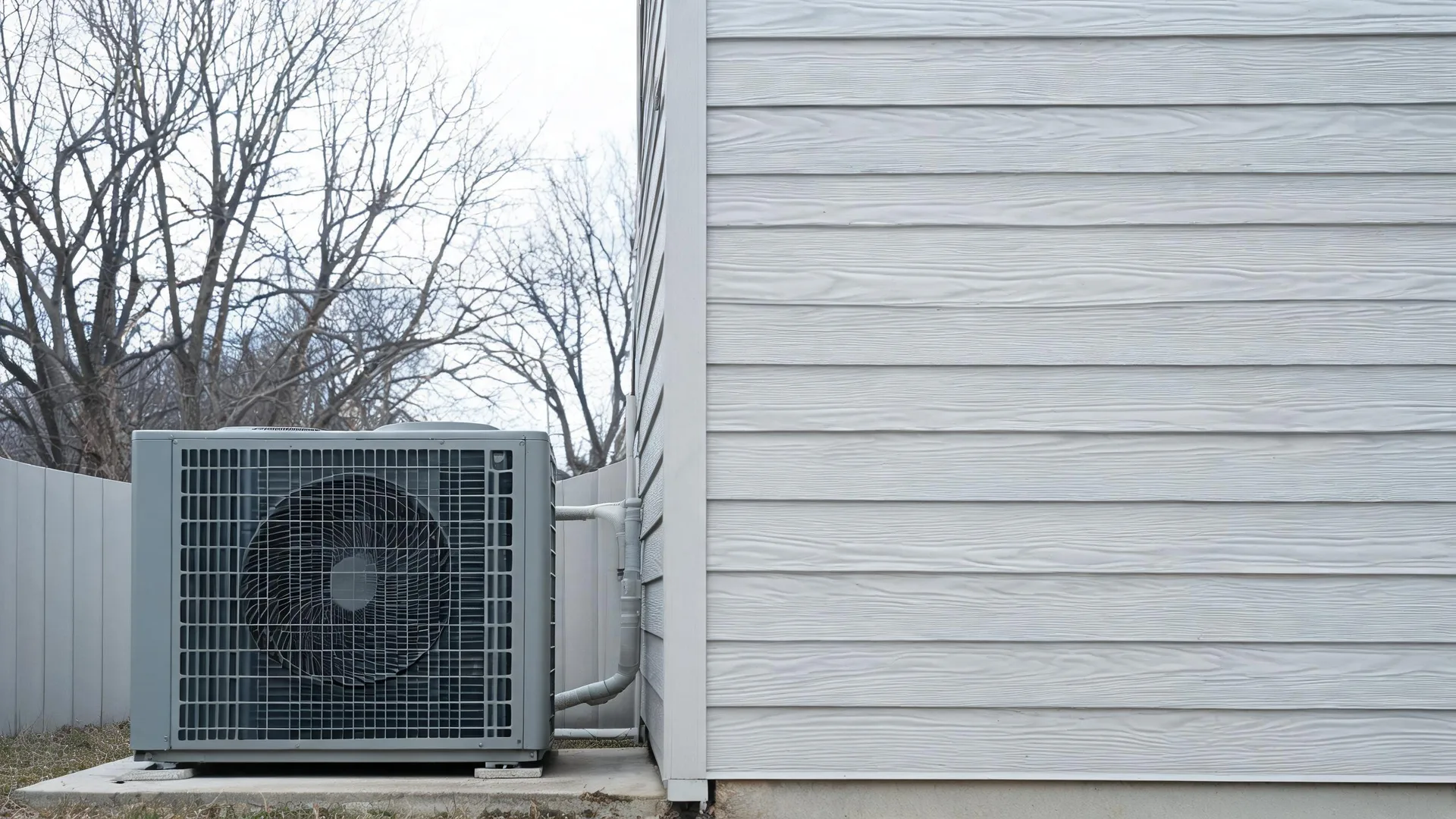
Weather here is rough on equipment
Finney County had 363 severe weather events between 2015 and 2024, including 252 damaging wind events, 75 hail events and 15 tornadoes. An outdoor condenser sits outside through all of it.
Takes about a minute. No obligation.
Finney County had 363 severe weather events between 2015 and 2024, including 252 damaging wind events, 75 hail events and 15 tornadoes. An outdoor condenser sits outside through all of it.
Close to one in five Kansas households went at least 24 hours without power in 2024. A new air conditioner should go in with that in mind, since the install affects how the system handles an outage.

NOAA nClimDiv, 1991–2020 normals
Cooling runs June through September here.
May is the month to get a new system installed, before the first hot stretch hits.




Finney County falls under zone 4A in the 2021 energy code, a mixed climate that asks real work of both your furnace and your air conditioner. Any split-system air conditioner installed here, under 45,000 Btu an hour, has to meet 13.4 SEER2, the federal minimum for units built from 2023 on. That rating limits what a contractor can legally put in, so the choice isn't wide open the way it might have been years ago. A federal tax credit is available for qualifying high-efficiency equipment, worth checking into before you settle on a system. The rating tells you how the unit uses electricity over a full summer, not how big it is or how fast it cools a given room.
The outdoor unit is going to sit through wind, hail and whatever else comes through. Where it goes and how it's mounted is part of the install, not an afterthought. Worth asking too how the system handles a power cut, since a day without power isn't rare here.
Find a contractorFour months isn't long, but 91 degrees most afternoons in June, July and August is real work for a condenser. Ask about where the unit sits and how it's secured before the crew shows up, not after. A system installed with the wind and hail here in mind holds up better than one just sized for the heat.
A contractor has to work out how much heat the house gains in a day and size the condenser and coil to match. Too big and the unit short cycles, cooling the air fast but never running long enough to pull moisture out. Too small and it runs constantly and still can't keep up on the hottest afternoons. Getting this right takes a proper load calculation, not a guess based on the old unit's size, and it drives which equipment goes on the truck.
If the ductwork, the electrical disconnect and the refrigerant line set are already in place and sized right, the crew is mostly swapping equipment. If the old ducts are undersized or leaky, or the electrical panel can't handle a new unit's draw, that work has to happen first or the new system won't perform the way it's rated to. A pad or mounting bracket that doesn't match the new unit's footprint is its own small job too.
Estimates for a typical Finney County home, from EIA household energy data, Kansas fuel prices and NOAA climate normals. Your home will differ.
Installation starts with the old equipment coming out, the condenser, the coil, and if it's being replaced, the line set. The crew sets the new condenser on its pad or bracket, runs or reuses the line set, and connects it to the indoor coil, usually mounted above the furnace. Those lines get evacuated with a vacuum pump before any refrigerant goes in, which pulls out moisture and air that would otherwise ruin the compressor. Once the system is charged, the crew checks refrigerant pressure against the manufacturer's numbers rather than eyeballing it. Electrical work comes next, tying the condenser to its own disconnect and breaker sized for the unit's draw. Before they leave, a tech runs the system through a full cycle, checks the temperature drop across the coil, and confirms the thermostat is talking to the new equipment correctly.