






A snow-covered small-town street at dusk, lined with illuminated two-story houses and a grain elevator on the horizon.

AC Installation in Hiawatha, KS

Tell us about the job

Takes about a minute. No obligation.

New system or replacementCentral ACBrown County, KS
Step 1 of 2

What ZIP code is the job in?

Gas heats more than half the homes in Brown County, and most of those houses already have the ductwork a central air system needs to run. That makes air conditioning a simpler add than it would be in a house with no ducts at all. Electricity heats a smaller share of homes here, and those houses usually run forced air too, just off a different furnace. Either way, the AC side of the job is largely separate from how the house gets its heat. What matters more is whether the existing ducts and the electrical panel can handle the new unit, which is something a contractor checks on site.

4 months
June through September, your air conditioner is on duty
86°F
the average summer afternoon it cools against
35 hail events
in ten years, and hail bends the fins on outdoor coils
13.4 SEER2
the federal minimum any new unit must meet
Isometric cutaway illustration of a single-story house showing interior rooms with furniture, overhead ductwork, an indoor air handler unit, and an outdoor condenser unit connected by lines at the side of the building.
Your air conditioner works hardest from June through August.

NOAA nClimDiv, 1991–2020 normals

Summers in Brown County run about four months, June through September.

A standard system sized for an 86 degree afternoon in July handles this job fine.

A normal-sized system is all this heat asks for

Power costs 14.15 cents a kWh statewide
Cooling runs June through September
Summer afternoons average 86°F
Built for an older houseHalf the homes here went up in 1964 or earlier, and a new system has to match that house, not a new one.

Cooling starts here in June, which makes May the month to get a new system in. Installing before the season starts means the job happens on your schedule, not in a hurry. A contractor can take the time to check the ductwork and get the sizing right instead of rushing a swap because the old unit failed on a hot day. Homes here run AC for about four months, June through September. Waiting until the old system quits mid season just means doing the same job under worse conditions.

A new system here has to meet a 13.4 SEER2 minimum

Brown County falls in climate zone 4A, and any split-system air conditioner under 45,000 Btu/h installed here has to meet a federal minimum of 13.4 SEER2. That floor already rules out the older, less efficient units some homes are still running. A federal tax credit is available on qualifying equipment, which helps offset choosing a unit that clears the minimum by a wider margin.

Find a contractor
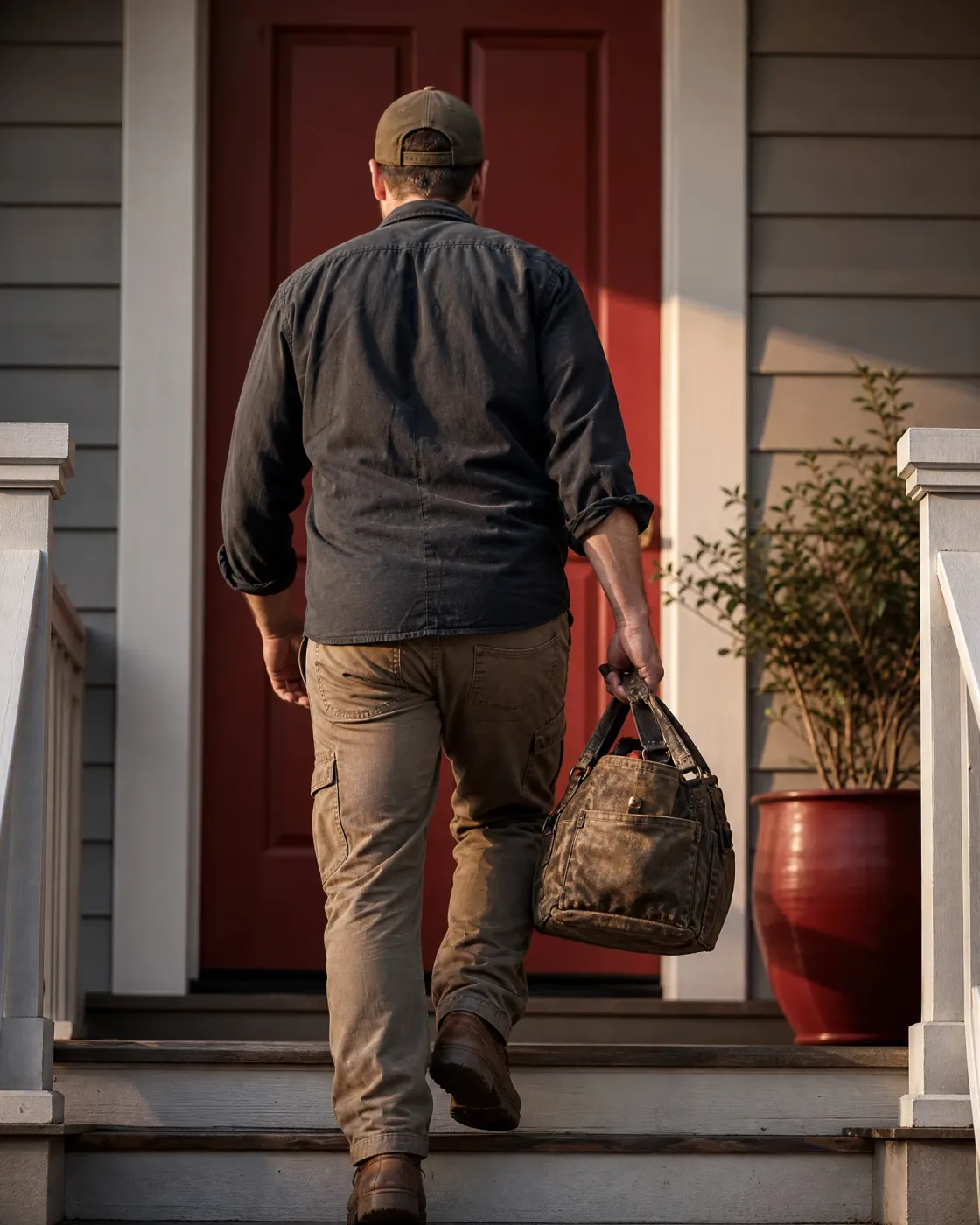
A man in a cap, dark shirt and tan cargo pants, seen from behind, climbs porch steps toward a red front door while carrying a worn canvas duffel bag, with a potted shrub in a red planter beside him.
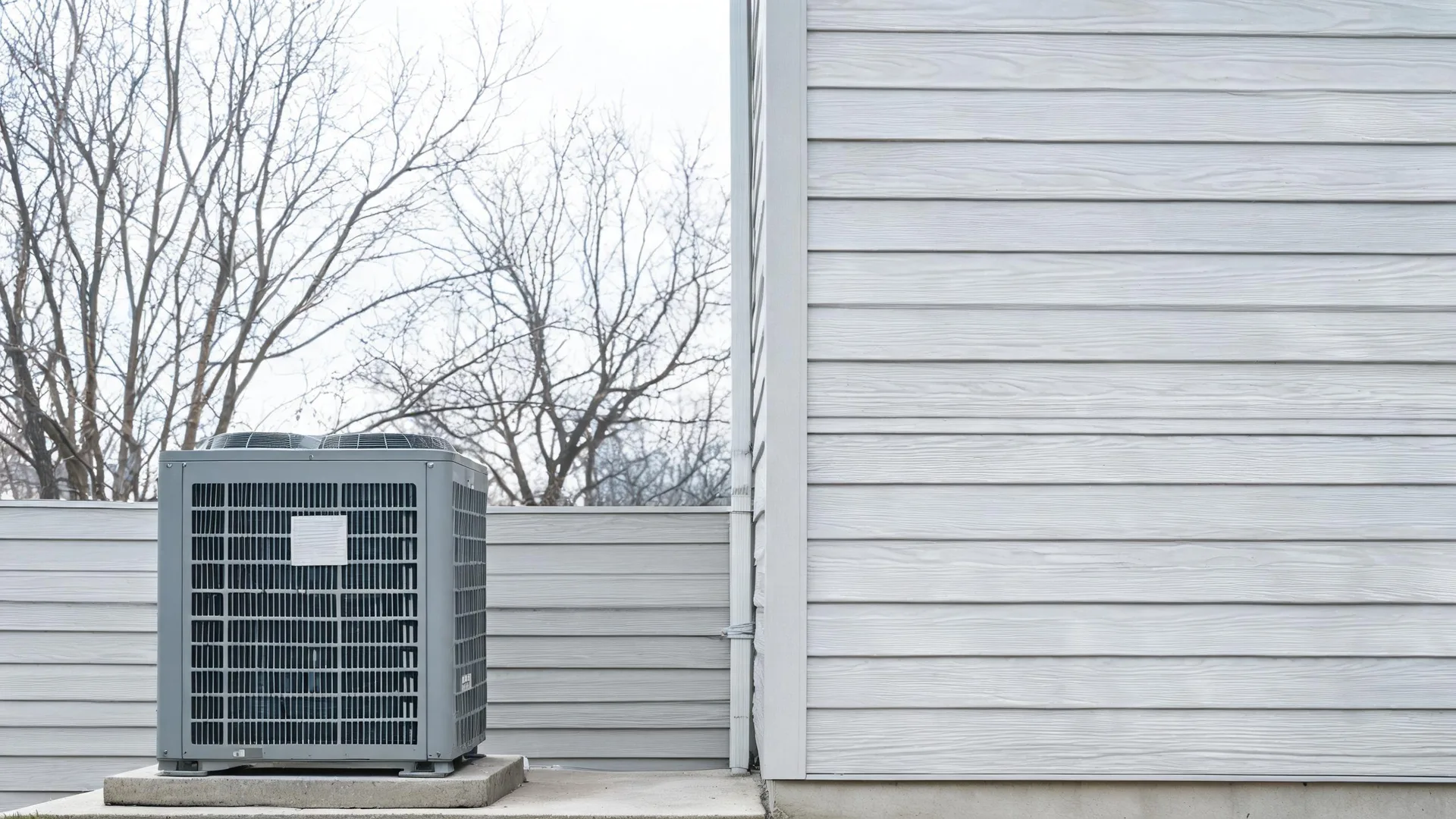
A gray cylindrical air conditioning condenser unit mounted on a concrete pad next to a light-colored vinyl-sided house exterior.

Match the new system to the one it's replacing

A contractor sizing the job will ask what the old system was built around, not just what's listed on the nameplate. In a house from that era, the ducts, the returns, and the electrical panel were all sized for whatever ran there before. A new system has to work with those, or the install has to change them. That's a conversation to have before the unit shows up, not after.

The old unit gets hauled away

A contractor doing the install disconnects the old condenser and air handler or coil, recovers the refrigerant, and removes the equipment. Refrigerant can't legally be vented to the air, so it gets captured and taken off site properly. The old unit doesn't just get left in the yard.

What stays behind matters too

If the ducts, the refrigerant lines, or the electrical whip from the old system are being reused, a contractor checks them before closing the job up. Old line sets can have the wrong fitting size for new equipment, and old wiring may not match what the new unit draws. Reusing what still works is normal. Reusing what doesn't just moves the failure down the road.

An outdoor air conditioning condenser unit installed beside the exterior wall of a blue vinyl-sided house at sunset.

A higher-efficiency unit would save about $30 a year to run in Brown County compared with a new unit at the federal minimum.

  • A higher-efficiency unit$250 a year
  • A new unit at the federal minimum, 13.4 SEER2$280 a year

Estimates for a typical Brown County home, from EIA household energy data, Kansas fuel prices and NOAA climate normals. Your home will differ.

The old equipment comes out first. A contractor disconnects the condenser and air handler, recovers the refrigerant, and clears the line set before anything new goes in. The new coil sets in above or beside the furnace, and the condenser goes on its pad outside. The line set connecting them gets run, then pressure tested for leaks before any refrigerant goes in. Electrical and thermostat wiring get tied in, and the system gets charged to the manufacturer's spec rather than topped off by feel. The last step is startup. That means checking airflow at the vents, checking the temperature split between the air going in and the air coming out, and watching the system cycle on and off the way it should before the job is called done.