A snow-covered suburban street at dusk with lit houses and bare trees under a twilight sky.

AC Installation in Hillsboro, KS

Tell us about the job

Takes about a minute. No obligation.

New system or replacementCentral ACMarion County, KS
Step 1 of 2

What ZIP code is the job in?

Five months of real heat

Air conditioners here run from May through September, and the afternoon high averages 89°F through June, July and August. The dew point sits around 64°F those same months, so the air stays heavy on top of the heat. A system here runs longer each day and works against tougher conditions than one installed in a milder state.

Pick a system that matches the load

A new air conditioner for this county needs to be sized for what it will actually face, not for a mild summer somewhere else. An undersized unit will run constantly and still struggle to keep up. The right size, matched to the home, is worth more here than it would be in a place where summer barely tests it.

5 months
May through September, your air conditioner is on duty
89°F
the average summer afternoon it cools against
69 hail events
in ten years, and hail bends the fins on outdoor coils
13.4 SEER2
the federal minimum any new unit must meet
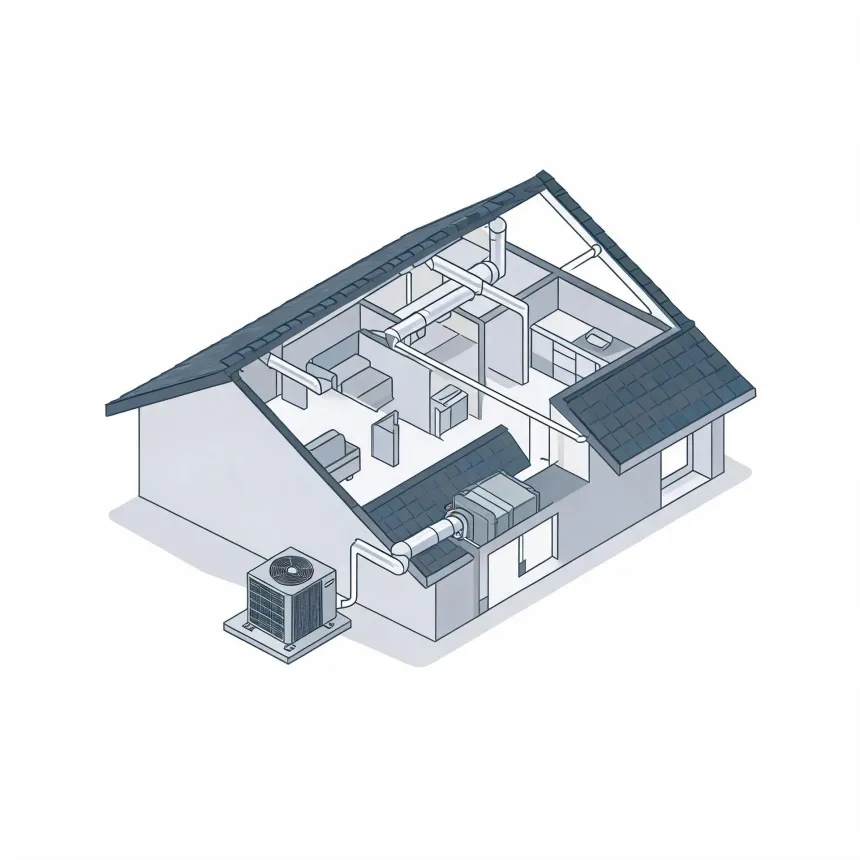
Isometric line illustration of a cutaway single-story house showing interior rooms, ceiling ductwork and an air handler, connected to an outdoor condenser unit on a pad beside the building.
Your air conditioner works hardest from June through August.

NOAA nClimDiv, 1991–2020 normals

Half the homes in Marion County were built in 1957 or earlier.

An install in a house that old has to work with the ductwork and wiring already there, not a new build's.

Most homes here already heat with gas, and that shapes what replaces the AC

56.9% of homes heat with gas
Climate zone 4A
Power here costs 14.56 cents per kilowatt-hour
Replace It Before May Asks You ToCooling runs May through September here, so April is the month to get it done.

Marion County saw 159 severe weather events between 2015 and 2024, and 75 of those were damaging wind. Hail hit 69 times over that same stretch, and an outdoor condenser sitting out in the open takes the brunt of that. Where the installer places the new unit, and what if anything shields it, is worth deciding on purpose rather than leaving to wherever the old one happened to sit. Power loss is the other side of it. Statewide, 19% of Kansas households were without power for a day or more in 2024, and an outage that long means no cooling and no hot water until it's back. That's worth planning around before the old system fails, not after.

Size It For The Summer It Will Actually Run

Get the new system sized for what it has to do here. Five months of running against 89 degree afternoons wears on a unit faster than a short, mild summer would. Matching the size to the house now means it isn't straining from the first week it's on.

Find a contractor
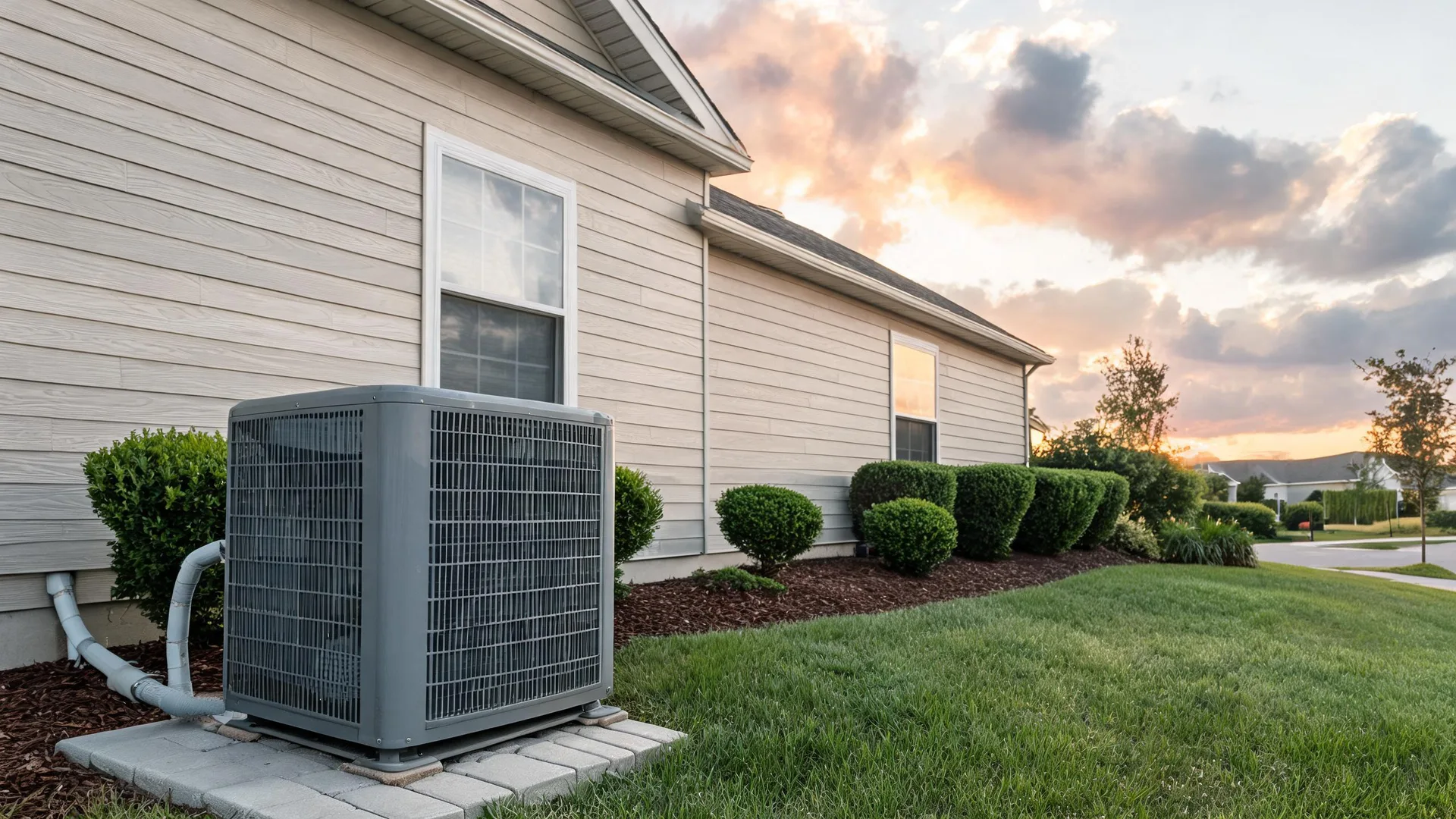
A gray metal air conditioning condenser unit mounted on a concrete pad in a flat grassy field under a partly cloudy sky.

Built For The House You Have

An installer working on a house this age has to check what's already there before putting in the new system. The ductwork and the electrical panel were sized for whatever ran before, and that may not match the new unit's needs. Checking that fit ahead of time, rather than after the new system is running, is what keeps a mismatch from showing up as a comfort problem or a strain on the equipment later.

What Changes The Price

The unit itself is one line item. The bigger factors are usually what's around it. A condenser pad that needs leveling, a disconnect box that needs moving, refrigerant line sets that need replacing instead of reusing, all of that adds labor before the new system ever turns on. A straightforward swap, same spot, same connections, costs less than one where the installer has to rework what's already there.

Why Load Calculations Matter Here

An installer should run a load calculation on the house, not just match the old unit's size. A system that's too big cools the air fast and shuts off before it pulls the moisture out, leaving the house cold and clammy. One that's too small runs constantly and still falls behind on the hottest days. Getting the size right the first time costs something up front in the installer's time, but it's cheaper than paying to undo an oversized or undersized install later.

Overhead view of a gray residential air conditioning condenser unit mounted on a concrete pad beside a house with asphalt shingle roofing.

A higher-efficiency unit would save about $40 a year to run in Marion County compared with a new unit at the federal minimum.

  • A higher-efficiency unit$300 a year
  • A new unit at the federal minimum, 13.4 SEER2$340 a year

Estimates for a typical Marion County home, from EIA household energy data, Kansas fuel prices and NOAA climate normals. Your home will differ.

Installation takes most of a day, sometimes longer if the ductwork or electrical needs work first. The crew starts by disconnecting and removing the old unit, both the outdoor condenser and the indoor coil. Line sets get replaced or flushed, because old refrigerant oil left behind can damage a new compressor. The new condenser goes on its pad, the coil goes in above the furnace or air handler, and new line sets connect the two. Once everything's connected, the system gets charged with refrigerant to the exact weight the manufacturer specifies, not just topped off by feel. The last part is startup: checking airflow, checking the charge, checking that the thermostat is talking to the system correctly. A rushed charge or a skipped airflow check is what turns into a service call a few weeks later, so that last hour matters as much as the rest of the day.