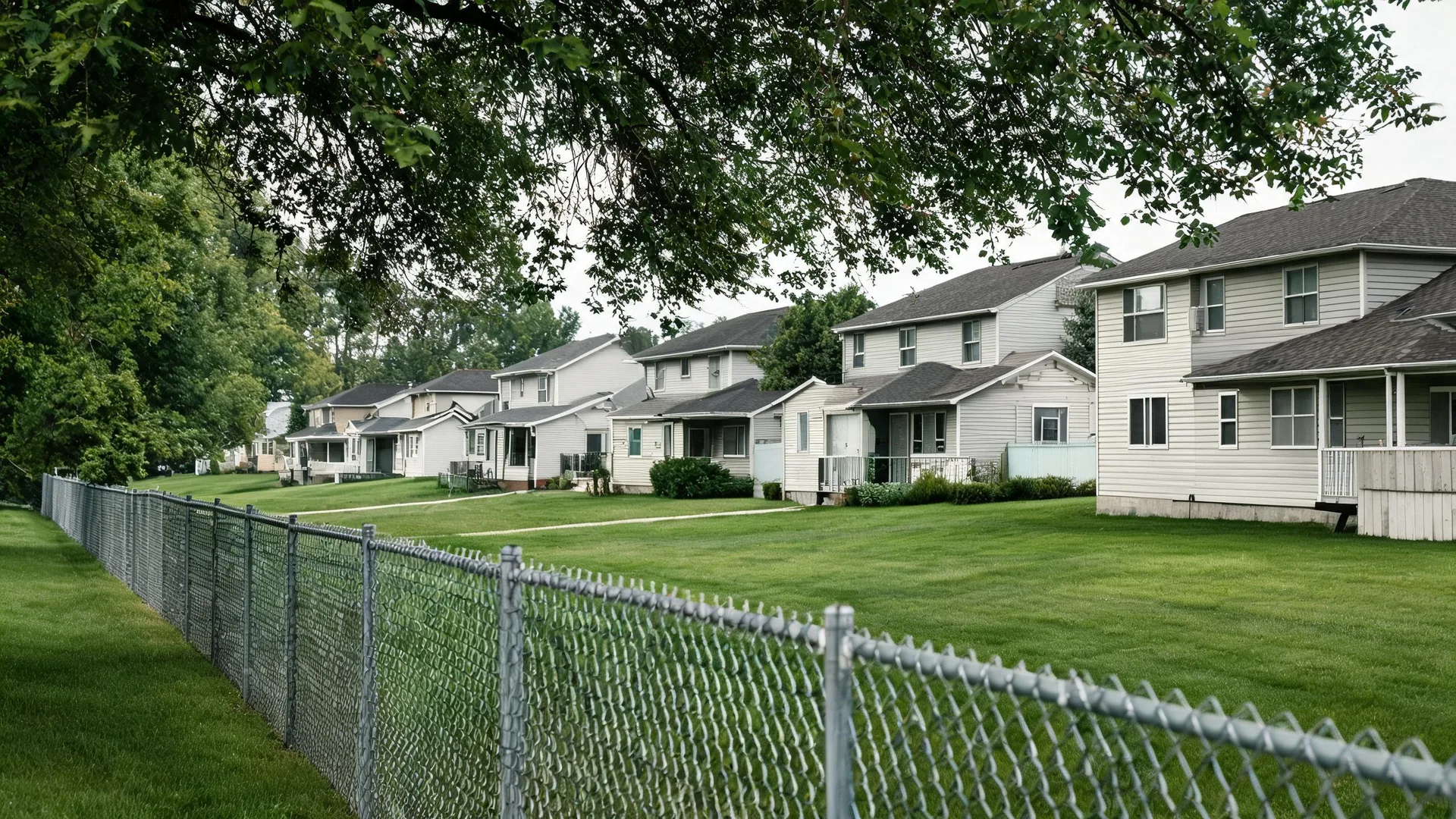





A row of similar light-colored two-story houses behind a mown lawn, with a chain-link fence running along the foreground and overhanging tree branches at the top of the frame.

AC Installation in Hutchinson, KS

Tell us about the job

Takes about a minute. No obligation.

New system or replacementCentral ACReno County, KS
Step 1 of 2

What ZIP code is the job in?

Kansas households paid 14.15 cents per kilowatthour for electricity in 2024. An air conditioner running all summer in Hutchinson adds that up fast. The difference between a worn-out unit and a properly sized, efficient one shows up on every bill, not just one. When you compare systems, check the SEER2 rating on each. A higher number means less power for the same cooling, and at these rates that keeps paying you back for as long as you own the system.

5 months
May through September, your air conditioner is on duty
90°F
the average summer afternoon it cools against
104 hail events
in ten years, and hail bends the fins on outdoor coils
13.4 SEER2
the federal minimum any new unit must meet
Isometric cutaway illustration of a small home interior with furniture and ducting, showing an indoor air handler connected by lines to an outdoor condenser unit on a pad.
Your air conditioner works hardest from June through August.

NOAA nClimDiv, 1991–2020 normals

Cooling runs May through September in Hutchinson.

April is when a new system should already be installed, not when you start calling around.

Most homes here heat with gas, so a gas furnace paired with your new AC is the straightforward match

65.1% of homes heat with gas
Cooling runs May through September
Summer afternoons average 90°F

Reno County sits in zone 4A, a mixed climate that asks real work of both your furnace and your AC. That classification sets the floor for what a contractor can install here. Any new split-system AC under 45,000 Btu/h has to meet a federal minimum of 13.4 SEER2, so a quote below that number isn't legal to install. You can still choose higher for lower bills, but that minimum is the baseline everything gets measured against.

Size it right once, because summer here doesn't let up

Five months of summer here means afternoons at 90°F, month after month, for whatever system you put in. That kind of steady load wears parts sooner than it would somewhere milder. Get the sizing right now and you won't be paying for someone's guesswork every July.

Find a contractor
A gray cylindrical air conditioning condenser unit mounted on a concrete pad next to a light-colored vinyl-sided house exterior.

Half these homes were built in 1962 or earlier

Half the houses in Reno County were built in 1962 or earlier. A system going into one of those has to match the house, not a catalog spec. Ductwork already in place was sized for whatever cooled or heated the house decades ago, and a new AC has to work with it as it is. If those ducts are undersized or leaky for the unit going in, you'll feel it in rooms that never quite cool down, no matter how good the condenser is outside. Ask the contractor to check the ducts before they quote a system, not after it's installed.

The old condenser and coil get hauled away

A contractor disconnects the refrigerant lines, recovers whatever refrigerant is left in the system, and takes the old condenser and indoor coil with them. Refrigerant can't legally be vented into the air, so a licensed contractor has the equipment to pull it out and dispose of it properly. You shouldn't be left with a dead unit sitting in the side yard.

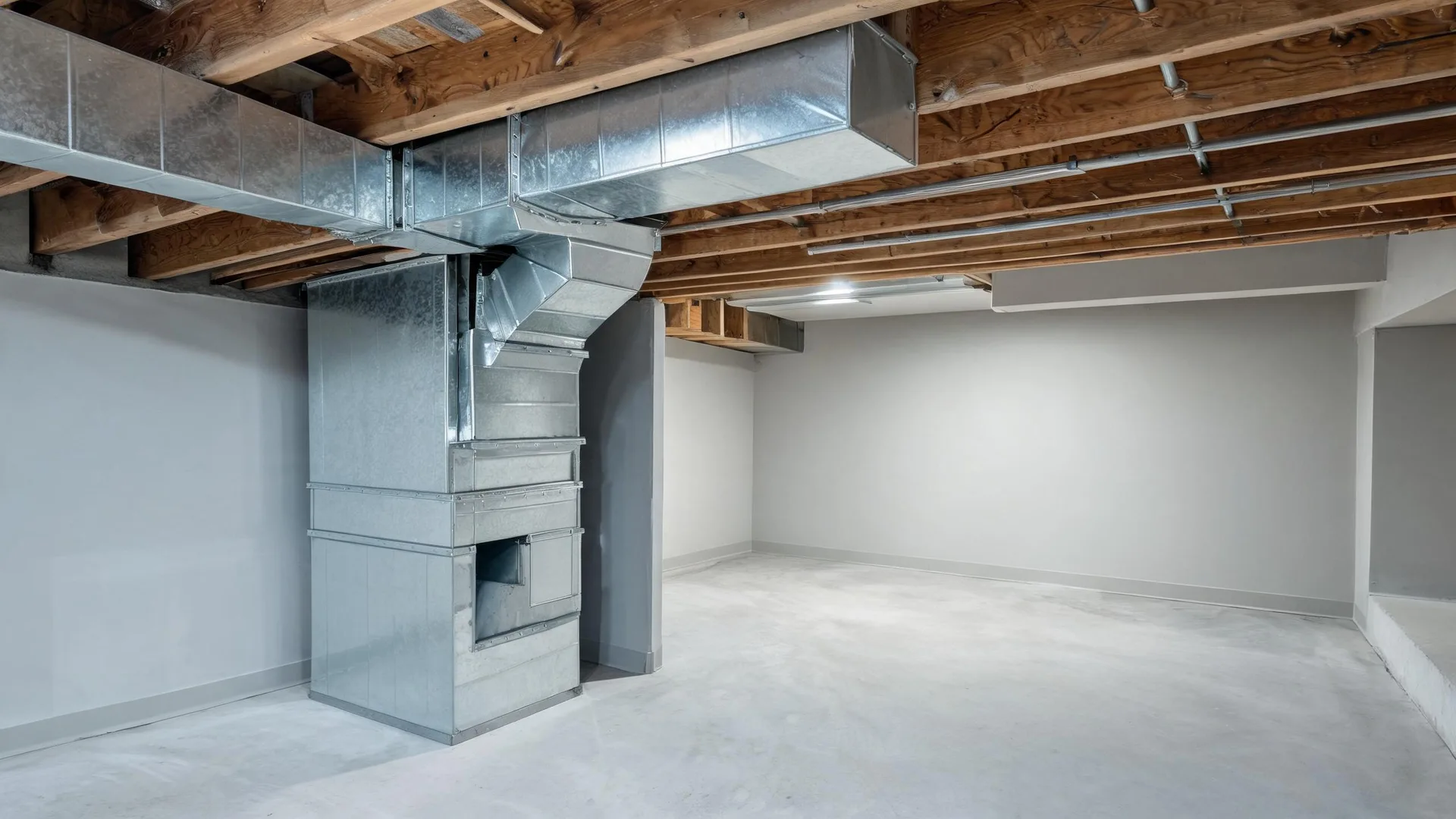
The line set and pad usually stay

If the copper line set running between the indoor coil and outdoor condenser is in good shape, a contractor may reuse it instead of running new lines through your walls. The concrete pad outside often stays too, as long as it's level and sized for the new unit. What gets replaced is what wore out or what the new system actually needs to run right, not everything just because it's new.

Aerial view of a gray outdoor air conditioning condenser unit mounted on a concrete pad next to a house with vinyl siding.

A higher-efficiency unit would save about $40 a year to run in Reno County compared with a new unit at the federal minimum.

  • A higher-efficiency unit$320 a year
  • A new unit at the federal minimum, 13.4 SEER2$360 a year

Estimates for a typical Reno County home, from EIA household energy data, Kansas fuel prices and NOAA climate normals. Your home will differ.

Installation day starts with the old system coming out and the new one going in, but most of the time goes to details nobody sees once the panels are back on. The indoor coil gets matched to the condenser outside, because a mismatched pair never hits its rated efficiency no matter how well it's installed. Refrigerant lines get pressure tested before any charge goes in, since a leak found after the fact means pulling the system apart again. The line set gets charged to the manufacturer's spec for its exact length, not just filled and left. Once it's running, a contractor checks airflow at the vents and the temperature split between the air going in and the air coming out, because that number tells you whether the system is actually doing its job or just running. A startup that skips these checks can leave you with a unit that looks installed but never performs the way it's rated to.