





A two-story black-clad house with a dark shingled roof and covered porch stands in front of a dense row of tall conifers, viewed across a green lawn shot from ground level under an overcast sky.

AC Installation in Kansas City, KS

Tell us about the job

Takes about a minute. No obligation.

New system or replacementCentral ACWyandotte County, KS
Step 1 of 2

What ZIP code is the job in?

Most houses in Wyandotte County run on utility gas, close to seven in ten. That usually means a gas furnace paired with the air conditioner, sharing the same ductwork and the same thermostat. If that's what your house already has, matching a new AC to that setup is the straightforward route, since the ducts and the furnace blower are already built for it. Electricity heats most of the rest, so if your home is one of those, an installer will size the AC around a different kind of system. Either way, the fuel your furnace uses now is the first thing worth telling whoever quotes the job.

5 months
May through September, your air conditioner is on duty
87°F
the average summer afternoon it cools against
43 hail events
in ten years, and hail bends the fins on outdoor coils
13.4 SEER2
the federal minimum any new unit must meet
Isometric line illustration of a cutaway house showing interior rooms with furniture and ceiling ductwork, connected to an outdoor condenser unit with a fan beside the building.
Your air conditioner works hardest from June through August.

NOAA nClimDiv, 1991–2020 normals

Matching tonnage doesn't mean matching systems, since the coil, the blower and how the ductwork handles that airflow all change how a house actually cools.

Ask the installer to show the load calculation for your house, not just the size they're planning to install.

Wyandotte County weather is hard on power lines, not on AC sizing

103 severe weather events from 2015 to 2024
19% of homes statewide lost power a day or more in 2024
52 damaging wind events from 2015 to 2024

Kansas homes paid 14.15 cents per kilowatthour in 2024. That number matters more for how you run the AC than how big it should be. A correctly sized system for your square footage and your ductwork will cost what it costs to run, and an oversized one costs more to run while doing a worse job of cooling the house evenly. There's nothing about Kansas City weather or Kansas power rates that argues for going bigger than the load calculation says. Standard sizing, standard efficiency, matched to your house, is the right call here.

Get the new system sized for the house you have

Half the houses in Wyandotte County were built in 1962 or earlier. A furnace or AC going into a house that age has to work with the ductwork that's already there, not the ductwork a builder would install today. That's the sizing question an installer needs to answer before anything goes in.

Find a contractor
A man in a dark jacket, cap and tan work pants climbs wooden porch steps toward a red door, carrying a canvas tool bag beside a potted shrub in a red planter.
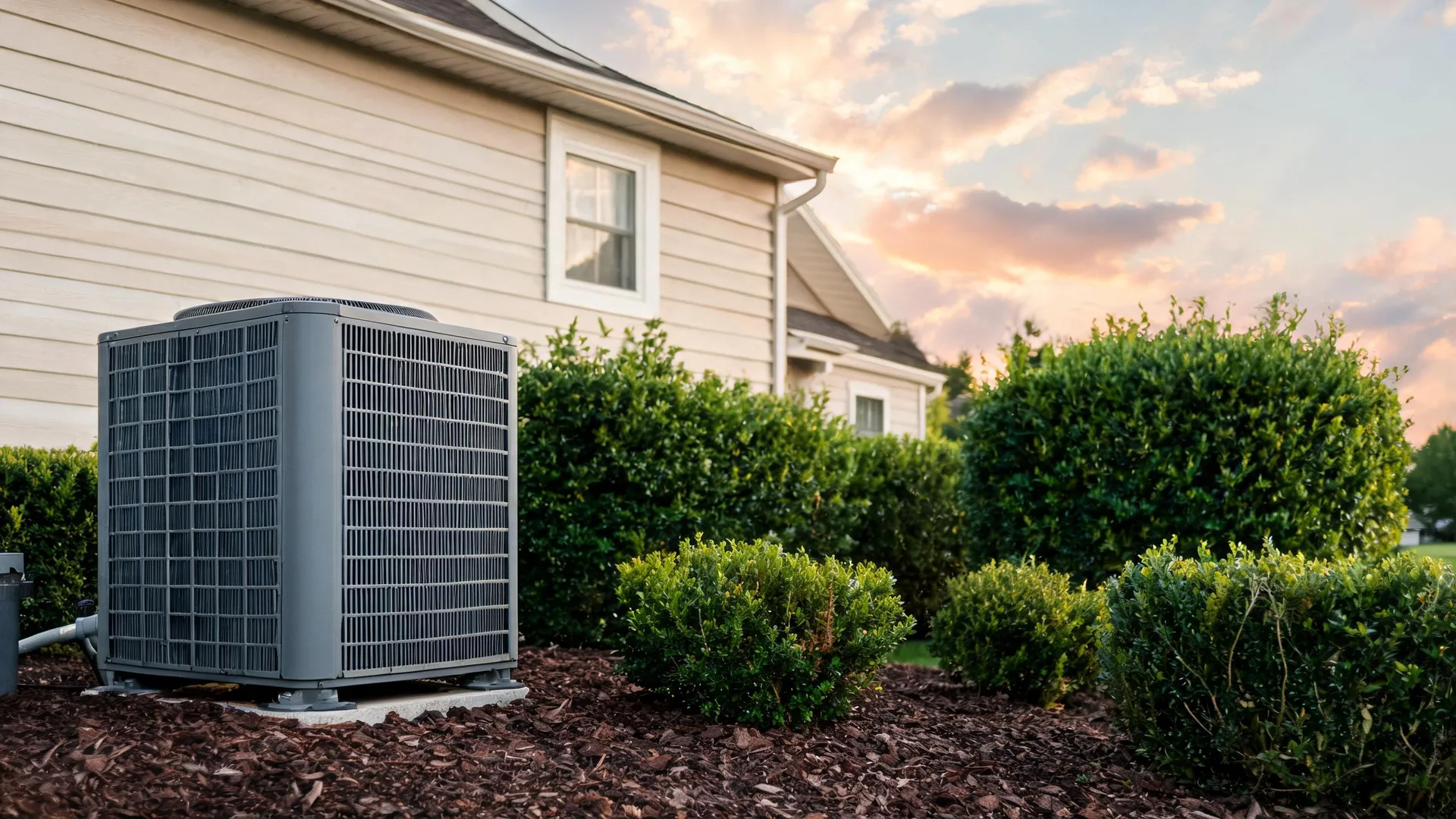
A gray residential air conditioning condenser unit mounted on a concrete pad outdoors, surrounded by green grass under a partly cloudy blue sky.

Right-sized runs longer and does more

A system sized too big cools the air fast and shuts off before it pulls the moisture out of it, so the house feels cold and clammy at the same time. It short cycles, switching on and off instead of running a steady stretch, and every start puts more wear on the compressor than a long run does. A system sized right runs longer, pulls the humidity down the way it should, and wears the way it's supposed to over its life. The load calculation an installer runs accounts for square footage, insulation, window area and orientation, and the condition of the ductwork, not just the size of the room the thermostat happens to sit in. That's why houses that look about the same from the street can need different equipment, and why the number stamped on the old unit isn't automatically the right number for the new one.

The old unit has to come out first

An installer disconnects the refrigerant lines, the electrical whip and the condensate drain, then unbolts the old condenser from its pad. If the line set or the pad isn't being reused, that comes out too. None of this is quick work to skip past, since a leftover fitting or a cracked line can undo the new system before it starts.

The refrigerant inside has to be recovered, not released

Old AC systems hold refrigerant under pressure, and it can't just be vented into the air. A technician pulls it into a recovery tank with a machine built for that job. This is a legal requirement on any system being decommissioned, not an optional step, so it's worth asking how the installer handles it.

Overhead view of an air conditioning condenser unit on a concrete pad next to a house with asphalt shingle roofing and vinyl siding.

A higher-efficiency unit would save about $40 a year to run in Wyandotte County compared with a new unit at the federal minimum.

  • A higher-efficiency unit$280 a year
  • A new unit at the federal minimum, 13.4 SEER2$320 a year

Estimates for a typical Wyandotte County home, from EIA household energy data, Kansas fuel prices and NOAA climate normals. Your home will differ.

Once the old unit is out, the new one goes in roughly the same order every time. The pad goes down first, leveled, since a condenser sitting crooked wears its compressor mounts unevenly over the years. Line set gets run or reused, new electrical whip connected, and the condensate line checked for a proper slope so water actually drains instead of backing up into the coil. Indoors, the coil goes in above or beside the furnace, matched to that specific condenser rather than just sized the same. Once everything's connected, the system gets charged with refrigerant to the exact weight the manufacturer specifies, not just until it feels cold, and that charge gets checked against the line length and the outdoor temperature that day. Then it runs, and the installer checks the temperature split between the air going into the return and the air coming out of the supply, because that number says more about whether the job was done right than how cold the air feels standing next to it.