






Overhead view of an air conditioning condenser unit on a concrete pad next to a house with asphalt shingle roofing and vinyl siding.

AC Installation in Leavenworth, KS

Tell us about the job

Takes about a minute. No obligation.

New system or replacementCentral ACLeavenworth County, KS
Step 1 of 2

What ZIP code is the job in?

Most houses in Leavenworth County heat with gas, 60.2 percent of them. That matters for an AC install even though gas heat and central air are two separate jobs, because gas furnace setups almost always pair with a central air conditioner on the same ductwork. If your home falls into that majority, you likely already have the ducts and the air handler an install needs, and the new condenser just ties into what's there. Electric heat accounts for about a quarter of homes here, and those often run on heat pumps or air handlers that work a little differently with a new AC unit. Worth checking which setup your house has before you get quotes.

5 months
May through September, your air conditioner is on duty
87°F
the average summer afternoon it cools against
36 hail events
in ten years, and hail bends the fins on outdoor coils
13.4 SEER2
the federal minimum any new unit must meet
Isometric line illustration of a cutaway house showing interior rooms with furniture and ceiling ductwork, connected to an outdoor condenser unit with a fan beside the building.
Your air conditioner works hardest from June through August.

NOAA nClimDiv, 1991–2020 normals

Leavenworth County runs its air conditioners about five months a year, May through September.

A standard-sized system handles that five-month stretch fine, no upsizing needed.

Cooling starts in May. April is for putting in the new system, not finding out the old one quit.

Cooling runs May through September
Summer afternoons average 87°F
92 damaging wind events from 2015 to 2024

Any new system here starts at 13.4 SEER2

Leavenworth County sits in climate zone 4A, which asks real work of both sides of the system, heating and cooling. Any split-system air conditioner installed here now has to meet 13.4 SEER2 at minimum, so that's the baseline a contractor will be working from when sizing your options.

Find a contractor
A man in a dark jacket, cap and tan work pants climbs wooden porch steps toward a red door, carrying a canvas tool bag beside a potted shrub in a red planter.
A gray residential air conditioning condenser unit mounted on a concrete pad outdoors, surrounded by green grass under a partly cloudy blue sky.

What you don't see is what costs

What a new system costs comes down to what has to happen before the condenser ever gets set on its pad. A straight swap, same size unit, same spot, same ductwork, is the simplest version of this job. Anything that changes that picture adds work. If the ducts are undersized or leaky, they need sealing or rework before the new unit can push air the way it's rated to. If the electrical panel can't support the new condenser's draw, that's an upgrade on its own. Line sets usually get replaced rather than reused, since old refrigerant lines can carry contamination into a new system. The pad, the disconnect box, the whip running power to the unit, all of that gets inspected and often replaced rather than patched. None of this is add-on work a contractor is inventing. It's what keeps a new system running the way it's supposed to instead of failing early because it was hooked into something that couldn't support it.

The number is a ratio, not a guarantee

SEER2 compares the cooling a system puts out over a season to the power it draws getting there. A higher number means the unit gets more cooling for the electricity it uses. It doesn't promise a certain bill, because that also depends on the ductwork it's tied into, how well the unit was sized for the house, and how it was installed.

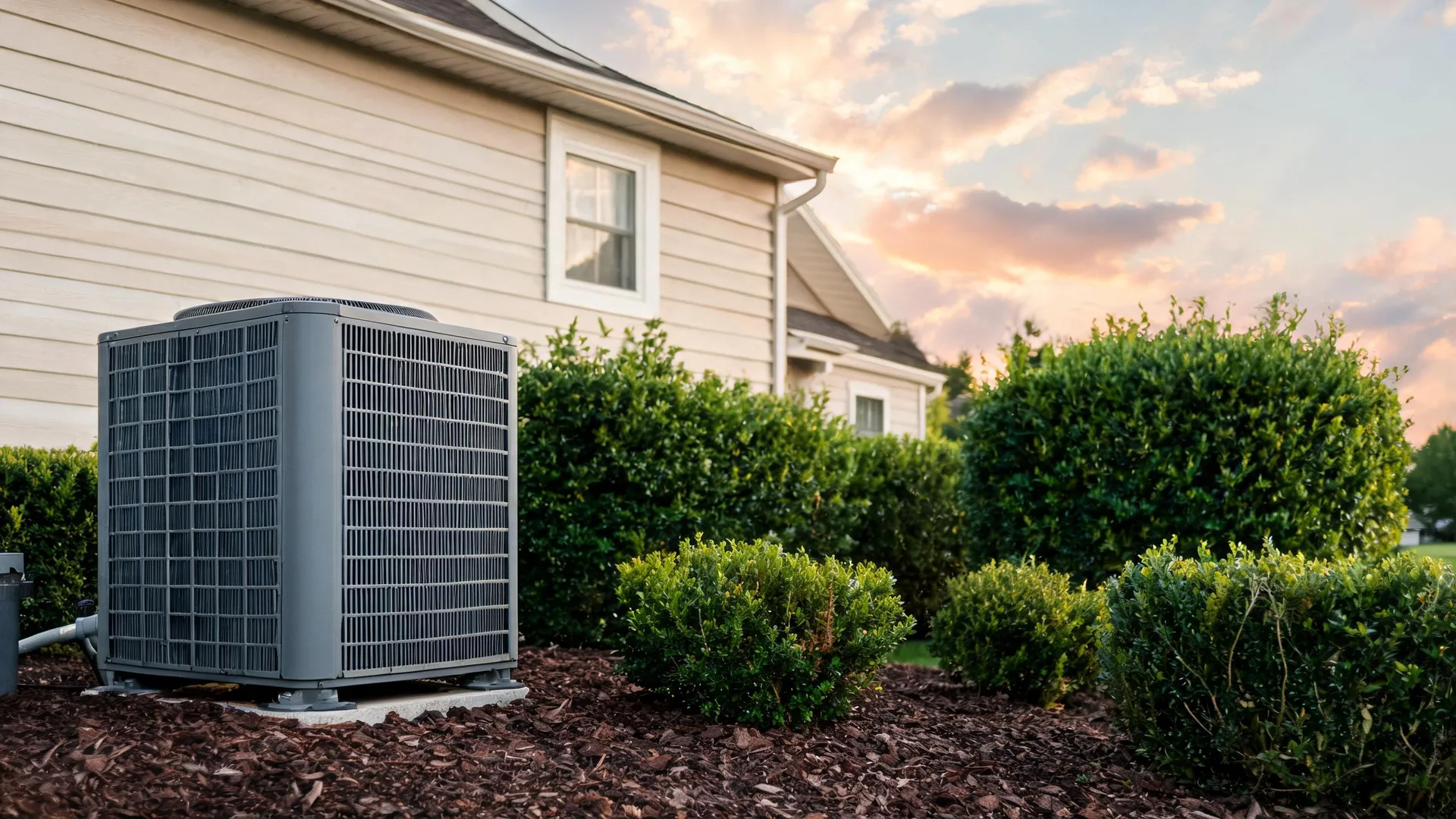
The rating only holds if the install matches it

A condenser earns its SEER2 number running against the coil, ducts and airflow it was tested with. Undersized ducts, a mismatched coil, or a refrigerant charge that's off all pull real-world performance below what's stamped on the label. The rating is the ceiling the equipment can reach, not a floor it hits on its own once it's set on the pad.

An outdoor air conditioning condenser unit mounted on a concrete pad next to a blue-sided residential house at sunset.

A higher-efficiency unit would save about $40 a year to run in Leavenworth County compared with a new unit at the federal minimum.

  • A higher-efficiency unit$280 a year
  • A new unit at the federal minimum, 13.4 SEER2$320 a year

Estimates for a typical Leavenworth County home, from EIA household energy data, Kansas fuel prices and NOAA climate normals. Your home will differ.

Installation day starts with the old unit coming out, not the new one going in. A tech disconnects the power, recovers the refrigerant from the old lines, and pulls the condenser off the pad before anything new gets set. The indoor coil usually comes out too, since it's matched to the old system and won't pair right with a new one. From there it's the pad, the line set, the electrical whip, each one either reused or replaced depending on what's actually there once it's exposed. The new condenser goes on the pad, the lines get connected and brazed, and the system gets evacuated to pull out moisture and air before any refrigerant goes in. Once it's charged, a tech checks the pressures against what the unit calls for and runs it to see that it's cooling the way it should before calling the job done.