A snow-covered suburban street at dusk with lit houses and bare trees under a twilight sky.

AC Installation in Osage City, KS

Tell us about the job

Takes about a minute. No obligation.

New system or replacementCentral ACOsage County, KS
Step 1 of 2

What ZIP code is the job in?

Severe weather is a regular visitor here

Osage County logged 157 severe weather events between 2015 and 2024. That includes 71 cases of damaging wind, 70 hail events, 9 winter storms, and 7 tornadoes. A new air conditioner here is going outside into that.


Power doesn't always hold through the storm

Across Kansas, 19% of households went at least 24 hours without power in 2024. A central air system depends on that power to run, and a long outage can mean no cooling and no hot water until it's back.

5 months
May through September, your air conditioner is on duty
88°F
the average summer afternoon it cools against
70 hail events
in ten years, and hail bends the fins on outdoor coils
13.4 SEER2
the federal minimum any new unit must meet
Isometric grayscale illustration of a cutaway house showing interior rooms, ceiling ductwork connected to an indoor air handler, and an outdoor condenser unit linked by lines along the exterior wall.
Your air conditioner works hardest from June through August.

NOAA nClimDiv, 1991–2020 normals

Cooling here runs May through September.

Get the new system in during April, before the first hot week puts it to work.

Nearly half the homes here heat with gas, and that shapes what AC pairs with it

48.6% of homes heat with gas
Climate zone 4A
Power here costs 13.89 cents per kilowatt-hour

Five months of cooling a year is real work for a new system, and here that work comes at full strength. June through August, afternoon highs average 88°F, and the dew point sits around 66°F, which is the kind of air that feels heavy even when the temperature alone doesn't look that bad. A unit sized for a milder climate will run longer and lose ground on days like that. On top of the heat, this county has logged 71 damaging wind events and 70 hail events between 2015 and 2024. The outdoor unit sits through all of it. Buying on price alone means buying a machine that has to hold up to more than most, every summer it runs.

Plan the installation around the weather it has to survive

Where the outdoor unit goes and how it's installed makes a difference when hail and wind come through this often. A properly mounted system with surge protection handles that better than one set up without it. Get those details settled now, while the system is going in.

Find a contractor
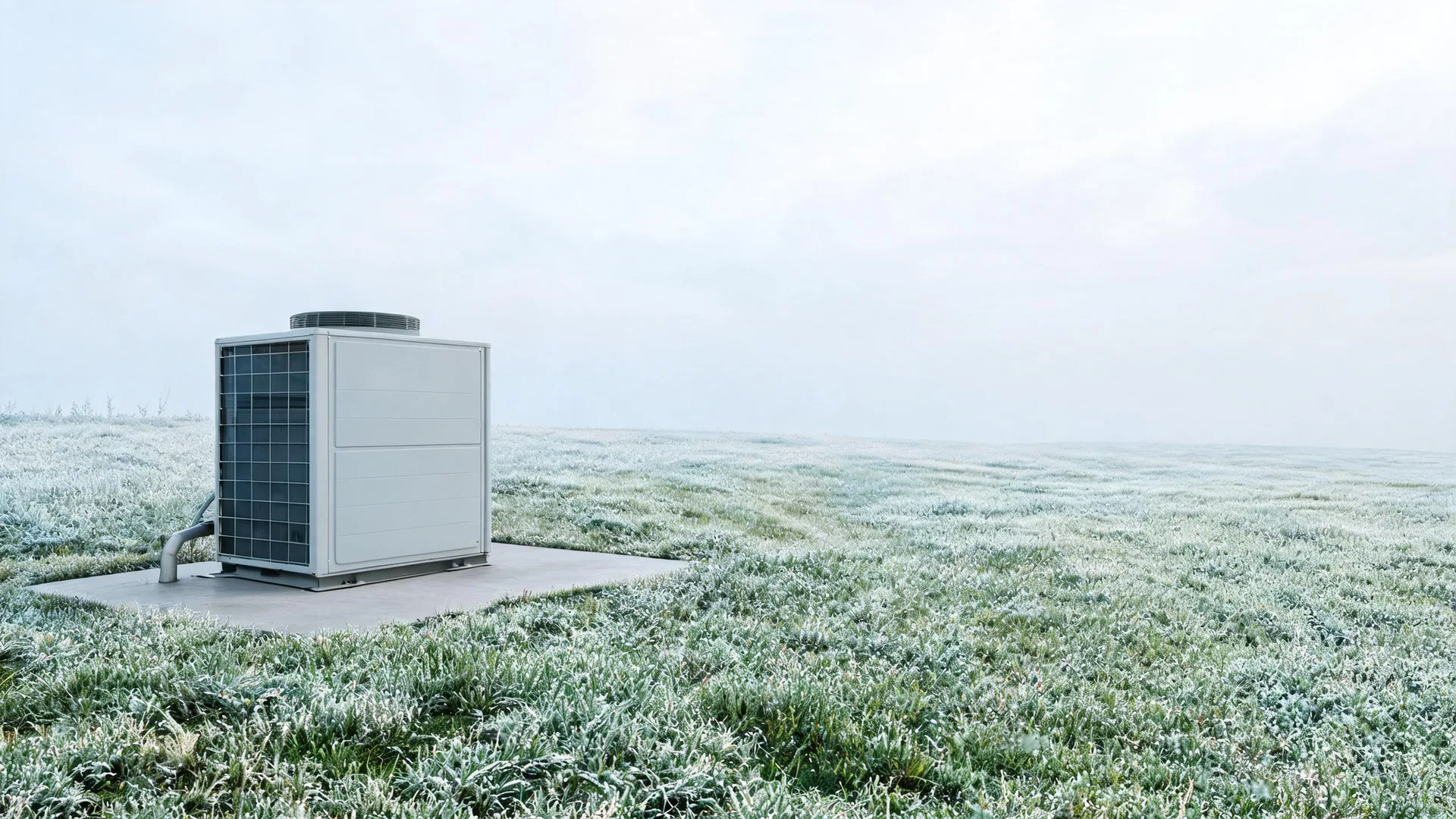
A gray metal air conditioning condenser unit mounted on a concrete pad in a flat grassy field under a partly cloudy sky.

Five months of work a year, starting the day it's installed

Five months of cooling means the unit outside runs from May into September without a break in the pattern. Ask whoever installs it where surge protection fits into the job and whether the pad or mount they're using is rated for wind, not just convenience. Those are decisions made once, at installation, and they're harder to fix after the fact.

The old unit has to come out first

A central air system isn't just the outdoor unit. There's a coil inside, usually sitting in the plenum above or beside the furnace, lines running between the two, and a disconnect box on the wall outside. Pulling it out means recovering the refrigerant properly, disconnecting the electrical, and freeing up the lines before the old equipment can be lifted out and hauled off.

The coil swap matters as much as the condenser

A new outdoor unit paired with an old indoor coil rarely performs the way it should, and some manufacturers won't warranty the match at all. Matching refrigerant types is part of it too. Replacing both halves together is what lets the new system actually hit its rated output instead of running long and short at the same time.

Overhead view of an outdoor AC condenser unit on a concrete pad next to a house with a dark shingle roof.

A higher-efficiency unit would save about $30 a year to run in Osage County compared with a new unit at the federal minimum.

  • A higher-efficiency unit$290 a year
  • A new unit at the federal minimum, 13.4 SEER2$320 a year

Estimates for a typical Osage County home, from EIA household energy data, Kansas fuel prices and NOAA climate normals. Your home will differ.

Installation starts with the old equipment coming out, and that part takes longer than people expect. The refrigerant gets recovered, not vented, and that's the law. Once the lines are clear, the new outdoor unit goes on its pad and the indoor coil goes in next to or above the furnace. The line set connecting them often gets replaced rather than reused, since old lines can carry contamination or the wrong oil for new refrigerant. After everything is connected, the system gets evacuated to pull moisture and air out of the lines before any refrigerant goes in. Then comes the charge, checked against the manufacturer's spec, and a run cycle to confirm the airflow and temperature split are where they should be. None of that is optional if you want the unit to hit its rated output.