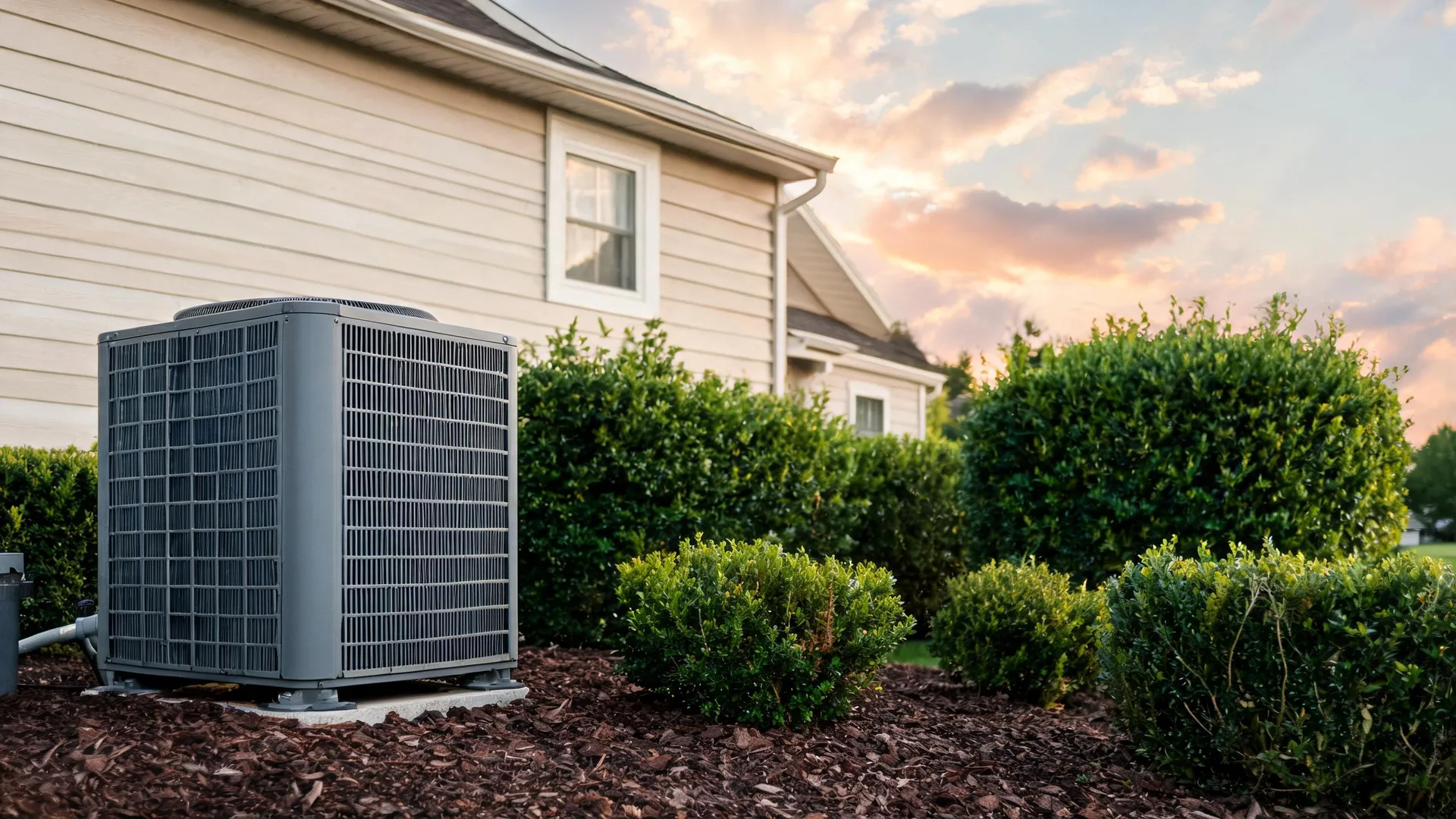
Gas furnaces are the norm here
Half the homes in Franklin County heat with utility gas. Most of those houses already have gas line, a flue and a spot built for a gas furnace, so a central AC pairs with the furnace that's already there.
Takes about a minute. No obligation.
Half the homes in Franklin County heat with utility gas. Most of those houses already have gas line, a flue and a spot built for a gas furnace, so a central AC pairs with the furnace that's already there.
If your house heats with gas, the install is mostly about matching a new coil and condenser to the furnace or air handler you already have. The ductwork and the blower are already sized for that setup, so the contractor is fitting the AC side to a system that's already in place.

NOAA nClimDiv, 1991–2020 normals
The quote should name the condenser's size and the coil that goes with it, not just a price.
A mismatched coil will cost you on comfort and wear even if the condenser itself is the right one.



AC here runs from May through September, with afternoon highs averaging 87 in June, July and August. That's a normal stretch for this part of Kansas, and it doesn't call for oversizing the condenser or paying for a higher efficiency tier than you'd otherwise pick. A correctly sized standard system handles it fine. Franklin County does see damaging wind and hail come through, so it's worth asking where the contractor plans to set the condenser and whether a cover or cage makes sense for it. That's a question about placement, not a reason to spend more on the unit itself.
Franklin County homes split about evenly between built in 1975 or earlier and built in 1975 or later. Neither group needs anything special on the AC side. A standard condenser and coil, sized to the house and matched to the furnace or air handler already there, is the right call either way.
Find a contractor
An old condenser usually doesn't fail outright. It just loses capacity year after year as the compressor wears and the coil gets dirtier, until it's barely cooling the house on the hottest days and running nonstop trying. If the unit's refrigerant type is no longer made, a repair can turn into a replacement fast, since the part may not be worth sourcing. Pulling the old condenser doesn't mean touching the ductwork or the furnace. Those stay put. The old unit gets disconnected, the line set and pad get reused or replaced depending on their shape, and the new condenser gets matched to a coil set above or beside the furnace already there.
The efficiency rating compares the cooling a system puts out to the power it draws to do it. A higher number means the condenser gets more cooling per unit of electricity. It says nothing about how big a house it can cool or how fast. Sizing is a separate question from efficiency, and a correctly sized standard unit will out-cool an oversized high-efficiency one while running less.
A condenser earns its efficiency rating paired with a specific coil. Put the wrong coil on that condenser, or reuse an old one that doesn't match, and the system won't deliver the number on the label no matter how the condenser itself is rated. The compressor also works harder to make up for the mismatch, which shortens its life. Ask for the coil model listed next to the condenser model, not just the efficiency number by itself.
Estimates for a typical Franklin County home, from EIA household energy data, Kansas fuel prices and NOAA climate normals. Your home will differ.
Most installs start with the old condenser coming off the pad and out of the way. The line set gets checked next, reused if it's in good shape, replaced if it's corroded or the wrong diameter for the new system. The new coil sets in above or beside the furnace, the condenser goes down on the pad, and the line set gets run and sealed between them. Once it's all connected, the system gets charged with refrigerant to the exact amount that coil and condenser combination calls for, not a standard fill. Before the contractor leaves, they'll run the system through a cycle, check the pressures against what the manufacturer specifies, and confirm the thermostat is controlling it the way it should.